
Contents
Introduction & Spiritual Essence
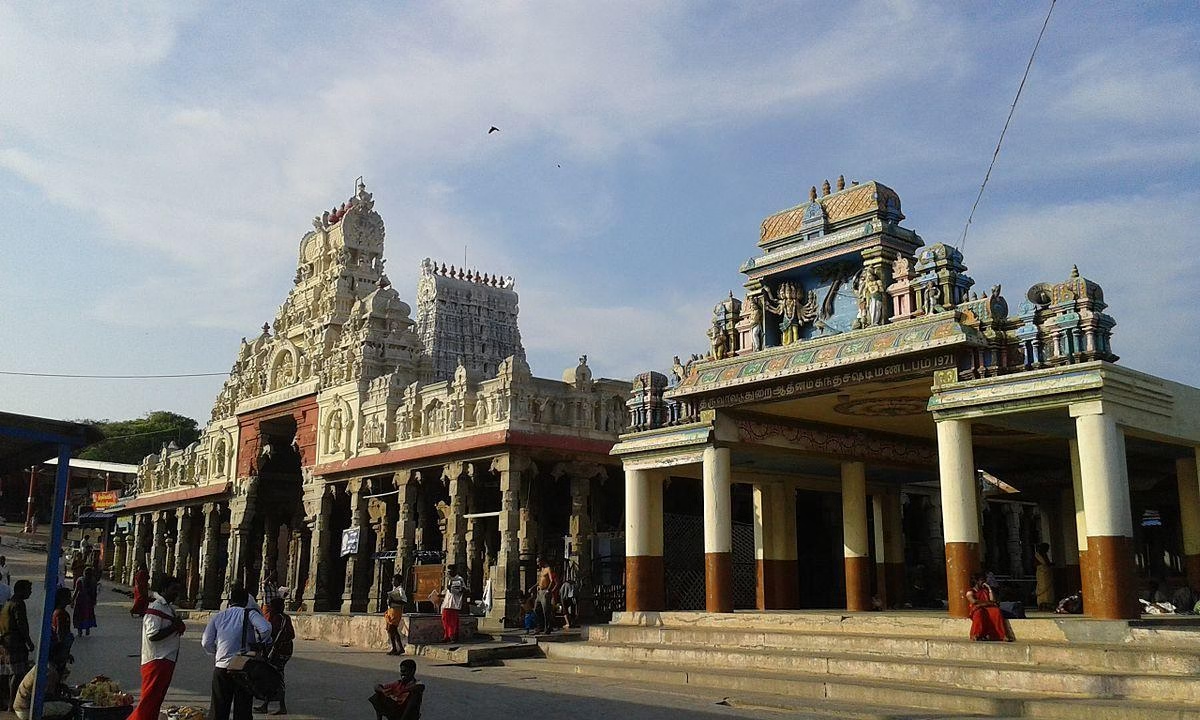
Perched on the pristine shores of the Bay of Bengal, the Thiruchendur Murugan Temple stands as a monumental testament to faith, resilience, and Dravidian artistry. It is the second of the six sacred abodes (Arupadaiveedu) of Lord Murugan and holds the unique distinction of being the only one among the six that is located on a seashore. Known scripturally as Jayanthipuram, this temple is the site of the legendary Soorasamharam—the vanquishing of the demon Soorapadman.
Why Visit? (Phalaśruti)
Devotees flock to Tiruchendur to witness the valor of Lord Murugan in his form as Senthil Aandavan (The Red-Hued Lord of Mercy). It is believed that performing the Annadhanam (free food service) here washes away sins accumulated over lifetimes. For ancestors, a Tharpanam ritual performed at the nearby seashore is said to grant ancestral souls liberation (Moksha).
Historical Origins & Scriptural Legend
While the temple’s foundational roots are ancient, historical inscriptions trace its significance back to the Pandyan era. The temple structure we see today was largely expanded by the Pandya kings (7th–12th centuries CE) and later refined by the Travancore royal family.
The Battle of Surapadman
According to the Skanda Purana and local Sthala Purana, this is the battlefield where Lord Murugan unleashed his Vel (divine spear) to split the demon Surapadman’s fortress. Surapadman transformed into a massive coconut tree to escape; Murugan’s Vel pierced the tree, splitting it into two. One half became the peacock (his Vahana), and the other became a rooster (his flag).
The Dutch Intrusion of 1646
A dramatic chapter in the temple’s history occurred in the 17th century. The Dutch East India Company occupied the temple from 1646 to 1648. After being ousted by the Naik rulers, the retreating Dutch soldiers stole the main idol. As their ship sailed into the ocean, a violent storm erupted. Realizing their folly, they threw the idol into the sea. Lord Murugan appeared in a dream to the devotee Vadamaliyappa Pillai, revealing the location. In 1653, the idol was retrieved from the sea, a miracle commemorated in paintings within the temple.
Architectural Marvels
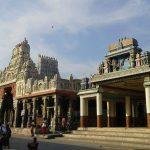
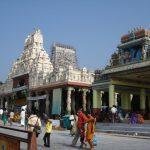
The temple is a masterpiece of Dravidian Architecture. Sprawling over 91 meters by 65 meters, the complex is designed to withstand the saline coastal air.
The Seven-Tiered Gopuram
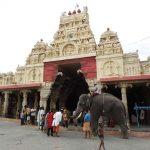
The southern Gopuram (gateway tower) rises 42 meters high with seven tiers. Unlike other South Indian temples where the main entrance is on the south, the Thiruchendur Murugan Temple houses its sanctum sanctorum facing the East.
The Rock-Cut Sanctum (Azhagar Koyil)
The inner sanctum (Garbhagriha) is situated within a natural cave. The Moolavar (primary deity) depicts Lord Murugan as a saintly boy, standing with a serene countenance carved directly out of granite.
Sacred Water: Naazhi Kinaru
Located 100 meters south of the temple is the Naazhi Kinaru, a sacred freshwater well fed by an underground spring. Devotees perform a ritual cleansing here after bathing in the ocean.
Darshan & Ritual Logistics
The temple is open from 5:00 AM to 9:00 PM daily. Unlike the other five Murugan temples, this is a Sayamukha temple (facing west) for the Moolavar and Thayavasam (facing east) for the Utsavar (procession deity).
Daily Timings (2026)
| Pooja / Darshan | Timings |
|---|---|
| Temple Opening | 05:00 AM |
| Early Morning Pooja | 05:30 AM – 06:00 AM |
| General Darshan | 06:00 AM – 12:00 PM |
| Afternoon Break | 12:00 PM – 04:30 PM |
| Evening Darshan | 04:30 PM – 08:30 PM |
| Arthajama Pooja | 08:30 PM |
| Temple Closing | 09:00 PM |
Key Sevas & Online Booking
Major offerings include Abhishekam (ritual bathing of the deity) and Archana. The famous Kumababhishekam (wedding ceremony for Lord Murugan) is performed daily at 9:00 AM.
Devotees can book online seva through the official Tamil Nadu HR&CE website. Advance booking is highly recommended for the Kanda Shasti season.
2026 Festival Calendar
- Thai Poosam: January 2026 (Tamil Month Thai)
- Masi Magam: February/March 2026 (Major temple festival)
- Panguni Uthiram: March/April 2026
- Kanda Shasti Vizha: October/November 2026. Note: This is the grandest event featuring Soorasamharam enactment. Expect massive crowds.
Practical Visitor Guidance
Dress Code & Etiquette
Traditional attire is mandatory. Men should wear Dhoti or formal trousers with a shirt; women should wear Saree, Salwar Kameez, or Chudithar. Western wear (jeans, shorts) is strictly prohibited inside the sanctum.
Crowd Management & Accessibility
- Best Hours: Visit between 6:00 AM – 8:00 AM or 4:30 PM – 6:00 PM to avoid peak crowds.
- Footwear: A paid facility is available outside the temple. Carry cash for tokens.
- Mobile Lockers: Digital lockers are available near the entrance for phones and cameras (photography inside the sanctum is prohibited).
- Seaside Safety: If visiting during the evening, be cautious of high tides near the temple walls.
Pilgrimage Connectivity
How to Reach
The temple is located in the heart of Tiruchendur town.
- By Air: The nearest airport is Tuticorin Airport (TCR), approximately 40 km away. Madurai International Airport (IXM) is 150 km north.
- By Rail: Tiruchendur Railway Station (TCN) is on the Virudhachalam – Tuticorin line. It is the last station on the branch line.
- By Road: Well connected via NH 38 (India). Frequent buses operate from Tirunelveli (60 km) and Tuticorin (40 km).
Surrounding Pilgrimage Circuit
Completing the Padai Veedu (Battlefield) circuit is highly auspicious:
- Swamimalai: Where Murugan taught Shiva the Vedas (50 km south, near Sankarankovil route).
- Pazhamudircholai: The forest abode near Madurai (180 km north).
Frequently Asked Questions (FAQs)
1. Is there a VIP Darshan entry?
Yes, the temple administration offers a Sri Deekshithar Darshan or VIP entry ticket (price subject to change, usually ₹100-₹150). This allows devotees to bypass the general queue during non-peak hours.
2. Can we carry Prasadam inside the temple?
Outside food is generally not allowed inside the sanctum. However, the temple provides excellent Annam (free meals) at the dining hall. You can offer materials like Jaggery, Rice, or Vel Kungumam at the designated counters.
3. Is photography allowed?
Photography is strictly prohibited inside the cave sanctum and near the inner Prakaram. You are allowed to take photos in the outer corridors and the gopuram premises.
4. Why is the temple facing the sea?
Unlike other temples where the Gopuram faces east, the sanctum here faces east toward the sea, while the deity stands facing west. Tradition holds that after the Soorasamharam, Lord Murugan performed Tapas here, hence the unique orientation facing the setting sun.
5. What is the significance of Naazhi Kinaru?
It is a fresh water well located near the seashore. It is believed that bathing in the ocean and subsequently washing in this well cleanses the body and soul of impurities.
Recent Posts

Shri Kaamkoteeshwar Mandir, Varanasi – History & Significance
In the heart of Kashi, the eternal city of Lord Shiva, where the Ganges flows with celestial grace, stands the Shri Kaamkoteeshwar Mandir. This sacred Sannidhi is not merely a temple but a profound spiritual bridge between the Northern…

ओ सांवरे तूने ही मुझको संभाला – Lyrics & Meaning
ओ सांवरे तूने ही मुझको संभाला – A Prayer to Shyam Origin & Spiritual Essence Why This Bhajan Resonates Devotees chant this when overwhelmed by life’s storms—the refrain ‘तूने ही मुझको संभाला’ is the soul’s sigh of relief: “You…

कथा ये है महाराज मेरे की – Lyrics & Meaning
कथा ये है महाराज मेरे की छत्रपति संभाजी महाराज – A Prayer to Chhatrapati Sambhaji Maharaj Origin & Spiritual Essence Why This Bhajan Resonates Devotees chant this when their spirit feels tested—its powerful refrain “महाराज मेरे” is a soul’s…

Rigveda Samhita Yathartha Anuvada (ऋग्वेद संहिता यथार्थ अनुवाद) – Complete Set with Anvayartha & Hindi/English Translation
The Rigveda is the oldest surviving scripture of humanity and the foundational text of Sanātana Dharma. For serious students, scholars, UPSC aspirants studying ancient Indian history, Sanskrit learners, and spiritual seekers, a precise and grammatically structured translation is indispensable.…

आना भी अकेला है जाना भी अकेला है – Lyrics & Meaning | BharatTemples
आना भी अकेला है जाना भी अकेला है – A Prayer to the Divine Witness Origin & Spiritual Essence Why This Bhajan Resonates Devotees turn to this bhajan in moments of deep reflection—when life’s attachments begin to ache. The…

माता शेरावाली के द्वार जो भी जाता है – Lyrics & Meaning
माता शेरावाली के द्वार जो भी जाता है – A Prayer to Maa Sherawali Origin & Spiritual Essence Why This Bhajan Resonates Devotees turn to this bhajan in times of fear or uncertainty—its promise that no one leaves Maa’s…

मार लेना सपणी उबार लेणा भवरा – Lyrics & Meaning
मार लेना सपणी उबार लेणा भवरा – A Prayer to the Divine Beloved Origin & Spiritual Essence Why This Bhajan Resonates Devotees chant this in moments of deep vulnerability—its cry of “मार लेना सपणी, उबार लेणा भवरा” is the…

हमें श्याम सुंदर भरोसा तुम्हारा – Lyrics & Meaning
हमें श्याम सुंदर भरोसा तुम्हारा – A Prayer to Shyam Sundar Origin & Spiritual Essence Why This Bhajan Resonates Devotees chant this when feeling alone—its refrain ‘de do sahara’ is the soul’s cry for divine support. Lyrics in Hindi…

Mere Satguru Ne Di Thi Davai Lyrics in Hindi & Meaning
Mere Satguru Ne Di Thi Davai: Invoking the Guru’s Liberating Wisdom This soul-stirring bhajan venerates the Satguru (True Spiritual Master) as the divine physician who dispenses the only remedy for life’s deepest sufferings. Composed by Sant Karmaveer Tufani, it…

Janm Diyo Thari Maa Dukh Dekhiyo Lyrics in Hindi & Meaning
जन्म दियो थारी माँ दुख देखियो (Maa’s Grief Upon Birthing You) This soul-stirring Chetavani Bhajan (admonitory hymn) is addressed to the Divine Mother (Maa) – a call for repentance when children forget their filial duties in the dark age…