
Contents
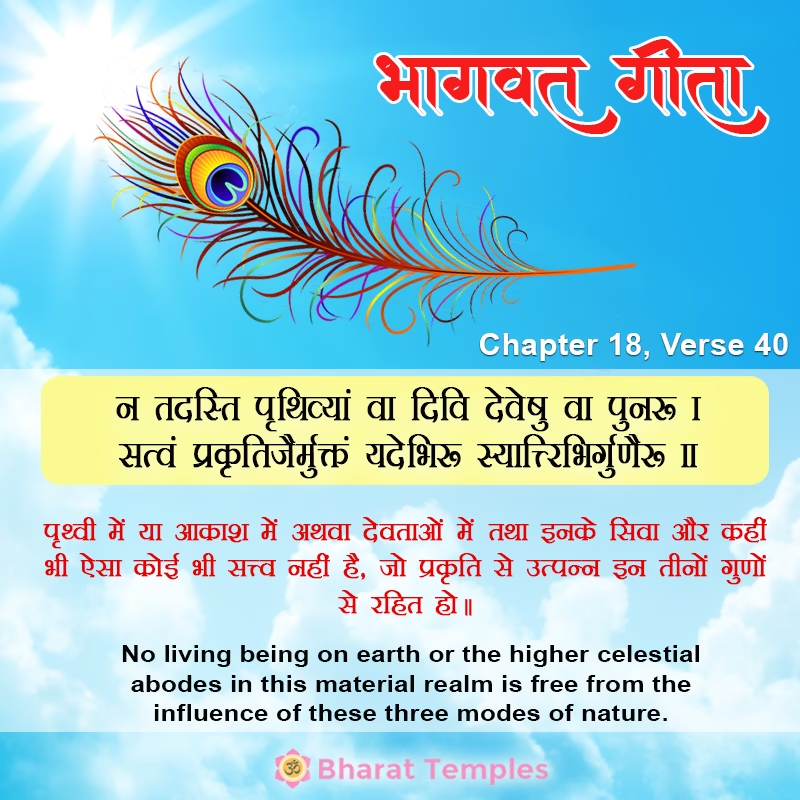
न तदस्ति पृथिव्यां वा दिवि देवेषु वा पुन: |
सत्वं प्रकृतिजैर्मुक्तं यदेभि: स्यात्त्रिभिर्गुणै: ||
na tad asti pṛithivyāṁ vā divi deveṣhu vā punaḥ
sattvaṁ prakṛiti-jair muktaṁ yad ebhiḥ syāt tribhir guṇaiḥ
भावार्थ:
पृथ्वी में या आकाश में अथवा देवताओं में तथा इनके सिवा और कहीं भी ऐसा कोई भी सत्त्व नहीं है, जो प्रकृति से उत्पन्न इन तीनों गुणों से रहित हो॥40॥
Translation
No living being on earth or the higher celestial abodes in this material realm is free from the influence of these three modes of nature.
English Translation Of Sri Shankaracharya’s Sanskrit Commentary By Swami Gambirananda
18.40 Na asti, there is no; tat, such; sattvam, entity, living creatures like men and others, or non-living things; prthivyam, in the world; va punah, or, again; an entity devesu, among the gods; divi, in heaven; yat, which; syat, can be [-this is connected with the preceding portion ‘na tat, there is no such (entity)’-]; muktam, free; hih, from these; trubhih, three; gunaih, gunas, sattva etc.; prakrti-jaih, born of Nature.
It has been said that the entire transmigratory state together with its roots, characterized by action, agent and resuls-consisting of the gunas, sattva, rajas and tamas-, and projected by ignorance, is an evil. And this also has been said through the imagery of the Tree in the verse, ‘৷৷.which has its roots upward’ etc. (15.1). It has been further said that, ‘after felling that (Tree), with the strong sword of detachment, thereafter, that State has to be sought for’ (15.3-4). And, as to that, since all things consist of the three gunas, there arises the impossibility of the eradication of the cause of worldly existence. Hence, it has to be shown how it can be eradicated. Besides, the purport of the scripture Gita has to be summed up, and it has also to be shown that the import of all the Vedas and the Smrtis, which must be put into practice by those who long for the Goal of human life, is verily this much. Hence begin the verses, ‘The duties of the Brahmanas, the Ksatriyas and the Vaisyas৷৷.’, etc.
Recent Posts

Shri Kaamkoteeshwar Mandir, Varanasi – History & Significance
In the heart of Kashi, the eternal city of Lord Shiva, where the Ganges flows with celestial grace, stands the Shri Kaamkoteeshwar Mandir. This sacred Sannidhi is not merely a temple but a profound spiritual bridge between the Northern…

ओ सांवरे तूने ही मुझको संभाला – Lyrics & Meaning
ओ सांवरे तूने ही मुझको संभाला – A Prayer to Shyam Origin & Spiritual Essence Why This Bhajan Resonates Devotees chant this when overwhelmed by life’s storms—the refrain ‘तूने ही मुझको संभाला’ is the soul’s sigh of relief: “You…

कथा ये है महाराज मेरे की – Lyrics & Meaning
कथा ये है महाराज मेरे की छत्रपति संभाजी महाराज – A Prayer to Chhatrapati Sambhaji Maharaj Origin & Spiritual Essence Why This Bhajan Resonates Devotees chant this when their spirit feels tested—its powerful refrain “महाराज मेरे” is a soul’s…

Rigveda Samhita Yathartha Anuvada (ऋग्वेद संहिता यथार्थ अनुवाद) – Complete Set with Anvayartha & Hindi/English Translation
The Rigveda is the oldest surviving scripture of humanity and the foundational text of Sanātana Dharma. For serious students, scholars, UPSC aspirants studying ancient Indian history, Sanskrit learners, and spiritual seekers, a precise and grammatically structured translation is indispensable.…

आना भी अकेला है जाना भी अकेला है – Lyrics & Meaning | BharatTemples
आना भी अकेला है जाना भी अकेला है – A Prayer to the Divine Witness Origin & Spiritual Essence Why This Bhajan Resonates Devotees turn to this bhajan in moments of deep reflection—when life’s attachments begin to ache. The…

माता शेरावाली के द्वार जो भी जाता है – Lyrics & Meaning
माता शेरावाली के द्वार जो भी जाता है – A Prayer to Maa Sherawali Origin & Spiritual Essence Why This Bhajan Resonates Devotees turn to this bhajan in times of fear or uncertainty—its promise that no one leaves Maa’s…

मार लेना सपणी उबार लेणा भवरा – Lyrics & Meaning
मार लेना सपणी उबार लेणा भवरा – A Prayer to the Divine Beloved Origin & Spiritual Essence Why This Bhajan Resonates Devotees chant this in moments of deep vulnerability—its cry of “मार लेना सपणी, उबार लेणा भवरा” is the…

हमें श्याम सुंदर भरोसा तुम्हारा – Lyrics & Meaning
हमें श्याम सुंदर भरोसा तुम्हारा – A Prayer to Shyam Sundar Origin & Spiritual Essence Why This Bhajan Resonates Devotees chant this when feeling alone—its refrain ‘de do sahara’ is the soul’s cry for divine support. Lyrics in Hindi…

Mere Satguru Ne Di Thi Davai Lyrics in Hindi & Meaning
Mere Satguru Ne Di Thi Davai: Invoking the Guru’s Liberating Wisdom This soul-stirring bhajan venerates the Satguru (True Spiritual Master) as the divine physician who dispenses the only remedy for life’s deepest sufferings. Composed by Sant Karmaveer Tufani, it…

Janm Diyo Thari Maa Dukh Dekhiyo Lyrics in Hindi & Meaning
जन्म दियो थारी माँ दुख देखियो (Maa’s Grief Upon Birthing You) This soul-stirring Chetavani Bhajan (admonitory hymn) is addressed to the Divine Mother (Maa) – a call for repentance when children forget their filial duties in the dark age…