
Contents
Introduction & Spiritual Essence
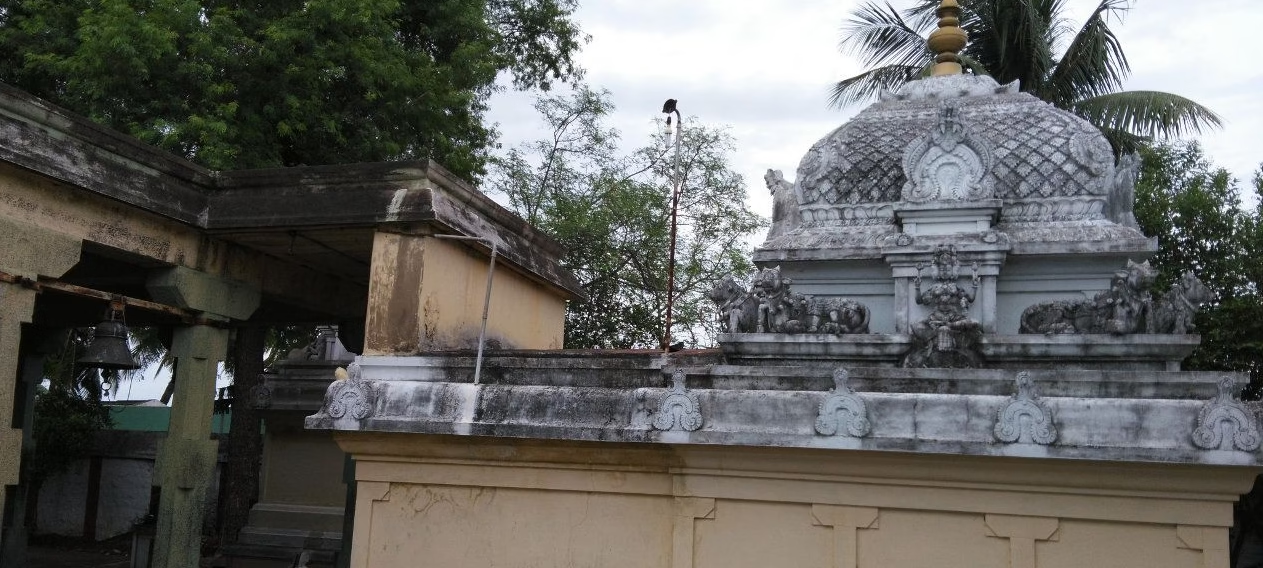
The Sri Agastheeswarar Temple in Kiliyanur, near Pondicherry, stands as a timeless testament to Shaivism, radiating spiritual energy for over fifteen centuries. Dedicated to Lord Shiva, worshipped here as Sri Agastheeswarar, the presiding deity is a Swayambhu (self-manifested) Lingam. This ancient shrine is deeply revered by devotees seeking liberation from ancestral burdens and spiritual purification.
Phalaśruti: The Spiritual Benefits
Devotees flock to this sacred abode to perform rites for their forefathers, believing that prayers here alleviate Pitra Dosha (ancestral karma). The sanctum’s energy is said to cleanse the mind and soul, facilitating a direct connection with the divine consciousness. Worshipping Lord Agastheeswarar is traditionally associated with removing obstacles in one’s path and bestowing longevity and prosperity upon the devotee.
Historical Origins & Scriptural Legend
According to temple records and local historical references, this shrine is approximately 1500 years old, firmly rooting its origins in the glorious Chola period. The architectural style and inscriptions found within the complex bear the hallmark of early Chola craftsmanship.
Connection to the Chola Dynasty
The region has a distinct historical link to the Chola lineage. The term “Killi” is recognized as a surname or title used by Chola kings. Historical texts mention monarchs such as King Nedungkilli and King Killivalavan. It is widely believed that the village name “Kiliyanur” evolved from its direct association with these dynastic rulers, signifying the area’s royal patronage in ancient times.
The Legend of Sage Agastya
Tradition holds that the Moolavar (primary deity) was installed and initially worshiped by the revered Sage Agasthiyar (Agastya). It is said that the sage performed intense penance at this very spot to appease Lord Shiva. Pleased by his devotion, the Lord manifested as a Lingam. Consequently, the deity was named Sri Agastheeswarar in honor of the sage.
Architectural Marvels
While specific ASI or UNESCO status documentation for this smaller shrine may be limited compared to mega-temples, its architecture is a pure representation of Dravidian temple artistry. The structure adheres to the principles of Vastu Shastra, oriented to harness cosmic energies.
The temple features a modest but sturdy Rajagopuram (gateway tower) leading into the Prakaram (outer courtyard). The Sanctum Sanctorum is designed to focus devotee attention entirely on the Swayambhu Lingam. The pillars and walls, though aged, carry intricate carvings depicting Shaivite mythology and celestial beings.
Photo Gallery

Darshan & Ritual Logistics
To ensure a smooth spiritual experience, devotees are advised to plan their visit according to the temple’s daily schedule. Note that timings may vary slightly during festivals.
Daily Timings
| Session | Timing |
|---|---|
| Morning Darshan | 6:00 AM – 12:00 PM |
| Afternoon Closure | 12:00 PM – 4:00 PM |
| Evening Darshan | 4:00 PM – 8:30 PM |
Key Sevas & Online Booking
Standard Sevas include Abhishekam (ritual bathing of the deity) and Archana (recitation of names). While this ancient temple operates largely on traditional lines, formal online booking for specific rituals may not be available directly through a dedicated temple website. Devotees are recommended to contact the temple administration using the provided contact number for special arrangements or check third-party platforms like Arulmigu official portals if linked to the state HR&CE department.
2026 Festival Calendar
- Shivaratri: February 26, 2026 (Major annual celebration with night-long vigil).
- Pradosham: Bi-monthly (13th day after New Moon/Full Moon) – 6:30 PM special darshan.
- Arudra Darshan: December 2026 (Date varies based on Tamil Calendar) – Celebrates Lord Nataraja.
- Navaratri: September 22 – October 1, 2026 (Special decorations for Devi).
Practical Visitor Guidance
Ensuring a respectful and comfortable visit requires adherence to local customs and practical planning.
- Dress Code: Traditional attire is mandatory. Men should wear Dhoti or trousers with a shirt; women should wear Saree, Salwar Kameez, or long skirts. Avoid shorts and sleeveless tops.
- Photography: Photography is strictly prohibited inside the Sanctum Sanctorum. Discretion is advised in prayer halls.
- Mobile & Lockers: Mobile phones should be switched to silent mode. As this is a smaller rural temple, dedicated locker facilities may not be available; travel light.
- Accessibility: The temple complex is compact. The inner sanctum requires climbing two steps. Wheelchair access to the outer precincts is possible, but inner sanctum access may be difficult due to architectural heritage constraints.
Crowd Management & Seasonal Advice
Best Hours: Mornings between 6:30 AM and 8:00 AM are ideal for a peaceful darshan. Evenings around 5:00 PM are less crowded.
Seasonal Tips:
- Summer (May – July): Temperatures can soar. Carry a water bottle and wear a hat.
- Monsoon (Oct – Dec): Light rain is common. Be cautious on the village roads leading to the temple.
Pilgrimage Connectivity
How to Reach
Location: Kiliyanur, Villupuram District, Tamil Nadu.
- By Road: The temple is approximately 25 km from Pondicherry on the Pondicherry to Tindivanam route (NH 332 / ECR extension). After crossing Morattandi, take the right diversion toward Kiliyanur village. Travel roughly 3 km to reach the shrine.
- By Rail: The nearest major railway junction is Tindivanam (approx. 20 km). From there, local taxis or buses are available.
- By Air: Pondicherry Airport (50 mins drive) or Chennai International Airport (2 hours drive) are the nearest air connectivity hubs.
Nearby Sacred Sites (Pilgrimage Circuit)
- Thiruvakkarai Fossil Park & Temple: Located roughly 20 km away, famous for the fossil park and the Chandramouliswarar temple.
- Vanakkamagalam Temple: A serene shrine en route to Tindivanam.
- Thiruvannamalai (Arunachaleswarar Temple): About 65 km from Kiliyanur, one of the Pancha Bhoota Stalas (Fire Element).
Address & Contact
Sri Agastheeswarar Temple
Thiru Kiliyanur, Thindivanam Taluk,
Villupuram District, Tamil Nadu – 604001.
Contact: 09976440754
Frequently Asked Questions (FAQ)
1. Is there a VIP darshan entry available?
As a heritage village temple, there is no formal VIP entry system like in mega-temples. However, donating to the temple maintenance funds or contacting the priest in advance can sometimes facilitate a smoother viewing experience during crowded hours.
2. What is the significance of the name Kiliyanur?
The name is historically linked to the Chola kings who bore the title “Killi” (e.g., Killivalavan). The suffix “ur” means village, indicating its royal heritage in the Chola dynasty.
3. Are there food facilities available at the temple?
Small local shops near the village bus stand offer snacks. For a full meal, it is advisable to eat at Pondicherry or Tindivanam before traveling to Kiliyanur, as dedicated temple canteens are not typically operational here.
4. Can we perform last rites (Shraddha) here?
Yes, given the temple’s association with ancestral karma cleansing, many families visit to perform Shraddha rituals. It is recommended to bring the required materials and coordinate with the local priest.
5. What is the best route from Chennai?
Take the ECR (East Coast Road) towards Pondicherry. After crossing the border into Tamil Nadu (from Chennai), continue towards Tindivanam. It is a scenic coastal and countryside drive.
Recent Posts

Shri Kaamkoteeshwar Mandir, Varanasi – History & Significance
In the heart of Kashi, the eternal city of Lord Shiva, where the Ganges flows with celestial grace, stands the Shri Kaamkoteeshwar Mandir. This sacred Sannidhi is not merely a temple but a profound spiritual bridge between the Northern…

ओ सांवरे तूने ही मुझको संभाला – Lyrics & Meaning
ओ सांवरे तूने ही मुझको संभाला – A Prayer to Shyam Origin & Spiritual Essence Why This Bhajan Resonates Devotees chant this when overwhelmed by life’s storms—the refrain ‘तूने ही मुझको संभाला’ is the soul’s sigh of relief: “You…

कथा ये है महाराज मेरे की – Lyrics & Meaning
कथा ये है महाराज मेरे की छत्रपति संभाजी महाराज – A Prayer to Chhatrapati Sambhaji Maharaj Origin & Spiritual Essence Why This Bhajan Resonates Devotees chant this when their spirit feels tested—its powerful refrain “महाराज मेरे” is a soul’s…

Rigveda Samhita Yathartha Anuvada (ऋग्वेद संहिता यथार्थ अनुवाद) – Complete Set with Anvayartha & Hindi/English Translation
The Rigveda is the oldest surviving scripture of humanity and the foundational text of Sanātana Dharma. For serious students, scholars, UPSC aspirants studying ancient Indian history, Sanskrit learners, and spiritual seekers, a precise and grammatically structured translation is indispensable.…

आना भी अकेला है जाना भी अकेला है – Lyrics & Meaning | BharatTemples
आना भी अकेला है जाना भी अकेला है – A Prayer to the Divine Witness Origin & Spiritual Essence Why This Bhajan Resonates Devotees turn to this bhajan in moments of deep reflection—when life’s attachments begin to ache. The…

माता शेरावाली के द्वार जो भी जाता है – Lyrics & Meaning
माता शेरावाली के द्वार जो भी जाता है – A Prayer to Maa Sherawali Origin & Spiritual Essence Why This Bhajan Resonates Devotees turn to this bhajan in times of fear or uncertainty—its promise that no one leaves Maa’s…

मार लेना सपणी उबार लेणा भवरा – Lyrics & Meaning
मार लेना सपणी उबार लेणा भवरा – A Prayer to the Divine Beloved Origin & Spiritual Essence Why This Bhajan Resonates Devotees chant this in moments of deep vulnerability—its cry of “मार लेना सपणी, उबार लेणा भवरा” is the…

हमें श्याम सुंदर भरोसा तुम्हारा – Lyrics & Meaning
हमें श्याम सुंदर भरोसा तुम्हारा – A Prayer to Shyam Sundar Origin & Spiritual Essence Why This Bhajan Resonates Devotees chant this when feeling alone—its refrain ‘de do sahara’ is the soul’s cry for divine support. Lyrics in Hindi…

Mere Satguru Ne Di Thi Davai Lyrics in Hindi & Meaning
Mere Satguru Ne Di Thi Davai: Invoking the Guru’s Liberating Wisdom This soul-stirring bhajan venerates the Satguru (True Spiritual Master) as the divine physician who dispenses the only remedy for life’s deepest sufferings. Composed by Sant Karmaveer Tufani, it…

Janm Diyo Thari Maa Dukh Dekhiyo Lyrics in Hindi & Meaning
जन्म दियो थारी माँ दुख देखियो (Maa’s Grief Upon Birthing You) This soul-stirring Chetavani Bhajan (admonitory hymn) is addressed to the Divine Mother (Maa) – a call for repentance when children forget their filial duties in the dark age…