
Contents
- 1 Definitive Pilgrimage Guide: Lakshmi Narasimhar Temple, Narasingapuram
Definitive Pilgrimage Guide: Lakshmi Narasimhar Temple, Narasingapuram
By Bharat Temples Heritage Team | Updated: January 2026
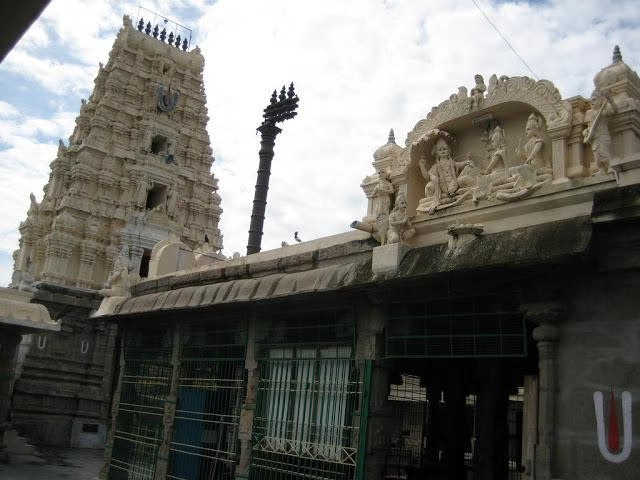
Welcome to the sacred village of Narasingapuram, home to the ancient Lakshmi Narasimhar Temple. Steeped in the spiritual legacy of the Pallavas and expanded during the Vijayanagara era, this temple is a unique Prarthana Sthalam (place of prayer) where Lord Narasimha is worshipped in a peaceful Shantha Swaroopi (calm form), seated with Goddess Lakshmi on his lap.
Primary Deity: Lakshmi Narasimha (Swayambhu)
Age: ~1400 Years (Early Pallava Period)
Location: Narasingapuram, Thiruvallur District
Praying For: Removal of Naga Dosham, Debt Relief, Health
1. Introduction & Spiritual Essence
The temple is dedicated to Lakshmi Narasimhar, an avatar of Lord Vishnu. Unlike the fierce, Ugra Narasimha often depicted in mythology, the deity here is revered as Varaprasadi—the granter of boons—and radiates compassion.
Phalaśruti: Why Devotees Visit
According to temple scriptures and local tradition, this shrine holds immense power for devotees seeking relief from specific astrological afflictions:
- Naga Dosham: The Garuda (vehicle of Vishnu) shrine here features 16 types of snake carvings, making it a potent site for absolving ancestral curses related to serpents.
- Debt & Financial Health: It is believed that worshipping here removes bad debts and financial stagnation.
- Health & Horoscope: Those with afflictions in the 6th house of their horoscope (health issues, enemies) are advised to worship here for nine consecutive Swathi Nakshatrams to attain complete bliss.
2. Historical Origins & Scriptural Legend
The history of Lakshmi Narasimhar Temple is a timeline of South Indian dynastic patronage.
Pallava Roots & Inscriptions
Temple records date the original Utsava Moorthy (processional deity) back to the early Pallava period (6th – 8th Century AD), making the temple approximately 1400 years old. Archaeologists have discovered inscriptions in the Andal shrine basement belonging to the reigns of Kulothunga Chozha I and Vikrama Chozha I (11th–12th Century). These Tamil inscriptions detail land grants and the construction of the Madurantaka Vinnagar temple.
The Vijayanagara Era
While the temple survived the Saivism dominance of the Chola era, it flourished during the Vijayanagara Nayak period. The Vijayanagara emperors patronized Vaishnavism, granting villages for the temple’s development. The architectural elements seen today largely reflect this era of grand resurgence.
Modern Reverence
The temple continues to attract spiritual leaders. In February 2003, Sri Narayana Yatindra Maha Desikan, the 45th Jeeyar of the Ahobila Math, visited and offered Mangalasasanam (special worship) to the Lord.
3. Architectural Marvels
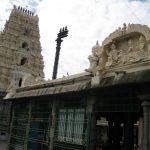
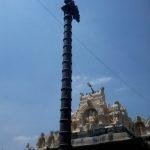
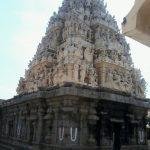
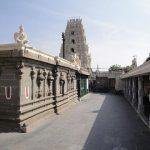
The temple is a fine specimen of Dravidian architecture with significant influences from the Vijayanagara style.
Key Structural Features
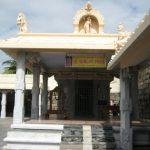
- The Mandapas: The temple features a series of pillared halls (Mandapas) adorned with sculptures depicting scenes from the Puranas. The pillars are carved with distinct geometric motifs.
- Sanctum Sanctorum: The inner sanctum houses the deity in a seated posture, reflecting the Shantha Swaroopi.
- Garuda Shrine: A notable feature is the Garuda shrine, which features 16 types of snake sculptures, a rare iconographic element tied to the temple’s power to cure Naga Dosham.
4. Darshan & Ritual Logistics (2026 Schedule)
Planning your visit requires attention to the daily rituals and specific festivals.
Daily Temple Timings
| Session | Timings |
|---|---|
| Morning Darshan | 07:30 AM – 12:00 PM |
| Evening Darshan | 04:30 PM – 08:00 PM |
Key Sevas (Rituals)
- Thirumanjanam: Abhishekam (sacred bathing) of the deity. Highly recommended in the month of Karthigai.
- Archana: Recitation of names. Specific prayers are available for removing Naga Dosham and financial troubles.
- Rama Narasimha Homam: A rare fire ritual combining the energies of Rama and Narasimha.
Online Seva Booking (2026)
Currently, the temple administration prefers direct contact for special Sevas. However, for major festivals, special arrangements can be made via phone.
- Call the administration at +91 94425 85638 to reserve a slot for Thirumanjanam.
- Donations for Anna Daanam (free food) can be transferred via the bank details provided at the temple office.
2026 Major Festival Dates
- Narasimha Jayanthi: April 26, 2026 (Chitrai Month)
- Rama Navami: April 6, 2026
- Adi Pooram: July 28, 2026
- Karthigai Deepam: Special Thirumanjanam (November 2026 dates based on the Tamil Calendar)
5. Practical Visitor Guidance
To ensure a serene experience, please adhere to the following guidelines.
Rules & Etiquette
- Dress Code: Traditional attire is mandatory. Men: Dhoti or trousers with a shirt. Women: Saree, Salwar Kameez, or long skirts.
- Photography: Photography is generally permitted in the outer courtyards but prohibited inside the sanctum sanctorum.
- Mobile Phones: Please switch devices to silent mode. Many temples offer free locker facilities; use them if available to maintain the sanctity of the shrine.
- Accessibility: The temple is accessible for seniors, though the inner sanctum has a small step.
Crowd Management & Seasonal Advice
- Best Time to Visit: Weekday mornings (Tuesday and Friday are auspicious).
- Summer (April – June): Temperatures in Thiruvallur can exceed 38°C. Carry a water bottle and an umbrella.
- Monsoon: The region is accessible, but carry a raincoat.
6. Pilgrimage Connectivity
How to Reach
The temple is located in Narasingapuram, approximately 55 km from Chennai.
- By Air: Chennai International Airport (MAA) is the nearest airport, located about 54 km away.
- By Train: The nearest railway station is Kadambathur (approx. 12 km). It lies on the Chennai Central – Arakkonam suburban route. Taxis/Autos are available at the station.
- By Road:
- Route from Chennai (Poonamallee): Take the Chennai-Bangalore NH48. Turn right at Thandalam junction (towards Arakkonam). Proceed to Perambakkam and take the left fork towards the temple.
- Bus Services: Buses are available from Koyambedu (CMBT) – Nos 91B, 138B, 86A, 107, 107A.
Nearby Sacred Sites (Pilgrimage Circuit)
- Sriperumbudur (20 km): The birthplace of Sri Ramanujacharya and a major Divyadesam site.
- Thiruvallur (20 km): Home to the Veeraraghava Swamy Temple, a great Healer God (Vaidya Narayana).
- Kadambathur (12 km): Famous for the Adikesava Perumal Temple located right at the railway station.

7. Frequently Asked Questions (FAQ)
1. Is there a VIP or Special Entry Darshan available?
Yes, the temple administration offers special entry for senior citizens and physically challenged devotees. For VIP darshan, please coordinate with the temple executive officer at the entrance.
2. Are there accommodation facilities nearby?
There are no guest houses inside the temple. However, lodges and guest houses are available in Sriperumbudur (20 km) and Thiruvallur (20 km). For a spiritual experience, some devotees choose to stay in Chennai and drive down for a day trip.
3. Can we perform Shradh or Tharpanam here?
While this is primarily a Vishnu temple focused on Naga Dosha remedies, specific prayers for ancestors can be performed. It is advisable to consult the temple priest (Hotri) beforehand for specific dates.
4. What is the exact postal address for delivery/offerings?
Lakshmi Narasimhar Temple, Narasingapuram Post, Perambakkam Via, Thiruvallur District – 631 402.
5. Is the temple open on all days?
Yes, the temple remains open throughout the year, except for annual maintenance days (usually announced a week in advance).
Contact Details
Lakshmi Narasimhar Temple
Narasingapuram Po.,
Perambakkam Via,
Thiruvallur District – 631 402
Phone: +91 44 2765 5164
Mobile: +91 94425 85638 / 94443 51026 / 94871 94649
Email: narasingapuram2008@gmail.com
Recent Posts

Shri Kaamkoteeshwar Mandir, Varanasi – History & Significance
In the heart of Kashi, the eternal city of Lord Shiva, where the Ganges flows with celestial grace, stands the Shri Kaamkoteeshwar Mandir. This sacred Sannidhi is not merely a temple but a profound spiritual bridge between the Northern…

ओ सांवरे तूने ही मुझको संभाला – Lyrics & Meaning
ओ सांवरे तूने ही मुझको संभाला – A Prayer to Shyam Origin & Spiritual Essence Why This Bhajan Resonates Devotees chant this when overwhelmed by life’s storms—the refrain ‘तूने ही मुझको संभाला’ is the soul’s sigh of relief: “You…

कथा ये है महाराज मेरे की – Lyrics & Meaning
कथा ये है महाराज मेरे की छत्रपति संभाजी महाराज – A Prayer to Chhatrapati Sambhaji Maharaj Origin & Spiritual Essence Why This Bhajan Resonates Devotees chant this when their spirit feels tested—its powerful refrain “महाराज मेरे” is a soul’s…

Rigveda Samhita Yathartha Anuvada (ऋग्वेद संहिता यथार्थ अनुवाद) – Complete Set with Anvayartha & Hindi/English Translation
The Rigveda is the oldest surviving scripture of humanity and the foundational text of Sanātana Dharma. For serious students, scholars, UPSC aspirants studying ancient Indian history, Sanskrit learners, and spiritual seekers, a precise and grammatically structured translation is indispensable.…

आना भी अकेला है जाना भी अकेला है – Lyrics & Meaning | BharatTemples
आना भी अकेला है जाना भी अकेला है – A Prayer to the Divine Witness Origin & Spiritual Essence Why This Bhajan Resonates Devotees turn to this bhajan in moments of deep reflection—when life’s attachments begin to ache. The…

माता शेरावाली के द्वार जो भी जाता है – Lyrics & Meaning
माता शेरावाली के द्वार जो भी जाता है – A Prayer to Maa Sherawali Origin & Spiritual Essence Why This Bhajan Resonates Devotees turn to this bhajan in times of fear or uncertainty—its promise that no one leaves Maa’s…

मार लेना सपणी उबार लेणा भवरा – Lyrics & Meaning
मार लेना सपणी उबार लेणा भवरा – A Prayer to the Divine Beloved Origin & Spiritual Essence Why This Bhajan Resonates Devotees chant this in moments of deep vulnerability—its cry of “मार लेना सपणी, उबार लेणा भवरा” is the…

हमें श्याम सुंदर भरोसा तुम्हारा – Lyrics & Meaning
हमें श्याम सुंदर भरोसा तुम्हारा – A Prayer to Shyam Sundar Origin & Spiritual Essence Why This Bhajan Resonates Devotees chant this when feeling alone—its refrain ‘de do sahara’ is the soul’s cry for divine support. Lyrics in Hindi…

Mere Satguru Ne Di Thi Davai Lyrics in Hindi & Meaning
Mere Satguru Ne Di Thi Davai: Invoking the Guru’s Liberating Wisdom This soul-stirring bhajan venerates the Satguru (True Spiritual Master) as the divine physician who dispenses the only remedy for life’s deepest sufferings. Composed by Sant Karmaveer Tufani, it…

Janm Diyo Thari Maa Dukh Dekhiyo Lyrics in Hindi & Meaning
जन्म दियो थारी माँ दुख देखियो (Maa’s Grief Upon Birthing You) This soul-stirring Chetavani Bhajan (admonitory hymn) is addressed to the Divine Mother (Maa) – a call for repentance when children forget their filial duties in the dark age…