
Contents
- 1 Vadamalleeswarar Temple, Oragadam: The Definitive Pilgrimage Guide
Vadamalleeswarar Temple, Oragadam: The Definitive Pilgrimage Guide
1. Introduction & Spiritual Essence
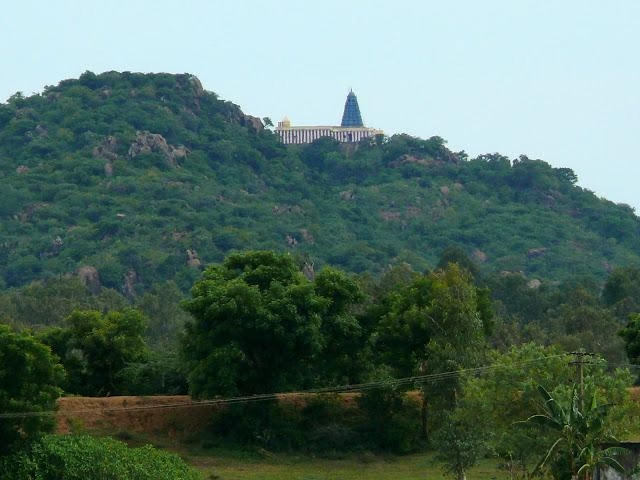
Perched atop a serene hillock in the village of Oragadam, Kanchipuram District, the Vadamalleeswarar Temple stands as a timeless monument to the Dravidian spirit. This ancient sanctuary, often described as a hidden gem of Tamil Nadu, is dedicated to Lord Shiva (Vadamalleeswarar) and his consort Goddess Parvati (Amrudhavalleeswari). Unlike the bustling temple cities nearby, this shrine offers a profound sense of tranquility, nestled amidst a sprawling Banyan tree and a sacred temple tank.
The Phalaśruti: Why Devotees Visit
According to Hindu scriptures, the Phalaśruti (spiritual benefits) of worshipping at Vadamalleeswarar Temple are vast. The presiding deity is a Swayambhu Lingam (self-manifested), believed to possess immense spiritual energy. Devotees visit to:
- Cleanse Ancestral Karma: Performing rituals here is believed to absolve sins and grant peace to departed ancestors, particularly through the worship of Lord Brahma, who is uniquely enshrined here.
- Attain Spiritual Wisdom: The temple houses shrines for the three divine energies—Iccha Shakthi (Power of Desire), Gnana Shakthi (Power of Knowledge), and Kriya Shakthi (Power of Action). Worshipping these forms helps balance material desires with spiritual growth.
- Overcome Obstacles: The name “Vadamalleeswarar” implies the Lord of the Vadamalli (Safflower) flower, symbolizing the removal of life’s thorns and obstacles.
2. Historical Origins & Scriptural Legend
The Pallava Legacy
Historical records and archaeological evidence suggest that the Vadamalleeswarar Temple was constructed during the 7th Century AD. It was built by the Pallava King Nandivarman II (reigned 731–796 AD), a patron of arts and architecture responsible for many structures in the Kanchipuram region. The temple underwent significant renovations during the reign of Rajaraja Chola (10th Century), adding to its grandeur.
Scriptural & Oral Traditions
While specific references in the major Puranas are sparse, the Sthala Purana (local legend) is deeply revered by the local populace. Tradition holds that Lord Shiva manifested here to bless the Naalvar (four devoted saints) who were ardent followers of the Shaiva Siddhanta philosophy.
A unique aspect of this temple is the shrine dedicated to Lord Brahma. In most Hindu temples, a separate shrine for Brahma is rare. Legend says that Brahma worshipped Shiva here to attain the power of creation, making this a pilgrimage site for resolving issues related to lineage and progeny.
3. Architectural Marvels
The Vadamalleeswarar Temple is a classic example of Dravidian Architecture, characterized by its towering gateways (Gopurams) and intricate sculptural details. Though smaller in scale compared to the Kailasanathar Temple in Kanchipuram, its design adheres to strict Vastu Shastra principles.
- The Sanctum (Garbhagriha): The central shrine houses the Swayambhu Lingam. The walls of the sanctum are adorned with panels depicting various forms of Shiva and scenes from mythology.
- The Mandapa: A spacious pillared hall allows devotees to gather for prayers and rituals. The pillars feature carved sculptures of lions and divine beings, typical of Pallava art.
- Rare Sculptures: Aside from the main deities, the temple complex features a massive rock-cut statue of Lord Shiva in a seated posture. Notably, the shrines for the three Shakthis (Desire, Knowledge, Action) are aligned in a unique triangular formation, representing the trinity of human capabilities.
- Natural Setting: The temple is harmoniously integrated with nature. A large Banyan tree at the base and a lotus pond (
- Preserving Heritage: The temple is a protected monument by the Archaeological Survey of India (ASI), ensuring the structural integrity of the ancient stone work.
4. Darshan & Ritual Logistics (2026 Guide)
The temple is open for a limited number of hours daily, managed by a dedicated priest. For 2026, devotees are advised to check specific festival timings, as they vary from standard hours.
Daily Timings
| Session | Timing | Ritual Activity |
|---|---|---|
| Morning | 07:00 AM – 11:00 AM | Abhishekam, Archana, Special Poojas |
| Afternoon | 11:00 AM – 04:00 PM | Temple Closed (Rest Period) |
| Evening | 04:00 PM – 06:00 PM | Deepa Aradhana, Evening Aarti |
Note: The priest visits early morning and returns only in the evening. It is strictly advised not to visit between 11:00 AM and 4:00 PM.
Seva Booking & Rituals
While this is a heritage temple, the Kanchipuram Devaswom Board manages specific rituals. For 2026, devotees can book the following:
- Abhishekam (Ritual Bathing): Performed with milk, honey, and sandalwood paste.
- Archana (Chanting): Recitation of hymns dedicated to Vadamalleeswarar.
- Special Pooja for Ancestors: Dedicated rituals at the Brahma shrine.
Online Booking: While physical bookings are accepted at the temple office, preliminary inquiries can be made via the Kanchipuram Devaswom Board website. (Search: “Online Seva Booking Kanchipuram Temples”).
2026 Festival Calendar
- Pradosham: Every 13th and 28th day of the lunar month (6:00 PM).
- Shivaratri (March 2026): Special midnight darshan and Abhishekam. Extended hours (6:00 PM – 6:00 AM).
- Arudra Darshan (January 2026): Celebrating the cosmic dance of Shiva.
- Navaratri (September/October 2026): Daily homams and alankaram for Goddess Amrudhavalleeswari.
5. Practical Visitor Guidance
Dress Code & Etiquette
As a traditional South Indian temple, modesty is paramount. Men should wear veshti (dhoti) or formal trousers with a shirt. Women are encouraged to wear sarees, half-sarees, or salwar kameez. Avoid shorts, leggings, or torn clothing.
Photography & Lockers
Photography is restricted inside the inner sanctum (Garbhagriha). Mobile cameras are allowed in the outer praharam (corridor) but strictly prohibited during the main Aarti. There are no automated lockers; however, the temple office provides a secure deposit facility for bags and footwear.
Crowd Management & Accessibility
- Best Hours: Weekday mornings (07:00 AM – 08:30 AM) offer the most peaceful darshan. Weekends see a spike in local visitors.
- Seasonal Advice: Kanchipuram summers (April–June) are hot; carry a water bottle and an umbrella. The monsoon (October–December) brings lush greenery but slippery steps.
- Accessibility: The temple is located on a hillock. While a motorable road exists near the base, visitors must climb a flight of ancient stone steps to reach the sanctum. This may be challenging for those with severe mobility issues.
6. Pilgrimage Connectivity
Oragadam is strategically located near the bustling industrial hub but retains its rural charm.
How to Reach
- By Air: The nearest airport is Chennai International Airport (MAA), approximately 65 km away.
- By Rail: The nearest railway junction is Chengalpattu (10 km). From there, auto-rickshaws and local buses are available to Oragadam.
- By Road: The temple is located 9 km from Chengalpattu on the Chengalpattu–Thirukazhukundram Road. It is accessible via NH 32 (East Coast Road). Look for the signboard pointing to the temple (often obscured by posters, so keep a GPS map ready).
Nearby Sacred Sites (Pilgrimage Circuit)
Extend your journey by visiting these nearby spiritual destinations:
- Thirukazhukundram (Vedagiriswarar Temple): A famous hill temple just 4 km away, known for the daily visit of two eagles.
- Kailasanathar Temple (Kanchipuram): A masterpiece of Pallava architecture, located 20 km away.
- Ekambareswarar Temple (Kanchipuram): One of the Pancha Bhoota Stalas (Earth element), 25 km away.
7. Frequently Asked Questions
Is there a VIP darshan entry at Vadamalleeswarar Temple?
Due to the temple’s heritage nature and smaller size, there is no formal VIP entry system. However, approaching the temple priest (Gurukkal) for a special Abhishekam allows for closer access to the deity.
What is the significance of the Lotus Pond near the temple?
The pond located opposite the temple is considered sacred. Local legends suggest the water has healing properties. It is also the primary water source for the local village, symbolizing the temple’s role in community sustenance.
Can we perform Shradh ceremonies here?
Yes, the temple is particularly auspicious for Shradh and Tharpanam rituals dedicated to ancestors, especially due to the presence of the rare Brahma shrine.
Are there hotels available in Oragadam?
Accommodation is limited in Oragadam village itself. It is recommended to stay in Chengalpattu or Kanchipuram, which offer a wide range of hotels and choultrys.
What are the temple timings during Tamil Festivals?
During major festivals like Thai Pongal or Deepavali, the temple opens earlier (around 5:30 AM) and closes later (around 8:00 PM). Please check with the local priest before visiting.
Editor’s Note: bharattemples.com is dedicated to preserving the sanctity of our heritage sites. We urge all visitors to maintain silence inside the sanctum and avoid littering the hillock premises.
Recent Posts

Shri Kaamkoteeshwar Mandir, Varanasi – History & Significance
In the heart of Kashi, the eternal city of Lord Shiva, where the Ganges flows with celestial grace, stands the Shri Kaamkoteeshwar Mandir. This sacred Sannidhi is not merely a temple but a profound spiritual bridge between the Northern…

ओ सांवरे तूने ही मुझको संभाला – Lyrics & Meaning
ओ सांवरे तूने ही मुझको संभाला – A Prayer to Shyam Origin & Spiritual Essence Why This Bhajan Resonates Devotees chant this when overwhelmed by life’s storms—the refrain ‘तूने ही मुझको संभाला’ is the soul’s sigh of relief: “You…

कथा ये है महाराज मेरे की – Lyrics & Meaning
कथा ये है महाराज मेरे की छत्रपति संभाजी महाराज – A Prayer to Chhatrapati Sambhaji Maharaj Origin & Spiritual Essence Why This Bhajan Resonates Devotees chant this when their spirit feels tested—its powerful refrain “महाराज मेरे” is a soul’s…

Rigveda Samhita Yathartha Anuvada (ऋग्वेद संहिता यथार्थ अनुवाद) – Complete Set with Anvayartha & Hindi/English Translation
The Rigveda is the oldest surviving scripture of humanity and the foundational text of Sanātana Dharma. For serious students, scholars, UPSC aspirants studying ancient Indian history, Sanskrit learners, and spiritual seekers, a precise and grammatically structured translation is indispensable.…

आना भी अकेला है जाना भी अकेला है – Lyrics & Meaning | BharatTemples
आना भी अकेला है जाना भी अकेला है – A Prayer to the Divine Witness Origin & Spiritual Essence Why This Bhajan Resonates Devotees turn to this bhajan in moments of deep reflection—when life’s attachments begin to ache. The…

माता शेरावाली के द्वार जो भी जाता है – Lyrics & Meaning
माता शेरावाली के द्वार जो भी जाता है – A Prayer to Maa Sherawali Origin & Spiritual Essence Why This Bhajan Resonates Devotees turn to this bhajan in times of fear or uncertainty—its promise that no one leaves Maa’s…

मार लेना सपणी उबार लेणा भवरा – Lyrics & Meaning
मार लेना सपणी उबार लेणा भवरा – A Prayer to the Divine Beloved Origin & Spiritual Essence Why This Bhajan Resonates Devotees chant this in moments of deep vulnerability—its cry of “मार लेना सपणी, उबार लेणा भवरा” is the…

हमें श्याम सुंदर भरोसा तुम्हारा – Lyrics & Meaning
हमें श्याम सुंदर भरोसा तुम्हारा – A Prayer to Shyam Sundar Origin & Spiritual Essence Why This Bhajan Resonates Devotees chant this when feeling alone—its refrain ‘de do sahara’ is the soul’s cry for divine support. Lyrics in Hindi…

Mere Satguru Ne Di Thi Davai Lyrics in Hindi & Meaning
Mere Satguru Ne Di Thi Davai: Invoking the Guru’s Liberating Wisdom This soul-stirring bhajan venerates the Satguru (True Spiritual Master) as the divine physician who dispenses the only remedy for life’s deepest sufferings. Composed by Sant Karmaveer Tufani, it…

Janm Diyo Thari Maa Dukh Dekhiyo Lyrics in Hindi & Meaning
जन्म दियो थारी माँ दुख देखियो (Maa’s Grief Upon Birthing You) This soul-stirring Chetavani Bhajan (admonitory hymn) is addressed to the Divine Mother (Maa) – a call for repentance when children forget their filial duties in the dark age…