
Contents
Introduction & Spiritual Essence: The Divine Sanctity of Perunagar
Amidst the ancient temple city of Kanchipuram, known as the “City of Temples,” lies the serene Perunagar Perumal Temple. A sacred abode of Lord Vishnu, this temple is a haven for devotees seeking spiritual solace and ancestral peace. Known locally as Perunagar Perumal Kovil, the temple is revered for its unique location and potent spiritual energy. The primary deity, Perunagar Perumal (a form of Vishnu), is worshipped here for granting liberation (Moksha) and removing planetary afflictions.
Phalaśruti (Spiritual Benefits): Devotees visit this temple to cleanse ancestral karma and seek blessings for familial harmony. It is believed that performing rituals here helps resolve prolonged obstacles in life and brings mental clarity. The temple holds significant importance in the Divya Desams (holy abodes of Vishnu) pilgrimage circuit, though it remains a hidden gem compared to the more famous Varadaraja Perumal Temple.
Historical Origins & Scriptural Legend
Historical Context: While the exact construction date is not documented in the provided archives, the temple’s architecture and the sanctity of Kanchipuram point to the era of the Pallava and Medieval Chola dynasties. Kanchipuram flourished as a center of theology and architecture under these rulers, who built countless shrines to honor the cosmic trinity. The temple has likely undergone renovations by later Nayak rulers, preserving the sanctity of the Garbhagriha (sanctum sanctorum).
Scriptural & Local Legends: According to temple records and local oral traditions (Sthala Purana), this region is highly associated with Lord Vishnu’s cosmic exploits. The name “Perunagar” translates to “The Great City,” signifying the divine presence of the Lord. Legend holds that Lord Brahma worshipped Vishnu here to attain balance, and the site is imbued with the energy of the Chakra (discus) weapon of Vishnu. Unlike the bustling centers, this temple offers a secluded atmosphere, allowing for deep meditation and connection with the divine.
Architectural Marvels: Dravidian Grandeur
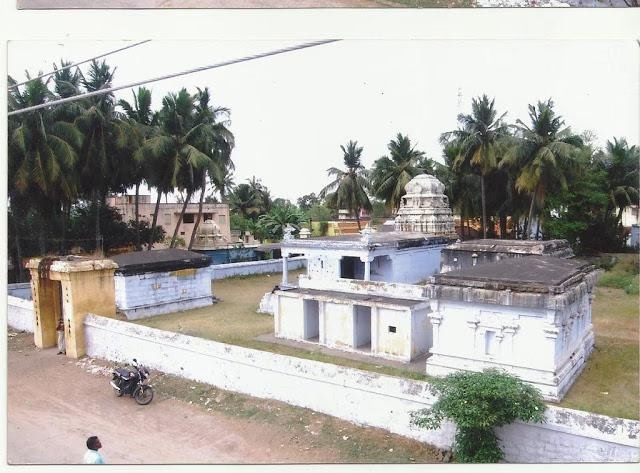
The Perunagar Perumal Temple is a classic example of the Dravidian style of architecture. The temple structure is characterized by its towering Gopuram (gateway tower) and the intricate Vimana (shrine roof) above the sanctum. While specific ASI (Archaeological Survey of India) tags may not be prominently displayed for this specific sub-shrine, the architectural elements—such as the Mandapas (pillared halls)—reflect the traditional Vastu Shastra principles employed in Kanchipuram’s temple planning.
The inner sanctum is designed to channel sound and energy, creating a resonant atmosphere during Mantras. The exterior walls feature carvings of deities and mythological scenes, typical of the Dravidian tradition, serving as a visual narrative of Hindu scriptures. The temple’s orientation aligns with the movement of the sun, ensuring natural illumination reaches the main deity during specific times of the year.
Darshan & Ritual Logistics
Visiting the Perunagar Perumal Temple is a structured spiritual experience. Below are the daily timings and key rituals. Note: Timings are subject to change during festival seasons; please verify locally before travel.
Daily Temple Timings
| Session | Timing | Activity |
|---|---|---|
| Morning | 6:00 AM – 12:00 PM | First Darshan & Abhishekam |
| Afternoon | 12:00 PM – 4:00 PM | Temple Closed (Restic Period) |
| Evening | 4:00 PM – 8:00 PM | Second Darshan & Deeparadhana |
Key Sevas & Online Booking
Devotees can participate in various Sevas (ritual services) to enhance their spiritual journey:
- Abhishekam: Ritual bathing of the deity with sacred items (milk, honey, sandalwood). Best performed on Fridays.
- Archana: Recitation of holy names. Best performed on Tuesdays.
- Vishnu Sahasranama Parayanam: Collective recitation of the 1000 names of Vishnu.
Online Booking: While many smaller temples in Kanchipuram operate on direct registration, devotees are advised to check the HRCE (Hindu Religious and Charitable Endowments) Department Tamil Nadu portal for online availability. For specific grand rituals, booking may be done at the temple office.
2026 Festival Calendar
Plan your visit around these auspicious dates to witness the temple at its vibrant peak:
- Vaikuntha Ekadashi: January 10, 2026 (Sunday) – The most significant festival for Vishnu devotees, celebrating the opening of the celestial gates.
- Brahmotsavam: May 2026 (Dates TBA based on the Tamil Calendar) – An annual festival involving the procession of the deity.
- Rama Navami: April 6, 2026 (Monday) – Celebrating the birth of Lord Rama.
- Karthigai Deepam: November 2026 – A festival of lights illuminating the temple.
Practical Visitor Guidance
To ensure a smooth darshan experience, please adhere to the following guidelines:
- Dress Code: Traditional attire is mandatory. Men should wear Dhoti or trousers with a formal shirt; women should wear Saree, Salwar Kameez, or long skirts. Avoid jeans and t-shirts.
- Photography & Mobiles: Photography is restricted inside the sanctum sanctorum. Mobile phones should be silenced; lockers are generally available near the entrance, but carrying minimal luggage is recommended.
- Accessibility: The temple features stone steps. While accessible, those with mobility issues may require assistance. Wheelchairs may not be available on-site.
- Crowd Management: Unlike the main Kanchipuram Vishnu temples, Perunagar is relatively less crowded. However, during Ekadashi and Brahmotsavam, expect significant crowds. Best hours for a peaceful darshan: 7:00 AM – 9:00 AM on weekdays.
- Seasonal Advice: Summer (April–June) in Kanchipuram is hot; carry a water bottle and umbrella. Monsoon (October–November) brings pleasant weather but occasional rain.
Pilgrimage Connectivity
How to Reach Perunagar:
Perunagar is located approximately 22 km from Kanchipuram on the Vandavasi Road.
- By Road: Accessible via National Highway 48 (NH 48) and the Vandavasi-Kanchipuram State Highway. Public buses run frequently from Kanchipuram bus stand to Vandavasi/Perunagar.
- By Rail: The nearest major railway station is Kanchipuram Railway Station (approx. 25 km). From there, taxi services are available.
- By Air: The nearest airport is Chennai International Airport (MAA), located about 75 km away.
Nearby Sacred Sites (Pilgrimage Circuit):
Extend your spiritual tour by visiting these nearby temples:
- Perunagar Brahmapureeswarar Temple: Located very close to the Perumal temple, dedicated to Lord Shiva (associated with Brahma).
- Uthiramerur Sundara Varadaraja Perumal Temple: A historic temple located about 16 km away.
- Kailasanathar Temple, Kanchipuram: A classic 8th-century Pallava-era Shiva temple (approx. 22 km).
Photo Gallery




Frequently Asked Questions (FAQ)
1. What is the significance of the name “Perunagar”?
“Perunagar” translates to “Great City” or “Big Town” in Tamil. It signifies the prominence of Lord Vishnu (Perumal) as the presiding deity of this area, protecting the land and its devotees.
2. Is there a VIP Darshan entry available?
For this specific temple, VIP darshan is not typically a separate paid entry like in Tirupati. However, devotees offering specific Sevas (like Abhishekam) are given priority entry during the ritual times. The temple is generally less crowded, making darshan accessible to all.
3. What is the best mode of transport from Chennai?
The best way is to drive via NH 48 towards Kanchipuram and then proceed to Vandavasi. Alternatively, take a train from Chennai Egmore to Kanchipuram station and hire a taxi or auto-rickshaw to Perunagar (22 km).
4. Are there accommodation options available in Perunagar?
Perunagar is a small village. Accommodation options are limited to basic lodges. It is highly recommended to stay in Kanchipuram (22 km away), which offers a wide range of hotels, guest houses, and choultries (Dharmashalas).
5. Is non-vegetarian food allowed near the temple?
Kanchipuram and its surrounding villages, including Perunagar, are strictly vegetarian zones. Only vegetarian food is available near the temple complex. Alcohol and non-vegetarian food are strictly prohibited.
Contact Details
As specific contact numbers for the Perunagar Perumal Temple are not always publicly listed in the central database, visitors are advised to contact the Tamil Nadu HRCE Department (Kanchipuram Circle) for official information or to speak with the local temple priest (Jeeyar/Archaka) on-site.
Recent Posts

Shri Kaamkoteeshwar Mandir, Varanasi – History & Significance
In the heart of Kashi, the eternal city of Lord Shiva, where the Ganges flows with celestial grace, stands the Shri Kaamkoteeshwar Mandir. This sacred Sannidhi is not merely a temple but a profound spiritual bridge between the Northern…

ओ सांवरे तूने ही मुझको संभाला – Lyrics & Meaning
ओ सांवरे तूने ही मुझको संभाला – A Prayer to Shyam Origin & Spiritual Essence Why This Bhajan Resonates Devotees chant this when overwhelmed by life’s storms—the refrain ‘तूने ही मुझको संभाला’ is the soul’s sigh of relief: “You…

कथा ये है महाराज मेरे की – Lyrics & Meaning
कथा ये है महाराज मेरे की छत्रपति संभाजी महाराज – A Prayer to Chhatrapati Sambhaji Maharaj Origin & Spiritual Essence Why This Bhajan Resonates Devotees chant this when their spirit feels tested—its powerful refrain “महाराज मेरे” is a soul’s…

Rigveda Samhita Yathartha Anuvada (ऋग्वेद संहिता यथार्थ अनुवाद) – Complete Set with Anvayartha & Hindi/English Translation
The Rigveda is the oldest surviving scripture of humanity and the foundational text of Sanātana Dharma. For serious students, scholars, UPSC aspirants studying ancient Indian history, Sanskrit learners, and spiritual seekers, a precise and grammatically structured translation is indispensable.…

आना भी अकेला है जाना भी अकेला है – Lyrics & Meaning | BharatTemples
आना भी अकेला है जाना भी अकेला है – A Prayer to the Divine Witness Origin & Spiritual Essence Why This Bhajan Resonates Devotees turn to this bhajan in moments of deep reflection—when life’s attachments begin to ache. The…

माता शेरावाली के द्वार जो भी जाता है – Lyrics & Meaning
माता शेरावाली के द्वार जो भी जाता है – A Prayer to Maa Sherawali Origin & Spiritual Essence Why This Bhajan Resonates Devotees turn to this bhajan in times of fear or uncertainty—its promise that no one leaves Maa’s…

मार लेना सपणी उबार लेणा भवरा – Lyrics & Meaning
मार लेना सपणी उबार लेणा भवरा – A Prayer to the Divine Beloved Origin & Spiritual Essence Why This Bhajan Resonates Devotees chant this in moments of deep vulnerability—its cry of “मार लेना सपणी, उबार लेणा भवरा” is the…

हमें श्याम सुंदर भरोसा तुम्हारा – Lyrics & Meaning
हमें श्याम सुंदर भरोसा तुम्हारा – A Prayer to Shyam Sundar Origin & Spiritual Essence Why This Bhajan Resonates Devotees chant this when feeling alone—its refrain ‘de do sahara’ is the soul’s cry for divine support. Lyrics in Hindi…

Mere Satguru Ne Di Thi Davai Lyrics in Hindi & Meaning
Mere Satguru Ne Di Thi Davai: Invoking the Guru’s Liberating Wisdom This soul-stirring bhajan venerates the Satguru (True Spiritual Master) as the divine physician who dispenses the only remedy for life’s deepest sufferings. Composed by Sant Karmaveer Tufani, it…

Janm Diyo Thari Maa Dukh Dekhiyo Lyrics in Hindi & Meaning
जन्म दियो थारी माँ दुख देखियो (Maa’s Grief Upon Birthing You) This soul-stirring Chetavani Bhajan (admonitory hymn) is addressed to the Divine Mother (Maa) – a call for repentance when children forget their filial duties in the dark age…