

Contents
- 1 The Eternal Radiance of Ganga Aditya Temple: A Definitive Guide
The Eternal Radiance of Ganga Aditya Temple: A Definitive Guide
Nestled below the sacred Nepali Mandir on the revered Lalita Ghat of Varanasi lies a spiritual jewel often missed by the hurried tourist but cherished by the devout: the Ganga Aditya Temple. This ancient shrine is not merely a structure of stone but a living testament to the Vedic belief that Lord Surya (the Sun God) himself resides in Kashi to offer oblations to the Holy River Ganga.
1. Introduction & Spiritual Essence
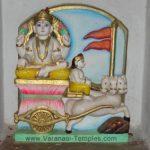
The Ganga Aditya Temple is dedicated to Ganga Aditya, a unique manifestation of Lord Surya (the Sun God). Here, the deity is depicted as Aditya (the son of Aditi, the cosmic mother) pouring his devotion to Mother Ganga.
Why Visit? (Phalaśruti)
According to the sacred Kashi Khand of the Skanda Purana, this is the spot where Lord Surya positioned himself to worship the Ganges. Devotees believe that offering prayers here yields profound spiritual benefits:
- Cleansing of Ancestral Karma: It is highly auspicious to perform rites for ancestors (Pinda Daan) here, as the combined energy of Surya and Ganga washes away ancestral sins.
- Relief from Planetary Afflictions: As the seat of the Sun God, worshipping here helps mitigate the malefic effects of Surya (Sun) in one’s astrological chart.
- Inner Illumination: The temple is believed to illuminate the Anahata (heart) chakra, fostering truth and clarity.
2. Historical Origins & Scriptural Legend
While specific architectural inscriptions regarding the builder are scarce, the temple’s existence is rooted deeply in the mythological geography of Varanasi.
The Legend of Lord Surya in Kashi
Tradition holds that Lord Surya descended to Earth in Kashi to perform severe austerities to please Lord Shiva. The Kashi Khand states that Surya positioned himself at this precise location on Lalita Ghat to continuously recite Stotras (hymns) in praise of the Ganges. Even today, it is believed that Lord Surya resides here, blessing devotees with his spiritual presence.
Renovation and Legacy
The temple structure has been preserved and renovated over centuries by local priests and devotees. The sanctum is ancient, reflecting the timeless nature of Kashi itself, where the divine and the temporal intersect.
3. Architectural Marvels
The Ganga Aditya Temple exhibits a blend of traditional temple architecture typical of the Varanasi riverfront, with significant Dravidian influences noted in the temple’s spire and sanctum design.
Key Architectural Elements
- The Sanctum Sanctorum (Garbhagriha): The deity is housed in a room covered with an iron grill (Jali) facing the river Ganges. This positioning ensures that the first rays of the rising sun fall directly upon the deity.
- Dravidian Influence: The temple features a tiered tower (Shikhara) typical of Dravidian architecture, characterized by stepped pyramidal slopes.
- Stone Carvings: Although modest in size, the exterior walls feature intricate carvings depicting solar motifs and floral patterns common in South Indian temple art.
4. Darshan & Ritual Logistics
Visiting this shrine requires patience due to the narrow lanes of Lalita Ghat. Below are the standard timings (subject to seasonal changes).
Daily Timings
| Session | Timing | Activity |
|---|---|---|
| Morning | 05:00 AM – 12:00 PM | Morning Aarti & Darshan |
| Evening | 04:00 PM – 09:00 PM | Evening Aarti & Closing |
Seva & Offerings
While the temple is modest, specific sevas can be performed:
- Arghya to Surya: Offering water to the Sun God during sunrise hours.
- Deep Daan: Lighting mustard oil lamps.
- Maha Abhishekam: Performed on Sundays (typically between 7:00 AM and 9:00 AM).
Online Booking: Due to the temple’s local nature, formal online bookings are not standard. Arrangements are made directly with the attending priest.
2026 Festival Calendar
Key dates for 2026 to plan your visit:
- Makar Sankranti (Sun Entry into Capricorn): January 14, 2026
- Ratha Saptami: February 4, 2026 (Major festival for Lord Surya)
- Chhath Puja: October 26-29, 2026 (High spiritual significance on the Ghat)
- Kartik Purnima: November 5, 2026
5. Practical Visitor Guidance
To ensure a seamless darshan experience, adhere to the following guidelines.
Code of Conduct
- Dress Code: Modest, traditional attire is recommended. Men should wear dhotis or trousers with a shirt; women should wear sarees or salwar kameez.
- Footwear: Shoes must be removed at the designated stand outside the temple entrance.
- Photography: Photography of the main deity is generally prohibited. Mobile phones should be kept on silent.
Crowd Management & Seasonal Advice
- Best Hours: Early morning (5:30 AM – 7:00 AM) offers the most serene experience, coinciding with the morning Aarti.
- Seasonal Tips:
- May/June (Summer): Varanasi can exceed 40°C. Carry water and a head covering.
- July-Sept (Monsoon): The Ghat steps can be slippery; exercise caution.
- Dec/Jan (Winter): The best time to visit. Mornings are foggy and mystical.
6. Pilgrimage Connectivity
Varanasi is well-connected, but reaching Lalita Ghat requires navigating the Old City.
How to Reach Ganga Aditya Temple
Location: No. 1/68, Below Nepali Mandir, Lalita Ghat, Varanasi.
- Nearest Airport: Lal Bahadur Shastri International Airport (LBS) (approx. 25 km from Lalita Ghat).
- Nearest Railway Station: Varanasi Junction (approx. 5 km) or Kashi Vishwanath Temple Halt (approx. 2 km).
- Route from Vishwanath Temple: Proceed from Vishwanath Temple to Saraswati Phatak. Walk straight for approximately 200 meters to find the famous ‘Phoote Ganesh’ (Broken Ganesha). Ask locals for directions to the Nepali Pasupatinath Temple—Ganga Aditya is located below this landmark.
Nearby Sacred Sites (Pilgrimage Circuit)
- Nepali Pasupatinath Temple: Located immediately above Ganga Aditya. A beautiful Thai-Nepali style temple made of wood and stone.
- Kedareshwar Temple: Located slightly upstream, this temple is dedicated to Lord Shiva and features a unique architecture.
- Lalita Ghat: While here, spend time at the Ghat itself, known for its morning aartis and spiritual serenity.
Photo Gallery
Frequently Asked Questions (FAQs)
1. What is the best time of day for Darshan at Ganga Aditya Temple?
The best time for Darshan is during the morning hours between 5:30 AM and 7:30 AM. This is when the morning Aarti takes place, and the sanctity of the temple is at its peak.
2. Is there a VIP darshan entry available?
No, the Ganga Aditya Temple is a traditional shrine, not a large commercial complex. Darshan is open to all devotees equally without any VIP quotas.
3. Can we offer water (Jal Abhishek) to the deity?
Yes, offering water (Arghya) is central to the worship of Lord Surya. Devotees typically offer water facing the rising sun, though direct offering to the idol inside the sanctum is managed by the temple priest.
4. Is the temple accessible for senior citizens?
The temple is located below the Nepali Mandir at Lalita Ghat, which involves descending steps. It can be challenging for those with mobility issues. However, the lane leading to the ghat is accessible via a cycle rickshaw up to a certain point.
5. Who is the priest currently serving at the temple?
The temple is maintained by a family of traditional priests (Pandas) of Kashi. Upon arrival, you will find a resident priest to assist with prayers and offerings.
Contact Details
For specific inquiries, the local temple committee or the temple priest present on-site can be approached. As this is a heritage site, formal contact numbers are not publicly listed.
Recent Posts

Shri Kaamkoteeshwar Mandir, Varanasi – History & Significance
In the heart of Kashi, the eternal city of Lord Shiva, where the Ganges flows with celestial grace, stands the Shri Kaamkoteeshwar Mandir. This sacred Sannidhi is not merely a temple but a profound spiritual bridge between the Northern…

ओ सांवरे तूने ही मुझको संभाला – Lyrics & Meaning
ओ सांवरे तूने ही मुझको संभाला – A Prayer to Shyam Origin & Spiritual Essence Why This Bhajan Resonates Devotees chant this when overwhelmed by life’s storms—the refrain ‘तूने ही मुझको संभाला’ is the soul’s sigh of relief: “You…

कथा ये है महाराज मेरे की – Lyrics & Meaning
कथा ये है महाराज मेरे की छत्रपति संभाजी महाराज – A Prayer to Chhatrapati Sambhaji Maharaj Origin & Spiritual Essence Why This Bhajan Resonates Devotees chant this when their spirit feels tested—its powerful refrain “महाराज मेरे” is a soul’s…

Rigveda Samhita Yathartha Anuvada (ऋग्वेद संहिता यथार्थ अनुवाद) – Complete Set with Anvayartha & Hindi/English Translation
The Rigveda is the oldest surviving scripture of humanity and the foundational text of Sanātana Dharma. For serious students, scholars, UPSC aspirants studying ancient Indian history, Sanskrit learners, and spiritual seekers, a precise and grammatically structured translation is indispensable.…

आना भी अकेला है जाना भी अकेला है – Lyrics & Meaning | BharatTemples
आना भी अकेला है जाना भी अकेला है – A Prayer to the Divine Witness Origin & Spiritual Essence Why This Bhajan Resonates Devotees turn to this bhajan in moments of deep reflection—when life’s attachments begin to ache. The…

माता शेरावाली के द्वार जो भी जाता है – Lyrics & Meaning
माता शेरावाली के द्वार जो भी जाता है – A Prayer to Maa Sherawali Origin & Spiritual Essence Why This Bhajan Resonates Devotees turn to this bhajan in times of fear or uncertainty—its promise that no one leaves Maa’s…

मार लेना सपणी उबार लेणा भवरा – Lyrics & Meaning
मार लेना सपणी उबार लेणा भवरा – A Prayer to the Divine Beloved Origin & Spiritual Essence Why This Bhajan Resonates Devotees chant this in moments of deep vulnerability—its cry of “मार लेना सपणी, उबार लेणा भवरा” is the…

हमें श्याम सुंदर भरोसा तुम्हारा – Lyrics & Meaning
हमें श्याम सुंदर भरोसा तुम्हारा – A Prayer to Shyam Sundar Origin & Spiritual Essence Why This Bhajan Resonates Devotees chant this when feeling alone—its refrain ‘de do sahara’ is the soul’s cry for divine support. Lyrics in Hindi…

Mere Satguru Ne Di Thi Davai Lyrics in Hindi & Meaning
Mere Satguru Ne Di Thi Davai: Invoking the Guru’s Liberating Wisdom This soul-stirring bhajan venerates the Satguru (True Spiritual Master) as the divine physician who dispenses the only remedy for life’s deepest sufferings. Composed by Sant Karmaveer Tufani, it…

Janm Diyo Thari Maa Dukh Dekhiyo Lyrics in Hindi & Meaning
जन्म दियो थारी माँ दुख देखियो (Maa’s Grief Upon Birthing You) This soul-stirring Chetavani Bhajan (admonitory hymn) is addressed to the Divine Mother (Maa) – a call for repentance when children forget their filial duties in the dark age…