
Contents
Introduction & Spiritual Essence
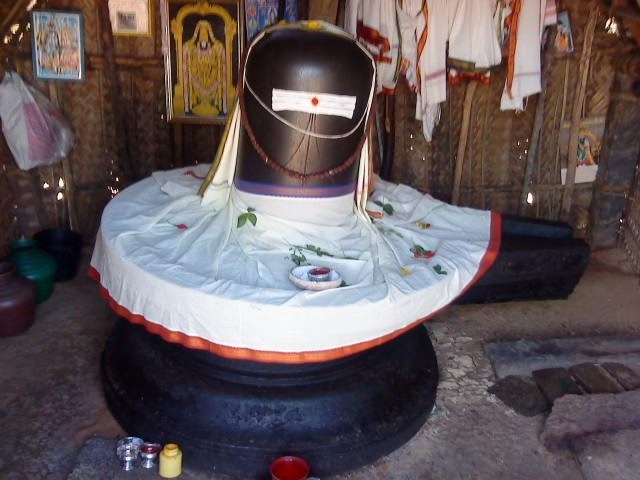
Nestled in the tranquil village of Mugaiyur along the East Coast Road (ECR) lies the Kanagapureeswarar Temple, a radiant spiritual beacon dedicated to Lord Shiva. Known locally as the “Mini Kailash” of the Coromandel Coast, this temple is a testament to the resilience of faith and the enduring legacy of Dravidian architecture. Here, the presiding deity, Kanagapureeswarar (meaning “The Lord of Gold”), stands as a Swayambhu (self-manifested) Lingam, radiating an aura of ancient power. His consort, Swarnambigai (the Goddess of Gold), graces the sanctum with benevolent grace.
Phalaśruti: The Spiritual Benefits
Devotees flock to this 1,400-year-old shrine seeking relief from chronic ailments and mental anguish. According to Vedic scriptures, worshipping here is believed to:
- cleanse ancestral karma (Pitra Dosha),
- bestow prosperity and spiritual wealth,
- and grant the boon of longevity.
The temple is particularly renowned for its power to resolve litigation issues and grant divine protection to devotees undertaking long journeys.
Historical Origins & Scriptural Legend
Builders and Era
While exact inscriptions regarding the royal patronage remain partially buried due to time, architectural evidence suggests a strong Chola lineage, dating back to approximately the 8th or 9th century CE. The presence of a massive Nandhi (bull) statue and the Vinayagar (Ganesha) shrine confirms its Chola period origins, possibly expanded during the later Vijayanagara era.
The Sthala Purana (Local Legends)
According to local oral tradition, this village was once a dense forest of Mugai (Jasmine) trees, giving the village its name, Mugaiyur. Legend holds that Lord Indra, suffering from a curse, worshipped Shiva here to regain his celestial status. The Lord appeared as a Swayambhu Lingam, glowing with the brilliance of pure gold (Kanaka). Hence, he came to be known as Kanagapureeswarar.
Another significant legend involves the Goddess, Swarnambigai. It is said that she performed intense penance here to unite with Shiva, embodying the essence of Gold and Wealth. A local myth also suggests that Siddhars (enlightened yogis) frequented this cave-like sanctuary to perform Tapas, and their spiritual energy still permeates the inner sanctum.
Architectural Marvels
The Kanagapureeswarar Temple showcases the quintessential Dravidian style of architecture, characterized by its stepped pyramidal towers and extensive use of granite.
- The Sanctum (Garbhagriha): The temple exhibits a unique cave-like structure. The roof is a massive monolithic slab, a hallmark of early Pallava/Chola architectural ingenuity, providing a cool respite from the coastal heat.
- The Vimana & Shikhara: The tower above the sanctum is a simple yet elegant Dravidian Shikhara, housing the divine deities. Though currently under restoration, the sanctity of the structure remains intact.
- Notable Sculptures:
- Monolithic Nandi: Unlike many temples where Nandi is a separate statue, the Nandi here is carved from a single rock and is exceptionally large, standing guard with serenity.
- Chola Ganesha: The Vinayagar statue at the entrance is a priceless artifact from the Chola period, showing the intricate carvings of that era.
- ASI Status: The temple is recognized as a heritage site of significant importance and is currently undergoing renovations to preserve its structural integrity.
Darshan & Ritual Logistics
Visitors are advised to confirm the following schedules in advance, as timings may vary during renovation phases or festivals.
Daily Darshan Timings (Estimated)
| Session | Timings | Status |
|---|---|---|
| Morning | 6:00 AM – 12:00 PM | Open |
| Afternoon | 12:00 PM – 4:00 PM | Closed |
| Evening | 4:00 PM – 8:00 PM | Open |
Sevas and Online Booking
Currently, the temple trust is working towards digitizing bookings. For major Sevas like Abhishekam (ritual bathing of the deity) and Archana (chanting of names), visitors are encouraged to contact the executive officer directly or visit the Tamil Nadu Hindu Religious and Charitable Endowments (HRCE) portal for updates.
2026 Festival Calendar
- Pradosham: Every Saturday (6:00 PM)
- Maha Shivaratri: March 8, 2026 (Special all-night darshan)
- Arudra Darshan: December 26, 2026
- Navaratri: October 6 – October 14, 2026 (Grand decorations for Swarnambigai)
Practical Visitor Guidance
Dress Code & Etiquette: Traditional attire is strictly recommended. Men should wear dhotis or pants with shirts; women should wear sarees or salwar kameez. Shorts and sleeveless tops are not permitted inside the sanctum.
Photography & Mobiles: Photography is allowed in the temple premises but is strictly prohibited inside the inner sanctum (Garbhagriha). Mobile lockers are available near the entrance for storing electronic devices, as smartwatches are not permitted during Darshan.
Crowd Management & Seasonal Advice:
The temple is located on the ECR, which can get humid.
– Best Time to Visit: 6:00 AM (early morning) for a peaceful darshan.
– Seasonal Tip: If visiting in May, carry a water bottle and an umbrella, as the coastal heat can be intense. Monsoon (November) brings a lush green cover but requires caution while driving on the ECR.
Pilgrimage Connectivity
How to Reach:
Address: Mugaiyur, Cheyyur Taluk, Kanchipuram District, Tamil Nadu 603301.
- By Road: The temple is located directly on the ECR (East Coast Road / NH 66), approximately 86 km south of Chennai and 62 km north of Puducherry. It is a scenic drive from the city.
- By Rail: The nearest railway junction is Chengalpattu (approx. 45 km away). From there, taxis and buses are available to Cheyyur/Mugaiyur.
- By Air: The nearest airport is Chennai International Airport (MAA), roughly 75 km away.
Nearby Sacred Sites:
Extend your pilgrimage with these nearby destinations:
- Marundeeswarar Temple, Tirukkalukundram: Famous for its healing powers and the legendary eagles (Pulikudi) that visit daily.
- Thiruporur Murugan Temple: A major Murugan shrine known for its grand architecture and vibrant festivals, located about 30 km away.
- Kelambakkam Temple: Known for its unique shrine to Kali and Dakshinamurthy.
Frequently Asked Questions (FAQ)
1. Is there a VIP Darshan entry available?
Currently, Kanagapureeswarar Temple operates on a general darshan model. However, during festival days, special entry tickets may be issued by the temple authorities to manage crowds. It is advisable to check with the local office on arrival.
2. Is there a dress code for children?
While there is no strict code, it is preferred that children wear clean, traditional clothes. Avoid shorts or t-shirts with offensive graphics.
3. Are non-Hindus allowed to enter the temple?
As per traditional temple customs in Tamil Nadu, entry into the inner sanctum is restricted to those who practice the faith. However, the outer precincts and the courtyard are generally open to all visitors who wish to admire the architecture and history.
4. Is food available at the temple?
There are no major restaurants inside the temple complex. However, small tea stalls and snacks vendors are available nearby. For a full meal, Cheyyur town (12 km away) offers decent options. It is recommended to carry water and light snacks.
5. What is the current renovation status in 2026?
The temple has undergone significant restoration over the last few years to preserve the Chola-era structures. While the inner sanctum is fully accessible, some outer mandapas might be under periodic maintenance. Please respect safety barriers in those areas.

Recent Posts

Shri Kaamkoteeshwar Mandir, Varanasi – History & Significance
In the heart of Kashi, the eternal city of Lord Shiva, where the Ganges flows with celestial grace, stands the Shri Kaamkoteeshwar Mandir. This sacred Sannidhi is not merely a temple but a profound spiritual bridge between the Northern…

ओ सांवरे तूने ही मुझको संभाला – Lyrics & Meaning
ओ सांवरे तूने ही मुझको संभाला – A Prayer to Shyam Origin & Spiritual Essence Why This Bhajan Resonates Devotees chant this when overwhelmed by life’s storms—the refrain ‘तूने ही मुझको संभाला’ is the soul’s sigh of relief: “You…

कथा ये है महाराज मेरे की – Lyrics & Meaning
कथा ये है महाराज मेरे की छत्रपति संभाजी महाराज – A Prayer to Chhatrapati Sambhaji Maharaj Origin & Spiritual Essence Why This Bhajan Resonates Devotees chant this when their spirit feels tested—its powerful refrain “महाराज मेरे” is a soul’s…

Rigveda Samhita Yathartha Anuvada (ऋग्वेद संहिता यथार्थ अनुवाद) – Complete Set with Anvayartha & Hindi/English Translation
The Rigveda is the oldest surviving scripture of humanity and the foundational text of Sanātana Dharma. For serious students, scholars, UPSC aspirants studying ancient Indian history, Sanskrit learners, and spiritual seekers, a precise and grammatically structured translation is indispensable.…

आना भी अकेला है जाना भी अकेला है – Lyrics & Meaning | BharatTemples
आना भी अकेला है जाना भी अकेला है – A Prayer to the Divine Witness Origin & Spiritual Essence Why This Bhajan Resonates Devotees turn to this bhajan in moments of deep reflection—when life’s attachments begin to ache. The…

माता शेरावाली के द्वार जो भी जाता है – Lyrics & Meaning
माता शेरावाली के द्वार जो भी जाता है – A Prayer to Maa Sherawali Origin & Spiritual Essence Why This Bhajan Resonates Devotees turn to this bhajan in times of fear or uncertainty—its promise that no one leaves Maa’s…

मार लेना सपणी उबार लेणा भवरा – Lyrics & Meaning
मार लेना सपणी उबार लेणा भवरा – A Prayer to the Divine Beloved Origin & Spiritual Essence Why This Bhajan Resonates Devotees chant this in moments of deep vulnerability—its cry of “मार लेना सपणी, उबार लेणा भवरा” is the…

हमें श्याम सुंदर भरोसा तुम्हारा – Lyrics & Meaning
हमें श्याम सुंदर भरोसा तुम्हारा – A Prayer to Shyam Sundar Origin & Spiritual Essence Why This Bhajan Resonates Devotees chant this when feeling alone—its refrain ‘de do sahara’ is the soul’s cry for divine support. Lyrics in Hindi…

Mere Satguru Ne Di Thi Davai Lyrics in Hindi & Meaning
Mere Satguru Ne Di Thi Davai: Invoking the Guru’s Liberating Wisdom This soul-stirring bhajan venerates the Satguru (True Spiritual Master) as the divine physician who dispenses the only remedy for life’s deepest sufferings. Composed by Sant Karmaveer Tufani, it…

Janm Diyo Thari Maa Dukh Dekhiyo Lyrics in Hindi & Meaning
जन्म दियो थारी माँ दुख देखियो (Maa’s Grief Upon Birthing You) This soul-stirring Chetavani Bhajan (admonitory hymn) is addressed to the Divine Mother (Maa) – a call for repentance when children forget their filial duties in the dark age…