
Contents
Introduction & Spiritual Essence
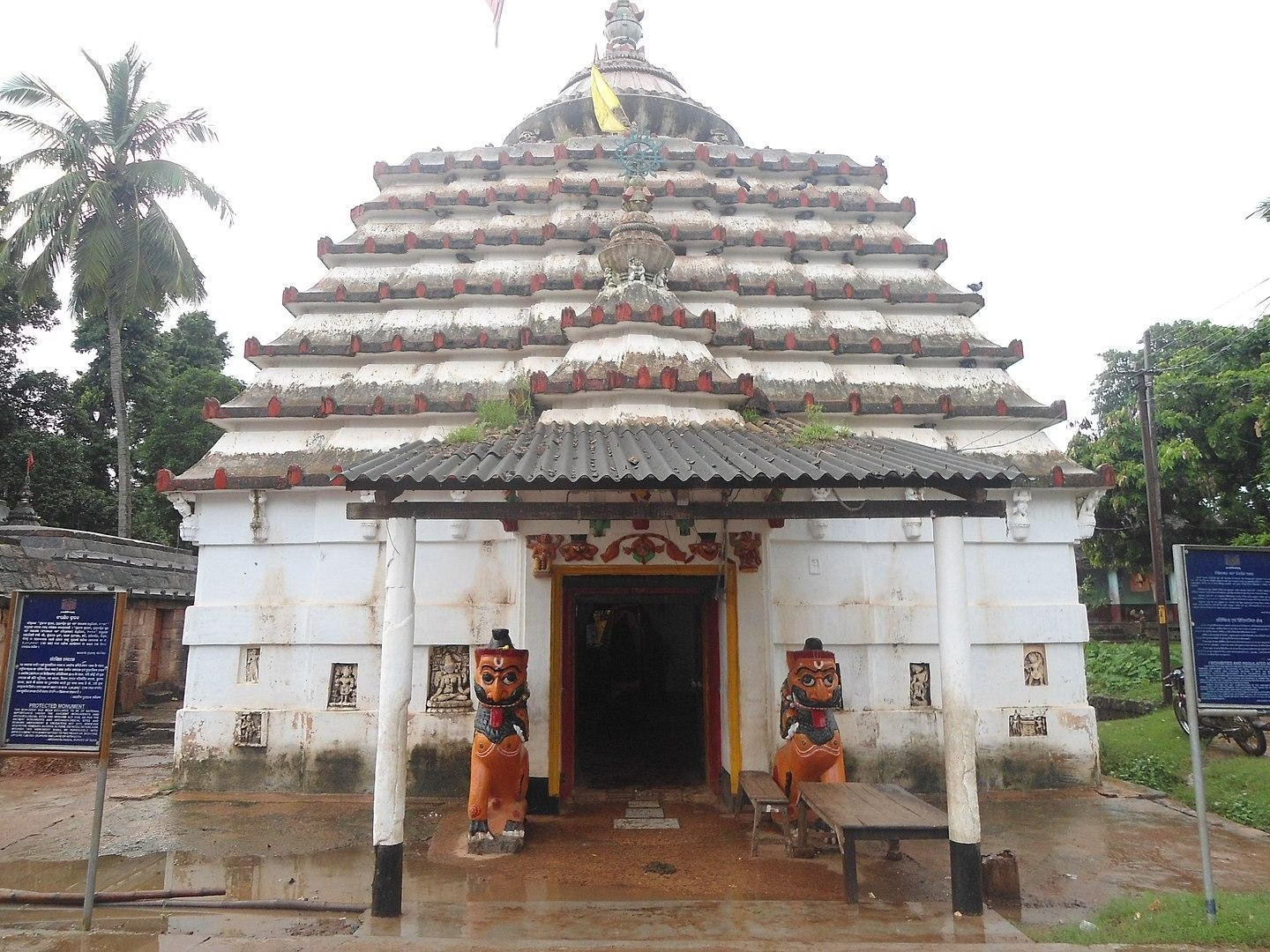
The sacred Varahanatha Temple, also revered as Yajna Varaha Temple, enshrines Lord Vishnu’s powerful boar avatar – Varaha. This Swayambhu manifestation stands on a holy island formed by the Vaitarani River in Jajpur, Odisha. Devotees believe darshan here grants:
- Liberation from ancestral karma (Pitr Dosha Nivaran)
- Protection during soul’s journey after death (Vaitarani River crossing)
- Fulfillment of material and spiritual desires
Historical Origins & Scriptural Legend
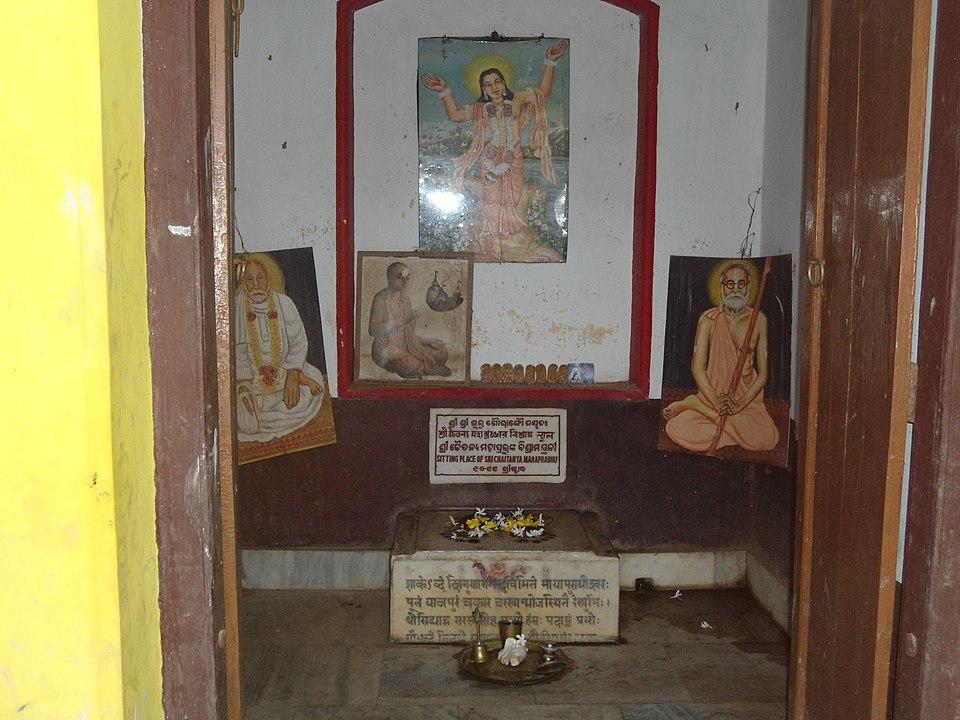
Built during 15-16th century under Suryavamshi Gajapati rule, temple records suggest King’s priest Kasi Mishra oversaw construction. According to Brahma Purana, this marks the spot where Lord Vishnu emerged from King Brahma’s yajna fire in Varaha form to retrieve stolen Vedas. Tradition holds that Chaitanya Mahaprabhu blessed this site in 1510 during his Odisha pilgrimage.
Architectural Marvels
This protected ASI monument showcases classical Kalinga architecture with distinct elements:
| Feature | Description |
|---|---|
| Vimana Type | Rekha Deula (22m tall) |
| Jagamohana | Pidha Deula pyramid roof |
| Wall Design | Panchanga Bada (5-part division) |
Notable sculptures include Prajnaparamita (Buddhist deity), rare Yamuna river goddess carvings, and erotic mithuna figures symbolizing cosmic union.
Darshan & Ritual Logistics
| Timing | Schedule |
|---|---|
| Morning Darshan | 5:30 AM – 12:30 PM |
| Evening Darshan | 3:30 PM – 8:00 PM |
Key 2026 Festivals:
• Maha Shivaratri: Mar 12
• Kartika Purnima: Nov 14
• Sunia: Aug 23-25
Online seva booking available for:
– Abhishekam (₹500)
– Special Archana (₹200)
Practical Visitor Guidance
- Dress Code: Traditional attire preferred (dhoti/saree)
- Photography: Permitted except in sanctum
- Best Time: 6-8 AM for peaceful darshan
Pilgrimage Connectivity
Nearest Transport:
• Airport: Bhubaneswar (90km via NH16)
• Railway: Jajpur Keonjhar Road (18km)
Sacred Circuit:
1. Biraja Temple (12km)
2. Chhatia Bata Temple (22km)
Frequently Asked Questions
Q: Is VIP darshan available?
A: Yes, through advance seva booking.
Q: Can non-Hindus visit?
A: Yes, all are welcome with respect.
The Varahanatha Temple, also known as Yajna Varaha Temple, is located on the left bank of the Vaitarani River on an island formed by the river, in Jajpur.
The main shrine is dedicated to Varaha, the boar avatar of the god Vishnu. Built-in 15-16th century, the temple is constructed in Kalinga architectural style. Besides the central Varaha shrine, there are numerous subordinate shrines to deities like Shiva, Vishnu, Vimala, and others.
On the basis of the architecture and structures enshrined in the temple, it is estimated to be built during the 15–16th century under the Suryavamshi Gajapati rule. Another legend attributes to the king’s head priest, Kasi Mishra. The Hindu saint Chaitanya Mahaprabhu (1486–1534), who was instrumental in establishing the Chaitnaya Math and propagated Vaishnavism (worship of Vishnu and related deities) visited this temple, on his way from Puri in 1510. The temple was refurbished by Raghoji I Bhonsle (reign: 1739-1755), the Maratha ruler of the Nagpur kingdom. It is a protected monument maintained by the Archaeological Survey of India
Festivals
The festivals held in the temple complex are the Chandana Yatra, Sunia, Kartika Purnima, Baula Amavasya, Maha Varuni Yatra, Mahashivaratri, and so forth.
Architecture
The temple faces east and is located in a 30-by-40-metre (98 by 131 ft) plot. The temple structure is built over a plinth of 25.30-by-12-metre (83.0 by 39.4 ft). The height of the temple is 22 metres (72 ft). Built in Kalinga architectural style, the temple has three components, namely the vimana (building containing the sanctum), the antarala (a small chamber between the sanctum and the hall) and the jagamohana (assembly hall).
The vimana is a Rekha deula (a tall building with a shape of sugar loaf) and the jagamohana is a pidha deula (square building with a pyramid-shaped roof). The Vimana as well as the jagamohana are square in shape. The temple is built in ashlar masonry with Khandolite stone, the exposed surfaces are plastered and given a white wash of lime. The outer wall is panchanga bada, that is, divided into 5 parts (from base to top): pabhaga, talajangha, bandhana, upara jangha and baranda.
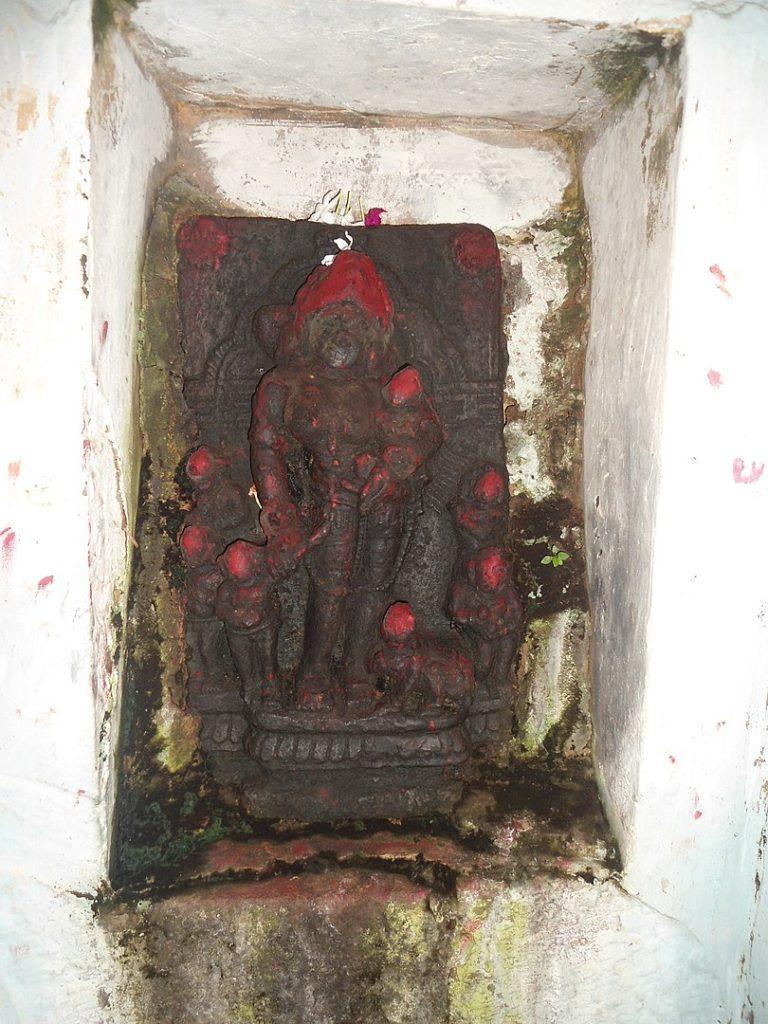
The sanctum has two images of Varaha, a Lakshmi (consort of Vishnu) image and a Jagannath (a regional form of Vishnu) image. The Jagannath image is made of wood, while the rest are made of chlorite. The talajangha of the vimana exhibits erotic sculptures, mother and child, and amorous couples. Musicians, devotees and Yamuna (a river goddess) are carved on the upara jangha. The pinnacle is Pancharatha (containing five Pagas or segments) in nature and decorated with figures of the udyotasimhas (lion with lolling tongue) and gajasimhas (the lion riding an elephant), all on central pagas (raha), except the main paga which bears a Varaha image.
The jagamohana and antarala have modern paintings with floral and animal or bird motifs. The jagamohana has a Garuda pillar. In the jagamohana, the sculptural images of dvarapala (gate keepers) of the Shaiva (related to the god Shiva) tradition, the head of Brahma and Astikajaratkaru (the goddess Manasa cradles her child Astika or a dead man who is revived) fixed to the walls. The niches in the talajangha of the jagamohana has images of the predominantly Buddhist deity Prajnaparamita, Vishnu, Kalyanasundara (marriage scene of Shiva and Parvati), Narasimha (avatar of Vishnu), Ganga (the goddess of the Ganges), Varaha, Parvati (consort of Shiva), Giridhari Govardhana (a form of Krishna – avatar of Vishnu) and dancing panels. The brackets supporting the gandi (temple pinnacle) have erotic sculptures of male and female figures and figurines of bharabahaka (goblins supporting the roof) and mother and child.
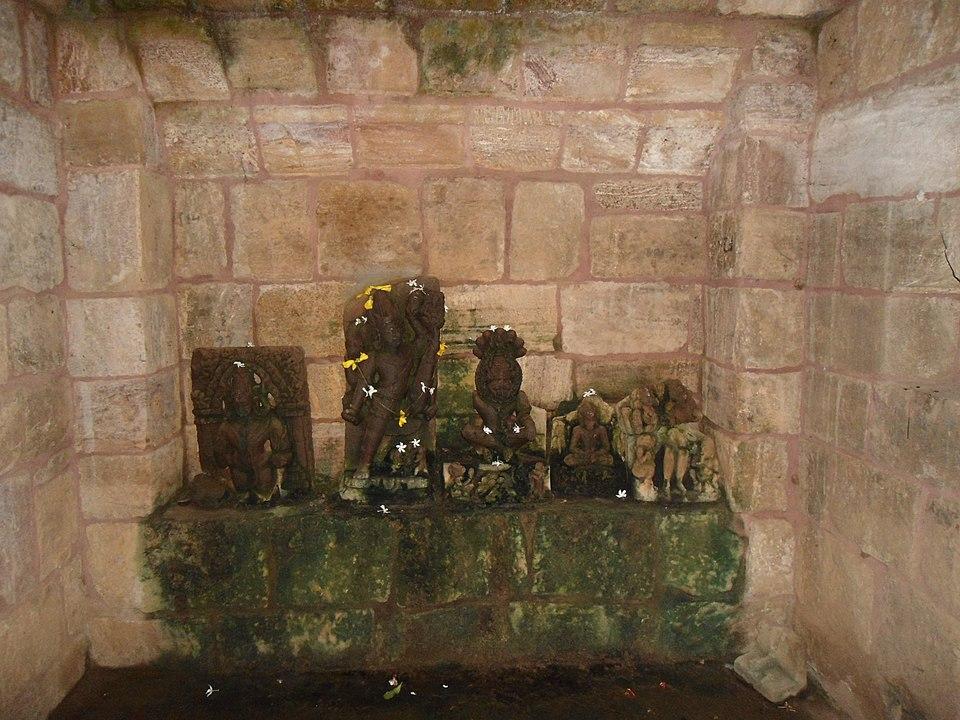
The temple also has independent sculptures of different ages, fixed at random. Deity sculptures in the temple include Ganesha (god of wisdom), Vamana (avatar of Vishnu), Vishnu, Narasimha, Brahma, Uma-Maheshavara (Shiva with Parvati) and Dhyani Buddha (a Buddhist image).
Legend / Local stories
When Brahma was performing Ashvamedha yajna, he realised that the Vedas were stolen, he then requested Lord Vishnu to retrieve them. As soon as the yajna was completed, Lord Vishnu emerged from the yagna in the form of a boar – His Varaha avatar – with the stolen scriptures. Since then, the location of the yajna came to be known as Jajpur. This 15-16th century temple is located at the banks of Vaitarani River on an island formed by the river. This ancient Varaha temple once had 4 deities – while 3 deities of Varaha are still here (Yajna Varaha, Vishnu Varaha and Adi Varaha). The fourth Deity named as Lakshmi Varaha was taken by King of Aul across Vaitarani to Kendrapara, Orissa.
Photo Gallery
How to Reach:
Contact Details
Recent Posts

Shri Kaamkoteeshwar Mandir, Varanasi – History & Significance
In the heart of Kashi, the eternal city of Lord Shiva, where the Ganges flows with celestial grace, stands the Shri Kaamkoteeshwar Mandir. This sacred Sannidhi is not merely a temple but a profound spiritual bridge between the Northern…

ओ सांवरे तूने ही मुझको संभाला – Lyrics & Meaning
ओ सांवरे तूने ही मुझको संभाला – A Prayer to Shyam Origin & Spiritual Essence Why This Bhajan Resonates Devotees chant this when overwhelmed by life’s storms—the refrain ‘तूने ही मुझको संभाला’ is the soul’s sigh of relief: “You…

कथा ये है महाराज मेरे की – Lyrics & Meaning
कथा ये है महाराज मेरे की छत्रपति संभाजी महाराज – A Prayer to Chhatrapati Sambhaji Maharaj Origin & Spiritual Essence Why This Bhajan Resonates Devotees chant this when their spirit feels tested—its powerful refrain “महाराज मेरे” is a soul’s…

Rigveda Samhita Yathartha Anuvada (ऋग्वेद संहिता यथार्थ अनुवाद) – Complete Set with Anvayartha & Hindi/English Translation
The Rigveda is the oldest surviving scripture of humanity and the foundational text of Sanātana Dharma. For serious students, scholars, UPSC aspirants studying ancient Indian history, Sanskrit learners, and spiritual seekers, a precise and grammatically structured translation is indispensable.…

आना भी अकेला है जाना भी अकेला है – Lyrics & Meaning | BharatTemples
आना भी अकेला है जाना भी अकेला है – A Prayer to the Divine Witness Origin & Spiritual Essence Why This Bhajan Resonates Devotees turn to this bhajan in moments of deep reflection—when life’s attachments begin to ache. The…

माता शेरावाली के द्वार जो भी जाता है – Lyrics & Meaning
माता शेरावाली के द्वार जो भी जाता है – A Prayer to Maa Sherawali Origin & Spiritual Essence Why This Bhajan Resonates Devotees turn to this bhajan in times of fear or uncertainty—its promise that no one leaves Maa’s…

मार लेना सपणी उबार लेणा भवरा – Lyrics & Meaning
मार लेना सपणी उबार लेणा भवरा – A Prayer to the Divine Beloved Origin & Spiritual Essence Why This Bhajan Resonates Devotees chant this in moments of deep vulnerability—its cry of “मार लेना सपणी, उबार लेणा भवरा” is the…

हमें श्याम सुंदर भरोसा तुम्हारा – Lyrics & Meaning
हमें श्याम सुंदर भरोसा तुम्हारा – A Prayer to Shyam Sundar Origin & Spiritual Essence Why This Bhajan Resonates Devotees chant this when feeling alone—its refrain ‘de do sahara’ is the soul’s cry for divine support. Lyrics in Hindi…

Mere Satguru Ne Di Thi Davai Lyrics in Hindi & Meaning
Mere Satguru Ne Di Thi Davai: Invoking the Guru’s Liberating Wisdom This soul-stirring bhajan venerates the Satguru (True Spiritual Master) as the divine physician who dispenses the only remedy for life’s deepest sufferings. Composed by Sant Karmaveer Tufani, it…

Janm Diyo Thari Maa Dukh Dekhiyo Lyrics in Hindi & Meaning
जन्म दियो थारी माँ दुख देखियो (Maa’s Grief Upon Birthing You) This soul-stirring Chetavani Bhajan (admonitory hymn) is addressed to the Divine Mother (Maa) – a call for repentance when children forget their filial duties in the dark age…