
Contents
- 1 Bandi Devi Temple, Varanasi: A Definitive Pilgrimage Guide for 2026
Bandi Devi Temple, Varanasi: A Definitive Pilgrimage Guide for 2026
Welcome to bharattemples.com, your trusted companion on the spiritual trail of Kashi. As we step into 2026, the ancient lanes of Varanasi continue to echo with the chants of devotees seeking liberation. In this comprehensive guide, we journey to the heart of Kashi to explore the Bandi Devi Temple—a sacred shrine nestled near the banks of the Ganga, holding immense significance in the Kashi Khand of the Shiva Purana.
1. Introduction & Spiritual Essence
The Bandi Devi Temple, dedicated to the fierce yet benevolent aspect of the Divine Mother, is a vital stop for pilgrims traversing the spiritual geography of Varanasi. Often referred to locally simply as the “Bandi Devi Mandir,” this shrine is deeply embedded in the Shaivite and Shakta traditions of Kashi.
The Deity and Form
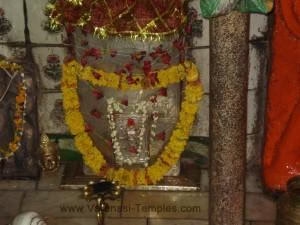
Bandi Devi is worshipped as the granter of freedom—Moksha-pradayini. While specific murti (idol) details may vary based on the local priest’s tradition, the Devi is traditionally worshipped as a manifestation of Shakti residing in the cosmic body of Lord Shiva (Kashi Vishwanath). Here, she is the liberator who cuts the bonds of Samsara (worldly existence).
Phalaśruti: Why Devotees Visit
According to the Kashi Khand, Chapter 70, the spiritual potency of this shrine is unparalleled. The Phalaśruti (benefits of devotion) states:
“Devotees who worship this Devi will be free from all bondages. If one regularly observes fasts on Tuesdays and performs Pooja/Archana of Bandi Devi, they will be blessed with all sorts of prosperity and freedom from bondages.”
It is believed that the blessings of Bandi Devi extend not just to the devotee but to their kith and kin, even those living far away from Kashi. Worship here removes misgivings and instills a profound sense of spiritual liberation.
2. Historical Origins & Scriptural Legend
Scriptural References: The Kashi Khand
The primary scriptural authority for the Bandi Devi Temple is found in the Kashi Khand of the Shiva Purana. Specifically, Chapter 70 designates the location as being near the Prayag Teerth (the confluence of sacred energies in Varanasi).
The Legend of Liberation
Tradition holds that the site represents a specific peetha (seat) where the Devi manifested to grant liberation. In the complex spiritual matrix of Kashi, where every lane connects to a divine narrative, Bandi Devi is the remover of the “Bandhana” (bonds). Whether these bonds are karmic, financial, or emotional, the Devi is known to sever them with her grace.
3. Architectural Marvels
As noted in temple records and architectural surveys, the Bandi Devi Temple showcases a distinct Dravidian architectural style. This is a fascinating feature in the predominantly Nagara-style dominated landscape of North India, suggesting influences from southern temple traditions or specific historical renovations.
Structure and Design
The temple structure, while compact, adheres to the principles of Vastu Shastra. The layout is designed to facilitate a natural flow of energy, directing the devotee from the outer Mandapa (hall) toward the inner sanctum (Garbhagriha).
- Shikhara: The tower follows the Dravidian tiered design, distinct from the curvilinear towers of North India.
- Mandapa: The pillared hall allows for congregational worship and reflection.
- Notable Sculptures: The exteriors often feature carvings depicting the various avatars of the Goddess and guardian deities.
4. Darshan & Ritual Logistics (2026 Updates)
Planning your visit requires attention to the daily schedule and the rhythm of temple rituals. Below are the general timings for the Bandi Devi Temple. Please note: Times may vary slightly during festivals.
Daily Darshan Timings
| Session | Timings |
|---|---|
| Morning Darshan | 06:00 AM – 12:00 PM |
| Afternoon Break | 12:00 PM – 03:00 PM |
| Evening Darshan | 05:00 PM – 09:00 PM |
Key Sevas and Online Booking
To perform specific rituals, devotees can opt for the following Sevas:
- Archana: Offering flowers and akshata (rice grains) with the chanting of Devi’s names.
- Abhishekam: Ritual bathing of the deity (usually performed with milk, honey, and curd).
- Tuesday Fast: Highly recommended as per Kashi Khand.
Online Booking: While the temple is part of the larger Varanasi pilgrimage circuit, specific online bookings for this specific shrine are managed through local trusts. However, for a seamless experience in Kashi, we recommend booking through the official Kashi Vishwanath Temple app or the Shri Kashi Vishwanath Integrated Transit App, which covers major shrines in the vicinity.
Major Festivals in 2026
- Navratri: The primary festival celebrated here. The temple is adorned with flowers and special night-long jagrans (awakenings).
- Teej: Celebrated with devotion, particularly by women seeking marital bliss and longevity.
- Weekly Tuesdays: Consider auspicious for Devi worship.
5. Practical Visitor Guidance
Code of Conduct & Facilities
- Dress Code: Traditional attire is recommended (Dhoti-Kurta for men, Saree/Salwar Kameez for women). Avoid shorts and sleeveless tops.
- Photography: Photography inside the sanctum is strictly prohibited. Please respect the sanctity of the space.
- Mobile Lockers: Due to the narrow gullies leading to the temple, it is advisable to carry minimal luggage. Large bags may need to be checked at shops near Dashashwamedh Ghat.
- Accessibility: The temple is located in the old city. The lanes are narrow and uneven. It is not wheelchair accessible.
Crowd Management
- Best Hours: For a peaceful darshan, visit between 7:00 AM and 9:00 AM or after 7:00 PM.
- Seasonal Advice: May and June are extremely hot; carry water and a head covering. December and January are pleasant but crowded due to winters and festivals.
6. Pilgrimage Connectivity
How to Reach Bandi Devi Temple
The temple is a hidden gem in the bustling spiritual maze of Varanasi.
- Nearest Railway Station: Varanasi Junction (BCY) – Approx 6 km (30 mins by auto).
- Nearest Airport: Lal Bahadur Shastri International Airport (LBS) – Approx 25 km.
- By Road (NH): The temple is accessible via NH 19 and NH 31. However, vehicles cannot enter the old city zone. You must disembark at the outskirts (Madhyamaheshwar or Dashashwamedh parking) and proceed on foot or by cycle rickshaw.
Location Guide
Nearby Sacred Sites (Pilgrimage Circuit)
Extend your spiritual journey by visiting these nearby shrines:
- Dashashwamedh Ghat: The site of the grand Ganga Aarti, just minutes away.
- Kashi Vishwanath Temple: The primary Jyotirlinga shrine (approx. 15-minute walk).
- Sankat Mochan Hanuman Temple: Located further south, accessible by rickshaw, famous for the removal of troubles.
7. Frequently Asked Questions (FAQ)
Is there a VIP darshan entry at Bandi Devi Temple?
Given the compact size of the temple and its location in the narrow lanes, there is no separate VIP entry gate. Darshan is generally fast-moving due to the single-file entry system, but special access for elderly devotees is facilitated by the local priests upon request.
What is the best time to visit this temple specifically for photography?
The interior is dimly lit, so natural light is best between 10:00 AM and 2:00 PM when sunlight penetrates the street level. However, remember that photography of the deity is prohibited.
Can I leave my shoes somewhere?
There is a small shoe-keeping facility at the entrance. However, during peak Navratri, it is safer to hand your shoes to a nearby authorized shoe-keeper shop at Dashashwamedh Ghat for a nominal fee.
Are there accommodation options nearby?
Yes, the area around Dashashwamedh Ghat is packed with guest houses and hotels ranging from budget to luxury. For a spiritual stay, look for Dharamshalas near Godaulia intersection.
What is the significance of Tuesday fast here?
As per Kashi Khand, fasting on Tuesdays and offering Pooja to Bandi Devi is believed to remove bondages (financial, karmic, or mental) and bless the devotee with prosperity.
Photo Gallery
Contact Details
Official Address:
Bandi Devi Temple, D.17/100, Dashashwamedh Ghat Road, Varanasi, Uttar Pradesh 221001.
Note: As this is an ancient site, phone numbers may not be publicly listed. For queries, contact the Kashi Vishwanath Temple administration or local temple desks.
Recent Posts

Shri Kaamkoteeshwar Mandir, Varanasi – History & Significance
In the heart of Kashi, the eternal city of Lord Shiva, where the Ganges flows with celestial grace, stands the Shri Kaamkoteeshwar Mandir. This sacred Sannidhi is not merely a temple but a profound spiritual bridge between the Northern…

ओ सांवरे तूने ही मुझको संभाला – Lyrics & Meaning
ओ सांवरे तूने ही मुझको संभाला – A Prayer to Shyam Origin & Spiritual Essence Why This Bhajan Resonates Devotees chant this when overwhelmed by life’s storms—the refrain ‘तूने ही मुझको संभाला’ is the soul’s sigh of relief: “You…

कथा ये है महाराज मेरे की – Lyrics & Meaning
कथा ये है महाराज मेरे की छत्रपति संभाजी महाराज – A Prayer to Chhatrapati Sambhaji Maharaj Origin & Spiritual Essence Why This Bhajan Resonates Devotees chant this when their spirit feels tested—its powerful refrain “महाराज मेरे” is a soul’s…

Rigveda Samhita Yathartha Anuvada (ऋग्वेद संहिता यथार्थ अनुवाद) – Complete Set with Anvayartha & Hindi/English Translation
The Rigveda is the oldest surviving scripture of humanity and the foundational text of Sanātana Dharma. For serious students, scholars, UPSC aspirants studying ancient Indian history, Sanskrit learners, and spiritual seekers, a precise and grammatically structured translation is indispensable.…

आना भी अकेला है जाना भी अकेला है – Lyrics & Meaning | BharatTemples
आना भी अकेला है जाना भी अकेला है – A Prayer to the Divine Witness Origin & Spiritual Essence Why This Bhajan Resonates Devotees turn to this bhajan in moments of deep reflection—when life’s attachments begin to ache. The…

माता शेरावाली के द्वार जो भी जाता है – Lyrics & Meaning
माता शेरावाली के द्वार जो भी जाता है – A Prayer to Maa Sherawali Origin & Spiritual Essence Why This Bhajan Resonates Devotees turn to this bhajan in times of fear or uncertainty—its promise that no one leaves Maa’s…

मार लेना सपणी उबार लेणा भवरा – Lyrics & Meaning
मार लेना सपणी उबार लेणा भवरा – A Prayer to the Divine Beloved Origin & Spiritual Essence Why This Bhajan Resonates Devotees chant this in moments of deep vulnerability—its cry of “मार लेना सपणी, उबार लेणा भवरा” is the…

हमें श्याम सुंदर भरोसा तुम्हारा – Lyrics & Meaning
हमें श्याम सुंदर भरोसा तुम्हारा – A Prayer to Shyam Sundar Origin & Spiritual Essence Why This Bhajan Resonates Devotees chant this when feeling alone—its refrain ‘de do sahara’ is the soul’s cry for divine support. Lyrics in Hindi…

Mere Satguru Ne Di Thi Davai Lyrics in Hindi & Meaning
Mere Satguru Ne Di Thi Davai: Invoking the Guru’s Liberating Wisdom This soul-stirring bhajan venerates the Satguru (True Spiritual Master) as the divine physician who dispenses the only remedy for life’s deepest sufferings. Composed by Sant Karmaveer Tufani, it…

Janm Diyo Thari Maa Dukh Dekhiyo Lyrics in Hindi & Meaning
जन्म दियो थारी माँ दुख देखियो (Maa’s Grief Upon Birthing You) This soul-stirring Chetavani Bhajan (admonitory hymn) is addressed to the Divine Mother (Maa) – a call for repentance when children forget their filial duties in the dark age…