
Contents
- 1 Definitive Pilgrimage Guide: Dharmeshwar Temple, Varanasi
- 1.1 1. Introduction & Spiritual Essence
- 1.2 2. Historical Origins & Scriptural Legend
- 1.3 3. Architectural Marvels
- 1.4 4. Darshan & Ritual Logistics (2026 Schedule)
- 1.5 5. Practical Visitor Guidance
- 1.6 6. Pilgrimage Connectivity
- 1.7 7. Frequently Asked Questions (FAQs)
- 1.8 Architectural Heritage Notes
- 1.9 Contact Details
Definitive Pilgrimage Guide: Dharmeshwar Temple, Varanasi
Namaste and welcome to BharatTemples.com. As the Lead Heritage Architect, I invite you to explore the spiritual and architectural depths of the Dharmeshwar Temple, a timeless sanctuary nestled in the sacred heart of Kashi (Varanasi). This guide is crafted for the modern pilgrim, blending ancient scriptural wisdom with practical logistics for your darshan in 2026.
1. Introduction & Spiritual Essence
Dharmeshwar, also revered in ancient texts as Dharmeshwara Linga, is a self-manifested (Swayambhu) representation of Lord Shiva. While Varanasi is home to the Kashi Vishwanath (Jyotirlinga), Dharmeshwar holds a unique scriptural importance tied to cosmic justice.
Phalaśruti: The Boon of Spiritual Cleansing
According to the Kashi Khand (Chapter 78) of the Skanda Purana, the spiritual potency of this site is unparalleled. Devotees visit Dharmeshwar Temple not merely for general blessings, but specifically for:
- Cleansing Ancestral Karma: It is believed that prayers offered here assist in liberating ancestors from the cycle of birth and death.
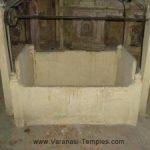
- Freedom from Sin: The temple is situated near the Dharma Koop. According to tradition, bathing in this holy well and worshipping Dharmeshwar washes away sins accumulated over lifetimes.
- Victory in Justice: As the patron of Dharma (righteousness), Lord Shiva in this form blesses devotees with the strength to uphold truth and find resolution in legal or moral disputes.
2. Historical Origins & Scriptural Legend
The Legend of Dharma Raja (Yamraj)
The Sthala Purana recounts a divine conversation between Lord Shiva and Goddess Parvati regarding the sacred shrines of Kashi. Lord Shiva narrated the story of Yamraj (the God of Death).
Yamraj established a Ling in Anand Van (modern-day Varanasi) and performed intense penance. During the severe winters of Satyuga, he stood on one leg, and later, for several days, on just one toe. Pleased by this severe austerity, Lord Shiva appeared and conferred upon him the title of Dharma Raja. The Ling installed by Yamraj was named Dharmeshwar by Lord Shiva.
Lord Shiva instructed Yamraj that while he must judge the dead, those living in Kashi who worship the Dharmeshwar Ling and bathe in the adjoining Dharma Koop shall be freed from all sins across generations.
Timeline & Renovations
While the exact date of construction is not preserved in modern records, the architectural style suggests ancient Dravidian influences. The temple has undergone several renovations over the centuries to maintain structural integrity while preserving the sanctity of the garbhagriha (sanctum sanctorum).
3. Architectural Marvels
The Dharmeshwar Temple showcases a distinct Dravidian architectural style, which is somewhat unique in the predominantly Nagara-style temples of North India. This highlights the cultural synthesis that has occurred in Varanasi over millennia.
- The Shikhara (Tower): The temple features a tiered shikhara typical of Dravidian style, with kutas (small spires) rising towards the apex.
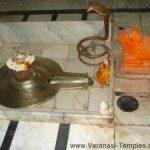
- Sanctum Sanctorum: The inner sanctum houses the Swayambhu linga, which is covered in vermillion and butter during rituals.
- Vastu Shastra: The temple layout is aligned with ancient Vastu principles, oriented to allow the first rays of the sun to strike the inner shrine, symbolizing the awakening of consciousness.
- Notable Sculptures: The outer walls feature niches housing carvings of various deities, reflecting the syncretic tradition of Kashi Shaivism.
4. Darshan & Ritual Logistics (2026 Schedule)
Daily Timings
The temple follows the traditional Nitya Puja schedule of Kashi. Please note that timings may vary slightly during festivals.
| Session | Timing | Activity |
|---|---|---|
| Morning Darshan | 05:00 AM – 11:00 AM | Mangala Aarti & Rudrabhishek |
| Afternoon Recess | 11:00 AM – 4:00 PM | Temple Cleaning & Rest |
| Evening Darshan | 4:00 PM – 9:00 PM | Sandhya Aarti & Shayan Aarti |
Key Sevas & Online Booking
To perform specific rituals, devotees can book Sevas in advance. Assuming the current year is 2026:
- Rudrabhishek: Performed daily. Booking can be done via the Kashi Vishwanath Temple Trust online portal (which manages many shrines in the vicinity).
- Archana: Individual name-based prayers offered to Dharmeshwar.
- Special Festival Pujas:
2026 Major Festival Dates
- Mahashivratri: February 26, 2026 (Special night-long vigil).
- Kartik Purnima: November 5, 2026 (Deep Daan at Dharma Koop).
- Pradosh Vrat: Bi-monthly (Trijunction of Earth, Heaven, and Netherworld).
5. Practical Visitor Guidance
Visiting Varanasi requires preparation. Here are essential guidelines for a smooth pilgrimage experience:
- Dress Code: Modest attire is mandatory. Traditional Indian wear (Saree, Kurta-Pajama) is recommended. Avoid shorts or sleeveless tops.
- Photography: Strictly prohibited inside the garbhagriha. Photography may be allowed in the outer courtyard, but seek permission from temple authorities.
- Mobile & Lockers: Electronic devices must be switched off before entering the inner sanctum. Use mobile lockers provided at the entrance (usually chargeable).
- Accessibility: The temple is located on the Ghats, accessible by stairs. It may be challenging for those with mobility issues. A boat ride to Mir Ghat reduces the walking distance.
- Crowd Management:
- Best Hours: 9:00 AM to 10:30 AM or after 7:00 PM.
- Seasonal Advice: Summers (April-June) are extremely hot; carry water and an umbrella. Winters (Dec-Jan) are foggy but pleasant.
6. Pilgrimage Connectivity
How to Reach
The temple is located at D-2/21, Mir Ghat, Varanasi.
- Nearest Airport: Lal Bahadur Shastri International Airport (LBS), Varanasi (approx. 30 km).
- Nearest Railway: Varanasi Junction (BSB) or Kashi Station (approx. 5-7 km).
- By Road: Accessible via NH-19. Take an auto-rickshaw to Dashashwamedh Ghat.
- Walking Route: From Dashashwamedh Vishwanath Gulli, walk towards Vishalakshi Gauri Temple. The Dharmeshwar Temple is located near the Saraswati Phatak Gate and Dharma Koop.
- By Water: Take a boat to Mir Ghat; the temple is a short climb up the steps.
Nearby Sacred Sites (The Pilgrimage Circuit)
The area surrounding Dharmeshwar is a powerful Shakti Peeth. Combine your visit with:
- Dharma Koop: The holy well of justice, located immediately adjacent (or very near) to the temple.
- Vishalakshi Devi Temple: A major Shakti Peeth where the eyes of Goddess Sati fell.
- Sankat Mochan Hanuman Temple: Located about 2 km away, famous for relieving devotees from troubles.
7. Frequently Asked Questions (FAQs)
Is there a VIP Darshan entry?
Unlike the Kashi Vishwanath Corridor, Dharmeshwar Temple generally operates on a first-come, first-serve basis. However, those who book specific Sevas (like Rudrabhishek) are accorded priority access during the ritual time.
Can I visit Dharmeshwar Temple with children?
Yes, but carry them in a sling or stroller. The stairs leading up to the temple can be steep, and the inner sanctum is often crowded. Avoid visiting during peak Aarti times with toddlers.
Is there a dress code for Dharmeshwar?
Yes. As a traditional temple, men are required to wear dhoti or trousers (no bare chests). Women must wear sarees, salwar kameez, or full-length skirts.
How long does a darshan take?
Typically, 30 to 45 minutes. However, during festivals or evenings, it may take up to 1.5 hours. The best time for a quick darshan is between 7:00 AM and 8:00 AM.
Is photography allowed inside?
Mobile phones and cameras are prohibited inside the inner sanctum. You may use them in the outer courtyard, but silence and respect are expected.
Architectural Heritage Notes
As a heritage architect, I observe that the temple complex represents a vital link between the Vedic period’s focus on elemental worship and the medieval period’s sculptural grandeur. The stone used in the foundation is likely local Chunar sandstone, known for its durability and ability to withstand the humidity of the Ganges basin.
Contact Details
Address: D-2/21, Mir Ghat, Near Vishalakshi Gauri Temple, Varanasi, Uttar Pradesh 221001.
Phone: While a dedicated number for this specific temple is not publicly listed, general inquiries for Varanasi temples can be directed to the Kashi Vishwanath Temple Trust helpline.
Recent Posts

Shri Kaamkoteeshwar Mandir, Varanasi – History & Significance
In the heart of Kashi, the eternal city of Lord Shiva, where the Ganges flows with celestial grace, stands the Shri Kaamkoteeshwar Mandir. This sacred Sannidhi is not merely a temple but a profound spiritual bridge between the Northern…

ओ सांवरे तूने ही मुझको संभाला – Lyrics & Meaning
ओ सांवरे तूने ही मुझको संभाला – A Prayer to Shyam Origin & Spiritual Essence Why This Bhajan Resonates Devotees chant this when overwhelmed by life’s storms—the refrain ‘तूने ही मुझको संभाला’ is the soul’s sigh of relief: “You…

कथा ये है महाराज मेरे की – Lyrics & Meaning
कथा ये है महाराज मेरे की छत्रपति संभाजी महाराज – A Prayer to Chhatrapati Sambhaji Maharaj Origin & Spiritual Essence Why This Bhajan Resonates Devotees chant this when their spirit feels tested—its powerful refrain “महाराज मेरे” is a soul’s…

Rigveda Samhita Yathartha Anuvada (ऋग्वेद संहिता यथार्थ अनुवाद) – Complete Set with Anvayartha & Hindi/English Translation
The Rigveda is the oldest surviving scripture of humanity and the foundational text of Sanātana Dharma. For serious students, scholars, UPSC aspirants studying ancient Indian history, Sanskrit learners, and spiritual seekers, a precise and grammatically structured translation is indispensable.…

आना भी अकेला है जाना भी अकेला है – Lyrics & Meaning | BharatTemples
आना भी अकेला है जाना भी अकेला है – A Prayer to the Divine Witness Origin & Spiritual Essence Why This Bhajan Resonates Devotees turn to this bhajan in moments of deep reflection—when life’s attachments begin to ache. The…

माता शेरावाली के द्वार जो भी जाता है – Lyrics & Meaning
माता शेरावाली के द्वार जो भी जाता है – A Prayer to Maa Sherawali Origin & Spiritual Essence Why This Bhajan Resonates Devotees turn to this bhajan in times of fear or uncertainty—its promise that no one leaves Maa’s…

मार लेना सपणी उबार लेणा भवरा – Lyrics & Meaning
मार लेना सपणी उबार लेणा भवरा – A Prayer to the Divine Beloved Origin & Spiritual Essence Why This Bhajan Resonates Devotees chant this in moments of deep vulnerability—its cry of “मार लेना सपणी, उबार लेणा भवरा” is the…

हमें श्याम सुंदर भरोसा तुम्हारा – Lyrics & Meaning
हमें श्याम सुंदर भरोसा तुम्हारा – A Prayer to Shyam Sundar Origin & Spiritual Essence Why This Bhajan Resonates Devotees chant this when feeling alone—its refrain ‘de do sahara’ is the soul’s cry for divine support. Lyrics in Hindi…

Mere Satguru Ne Di Thi Davai Lyrics in Hindi & Meaning
Mere Satguru Ne Di Thi Davai: Invoking the Guru’s Liberating Wisdom This soul-stirring bhajan venerates the Satguru (True Spiritual Master) as the divine physician who dispenses the only remedy for life’s deepest sufferings. Composed by Sant Karmaveer Tufani, it…

Janm Diyo Thari Maa Dukh Dekhiyo Lyrics in Hindi & Meaning
जन्म दियो थारी माँ दुख देखियो (Maa’s Grief Upon Birthing You) This soul-stirring Chetavani Bhajan (admonitory hymn) is addressed to the Divine Mother (Maa) – a call for repentance when children forget their filial duties in the dark age…