
Contents
1. Introduction & Spiritual Essence
Located in the ancient, labyrinthine bylanes of Varanasi (Kashi), the Agneeshwar Temple stands as a testament to unwavering devotion and divine protection. Dedicated to Lord Shiva in his self-manifested (Swayambhu) form as Agneeshwar Linga, this sacred shrine is deeply rooted in the Kashi Khand of the Skanda Purana.
The primary deity here is Agneeshwar Mahadev (The Lord of Fire). The temple derives its name from the profound legend of a young boy, Grahapati, who was saved from a wrathful lightning strike (Agni) by the grace of Lord Shiva. Consequently, the Linga installed by him came to be known as Agneeshwar.
Phalaśruti: The Spiritual Benefits
Devotees visit this temple not merely for blessings, but for protection from cosmic calamities. According to scriptural accounts, worshipping at the Agneeshwar Linga bestows specific boons:
- Protection from Fire & Lightning: It is believed that sincere prayers here safeguard the devotee from accidental fires, lightning strikes, and destruction by the elements.
- Averting Untimely Death (Akal Mrityu): The temple is a potent site for overcoming the fear of sudden, unexpected death, ensuring a long and healthy life.
- Ancestral Liberation: Performing rituals here is believed to cleanse ancestral karma, aiding departed souls in attaining Moksha (liberation).
- Attainment of Agni Lok: Legend states that a devotee who worships Agneeshwar in Kashi will reach Agni Lok (the abode of the fire god) upon death, regardless of where their physical body perishes.
2. Historical Origins & Scriptural Legend
While Varanasi is dotted with shrines dating back millennia, the Agneeshwar Temple is preserved within the cultural continuum of the 18th century, though the spiritual origin traces back to the Vedic era. The architecture bears the marks of the Maratha and Shahiyu influences, typical of the temples rebuilt along the ghats.
The Legend of Grahapati
According to the Kashi Khand (Chapter 11) and temple records, the origin story revolves around a pious Brahmin named Vishwanar and his wife Suchishmati. They were blessed with a son, Grahapati.
The sage Narada, upon visiting their home, prophesied a dire fate: at the age of twelve, Grahapati would be struck down by lightning (Agni). Distraught, the young Grahapati decided to seek the refuge of Lord Shiva, the conqueror of death (Mrityunjay).
Grahapati traveled to Kashi, bathed in the sacred Manikarnika Teerth, and installed a Shiv Ling. For two years, he performed intense Tapas (austerity), performing Abhishekam with 108 pots of Ganges water and observing strict fasts.
As the prophesied moment of danger arrived, Lord Indra appeared, testing Grahapati’s resolve by offering a divine wish. When Grahapati rejected Indra’s boon, insisting only Lord Shiva could protect him, an infuriated Indra struck him with the Vajraayud (thunderbolt). However, protected by the grace of Shiva, Grahapati survived. Lord Shiva appeared, pacified the fire (Agni), and declared that Grahapati would attain the status of a Deva. Henceforth, the Linga became known as Agneeshwar—the one who conquered fire.
3. Architectural Marvels
The Agneeshwar Temple is a classic example of the Dravidian architectural style adapted to the narrow confines of Varanasi’s old city. The structure is compact yet intricate, featuring the verticality and tiered sculpting characteristic of South Indian temple design.
Key Features
- The Shikhara (Spire): Unlike the towering Nagara style spires of North India, the shikhara here is more bulbous and rounded, adorned with intricate Makara (mythical creature) motifs.
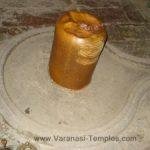
- The Sanctum (Garbhagriha): The Agneeshwar Linga resides in a dark, intimate sanctum. The Linga is naturally formed and is often covered in a thick layer of Chandana (sandalwood paste) and Bhasma (sacred ash).
- Carvings: The exterior walls feature carvings depicting scenes from the Kashi Khand, including the battle between Indra and Grahapati. The lintel of the main door features Ganesha and Nandi.
- Mandapa: A small pillared hall allows devotees to gather for prayers, though the space is intimate due to the urban setting.
4. Darshan & Ritual Logistics
Visiting the Agneeshwar Temple is a journey into the spiritual heart of Kashi. It is recommended to check specific timings during festivals, as the temple remains open throughout the day with slight breaks.
Daily Timings
| Session | Timing | Activity |
|---|---|---|
| Morning Darshan | 05:00 AM – 12:00 PM | Opening, Mangala Aarti, Abhishekam |
| Afternoon Break | 12:00 PM – 03:00 PM | Temple cleaning and deity rest |
| Evening Darshan | 03:00 PM – 11:00 PM | Shringar Aarti, Sandhya Aarti |
| Night Closing | 11:00 PM | Pashchim Aarti and closing |
Key Sevas & Online Booking
Devotees can perform various Sevas (rituals) to honor Lord Agneeshwar. While many rituals are performed on-site, standard Archana services are available. Note that online booking for this specific heritage shrine is managed through the general Varanasi temple trusts.
- Abhishekam: Ritual bathing of the Linga with water, milk, and honey (Best time: 6:00 AM).
- Maha Rudra Archana: Recitation of the Rudram mantra (11 chants).
- Cosmic Fire Ritual: Special Homa performed on request, specifically for nullifying planetary afflictions related to Mars and Sun.
For 2026 Festivals:
Maha Shivaratri: February 26, 2026
Shravan Mondays: July – August 2026 (Special Shringar and Bilva Archana throughout the month).
5. Practical Visitor Guidance
Given the location in the narrow lanes of Varanasi, preparation is key for a seamless experience.
- Dress Code: Traditional attire is recommended. Men should wear dhoti/kurta or trousers; women should wear sarees or full-length skirts. Modesty is strictly respected.
- Photography: Photography is strictly prohibited inside the inner sanctum (Garbhagriha). Exterior photography may be allowed at the discretion of the temple priests.
- Mobile/Lockers: There are no formal cloakrooms inside the temple due to its compact size. It is advisable to carry minimal belongings. Phones should be on silent mode.
- Crowd Management: The temple can get crowded during Monday mornings and festivals. Best hours to visit: Early morning (5:30 AM – 7:00 AM) or late evening (after 8:30 PM).
- Seasonal Advice: Summers (April–June) in Varanasi are scorching; carry a water bottle and wear breathable fabrics. Winters (Dec–Jan) are foggy; warm layers are necessary for pre-dawn visits.
6. Pilgrimage Connectivity
How to Reach
The Agneeshwar Temple is situated at House No. Ck.2/1, Patani Tola, Bhosala Ghat, Varanasi.
- By Air: The nearest airport is Lal Bahadur Shastri International Airport (VNS), approximately 25 km away. Taxis and hotel cabs are readily available.
- By Rail: The nearest railway station is Varanasi Junction (BSB) (approx. 5 km). Kashi Junction (approx. 3 km) is also a viable option.
- Local Transport (Walking/Rickshaw): The temple is located in the pedestrian-only zone of the old city. Take a cycle rickshaw to Chowk. From Chowk, walk towards the Sankata Devi Temple (a major landmark). The temple is located nearby in the Patani Tola lane.
- By Boat: Devotees can hire a boat to Bhosale Ghat or Ganesh Ghat (near Mehta Hospital). From the ghat, climb the steps up into the city to reach the temple.
Nearby Sacred Sites
Complete your pilgrimage circuit by visiting these nearby shrines:
- Sankata Devi Temple: Just a short walk away, dedicated to the Goddess who removes obstacles and grants courage.
- Manikarnika Ghat: The sacred cremation ground where Grahapati bathed. Witnessing the rituals here offers a profound perspective on life and death.
- Kashi Vishwanath Temple (New): Located about 1 km away, this is the primary Jyotirlinga of Varanasi and a must-visit for any Shiva devotee.
7. Frequently Asked Questions
Is there a VIP darshan entry at Agneeshwar Temple?
Due to the small size and heritage nature of the Agneeshwar Temple, there is no formal VIP entry system like in larger shrines. However, devotees wishing to perform special Abhishekam or Homa can contact the head priest (Pujari) in advance for priority access during non-peak hours.
What is the best day to visit for special prayers?
Monday is the most auspicious day, dedicated to Lord Shiva. The Pradosh Kaal (twilight) on Mondays is particularly powerful at this temple for seeking relief from malefic planetary effects.
Are there accommodation facilities nearby?
The immediate vicinity of the temple consists of residential lanes. However, the Chowk and Godaulia areas (5-10 minutes walk) are filled with guest houses and hotels ranging from budget to luxury heritage properties.
Can we perform Rudrabhishek here?
Yes, Rudrabhishek can be performed. However, due to space constraints, it is advisable to book this ritual in advance with the temple management or local priests to ensure the necessary materials and space are arranged.
Is the temple accessible for the elderly?
The temple is located in the old city, requiring a walk through narrow, uneven lanes. While cycle rickshaws can get you close, the final approach is on foot. There are no elevators or ramps within the temple premises, making it moderately challenging for those with mobility issues.
Photo Gallery
Contact Details
Official Address: House No. Ck.2/1, Patani Tola, Bhosala Ghat, Varanasi, Uttar Pradesh 221001
Phone: +91 542 239 8080 (Shri Kashi Vishwanath Temple Trust – General Inquiry)
Recent Posts

ओ सांवरे तूने ही मुझको संभाला – Lyrics & Meaning
ओ सांवरे तूने ही मुझको संभाला – A Prayer to Shyam Origin & Spiritual Essence Why This Bhajan Resonates Devotees chant this when overwhelmed by life’s storms—the refrain ‘तूने ही मुझको संभाला’ is the soul’s sigh of relief: “You…

कथा ये है महाराज मेरे की – Lyrics & Meaning
कथा ये है महाराज मेरे की छत्रपति संभाजी महाराज – A Prayer to Chhatrapati Sambhaji Maharaj Origin & Spiritual Essence Why This Bhajan Resonates Devotees chant this when their spirit feels tested—its powerful refrain “महाराज मेरे” is a soul’s…

Rigveda Samhita Yathartha Anuvada (ऋग्वेद संहिता यथार्थ अनुवाद) – Complete Set with Anvayartha & Hindi/English Translation
The Rigveda is the oldest surviving scripture of humanity and the foundational text of Sanātana Dharma. For serious students, scholars, UPSC aspirants studying ancient Indian history, Sanskrit learners, and spiritual seekers, a precise and grammatically structured translation is indispensable.…

आना भी अकेला है जाना भी अकेला है – Lyrics & Meaning | BharatTemples
आना भी अकेला है जाना भी अकेला है – A Prayer to the Divine Witness Origin & Spiritual Essence Why This Bhajan Resonates Devotees turn to this bhajan in moments of deep reflection—when life’s attachments begin to ache. The…

माता शेरावाली के द्वार जो भी जाता है – Lyrics & Meaning
माता शेरावाली के द्वार जो भी जाता है – A Prayer to Maa Sherawali Origin & Spiritual Essence Why This Bhajan Resonates Devotees turn to this bhajan in times of fear or uncertainty—its promise that no one leaves Maa’s…

मार लेना सपणी उबार लेणा भवरा – Lyrics & Meaning
मार लेना सपणी उबार लेणा भवरा – A Prayer to the Divine Beloved Origin & Spiritual Essence Why This Bhajan Resonates Devotees chant this in moments of deep vulnerability—its cry of “मार लेना सपणी, उबार लेणा भवरा” is the…

हमें श्याम सुंदर भरोसा तुम्हारा – Lyrics & Meaning
हमें श्याम सुंदर भरोसा तुम्हारा – A Prayer to Shyam Sundar Origin & Spiritual Essence Why This Bhajan Resonates Devotees chant this when feeling alone—its refrain ‘de do sahara’ is the soul’s cry for divine support. Lyrics in Hindi…

Mere Satguru Ne Di Thi Davai Lyrics in Hindi & Meaning
Mere Satguru Ne Di Thi Davai: Invoking the Guru’s Liberating Wisdom This soul-stirring bhajan venerates the Satguru (True Spiritual Master) as the divine physician who dispenses the only remedy for life’s deepest sufferings. Composed by Sant Karmaveer Tufani, it…

Janm Diyo Thari Maa Dukh Dekhiyo Lyrics in Hindi & Meaning
जन्म दियो थारी माँ दुख देखियो (Maa’s Grief Upon Birthing You) This soul-stirring Chetavani Bhajan (admonitory hymn) is addressed to the Divine Mother (Maa) – a call for repentance when children forget their filial duties in the dark age…
Bhadi Sabha Mein Thane Manaun Lyrics in Hindi & Meaning
Bhadi Sabha Mein Thane Manaun: Invoking the Spear-Wielding Mother Mata Bhawani (श्री ज्वाला भवानी), the fiery manifestation of Shakti worshipped as the Protector of Dharma in Her Dhaulagarh sanctum. Origin & Spiritual Essence Composed in Rajasthani folk tradition by…