
Contents
- 1 Atmajyoti Ashram, Vadodara: A Definitive Pilgrimage Guide
Atmajyoti Ashram, Vadodara: A Definitive Pilgrimage Guide
1. Introduction & Spiritual Essence
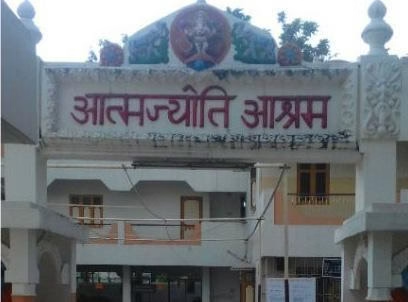
Atmajyoti Ashram, situated in the serene locality of Subhanpura in Vadodara (Baroda), Gujarat, stands as a beacon for practitioners of Santana Dharma. Unlike the ancient stone temples of antiquity, this ashram functions as a vibrant spiritual hub dedicated to the dissemination of Vedic wisdom, Brahmacharya (celibacy), and strict vegetarianism.
The Deity and Spiritual Form
While Atmajyoti Ashram does not house a traditional Swayambhu (self-manifested) murti, the sanctum is devoted to the Supreme Consciousness (Atman) and the teachings of the Vedas. The primary focus here is the internalization of the divine—realizing the “Jyoti” (light) within the “Atma” (soul).
Phalaśruti: Why Devotees Visit
Devotees and spiritual seekers flock to Atmajyoti Ashram for specific spiritual benefits:
- Clarity of Mind: Through the practice of Brahmacharya and meditation, visitors report a significant reduction in mental stress.
- Scriptural Wisdom: Unlike conventional darshan, the benefit here is knowledge (Jnana)—understanding the depths of the Bhagavad Gita and Upanishads.
- Community Harmony: Engaging in a lifestyle that prioritizes vegetarianism and spiritual discipline fosters a sense of collective upliftment.
2. Historical Origins & Scriptural Legend
Atmajyoti Ashram was established with a modern yet traditional vision to keep the flame of Santana Dharma alive in urban Vadodara. It was founded by Pujya Shri Atmabodh Saraswati, a disciple of Pujya Shri Swami Brahmadutt Saraswati.
Founding Vision
According to the ashram’s records, the institution was formally established to practice and propagate the tenets of Sanatana Dharma strictly. The ashram serves as a residence (Ashram) for students and spiritual aspirants, maintaining a disciplined schedule similar to ancient Gurukuls.
Scriptural and Oral Traditions
The practices here are rooted in the Shankaracharya Parampara. Tradition holds that the ashram continues the lineage of Shri Swami Brahmadutt Saraswati, who was a renowned ascetic of the Govardhan Math lineage (Puri, Odisha). The ashram follows the Digambara Akhara traditions, maintaining the sanctity of the “Tyaga” (renunciation) lifestyle amidst the urban landscape of Vadodara.
3. Architectural Marvels
The architecture of Atmajyoti Ashram is a blend of traditional Indian ashram design and functional modernity. It is designed to facilitate a contemplative lifestyle rather than just darshan.
Style and Vastu
The layout follows Vastu Shastra principles, ensuring that the energy flows from the residential quarters to the meditation hall (Gyan Yagya Shala) unimpeded. The structure prioritizes open spaces, allowing sunlight (Jyoti) to fill the rooms—a symbolic representation of the ashram’s name.
Notable Features
- The Yagya Shala: A central space for fire rituals (Havans) and Vedic chanting. The acoustics are designed to amplify the resonance of Mantras.
- The Library: Stocked with ancient scriptures, the library is an architectural space designed for deep study and silence.
- Vegetarian Kitchen (Bhojanalaya): Designed with separate areas for cooking and serving to maintain strict Sattvic standards.
Note: As a modern ashram, it does not carry an ASI or UNESCO classification, but it is a protected heritage site for the local spiritual community.
4. Darshan & Ritual Logistics
The ashram operates on a schedule conducive to Brahmacharya and spiritual discipline. Visitors are advised to confirm timings on specific festival days.
Daily Timings
| Activity | Morning | Evening |
|---|---|---|
| Mangala Aarti (Morning Prayers) | 06:00 AM | – |
| Gyan Yagya / Havan | 07:30 AM | 06:00 PM |
| Bhagavad Gita Path | 08:30 AM | – |
| Bhojan (Prasad) (Lunch/ Dinner) | 12:30 PM | 07:30 PM |
| Ashram Library | 10:00 AM – 1:00 PM | 4:00 PM – 8:00 PM |
Key Sevas & Online Booking
Unlike large temple trusts, the ashram operates primarily on community service (Seva) and donations. However, specific arrangements can be made for:
- Sponsor a Yagya: Devotees can sponsor fire rituals for specific life events.
- Guru Dakshina: Offerings to the spiritual guides.
Booking: It is recommended to call the ashram office at 02652398094 prior to arrival to schedule a meeting with the head priest or to reserve a seat in the Yagya Shala.
2026 Festival Schedule (Specific Dates)
The ashram observes major Sanatana festivals with special discourses and Yagyopaveeta (Sacred Thread) ceremonies.
- January 14, 2026: Makar Sankranti – Special Havan for prosperity.
- March 26, 2026: Ram Navami – 24-hour continuous chanting.
- August 15, 2026: Janmashtami – Night-long vigil (Jagran).
- October 10, 2026: Sharad Purnima – Special offerings of Kheer and spiritual discourses.
5. Practical Visitor Guidance
Dress Code & Etiquette
Being a center of Brahmacharya, modesty is paramount. Visitors should wear traditional Indian attire (Kurta-Pajama or Saree/Salwar Kameez). Western attire (shorts/leggings) is discouraged inside the prayer hall.
Photography & Mobiles
Photography is strictly prohibited inside the meditation halls and library. Mobile phones must be kept on silent mode. Lockers are available at the entrance for bags and electronics.
Accessibility
The ashram is located on a flat road in Subhanpura. It is wheelchair accessible for the ground floor areas, which includes the prayer hall and dining area.
Crowd Management & Seasonal Advice
- Best Hours: Mornings (6 AM – 9 AM) are quietest. Sundays can be crowded with weekly devotees.
- Seasonal: Summers in Vadodara (April-June) are extremely hot. If visiting during these months, carry a water bottle and an umbrella. The ashram provides water, but personal hydration is crucial.
6. Pilgrimage Connectivity
How to Reach
- By Air: Vadodara Airport (BDQ) is the nearest airport, approximately 7 km away (15-20 mins drive).
- By Train: Vadodara Junction (BRC) is the main railway station, about 6 km from the ashram.
- By Road: The ashram is located on Atmajyoti Ashram Road, Subhanpura. It is accessible via NH 64 (Vadodara-Ahmedabad Highway) and is easily reachable by auto-rickshaw or city bus from the Railway Station.
Nearby Sacred Sites (Pilgrimage Circuit)
While visiting Vadodara, devotees can extend their pilgrimage to these nearby sites:
- Ekllesh Mahadev Temple: Located within the city, known for its ancient Shiva Linga.
- Kirti Mandir: A historic memorial dedicated to Mahatma Gandhi, reflecting the cultural heritage of Baroda.
- Sayaji Baug (Kamati Baug): A large garden complex housing temples and a zoo, perfect for a meditative walk.
7. Frequently Asked Questions (FAQs)
Is there a VIP darshan entry at Atmajyoti Ashram?
Atmajyoti Ashram functions as a spiritual learning center rather than a crowded tourist temple. Therefore, there is no commercial VIP darshan system. However, devotees seeking a private audience with the head priest may request an appointment via phone.
Does the ashram provide accommodation?
Yes, the ashram has residential facilities (Param Bungalows) primarily for students and long-term guests. Short-term stay for devotees is subject to availability and prior approval. It is not a hotel; silence and discipline are mandatory.
Is non-vegetarian food allowed inside the ashram?
No. Atmajyoti Ashram strictly practices vegetarianism (Satvik diet). Bringing non-vegetarian food, alcohol, or tobacco products onto the premises is strictly prohibited.
What is the best time to visit Vadodara for a spiritual tour?
The ideal time is between November and February. The weather is cool and pleasant, making it comfortable to attend outdoor Havans and walk around the city’s sacred sites.
Can I volunteer at the ashram?
Yes, the ashram welcomes volunteers for Seva (service) in cooking, cleaning, and library management. Interested individuals should contact the administration at least one week in advance.
Photo Gallery
Contact Details
Address: Atmajyoti Ashram Road, Ellora Park, Subhanpura, Near Amra Kunj Society, Race Course Circle North, Vadodara, Gujarat 390023
Phone: 02652398094
Recent Posts

ओ सांवरे तूने ही मुझको संभाला – Lyrics & Meaning
ओ सांवरे तूने ही मुझको संभाला – A Prayer to Shyam Origin & Spiritual Essence Why This Bhajan Resonates Devotees chant this when overwhelmed by life’s storms—the refrain ‘तूने ही मुझको संभाला’ is the soul’s sigh of relief: “You…

कथा ये है महाराज मेरे की – Lyrics & Meaning
कथा ये है महाराज मेरे की छत्रपति संभाजी महाराज – A Prayer to Chhatrapati Sambhaji Maharaj Origin & Spiritual Essence Why This Bhajan Resonates Devotees chant this when their spirit feels tested—its powerful refrain “महाराज मेरे” is a soul’s…

Rigveda Samhita Yathartha Anuvada (ऋग्वेद संहिता यथार्थ अनुवाद) – Complete Set with Anvayartha & Hindi/English Translation
The Rigveda is the oldest surviving scripture of humanity and the foundational text of Sanātana Dharma. For serious students, scholars, UPSC aspirants studying ancient Indian history, Sanskrit learners, and spiritual seekers, a precise and grammatically structured translation is indispensable.…

आना भी अकेला है जाना भी अकेला है – Lyrics & Meaning | BharatTemples
आना भी अकेला है जाना भी अकेला है – A Prayer to the Divine Witness Origin & Spiritual Essence Why This Bhajan Resonates Devotees turn to this bhajan in moments of deep reflection—when life’s attachments begin to ache. The…

माता शेरावाली के द्वार जो भी जाता है – Lyrics & Meaning
माता शेरावाली के द्वार जो भी जाता है – A Prayer to Maa Sherawali Origin & Spiritual Essence Why This Bhajan Resonates Devotees turn to this bhajan in times of fear or uncertainty—its promise that no one leaves Maa’s…

मार लेना सपणी उबार लेणा भवरा – Lyrics & Meaning
मार लेना सपणी उबार लेणा भवरा – A Prayer to the Divine Beloved Origin & Spiritual Essence Why This Bhajan Resonates Devotees chant this in moments of deep vulnerability—its cry of “मार लेना सपणी, उबार लेणा भवरा” is the…

हमें श्याम सुंदर भरोसा तुम्हारा – Lyrics & Meaning
हमें श्याम सुंदर भरोसा तुम्हारा – A Prayer to Shyam Sundar Origin & Spiritual Essence Why This Bhajan Resonates Devotees chant this when feeling alone—its refrain ‘de do sahara’ is the soul’s cry for divine support. Lyrics in Hindi…

Mere Satguru Ne Di Thi Davai Lyrics in Hindi & Meaning
Mere Satguru Ne Di Thi Davai: Invoking the Guru’s Liberating Wisdom This soul-stirring bhajan venerates the Satguru (True Spiritual Master) as the divine physician who dispenses the only remedy for life’s deepest sufferings. Composed by Sant Karmaveer Tufani, it…

Janm Diyo Thari Maa Dukh Dekhiyo Lyrics in Hindi & Meaning
जन्म दियो थारी माँ दुख देखियो (Maa’s Grief Upon Birthing You) This soul-stirring Chetavani Bhajan (admonitory hymn) is addressed to the Divine Mother (Maa) – a call for repentance when children forget their filial duties in the dark age…
Bhadi Sabha Mein Thane Manaun Lyrics in Hindi & Meaning
Bhadi Sabha Mein Thane Manaun: Invoking the Spear-Wielding Mother Mata Bhawani (श्री ज्वाला भवानी), the fiery manifestation of Shakti worshipped as the Protector of Dharma in Her Dhaulagarh sanctum. Origin & Spiritual Essence Composed in Rajasthani folk tradition by…