

Contents
न हि देहभृता शक्यं त्यक्तुं कर्माण्यशेषत: |
यस्तु कर्मफलत्यागी स त्यागीत्यभिधीयते |
na hi deha-bhṛitā śhakyaṁ tyaktuṁ karmāṇy aśheṣhataḥ
yas tu karma-phala-tyāgī sa tyāgīty abhidhīyate
भावार्थ:
क्योंकि शरीरधारी किसी भी मनुष्य द्वारा सम्पूर्णता से सब कर्मों का त्याग किया जाना शक्य नहीं है, इसलिए जो कर्मफल त्यागी है, वही त्यागी है- यह कहा जाता है॥11॥
Translation
For the embodied being, it is impossible to give up activities entirely. But those who relinquish the fruits of their actions are said to be truly renounced.
English Translation Of Sri Shankaracharya’s Sanskrit Commentary By Swami Gambirananda
18.11 Deha-bhrta, for one who holds on to a body-one who maintains (bibharti) a body (deha) is called a deha-bhrt. One who has self-indentification with the body is called a deha-bhrt, but not a so a man of discrimination; for he has been excluded from the eligibility for agentship by such texts as, ‘He who knows this One is indestructible৷৷.’ etc. Hence, for that unenlightened person who holds on to the body, he, since; it is na, not; sakyam, possible; tyaktum, to give up, renounce; karmani, actions; asesatah, entirely, totally; therefore the ignorant person who is competent (for rites and duties), yah, who; tu, on the other hand; karma-phala-tyagi, renounces results of actions, relinishes only the hankering for the results of actions while performing the nityakarmas; sah, he; is abhidhiyate, called; tyagi iti, a man of renunciation-even though he continues to be a man of rites and duties. This is said by way of eulogy.
Therefore total renunciation of actions is possible only for one who has realized the supreme Truth, who does not hold on to the body, and who is devoid of the idea that the body is the Self.
Again, what is that purpose which is accomplished through renunciation of all actions? This is being stated:
Recent Posts

आना भी अकेला है जाना भी अकेला है – Lyrics & Meaning | BharatTemples
आना भी अकेला है जाना भी अकेला है – A Prayer to the Divine Witness Origin & Spiritual Essence Why This Bhajan Resonates Devotees turn to this bhajan in moments of deep reflection—when life’s attachments begin to ache. The…

माता शेरावाली के द्वार जो भी जाता है – Lyrics & Meaning
माता शेरावाली के द्वार जो भी जाता है – A Prayer to Maa Sherawali Origin & Spiritual Essence Why This Bhajan Resonates Devotees turn to this bhajan in times of fear or uncertainty—its promise that no one leaves Maa’s…

मार लेना सपणी उबार लेणा भवरा – Lyrics & Meaning
मार लेना सपणी उबार लेणा भवरा – A Prayer to the Divine Beloved Origin & Spiritual Essence Why This Bhajan Resonates Devotees chant this in moments of deep vulnerability—its cry of “मार लेना सपणी, उबार लेणा भवरा” is the…

हमें श्याम सुंदर भरोसा तुम्हारा – Lyrics & Meaning
हमें श्याम सुंदर भरोसा तुम्हारा – A Prayer to Shyam Sundar Origin & Spiritual Essence Why This Bhajan Resonates Devotees chant this when feeling alone—its refrain ‘de do sahara’ is the soul’s cry for divine support. Lyrics in Hindi…

Mere Satguru Ne Di Thi Davai Lyrics in Hindi & Meaning
Mere Satguru Ne Di Thi Davai: Invoking the Guru’s Liberating Wisdom This soul-stirring bhajan venerates the Satguru (True Spiritual Master) as the divine physician who dispenses the only remedy for life’s deepest sufferings. Composed by Sant Karmaveer Tufani, it…

Janm Diyo Thari Maa Dukh Dekhiyo Lyrics in Hindi & Meaning
जन्म दियो थारी माँ दुख देखियो (Maa’s Grief Upon Birthing You) This soul-stirring Chetavani Bhajan (admonitory hymn) is addressed to the Divine Mother (Maa) – a call for repentance when children forget their filial duties in the dark age…
Bhadi Sabha Mein Thane Manaun Lyrics in Hindi & Meaning
Bhadi Sabha Mein Thane Manaun: Invoking the Spear-Wielding Mother Mata Bhawani (श्री ज्वाला भवानी), the fiery manifestation of Shakti worshipped as the Protector of Dharma in Her Dhaulagarh sanctum. Origin & Spiritual Essence Composed in Rajasthani folk tradition by…
श्याम सुन्दरवा छोटे छोटे कनुवा Lyrics & Meaning
श्याम सुन्दरवा छोटे छोटे कनुवा (Shyam Sundarva Chhote Chhote Kanuva) is a heartfelt invocation to Lord Krishna in his most enchanting form—Shyam Sundar (the dark, beautiful one). This bhajan is a plea for the divine child Kanha to grace…
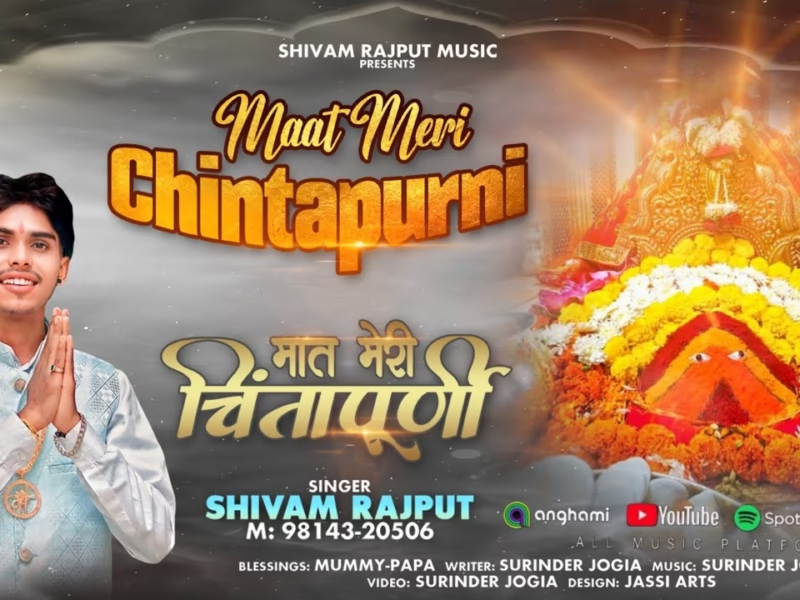
Maat Meri Chintapurni Lyrics in Hindi & Meaning
Maat Meri Chintapurni is a heartfelt devotional prayer dedicated to Maa Chintapurni, a form of the Divine Mother. She is revered as the remover of worries and the granter of wishes, especially venerated in the Himalayan region of Himachal…
थारी रे नदियां का ढावा पे खीची राजा Lyrics & Meaning
खीची राजा का अद्भुत युद्ध: एक शौर्य गाथा यह भजन एक पौराणिक या ऐतिहासिक शूरवीर राजा की वीरता का वर्णन करता है, जो प्रायः गुजराती लोक संस्कृति में लोककथाओं का हिस्सा है। इसकी रचना दुर्गेश कटारा ने की है…