
Contents
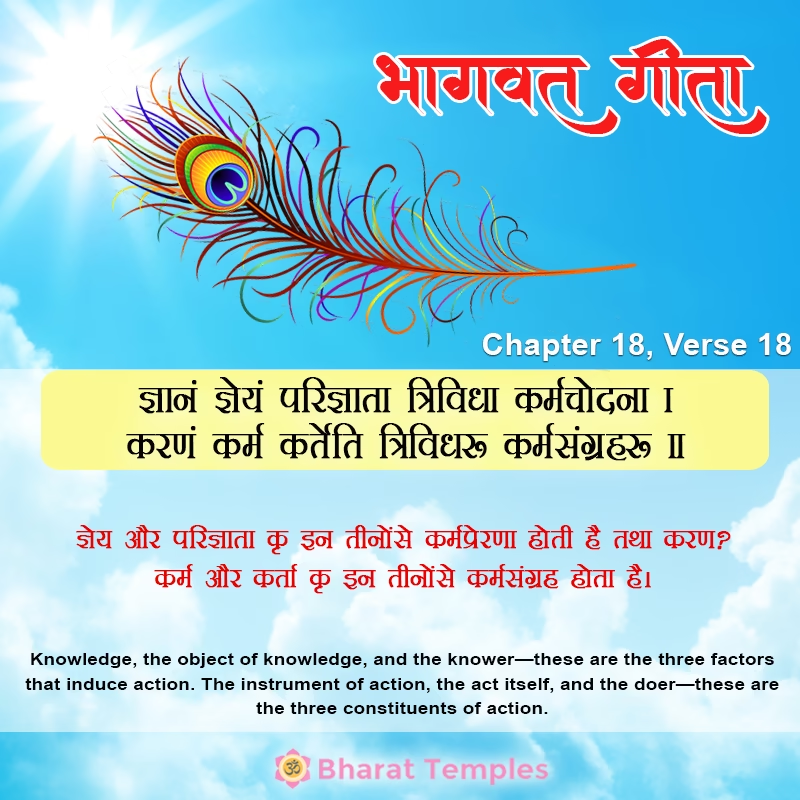
ज्ञानं ज्ञेयं परिज्ञाता त्रिविधा कर्मचोदना |
करणं कर्म कर्तेति त्रिविध: कर्मसंग्रह: |
jñānaṁ jñeyaṁ parijñātā tri-vidhā karma-chodanā
karaṇaṁ karma karteti tri-vidhaḥ karma-saṅgrahaḥ
भावार्थ:
।।18.18।।ज्ञान? ज्ञेय और परिज्ञाता — इन तीनोंसे कर्मप्रेरणा होती है तथा करण? कर्म और कर्ता — इन तीनोंसे कर्मसंग्रह होता है।
Translation
Knowledge, the object of knowledge, and the knower—these are the three factors that induce action. The instrument of action, the act itself, and the doer—these are the three constituents of action.
English Translation Of Sri Shankaracharya’s Sanskrit Commentary By Swami Gambirananda
18.18 Jnanam, knowledge (-being derived in the sense of ‘that through which something is known’, jnana means knowledge concerning all things in general-): so also jneyam, the object of knowledge (-that also is a reference to all objects in general-); similarly, parijnata, the knower, the experiencer, a product of ignorance, who partakes of the nature of the limiting adjuncts;-thus, this tripartite group formed by these is the trividha, threefold; karma-codana, inducement ot action, inducer of all actions in general. For, it is when the three, viz knowledge etc., combine that commencement of all actions meant either for acceptance or rejection [Acceptance, rejection or indifference.] are possible. After that, what are initiated by the five, viz locus etc., and are grouped in three ways according to the differences of their being based on speech, mind and body become comprehended under the three, viz instrument etc. This is what is being stated: Karma-sangrahah, the comprehension [It is well know that actions are based on the three-instrument etc.] of actions; iti, comes under; trividhah, three heads, three classes; viz karanam, the instrument (-derived in the sense of that through which anything is done-), i.e. the external (organs) (ear etc.) and the internal (organs) (intellect etc.); karma, the object (-derivatively meaning that which is most cherished by the subject and is achieved through an act-); and karta, the subject (agent), who employs the instrument etc., who partakes of the nature of the limiting adjuncts.
Sangrahah is derived thus: that in which something is comprehended. The comprehension of action (karma) is karma-sangrahah. Indeed, action becomes included in these three. Hence is this ‘threefold comprehension of action’.
Now then, since action, instrument and result are all constituted by the gunas, it becomes necessary to state the three fold variety in them based on the differences among the gunas, viz sattva, rajas and tamas. Hence it is begun:
Recent Posts

आना भी अकेला है जाना भी अकेला है – Lyrics & Meaning | BharatTemples
आना भी अकेला है जाना भी अकेला है – A Prayer to the Divine Witness Origin & Spiritual Essence Why This Bhajan Resonates Devotees turn to this bhajan in moments of deep reflection—when life’s attachments begin to ache. The…

माता शेरावाली के द्वार जो भी जाता है – Lyrics & Meaning
माता शेरावाली के द्वार जो भी जाता है – A Prayer to Maa Sherawali Origin & Spiritual Essence Why This Bhajan Resonates Devotees turn to this bhajan in times of fear or uncertainty—its promise that no one leaves Maa’s…

मार लेना सपणी उबार लेणा भवरा – Lyrics & Meaning
मार लेना सपणी उबार लेणा भवरा – A Prayer to the Divine Beloved Origin & Spiritual Essence Why This Bhajan Resonates Devotees chant this in moments of deep vulnerability—its cry of “मार लेना सपणी, उबार लेणा भवरा” is the…

हमें श्याम सुंदर भरोसा तुम्हारा – Lyrics & Meaning
हमें श्याम सुंदर भरोसा तुम्हारा – A Prayer to Shyam Sundar Origin & Spiritual Essence Why This Bhajan Resonates Devotees chant this when feeling alone—its refrain ‘de do sahara’ is the soul’s cry for divine support. Lyrics in Hindi…

Mere Satguru Ne Di Thi Davai Lyrics in Hindi & Meaning
Mere Satguru Ne Di Thi Davai: Invoking the Guru’s Liberating Wisdom This soul-stirring bhajan venerates the Satguru (True Spiritual Master) as the divine physician who dispenses the only remedy for life’s deepest sufferings. Composed by Sant Karmaveer Tufani, it…

Janm Diyo Thari Maa Dukh Dekhiyo Lyrics in Hindi & Meaning
जन्म दियो थारी माँ दुख देखियो (Maa’s Grief Upon Birthing You) This soul-stirring Chetavani Bhajan (admonitory hymn) is addressed to the Divine Mother (Maa) – a call for repentance when children forget their filial duties in the dark age…
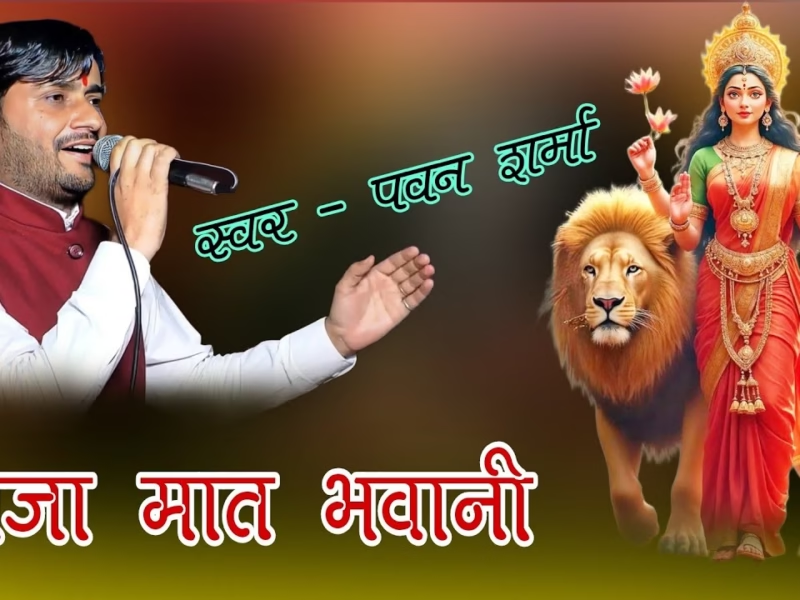
Bhadi Sabha Mein Thane Manaun Lyrics in Hindi & Meaning
Bhadi Sabha Mein Thane Manaun: Invoking the Spear-Wielding Mother Mata Bhawani (श्री ज्वाला भवानी), the fiery manifestation of Shakti worshipped as the Protector of Dharma in Her Dhaulagarh sanctum. Origin & Spiritual Essence Composed in Rajasthani folk tradition by…

श्याम सुन्दरवा छोटे छोटे कनुवा Lyrics & Meaning
श्याम सुन्दरवा छोटे छोटे कनुवा (Shyam Sundarva Chhote Chhote Kanuva) is a heartfelt invocation to Lord Krishna in his most enchanting form—Shyam Sundar (the dark, beautiful one). This bhajan is a plea for the divine child Kanha to grace…
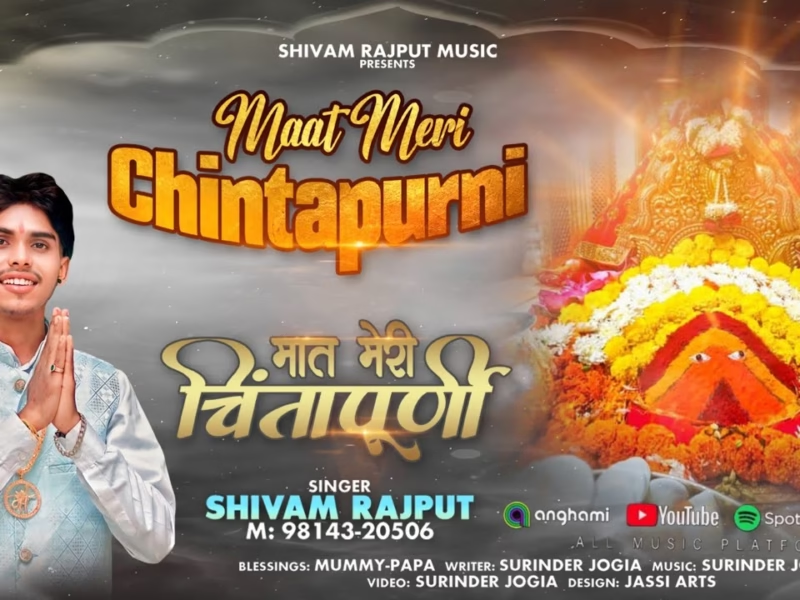
Maat Meri Chintapurni Lyrics in Hindi & Meaning
Maat Meri Chintapurni is a heartfelt devotional prayer dedicated to Maa Chintapurni, a form of the Divine Mother. She is revered as the remover of worries and the granter of wishes, especially venerated in the Himalayan region of Himachal…
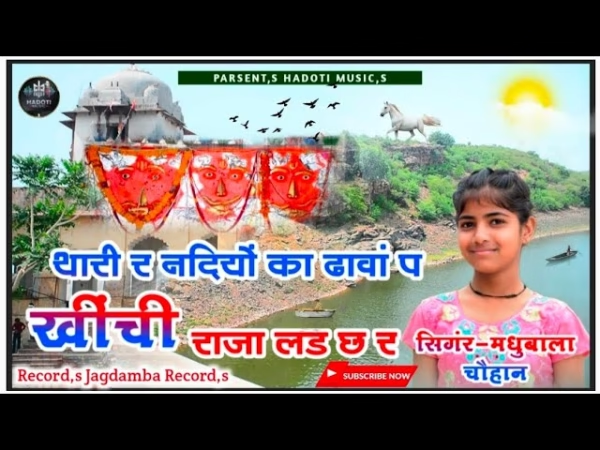
थारी रे नदियां का ढावा पे खीची राजा Lyrics & Meaning
खीची राजा का अद्भुत युद्ध: एक शौर्य गाथा यह भजन एक पौराणिक या ऐतिहासिक शूरवीर राजा की वीरता का वर्णन करता है, जो प्रायः गुजराती लोक संस्कृति में लोककथाओं का हिस्सा है। इसकी रचना दुर्गेश कटारा ने की है…