
Contents
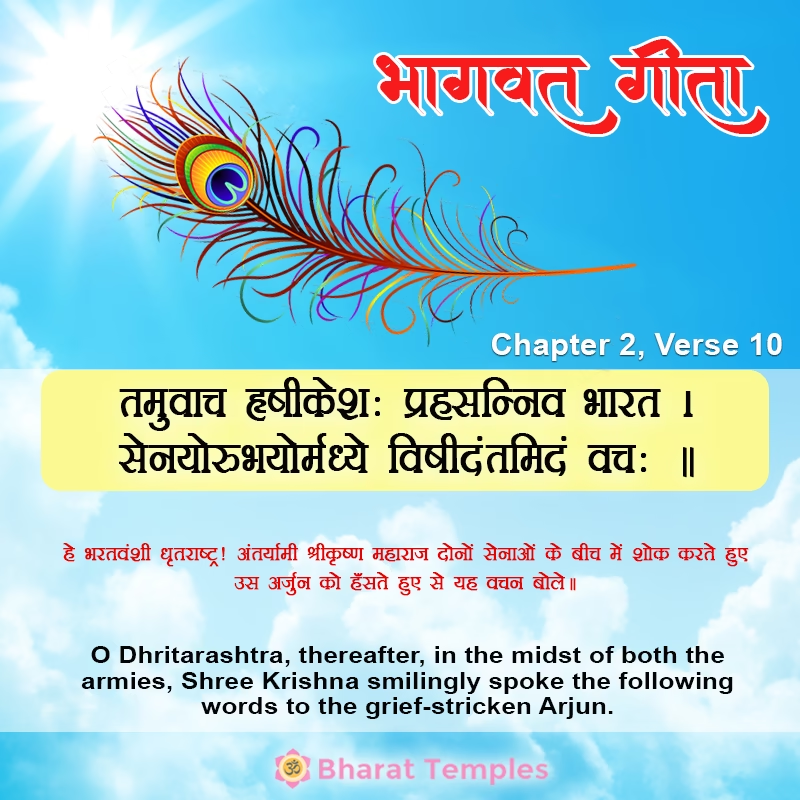
Chapter 2, Verse 10
तमुवाच हृषीकेश: प्रहसन्निव भारत |
सेनयोरुभयोर्मध्ये विषीदन्तमिदं वच: || 2.10 ||
tam-uvācha hṛiṣhīkeśhaḥ prahasanniva bhārata
senayorubhayor-madhye viṣhīdantam-idaṁ vachaḥ
भावार्थ:
हे भरतवंशी धृतराष्ट्र! अंतर्यामी श्रीकृष्ण महाराज दोनों सेनाओं के बीच में शोक करते हुए उस अर्जुन को हँसते हुए से यह वचन बोले॥10॥
Translation
O Dhritarashtra, thereafter, in the midst of both the armies, Shree Krishna smilingly spoke the following words to the grief-stricken Arjun.
Explanation in English:
This verse is the calm before the spiritual storm — a gentle moment of divine compassion before Krishna begins His profound teachings.
Let’s understand it line by line:
- “Tam uvāca Hṛṣīkeśaḥ” – “Hrishikesha (Krishna) spoke to him (Arjuna)…”
The name Hrishikesha means “Lord of the senses”, showing Krishna’s divine control over body and mind. - “Prahasan-niva” – “Smiling (gently)…”
Krishna smiles—not mockingly, but compassionately, with deep understanding.
His smile reflects wisdom, love, and confidence—He knows the confusion Arjuna feels and is ready to guide him out of it. - “Bhārata” – Addressed to Dhritarashtra (the blind king), Sanjaya continues narrating the scene.
- “Senayor ubhayor madhye” – “In the middle of both armies…”
This location is symbolic: Arjuna is stuck between two forces—duty and attachment, war and peace, clarity and confusion. - “Viṣīdantam idaṁ vacaḥ” – “To the one who was sorrowful, He spoke these words.”
Arjuna is immersed in grief, and now Krishna will speak to awaken his wisdom and courage.
Key Takeaway:
Krishna’s smile and calm presence mark the beginning of a shift—from emotional breakdown to spiritual awakening. The compassionate Guru is about to begin His teachings.
This verse sets the tone for the next section, where Krishna will begin explaining the nature of the soul, duty (dharma), and the path to liberation.
Recent Posts

Shri Kaamkoteeshwar Mandir, Varanasi – History & Significance
In the heart of Kashi, the eternal city of Lord Shiva, where the Ganges flows with celestial grace, stands the Shri Kaamkoteeshwar Mandir. This sacred Sannidhi is not merely a temple but a profound spiritual bridge between the Northern…

ओ सांवरे तूने ही मुझको संभाला – Lyrics & Meaning
ओ सांवरे तूने ही मुझको संभाला – A Prayer to Shyam Origin & Spiritual Essence Why This Bhajan Resonates Devotees chant this when overwhelmed by life’s storms—the refrain ‘तूने ही मुझको संभाला’ is the soul’s sigh of relief: “You…

कथा ये है महाराज मेरे की – Lyrics & Meaning
कथा ये है महाराज मेरे की छत्रपति संभाजी महाराज – A Prayer to Chhatrapati Sambhaji Maharaj Origin & Spiritual Essence Why This Bhajan Resonates Devotees chant this when their spirit feels tested—its powerful refrain “महाराज मेरे” is a soul’s…

Rigveda Samhita Yathartha Anuvada (ऋग्वेद संहिता यथार्थ अनुवाद) – Complete Set with Anvayartha & Hindi/English Translation
The Rigveda is the oldest surviving scripture of humanity and the foundational text of Sanātana Dharma. For serious students, scholars, UPSC aspirants studying ancient Indian history, Sanskrit learners, and spiritual seekers, a precise and grammatically structured translation is indispensable.…

आना भी अकेला है जाना भी अकेला है – Lyrics & Meaning | BharatTemples
आना भी अकेला है जाना भी अकेला है – A Prayer to the Divine Witness Origin & Spiritual Essence Why This Bhajan Resonates Devotees turn to this bhajan in moments of deep reflection—when life’s attachments begin to ache. The…

माता शेरावाली के द्वार जो भी जाता है – Lyrics & Meaning
माता शेरावाली के द्वार जो भी जाता है – A Prayer to Maa Sherawali Origin & Spiritual Essence Why This Bhajan Resonates Devotees turn to this bhajan in times of fear or uncertainty—its promise that no one leaves Maa’s…

मार लेना सपणी उबार लेणा भवरा – Lyrics & Meaning
मार लेना सपणी उबार लेणा भवरा – A Prayer to the Divine Beloved Origin & Spiritual Essence Why This Bhajan Resonates Devotees chant this in moments of deep vulnerability—its cry of “मार लेना सपणी, उबार लेणा भवरा” is the…

हमें श्याम सुंदर भरोसा तुम्हारा – Lyrics & Meaning
हमें श्याम सुंदर भरोसा तुम्हारा – A Prayer to Shyam Sundar Origin & Spiritual Essence Why This Bhajan Resonates Devotees chant this when feeling alone—its refrain ‘de do sahara’ is the soul’s cry for divine support. Lyrics in Hindi…

Mere Satguru Ne Di Thi Davai Lyrics in Hindi & Meaning
Mere Satguru Ne Di Thi Davai: Invoking the Guru’s Liberating Wisdom This soul-stirring bhajan venerates the Satguru (True Spiritual Master) as the divine physician who dispenses the only remedy for life’s deepest sufferings. Composed by Sant Karmaveer Tufani, it…

Janm Diyo Thari Maa Dukh Dekhiyo Lyrics in Hindi & Meaning
जन्म दियो थारी माँ दुख देखियो (Maa’s Grief Upon Birthing You) This soul-stirring Chetavani Bhajan (admonitory hymn) is addressed to the Divine Mother (Maa) – a call for repentance when children forget their filial duties in the dark age…