
Contents
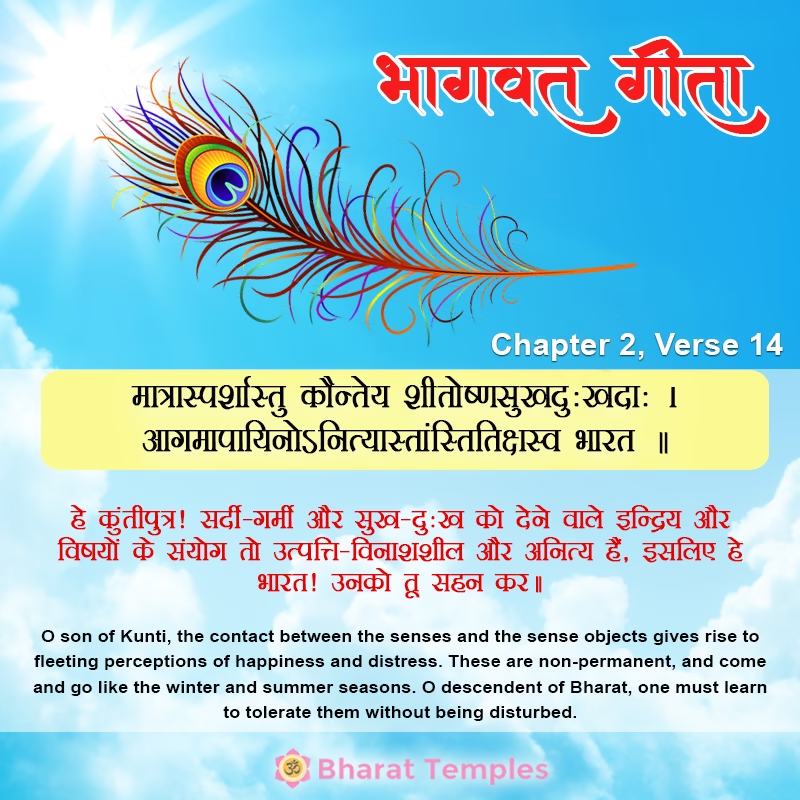
Chapter 2, Verse 14
मात्रास्पर्शास्तु कौन्तेय शीतोष्णसुखदु: खदा: |
आगमापायिनोऽनित्यास्तांस्तितिक्षस्व भारत || 14||
mātrā-sparśhās tu kaunteya śhītoṣhṇa-sukha-duḥkha-dāḥ
āgamāpāyino ’nityās tans-titikṣhasva bhārata
भावार्थ:
हे कुंतीपुत्र! सर्दी-गर्मी और सुख-दुःख को देने वाले इन्द्रिय और विषयों के संयोग तो उत्पत्ति-विनाशशील और अनित्य हैं, इसलिए हे भारत! उनको तू सहन कर॥14॥
Translation
O son of Kunti, the contact between the senses and the sense objects gives rise to fleeting perceptions of happiness and distress. These are non-permanent, and come and go like the winter and summer seasons. O descendent of Bharat, one must learn to tolerate them without being disturbed.
Explanation in English:
Krishna now explains the nature of physical and emotional experiences — such as pleasure, pain, heat, cold, joy, and sorrow.
1. “Mātrā-sparśāḥ” – “Contact with the senses”
Experiences like pain or pleasure arise when the senses interact with the external world — for example, the skin feels cold, or the eyes see something beautiful.
2. “Śītoṣṇa-sukha-duḥkha-dāḥ” – “They give rise to heat and cold, pleasure and pain”
All such sensations are opposites — temporary reactions of the body and mind.
3. “Āgamāpāyinaḥ anityāḥ” – “They come and go; they are impermanent”
Krishna reminds Arjuna that these sensations do not last — they arrive, stay for a while, and then pass away, like seasons.
4. “Tāṁs titikṣasva” – “Endure them patiently”
The wise way to deal with them is tolerance (titikṣā) — to remain steady without being disturbed by pain or carried away by pleasure.
Key Teaching:
Krishna is training Arjuna to develop equanimity — to not let temporary experiences control his emotions or decisions.
- Life will always bring opposites — pleasure & pain, success & failure, joy & sorrow.
- A true seeker or warrior learns to withstand them calmly, knowing they are not permanent.
Summary:
“Pleasure and pain come and go like seasons — endure them calmly, for they do not last.”
This verse introduces the practice of emotional resilience and inner strength, which is essential for walking the path of dharma with clarity and peace.
Recent Posts

Shri Kaamkoteeshwar Mandir, Varanasi – History & Significance
In the heart of Kashi, the eternal city of Lord Shiva, where the Ganges flows with celestial grace, stands the Shri Kaamkoteeshwar Mandir. This sacred Sannidhi is not merely a temple but a profound spiritual bridge between the Northern…

ओ सांवरे तूने ही मुझको संभाला – Lyrics & Meaning
ओ सांवरे तूने ही मुझको संभाला – A Prayer to Shyam Origin & Spiritual Essence Why This Bhajan Resonates Devotees chant this when overwhelmed by life’s storms—the refrain ‘तूने ही मुझको संभाला’ is the soul’s sigh of relief: “You…

कथा ये है महाराज मेरे की – Lyrics & Meaning
कथा ये है महाराज मेरे की छत्रपति संभाजी महाराज – A Prayer to Chhatrapati Sambhaji Maharaj Origin & Spiritual Essence Why This Bhajan Resonates Devotees chant this when their spirit feels tested—its powerful refrain “महाराज मेरे” is a soul’s…

Rigveda Samhita Yathartha Anuvada (ऋग्वेद संहिता यथार्थ अनुवाद) – Complete Set with Anvayartha & Hindi/English Translation
The Rigveda is the oldest surviving scripture of humanity and the foundational text of Sanātana Dharma. For serious students, scholars, UPSC aspirants studying ancient Indian history, Sanskrit learners, and spiritual seekers, a precise and grammatically structured translation is indispensable.…

आना भी अकेला है जाना भी अकेला है – Lyrics & Meaning | BharatTemples
आना भी अकेला है जाना भी अकेला है – A Prayer to the Divine Witness Origin & Spiritual Essence Why This Bhajan Resonates Devotees turn to this bhajan in moments of deep reflection—when life’s attachments begin to ache. The…

माता शेरावाली के द्वार जो भी जाता है – Lyrics & Meaning
माता शेरावाली के द्वार जो भी जाता है – A Prayer to Maa Sherawali Origin & Spiritual Essence Why This Bhajan Resonates Devotees turn to this bhajan in times of fear or uncertainty—its promise that no one leaves Maa’s…

मार लेना सपणी उबार लेणा भवरा – Lyrics & Meaning
मार लेना सपणी उबार लेणा भवरा – A Prayer to the Divine Beloved Origin & Spiritual Essence Why This Bhajan Resonates Devotees chant this in moments of deep vulnerability—its cry of “मार लेना सपणी, उबार लेणा भवरा” is the…

हमें श्याम सुंदर भरोसा तुम्हारा – Lyrics & Meaning
हमें श्याम सुंदर भरोसा तुम्हारा – A Prayer to Shyam Sundar Origin & Spiritual Essence Why This Bhajan Resonates Devotees chant this when feeling alone—its refrain ‘de do sahara’ is the soul’s cry for divine support. Lyrics in Hindi…

Mere Satguru Ne Di Thi Davai Lyrics in Hindi & Meaning
Mere Satguru Ne Di Thi Davai: Invoking the Guru’s Liberating Wisdom This soul-stirring bhajan venerates the Satguru (True Spiritual Master) as the divine physician who dispenses the only remedy for life’s deepest sufferings. Composed by Sant Karmaveer Tufani, it…

Janm Diyo Thari Maa Dukh Dekhiyo Lyrics in Hindi & Meaning
जन्म दियो थारी माँ दुख देखियो (Maa’s Grief Upon Birthing You) This soul-stirring Chetavani Bhajan (admonitory hymn) is addressed to the Divine Mother (Maa) – a call for repentance when children forget their filial duties in the dark age…