Bhagavad Gita: Chapter 2, Verse 20
Receive daily temple updates, divine darshan, and morning bhajans directly on WhatsApp.
Contents
- 1 न जायते म्रियते वा कदाचि
- 2 नायं भूत्वा भविता वा न भूय: |
- 3 अजो नित्य: शाश्वतोऽयं पुराणो
- 4 न हन्यते हन्यमाने शरीरे || 20||
- 5 भावार्थ:
- 6 Translation
न जायते म्रियते वा कदाचि
नायं भूत्वा भविता वा न भूय: |
अजो नित्य: शाश्वतोऽयं पुराणो
न हन्यते हन्यमाने शरीरे || 20||
na jāyate mriyate vā kadāchin
nāyaṁ bhūtvā bhavitā vā na bhūyaḥ
ajo nityaḥ śhāśhvato ’yaṁ purāṇo
na hanyate hanyamāne śharīre
भावार्थ:
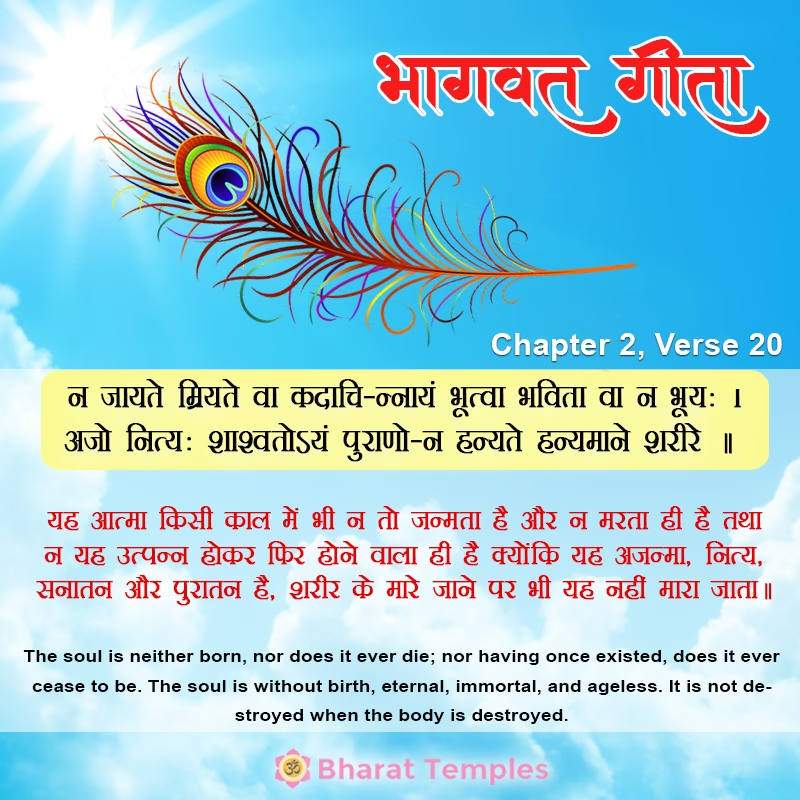
यह आत्मा किसी काल में भी न तो जन्मता है और न मरता ही है तथा न यह उत्पन्न होकर फिर होने वाला ही है क्योंकि यह अजन्मा, नित्य, सनातन और पुरातन है, शरीर के मारे जाने पर भी यह नहीं मारा जाता॥20॥
Translation
The soul is neither born, nor does it ever die; nor having once existed, does it ever cease to be. The soul is without birth, eternal, immortal, and ageless. It is not destroyed when the body is destroyed.
English Translation Of Sri Shankaracharya’s Sanskrit Commentary By Swami Gambirananda
2.20 Na kadacit, neverl; is ayam, this One; jayate, born i.e. the Self has no change in the form of being born to which matter is subject ; va, and ( va is used in the sense of and); na mriyate, It never dies. By this is denied the final change in the form of destruction. The word (na) kadacit), never, is connected with the denial of all kinds of changes thus never, is It born never does It die, and so on. Since ayam, this Self; bhutva, having come to exist, having experienced the process of origination; na, will not; bhuyah, again; abhavita, cease to be thereafter, therefore It does not die. For, in common parlance, that which ceases to exist after coming into being is said to die. From the use of the word va, nor, and na, it is understood that, unlike the body, this Self does not again come into existence after having been non-existent. Therefore It is not born. For, the words, ‘It is born’, are used with regard to something which comes into existence after having been non-existent. The Self is not like this. Therfore It is not born.
Since this is so, therefore It is ajah, birthless; and since It does not die, therefore It is nityah, eternal. Although all changes become negated by the denial of the first and the last kinds of changes, still changes occuring in the middle [For the six kinds of changes see note under verse 2.10.-Tr.] should be denied with their own respective terms by which they are implied. Therefore the text says sasvatah, undecaying,. so that all the changes, viz youth etc., which have not been mentioned may become negated. The change in the form of decay is denied by the word sasvata, that which lasts for ever. In Its own nature It does not decay because It is free from parts. And again, since it is without alities, there is no degeneration owing to the decay of any ality. Change in the form of growth, which is opposed to decay, is also denied by the word puranah, ancient. A thing that grows by the addition of some parts is said to increase and is also said to be new. But this Self was fresh even in the past due to Its partlessness. Thus It is puranah, i.e. It does not grow. So also, na hanyate, It is puranah, i.e. It does not grow. So also, na hanyate, It is not killed, It does not get transformed; even when sarire, the body; hanyamane, is killed, transformed. The verb ‘to kill’ has to be understood here in the sense of transformation, so that a tautology [This verse has already mentioned ‘death’ in the first line. If the verb han, to kill, is also taken in the sense of killing, then a tautology is unavoidable.-Tr.] may be avoided.
In this mantra the six kinds of transformations, the material changes seen in the world, are denied in the Self. The meaning of the sentence is that the Self is devoid of all kinds of changes. Since this is so, therefore ‘both of them do not know’ this is how the present mantra is connected to the earlier mantra.
📖 Related: ऊबो थारी हाजरी बजाऊं मावड़ी , बोल कुण सो भजन सुनाऊं मावड़ी