Bhagavad Gita: Chapter 2, Verse 9
Receive daily temple updates, divine darshan, and morning bhajans directly on WhatsApp.
Contents
Chapter 2, Verse 9
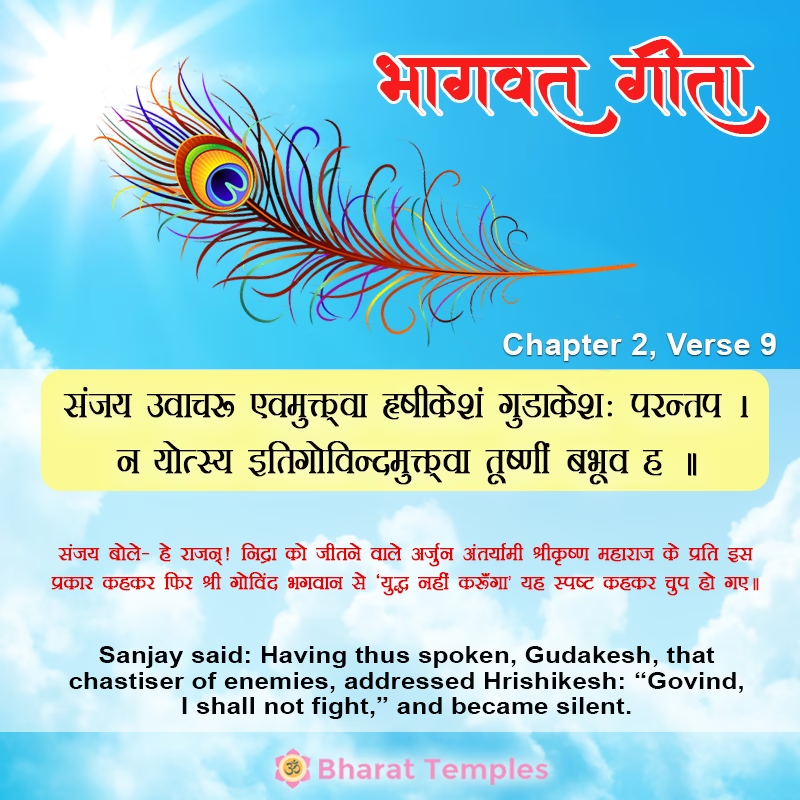
सञ्जय उवाच |
एवमुक्त्वा हृषीकेशं गुडाकेश: परन्तप |
न योत्स्य इति गोविन्दमुक्त्वा तूष्णीं बभूव ह || 2.9 ||
sañjaya uvācha
evam-uktvā hṛiṣhīkeśhaṁ guḍākeśhaḥ parantapa
na yotsya iti govindam uktvā tūṣhṇīṁ babhūva ha
भावार्थ:
संजय बोले- हे राजन्! निद्रा को जीतने वाले अर्जुन अंतर्यामी श्रीकृष्ण महाराज के प्रति इस प्रकार कहकर फिर श्री गोविंद भगवान् से ‘युद्ध नहीं करूँगा’ यह स्पष्ट कहकर चुप हो गए॥9॥
Translation
Sanjay said: Having thus spoken, Gudakesh, that chastiser of enemies, addressed Hrishikesh: “Govind, I shall not fight,” and became silent.
2.9 एवम् thus? उक्त्वा having spoken? हृषीकेशम् to Hrishikesha? गुडाकेशः Arjuna (the coneror of sleep)? परन्तप destroyer of foes? न योत्स्ये I will not fight? इति thus? गोविन्दम् to Govinda? उक्त्वा having said? तूष्णीम् silent? बभूव ह became.
Explanation in English:
This verse brings a pause in the dialogue. Sanjaya (the narrator) reports Arjuna’s final emotional stance before Krishna begins His spiritual discourse.
Here’s what it reflects:
- “Evam uktvā Hṛṣīkeśam” – “After speaking thus to Hrishikesha (Krishna)…”
Arjuna has poured out his sorrow, confusion, and inner struggle to Krishna, who is called Hrishikesha, meaning “Lord of the senses”—a divine name of Krishna. - “Guḍākeśaḥ Parantapaḥ” – “Gudakesha, the destroyer of enemies…”
These are honorable titles for Arjuna:- Gudakesha means “conqueror of sleep,” symbolizing discipline and control.
- Parantapa means “scorcher of foes,” reflecting his heroic identity.
Ironically, even this great warrior is now broken and conflicted.
- “Na yotsya iti Govindam uktvā” – “He said to Govinda (Krishna): I will not fight.”
Arjuna firmly declares he will not fight—even after hearing Krishna’s initial words in verses 2–3. - “Tūṣṇīṁ babhūva ha” – “And then he became silent.”
Arjuna has said all he had to say—he now waits silently, ready to listen.
📖 Related: Bhagavad Gita: Chapter 12, Verse 15
Key Takeaway:
This is a powerful moment: Arjuna, the mighty warrior, is completely disarmed—not by weapons, but by doubt and sorrow. He has surrendered as a student, admitted his helplessness, and now waits in silence for Krishna’s guidance.
It sets the stage for Krishna to begin the true teachings of the Gita from the next verse (2.11 onwards), starting with the knowledge of the soul.