
Contents
Introduction & Spiritual Essence
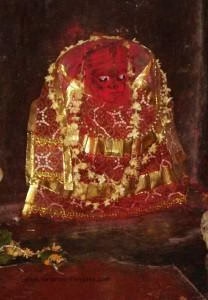
Nestled within the divine labyrinth of Kashi (Varanasi), the Bhavani Gauri Temple stands as a beacon of feminine energy and cosmic benevolence. The primary deity, Bhavani Gauri, is a manifestation of Parvati in her form as the benevolent mother—the giver of prosperity, health, and peace. Unlike the fierce forms of the Goddess, Bhavani Gauri represents the compassionate aspect of Shakti, making her a central figure for devotees seeking familial harmony and spiritual calm.
Phalaśruti: Why Visit?
According to the sacred Kashi Khand of the Skanda Purana, the spiritual merit (Phalaśruti) of visiting Bhavani Gauri is immense. It is believed that offering prayers here cleanses ancestral karma and relieves devotees from the cycle of sufferings. Specifically, worshiping Bhavani Gauri is said to bestow:
- Saubhagya: Auspiciousness and marital bliss.
- Artha Siddhi: Financial stability and prosperity.
- Arogya: Protection from chronic ailments.
Historical Origins & Scriptural Legend
The history of the Bhavani Gauri Temple is deeply intertwined with the ancient geography of Kashi. While the exact date of establishment is not recorded in public archives, the temple’s significance is derived from scriptural authority rather than mere brick and mortar.
Kashi Khand & Scriptural Legend
Tradition holds that Kashi Khand, Chapter 100 specifically prescribes the Gauri Yatra, a religious tour of Gauri temples across Varanasi. This Yatra is to be undertaken on Triteeya (the 3rd day) after Amavasya (New Moon). Devotees are instructed to take a holy dip in the Bhavani Teerth and worship Bhavani Gauri to attain happiness and prosperity.
Architectural Lineage
According to temple records and local historians, the structure has undergone several renovations over the centuries, preserving the sanctity of the shrine while enhancing its physical form. The current architectural style reflects the Dravidian influence, a unique feature in the Nagara-dominant landscape of North India, likely introduced by south-Indian artisans who settled in Varanasi during medieval dynastic eras.
Architectural Marvels
The Bhavani Gauri Temple is a masterpiece of Dravidian architecture, characterized by its pyramid-like tower (Vimana) rather than the curvilinear Shikhara typical of North Indian temples.
Vastu and Design Elements
- The Vimana: The sanctum sanctorum (Garbhagriha) is topped by a distinct Dravidian Vimana, featuring tiered projections that symbolize the descent of divine energy.
- Mandapas: The temple includes a pillared hall (Mandapa) used for rituals and gatherings, designed to allow natural light to illuminate the inner sanctum during specific solar events.
- Sculptures: The exterior walls feature intricate carvings of auspicious motifs (Kalasha and Makara) and depictions of other forms of Devi, reflecting the syncretic culture of Varanasi.
Darshan & Ritual Logistics (2026 Schedule)
To ensure a seamless spiritual experience, we have compiled the daily timings and major festival dates for 2026. Please note that timings may vary slightly based on local solar calculations and special religious events.
Daily Timings
| Session | Timing | Activity |
|---|---|---|
| Morning | 05:00 AM – 12:00 PM | Mangala Arati, Abhishekam, Darshan |
| Afternoon | 12:00 PM – 4:00 PM | Temple Rest (Cleaning & Preparation) |
| Evening | 4:00 PM – 9:00 PM | Sandhya Arati, Aarti, Darshan |
Key Sevas and Online Booking
Popular Sevas include Abhishekam (ritual bathing of the deity) and Archana (recitation of names). While many small shrines in Varanasi do not have centralized digital booking, the administration for major temples near Ram Mandir typically coordinates through local counters.
Devotees seeking to book specific Sevas for 2026 should inquire at the temple office upon arrival or contact the Varanasi Temple Trust helpline for updates on online booking portals.
2026 Major Festival Dates
- Chaitra Navaratri: March 30 – April 7, 2026. (Devotees visit on the 7th day).
- Sharad Navaratri: September 21 – September 29, 2026.
- Gauri Tritiya: To be observed 3 days after Amavasya (specific dates depend on the lunar calendar).
Practical Visitor Guidance
Visiting Kashi requires preparation. Here are essential guidelines for a hassle-free Darshan:
- Dress Code: Traditional attire is highly recommended. Men should wear dhotis or trousers with shirts; women should wear sarees, salwar kameez, or modest western wear. Avoid shorts and sleeveless tops.
- Photography: Photography inside the sanctum sanctorum is strictly prohibited. However, photography may be allowed in the outer courtyards; please seek permission from temple authorities.
- Mobile Lockers: Electronic items and leather goods (bags, belts) are often restricted. Utilize the free cloakrooms (mobile lockers) available at the entrance of the larger temple complex (Ram Mandir/Annapurna area).
- Accessibility: The temple is located in a narrow lane of Kashi. It is not wheelchair accessible due to ancient architecture. It is advisable to wear comfortable footwear that can be easily removed.
Crowd Management & Seasonal Advice
- Best Time to Visit: 6:00 AM – 8:00 AM is the most peaceful time for Darshan.
- Peak Hours: Avoid 6:00 PM – 8:00 PM during festivals like Navaratri.
- Seasonal Tip: In May and June, temperatures in Varanasi can exceed 40°C. Carry a reusable water bottle and a hand fan. Monsoon (July-August) brings humidity; carry an umbrella.
Pilgrimage Connectivity
How to Reach Bhavani Gauri Temple
The temple is centrally located in Varanasi, making it accessible via major transport hubs.
- Nearest Airport: Lal Bahadur Shastri International Airport (LBS), Varanasi (approx. 25 km).
- Nearest Railway Station: Varanasi Junction (BSB) is about 5-7 km away. From the station, take an auto-rickshaw to Godaulia or Dashashwamedh Ghat area.
- Road Access: The temple is located at D.8/38, Ram Mandir, annexed to the premises of Annapurna Devi. It lies between Kali Devi and Jagannath temples. For precise navigation, refer to the Visweshwar temple vicinity.
Nearby Sacred Sites (Pilgrimage Circuit)
Extend your spiritual journey by visiting these nearby temples:
- Annapurna Devi Temple: Located adjacent to Bhavani Gauri. Goddess Annapurna is the provider of food and nourishment.
- Kali Devi Temple: Just steps away, representing the fierce aspect of Shakti.
- Vishwanath Temple (Kashi Vishwanath): A short walk away, this is one of the 12 Jyotirlingas and the holiest site in Varanasi.
Photo Gallery
Frequently Asked Questions (FAQ)
1. Is there a VIP Darshan entry available?
While the temple is a smaller shrine within the larger Kashi complex, VIP arrangements are generally managed through the Kashi Vishwanath Temple administration. However, at Bhavani Gauri, general Darshan is usually swift, and devotees can get close access to the deity without long queues.
2. What is the significance of the Bhavani Teerth?
According to Kashi Khand, the Bhavani Teerth is a sacred water body associated with the Goddess. Bathing in this Teerth before worship is believed to purify sins and prepare the devotee for a successful Darshan.
3. Can I offer special offerings (Naivedyam) to the deity?
Yes, devotees can offer flowers, fruits, and sweets. These can be purchased from vendors outside the temple. Strict guidelines apply regarding the purity of offerings; please consult the temple priest (Pujari) before presenting items inside the sanctum.
4. What are the contact details for the temple?
Specific phone numbers for standalone shrines in Kashi are often not publicly listed. For inquiries regarding the Bhavani Gauri temple, it is best to visit the Ram Mandir administrative office or contact the general Varanasi tourism helpline.
5. Is the temple open year-round?
Yes, the temple remains open year-round. However, during extreme weather conditions or severe festival overcrowding, entry might be regulated for safety reasons.
Recent Posts

ओ सांवरे तूने ही मुझको संभाला – Lyrics & Meaning
ओ सांवरे तूने ही मुझको संभाला – A Prayer to Shyam Origin & Spiritual Essence Why This Bhajan Resonates Devotees chant this when overwhelmed by life’s storms—the refrain ‘तूने ही मुझको संभाला’ is the soul’s sigh of relief: “You…

कथा ये है महाराज मेरे की – Lyrics & Meaning
कथा ये है महाराज मेरे की छत्रपति संभाजी महाराज – A Prayer to Chhatrapati Sambhaji Maharaj Origin & Spiritual Essence Why This Bhajan Resonates Devotees chant this when their spirit feels tested—its powerful refrain “महाराज मेरे” is a soul’s…

Rigveda Samhita Yathartha Anuvada (ऋग्वेद संहिता यथार्थ अनुवाद) – Complete Set with Anvayartha & Hindi/English Translation
The Rigveda is the oldest surviving scripture of humanity and the foundational text of Sanātana Dharma. For serious students, scholars, UPSC aspirants studying ancient Indian history, Sanskrit learners, and spiritual seekers, a precise and grammatically structured translation is indispensable.…

आना भी अकेला है जाना भी अकेला है – Lyrics & Meaning | BharatTemples
आना भी अकेला है जाना भी अकेला है – A Prayer to the Divine Witness Origin & Spiritual Essence Why This Bhajan Resonates Devotees turn to this bhajan in moments of deep reflection—when life’s attachments begin to ache. The…

माता शेरावाली के द्वार जो भी जाता है – Lyrics & Meaning
माता शेरावाली के द्वार जो भी जाता है – A Prayer to Maa Sherawali Origin & Spiritual Essence Why This Bhajan Resonates Devotees turn to this bhajan in times of fear or uncertainty—its promise that no one leaves Maa’s…

मार लेना सपणी उबार लेणा भवरा – Lyrics & Meaning
मार लेना सपणी उबार लेणा भवरा – A Prayer to the Divine Beloved Origin & Spiritual Essence Why This Bhajan Resonates Devotees chant this in moments of deep vulnerability—its cry of “मार लेना सपणी, उबार लेणा भवरा” is the…

हमें श्याम सुंदर भरोसा तुम्हारा – Lyrics & Meaning
हमें श्याम सुंदर भरोसा तुम्हारा – A Prayer to Shyam Sundar Origin & Spiritual Essence Why This Bhajan Resonates Devotees chant this when feeling alone—its refrain ‘de do sahara’ is the soul’s cry for divine support. Lyrics in Hindi…

Mere Satguru Ne Di Thi Davai Lyrics in Hindi & Meaning
Mere Satguru Ne Di Thi Davai: Invoking the Guru’s Liberating Wisdom This soul-stirring bhajan venerates the Satguru (True Spiritual Master) as the divine physician who dispenses the only remedy for life’s deepest sufferings. Composed by Sant Karmaveer Tufani, it…

Janm Diyo Thari Maa Dukh Dekhiyo Lyrics in Hindi & Meaning
जन्म दियो थारी माँ दुख देखियो (Maa’s Grief Upon Birthing You) This soul-stirring Chetavani Bhajan (admonitory hymn) is addressed to the Divine Mother (Maa) – a call for repentance when children forget their filial duties in the dark age…
Bhadi Sabha Mein Thane Manaun Lyrics in Hindi & Meaning
Bhadi Sabha Mein Thane Manaun: Invoking the Spear-Wielding Mother Mata Bhawani (श्री ज्वाला भवानी), the fiery manifestation of Shakti worshipped as the Protector of Dharma in Her Dhaulagarh sanctum. Origin & Spiritual Essence Composed in Rajasthani folk tradition by…