
Contents
Introduction & Spiritual Essence
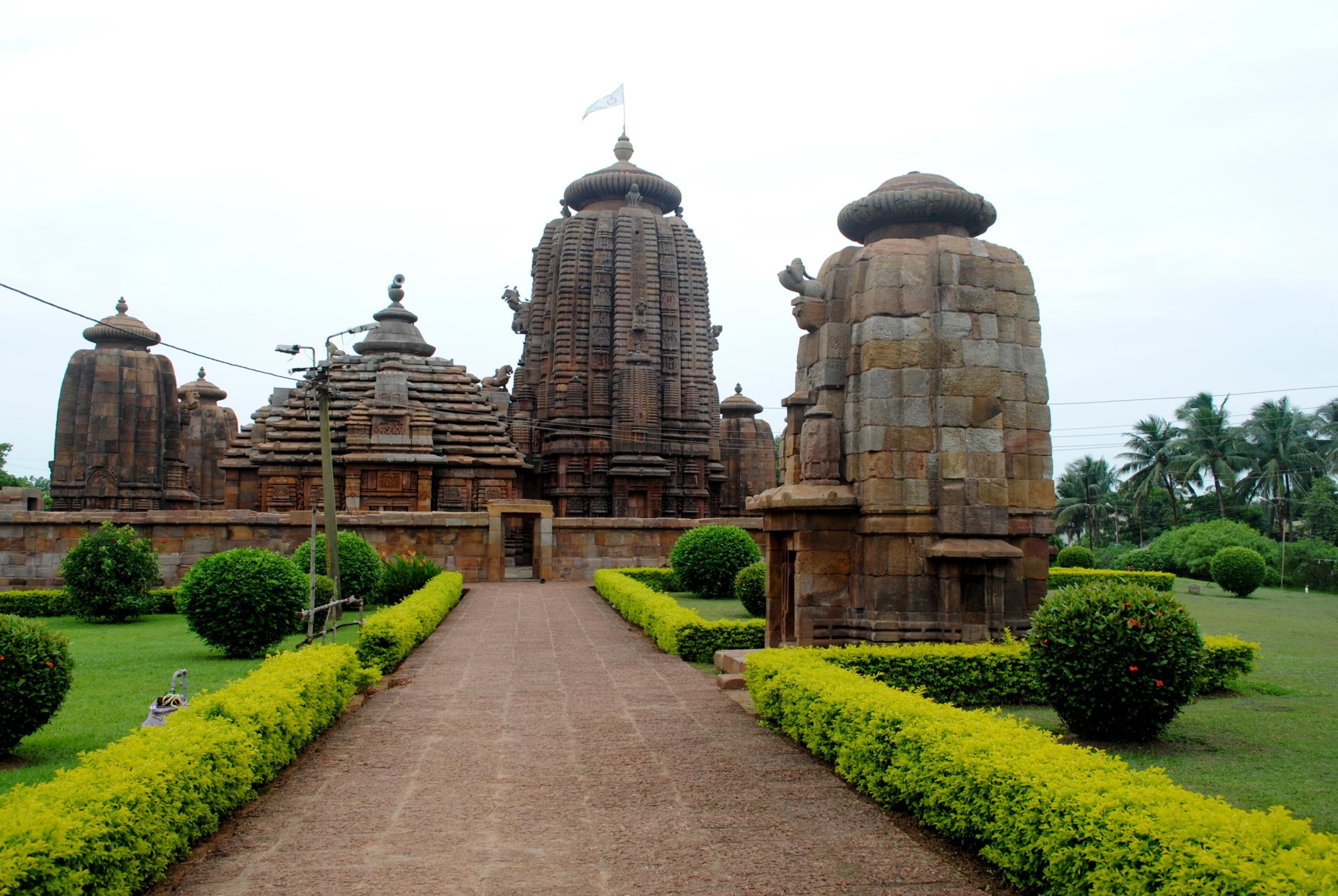
The Brahmeswara Temple in Bhubaneswar, Odisha, stands as a monumental testament to devotion and artistry. Dedicated to Lord Shiva, the temple derives its name from the Sanskrit words “Brahma” and “Ishwara,” signifying the supreme ruler of the universe. Unlike many other shrines, the presiding deity here is a Swayambhu (self-manifested) Shiva Lingam, which devotees believe appeared spontaneously from the earth.
Phalaśruti (Spiritual Benefits): According to local tradition and scriptural beliefs, visiting this temple brings profound spiritual merit. Devotees seek blessings here for:
- Cleansing Ancestral Karma: Performing rituals at Brahmeswara is believed to liberate ancestors from the cycle of rebirth.
- Removal of Obstacles: Lord Shiva, in his form as Brahmeswara, removes Vighnas (obstacles) from the lives of devotees.
- Marital Harmony: Couples often visit to pray for a blessed and harmonious life together.
Historical Origins & Scriptural Legend
The temple is a crowning achievement of the Somavamsi dynasty. According to temple records and inscriptions (now preserved in the Odisha State Museum), the temple was constructed in the 18th regnal year of King Udyotakesari, facilitated by his mother, Queen Kolavati Devi. This dates the structure to approximately 1058 CE (late 11th century).
Scriptural Legend: Tradition holds that the site was originally part of the historic Ekamra Kshetra (the ancient city of Bhubaneswar). While the inscriptions were removed from the temple walls decades ago and sent to the Calcutta Museum for preservation, historians have confirmed the authenticity of the construction narrative. The inscription mentions the donation of “many beautiful women” to the temple, which suggests the existence of the Devadasi tradition, integral to the cultural and ritualistic life of the temple during that era.
Architectural Marvels
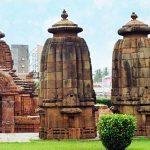
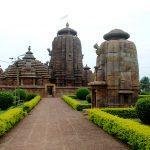
The Brahmeswara Temple is a classic example of the mature Kalinga style of architecture, specifically the Panchatanaya (five-spired) variety. It features a main sanctum (Vimana) and an assembly hall (Jagmohana), along with four subsidiary shrines in the corners.
- Height & Structure: The Vimana rises to a height of 18.96 meters (62.2 ft). The temple displays a perfect pyramid-like shape, carved from stone with techniques that mimic traditional woodwork.
- Innovations: This temple holds the distinction of being one of the earliest in Odisha to utilize iron beams for structural support, a technological leap in temple construction.
- Sculptural Details: The exterior walls are adorned with intricate carvings. Notably, the Lion Head motif (simha-ardha) appears in profusion, a feature first seen in the nearby Mukteswara Temple. The walls also feature eight directional Guardian Deities (Ashta-Dikpalas) and musicians playing lutes.
- Tantric Imagery: Uniquely, the western facade displays tantric iconography, including the fierce goddess Chamunda standing on a corpse, holding a trident and a human head, reflecting the esoteric aspects of Shaivism.
Darshan & Ritual Logistics
Planning your visit requires an understanding of the daily rituals. The temple follows a strict Vedic schedule.
Daily Darshan Timings
| Session | Timing | Activity |
|---|---|---|
| Morning | 6:00 AM – 12:00 PM | Mangala Darshan, Abhishekam |
| Afternoon | 12:00 PM – 4:00 PM | Temple Cleaning (Restricted Entry) |
| Evening | 4:00 PM – 9:00 PM | Sandhya Darshan, Aarti |
Key Sevas & Online Booking
Devotees can book specific rituals online via the official Shree Jagannath Temple Administration (SJTA) portal or local counters. Note: Assuming the current year is 2026, here are specific dates for major festivals:
- Maha Shivaratri (2026): March 4th. The temple remains open 24 hours with special Abhishekam.
- Chandana Yatra: May 15th, 2026 (Baisakh Saptami).
- Nabapatrika Puja (Durga Ashtami): October 1st, 2026.
How to Book: Visit the official government portal for Odisha temples (usually eservices.temples.odisha.gov.in) to reserve slots for Maha Rudra Yajna or Special Abhishekam.
Practical Visitor Guidance
To ensure a smooth darshan experience, please adhere to the following guidelines:
- Dress Code: Traditional attire is mandatory. Men should wear Dhoti or trousers with a shirt; women should wear Saree or Salwar Kameez. Shorts and torn jeans are strictly prohibited.
- Photography: Photography is allowed in the outer courtyard but strictly prohibited inside the Jagmohana and Garbhagriha (Sanctum Sanctorum).
- Mobile Lockers: Free mobile lockers are available near the entrance. Electronic devices must be deposited before entering the inner sanctum.
- Accessibility: The temple complex has stone steps. While not fully wheelchair accessible due to the historic nature of the structure, assistance is available for elderly devotees.
Crowd Management Tips
- Best Hours: The least crowded time is between 8:00 AM and 10:00 AM on weekdays.
- Seasonal Advice: Bhubaneswar can be extremely hot in May and June. Carry a water bottle and an umbrella. The winter months (November–February) offer the most pleasant weather.
Pilgrimage Connectivity
Brahmeswara Temple is located in the heart of the Old Town of Bhubaneswar, making it easily accessible.
How to Reach
- By Air: The nearest airport is Biju Patnaik International Airport (BBI), approximately 6 km away (20 minutes by taxi).
- By Rail: The nearest railway station is Bhubaneswar Railway Station (BBS), about 4 km from the temple.
- By Road: The temple is located off NH 16 (formerly NH 5). It is well connected by city buses, auto-rickshaws, and ride-sharing services.
Nearby Sacred Sites
Complete your pilgrimage circuit by visiting these nearby architectural wonders:
- Mukteswara Temple: Located just 1 km away, famous for its arched gateway (Torana) and intricate carvings.
- Rajarani Temple: Known for its ornate sculptures and peaceful garden, 2 km from Brahmeswara.
- Lingaraj Temple: The largest temple in Bhubaneswar, dedicated to Harihara, located 1.5 km away. (Note: Non-Hindus may view from a designated viewing platform).
Frequently Asked Questions (FAQ)
Is there a VIP darshan entry available?
Yes, the temple administration facilitates a special entry darshan for elderly devotees (above 65 years) and differently-abled visitors. This can be availed at the entrance upon showing valid ID proof.
Can non-Hindus visit the temple?
While the inner sanctum is generally restricted to practicing Hindus, the outer courtyard and architecture are often viewable by all. However, it is respectful to verify the current rules with local authorities as customs can vary.
Are there accommodation facilities nearby?
While there are no hotels directly inside the temple premises, there are numerous guest houses (Dharamshalas) and budget hotels in the Old Town area. The Temple Development Authority manages some guest houses for pilgrims.
What is the significance of the iron beams used in the temple?
The use of iron beams is historically significant as it marks one of the earliest instances of integrating metal reinforcement in stone architecture in Eastern India, enhancing the durability of the structure over the last millennium.
Is there a facility for online seva booking for Brahmeswara Temple?
Yes, specific sevas can be booked online. Visit the Odisha government’s temple services portal. For major festivals like Maha Shivaratri, online booking is highly recommended due to high demand.
What are the closing hours?
The temple typically closes around 9:00 PM. However, during festivals, it may remain open throughout the night.
Contact Details
Official Address
| Date built: | 1058 CE |
|---|---|
| Deity: | – |
| Architectural style: | – |
| Major festivals | – |
| Locale: | – |
| District:: | Bhubaneswar |
| Address: | – |
| Phone | – |
Recent Posts

ओ सांवरे तूने ही मुझको संभाला – Lyrics & Meaning
ओ सांवरे तूने ही मुझको संभाला – A Prayer to Shyam Origin & Spiritual Essence Why This Bhajan Resonates Devotees chant this when overwhelmed by life’s storms—the refrain ‘तूने ही मुझको संभाला’ is the soul’s sigh of relief: “You…

कथा ये है महाराज मेरे की – Lyrics & Meaning
कथा ये है महाराज मेरे की छत्रपति संभाजी महाराज – A Prayer to Chhatrapati Sambhaji Maharaj Origin & Spiritual Essence Why This Bhajan Resonates Devotees chant this when their spirit feels tested—its powerful refrain “महाराज मेरे” is a soul’s…

Rigveda Samhita Yathartha Anuvada (ऋग्वेद संहिता यथार्थ अनुवाद) – Complete Set with Anvayartha & Hindi/English Translation
The Rigveda is the oldest surviving scripture of humanity and the foundational text of Sanātana Dharma. For serious students, scholars, UPSC aspirants studying ancient Indian history, Sanskrit learners, and spiritual seekers, a precise and grammatically structured translation is indispensable.…

आना भी अकेला है जाना भी अकेला है – Lyrics & Meaning | BharatTemples
आना भी अकेला है जाना भी अकेला है – A Prayer to the Divine Witness Origin & Spiritual Essence Why This Bhajan Resonates Devotees turn to this bhajan in moments of deep reflection—when life’s attachments begin to ache. The…

माता शेरावाली के द्वार जो भी जाता है – Lyrics & Meaning
माता शेरावाली के द्वार जो भी जाता है – A Prayer to Maa Sherawali Origin & Spiritual Essence Why This Bhajan Resonates Devotees turn to this bhajan in times of fear or uncertainty—its promise that no one leaves Maa’s…

मार लेना सपणी उबार लेणा भवरा – Lyrics & Meaning
मार लेना सपणी उबार लेणा भवरा – A Prayer to the Divine Beloved Origin & Spiritual Essence Why This Bhajan Resonates Devotees chant this in moments of deep vulnerability—its cry of “मार लेना सपणी, उबार लेणा भवरा” is the…

हमें श्याम सुंदर भरोसा तुम्हारा – Lyrics & Meaning
हमें श्याम सुंदर भरोसा तुम्हारा – A Prayer to Shyam Sundar Origin & Spiritual Essence Why This Bhajan Resonates Devotees chant this when feeling alone—its refrain ‘de do sahara’ is the soul’s cry for divine support. Lyrics in Hindi…

Mere Satguru Ne Di Thi Davai Lyrics in Hindi & Meaning
Mere Satguru Ne Di Thi Davai: Invoking the Guru’s Liberating Wisdom This soul-stirring bhajan venerates the Satguru (True Spiritual Master) as the divine physician who dispenses the only remedy for life’s deepest sufferings. Composed by Sant Karmaveer Tufani, it…

Janm Diyo Thari Maa Dukh Dekhiyo Lyrics in Hindi & Meaning
जन्म दियो थारी माँ दुख देखियो (Maa’s Grief Upon Birthing You) This soul-stirring Chetavani Bhajan (admonitory hymn) is addressed to the Divine Mother (Maa) – a call for repentance when children forget their filial duties in the dark age…
Bhadi Sabha Mein Thane Manaun Lyrics in Hindi & Meaning
Bhadi Sabha Mein Thane Manaun: Invoking the Spear-Wielding Mother Mata Bhawani (श्री ज्वाला भवानी), the fiery manifestation of Shakti worshipped as the Protector of Dharma in Her Dhaulagarh sanctum. Origin & Spiritual Essence Composed in Rajasthani folk tradition by…