
Contents
Introduction & Spiritual Essence
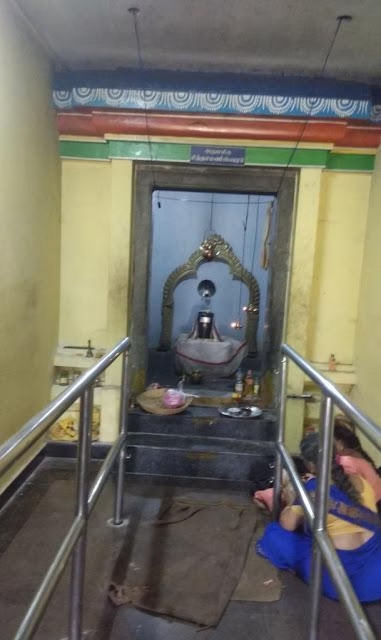
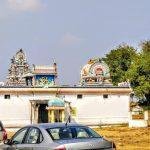
Chinthamaneeswarar Temple, nestled in the tranquil coastal village of Karungali (Kattur) in the Thiruvallur district, is a rare spiritual treasure dedicated to Lord Shiva. Known locally as the Kuladeivam (family deity) for the fishing community, this temple is unique due to its serene isolation—flanked by the Kosasthalaiyar River (Brahmaranya River) at its rear and the Bay of Bengal in front, with lush forests surrounding the remaining sides.
Phalaśruti: Why Visit?
This temple is regarded as being of equal sanctity to Kasi (Varanasi) and Rameshwaram. The primary spiritual benefit of visiting Chinthamaneeswarar is the cleansing of ancestral karma. It is a widely held belief that performing Shraddha and annual rites (Thithi) here, especially on Amavasya (New Moon) and Pournami (Full Moon) days, yields the same spiritual merit as performing them in Kashi. Devotees visit to seek relief from planetary afflictions and to ensure peace for departed souls.
Historical Origins & Scriptural Legend
The roots of this temple lie deep in antiquity. According to archaeological evidence and temple records, the structure is approximately 1,300 years old, built by the Chola Dynasty. After the decline of the Cholas, the temple fell into disuse and remained buried under shifting beach sand dunes for centuries. It was only rediscovered when the temple’s Kalasam (pinnacle) naturally emerged from the sands. Today, it stands fully excavated and rejuvenated, preserving its ancient glory.
Scriptural Legend (Sthala Purana):
Tradition holds that the great Rishi Sattai Muni performed intense Thapas (penance) on the banks of the Brahmaranya River (Kosasthalaiyar). Pleased by his devotion, Lord Shiva appeared before him. The temple houses a Swayambhu Lingam (self-manifested form) known as Chinthamaneeswarar.
Unique Connection to the Five Faces of Shiva:
The Kosasthalaiyar river banks are lined with five ancient Shiva temples representing the five faces (Pancha Mukhas) of Lord Shiva. Chinthamaneeswarar represents the Agora face. The other four in this circuit include:
- Ramagiri Vaaleeswarar (Isanam)
- Suruttuppalli Pallikondeeswarar (Thatpurusham)
- Arani Sampangi Pichaaleeswarar (Vaamadevam)
- Ariyathurai Varamoortheeswarar (Sathyojaatham)
Architectural Marvels
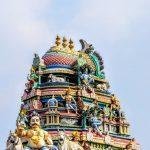
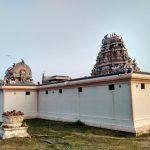
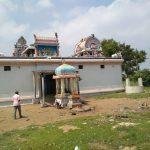
The temple follows the classical Dravidian architectural style, marked by its sturdy Vimana (tower) and spacious Mandapas (halls). Despite its age, the structure is resilient, having withstood centuries of coastal weather.
Vastu & Layout:
Situated at a distinct Vastu juncture where the river meets the sea, the temple is an architectural anomaly. It is rare to find a temple positioned without any human habitation surrounding it, creating a pure atmosphere of solitude ideal for meditation.
Sculptural Details:
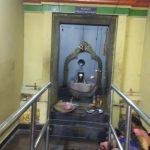
The sanctum sanctorum houses the Murti of Lord Chinthamaneeswarar in the form of a Shiva Lingam. While the structure is an ancient Chola creation, it has been maintained by the local community. The temple does not currently hold ASI or UNESCO status, but its unique geological and spiritual setting makes it a heritage marvel of the Tamil Nadu coast.
Original Source: tamilnadu-favtourism.blogspot.com
Chinthamaneeswarar Temple is a Hindu Temple dedicated to Lord Shiva located at Karungali near Pulicat in Thiruvallur District of Tamilnadu. Karungali is also called as Kattur. Lord Shiva of this Temple is family deity for the local fishing community and Chitra Pournami is celebrated in a grand manner. The temple occupies between the river Kosasthalaiyar river and Sea without any human habitation. The speciality of this temple is that, it has sea in the front side, a river behind it and forest on the other side. It is a very rare sight to see a temple amidst such a natural setting.
Darshan & Ritual Logistics
Unlike larger complex temples, the rituals here are deeply rooted in nature and specific timings due to the remote location and priest availability.
Daily Timings & 2026 Festival Calendar
Note: Due to the temple’s remote location near the coast, timings are subject to weather conditions and high tides. Always confirm via the phone number provided before travel.
| Session | Timings |
|---|---|
| Morning Darshan | 09:00 AM – 12:00 PM (Only one Kaala Pooja) |
| Afternoon Darshan | Closed (Open only on Pradosha Days) |
| Evening Darshan | Not regularly scheduled (Pradosham/Mondays) |
Major Festival 2026:
Chitra Pournami falls on Monday, May 11, 2026. This is the most significant event at Karungali. Devotees from across Tamil Nadu gather to prepare Pongal, offer it to the Lord, and stay overnight on the sands under the full moon. It is believed that wishes are fulfilled for those who participate in this specific nocturnal ritual.
Online Seva Booking
Currently, direct online booking for specific Sevas like Abhishekam (ritual bathing of the deity) or Archana is limited due to the temple’s remote management style. However, devotees are encouraged to contact the temple trustee directly to schedule specific offerings.
Practical Visitor Guidance
Dress Code & Rules
- Attire: Traditional Indian dress is preferred. Men should wear dhotis or trousers; women should wear sarees or salwar kameez.
- Photography: Allowed in the outer complex, but prohibited inside the sanctum sanctorum. Use of flash is discouraged to maintain the sanctity.
- Lockers: No digital lockers are available. Travel light and keep valuables secured in your vehicle.
- Accessibility: The temple has sandy approaches and ancient steps. It is moderately accessible, but those with mobility issues should proceed with caution.
Crowd Management
Best Hours to Visit: 09:00 AM to 10:30 AM is the ideal window to avoid the heat and ensure the priest is present.
Seasonal Advice: The temple is exposed to the elements.
- May – July: Extremely hot and humid. Carry ample water and an umbrella.
- Monsoon: The region receives heavy rains. The river water can rise, potentially restricting boat access. Check local news before visiting during heavy downpours.
- Winter (Nov-Feb): The best time to visit due to pleasant coastal breezes.
Pilgrimage Connectivity
How to Reach
Important Note: The final approach involves a boat ride across the Arani river or a sandy drive. The terrain is isolated.
- Nearest City/Town: Pulicat (9 km) or Minjur (34 km).
- Nearest Airport: Chennai International Airport (MAA) – Approx. 74 km.
- Nearest Railway Station: Ponneri Railway Station (28 km) or Minjur Railway Station (33 km).
- By Road (NH / State Highways):
- Route 1 (From Chennai): Take the NH 16 (Chennai-Kolkata Highway) towards Ennore/Pulicat. Drive to the lighthouse road in Pulicat village, then proceed to Karungali. Warning: After 5 PM, this desolate area is not advisable for travel.
- Route 2 (Via Minjur/Pulicat): Take the road from Minjur towards Pazhaverkadu (Pulicat). Reach Kattur village, take a right turn, and drive 5 km to the riverbank.
The Boat Crossing
Upon reaching the riverbank at Kattur, you must cross the Arani river by boat to reach Karungali village where the temple is located. Only one boat is usually available, operated by a local ferryman. The charge is nominal (approx. ₹10 per person), but the boatman must be contacted on arrival (Mobile: +91 98402 14130).
Nearby Sacred Sites
- Pulicat Lagoon & Bird Sanctuary: While not a temple, this natural wonder is adjacent to the route, offering a serene spiritual connection with nature.
- Arani Sampangi Pichaaleeswarar Temple: Located 17 km away, this is another of the five-faced Shiva temples on the river banks.
- Thirupalaivanam Narasimhar Temple: 17 km away, a dedicated Lord Narasimha shrine.
Frequently Asked Questions (FAQs)
1. Is there a VIP darshan entry available?
No, the temple is managed by the local community and does not offer special VIP entry tickets. Darshan is open to all devotees equally, reflecting the rustic nature of the shrine.
2. Can I perform ancestral rites (Pithru Karma) here?
Yes, the temple is renowned for this. It is considered equivalent to Kashi for performing Shraddha. The proximity to the river and sea enhances the spiritual potency of these rites.
3. Is the temple accessible by car?
Yes, but only up to the riverbank at Kattur or the lighthouse road at Karungali. From there, you must cross by boat or navigate a sandy path. A 4-wheeler is recommended over a bike due to the rough terrain.
4. Are there accommodation facilities nearby?
There are no hotels or guest houses within 5 km of the temple. The nearest accommodations are in Minjur, Pulicat, or Ponneri. It is advisable to do a day trip from Chennai or stay in Ponneri.
5. Why is the temple called Chinthamaneeswarar?
The name suggests a connection to ‘Chinthamani’ (a wish-fulfilling jewel), signifying the Lord’s grace in fulfilling the sincere prayers of devotees who perform worship with a focused mind (‘Chinthana’).
Contact Details
Chinthamaneeswarar Temple,
Karungali (Kattur),
Thiruvallur District, Tamil Nadu.
Mobile: +91 98402 14130
Recent Posts

माता शेरावाली के द्वार जो भी जाता है – Lyrics & Meaning
माता शेरावाली के द्वार जो भी जाता है – A Prayer to Maa Sherawali Origin & Spiritual Essence Why This Bhajan Resonates Devotees turn to this bhajan in times of fear or uncertainty—its promise that no one leaves Maa’s…

मार लेना सपणी उबार लेणा भवरा – Lyrics & Meaning
मार लेना सपणी उबार लेणा भवरा – A Prayer to the Divine Beloved Origin & Spiritual Essence Why This Bhajan Resonates Devotees chant this in moments of deep vulnerability—its cry of “मार लेना सपणी, उबार लेणा भवरा” is the…

हमें श्याम सुंदर भरोसा तुम्हारा – Lyrics & Meaning
हमें श्याम सुंदर भरोसा तुम्हारा – A Prayer to Shyam Sundar Origin & Spiritual Essence Why This Bhajan Resonates Devotees chant this when feeling alone—its refrain ‘de do sahara’ is the soul’s cry for divine support. Lyrics in Hindi…

Mere Satguru Ne Di Thi Davai Lyrics in Hindi & Meaning
Mere Satguru Ne Di Thi Davai: Invoking the Guru’s Liberating Wisdom This soul-stirring bhajan venerates the Satguru (True Spiritual Master) as the divine physician who dispenses the only remedy for life’s deepest sufferings. Composed by Sant Karmaveer Tufani, it…

Janm Diyo Thari Maa Dukh Dekhiyo Lyrics in Hindi & Meaning
जन्म दियो थारी माँ दुख देखियो (Maa’s Grief Upon Birthing You) This soul-stirring Chetavani Bhajan (admonitory hymn) is addressed to the Divine Mother (Maa) – a call for repentance when children forget their filial duties in the dark age…
Bhadi Sabha Mein Thane Manaun Lyrics in Hindi & Meaning
Bhadi Sabha Mein Thane Manaun: Invoking the Spear-Wielding Mother Mata Bhawani (श्री ज्वाला भवानी), the fiery manifestation of Shakti worshipped as the Protector of Dharma in Her Dhaulagarh sanctum. Origin & Spiritual Essence Composed in Rajasthani folk tradition by…
श्याम सुन्दरवा छोटे छोटे कनुवा Lyrics & Meaning
श्याम सुन्दरवा छोटे छोटे कनुवा (Shyam Sundarva Chhote Chhote Kanuva) is a heartfelt invocation to Lord Krishna in his most enchanting form—Shyam Sundar (the dark, beautiful one). This bhajan is a plea for the divine child Kanha to grace…
Maat Meri Chintapurni Lyrics in Hindi & Meaning
Maat Meri Chintapurni is a heartfelt devotional prayer dedicated to Maa Chintapurni, a form of the Divine Mother. She is revered as the remover of worries and the granter of wishes, especially venerated in the Himalayan region of Himachal…
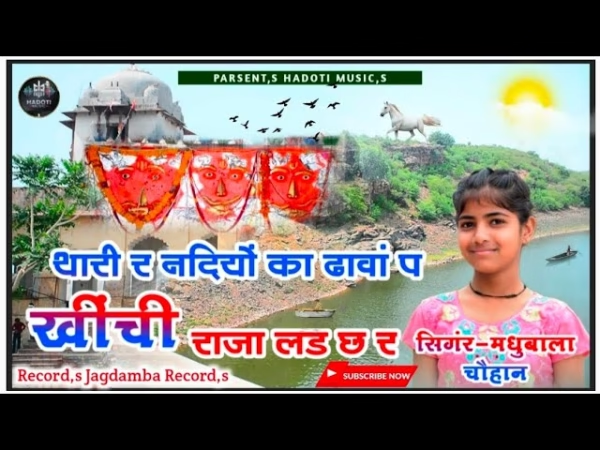
थारी रे नदियां का ढावा पे खीची राजा Lyrics & Meaning
खीची राजा का अद्भुत युद्ध: एक शौर्य गाथा यह भजन एक पौराणिक या ऐतिहासिक शूरवीर राजा की वीरता का वर्णन करता है, जो प्रायः गुजराती लोक संस्कृति में लोककथाओं का हिस्सा है। इसकी रचना दुर्गेश कटारा ने की है…
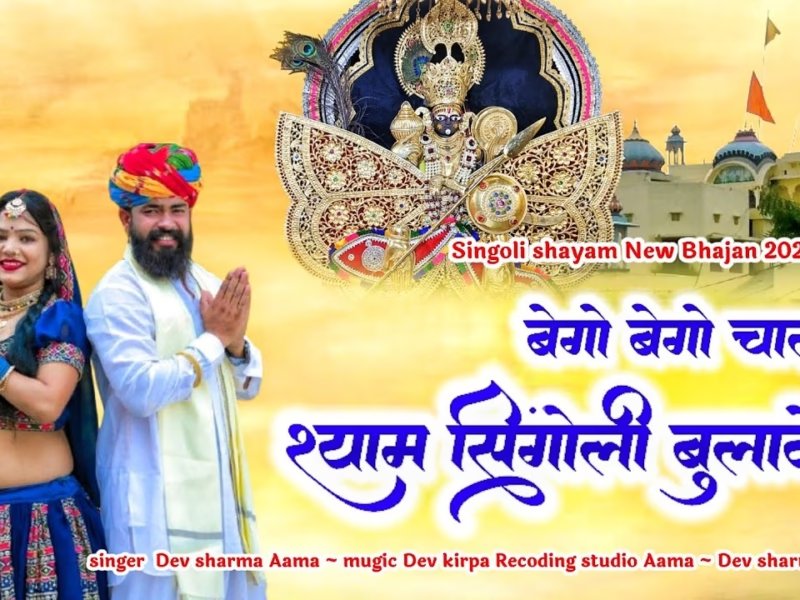
बेगो बेगो चाल श्याम सिंगोली बुलावे रे Lyrics in Hindi & Meaning
Bhajan Title & Deity This bhajan, बेगो बेगो चाल श्याम सिंगोली बुलावे रे, is dedicated to Lord Shyam, a revered form of Lord Krishna. Origin & Spiritual Essence The composer of this bhajan is not specified, but it is…