
Contents
Introduction & Spiritual Essence: The Gateway to Kashi’s Divine Grace
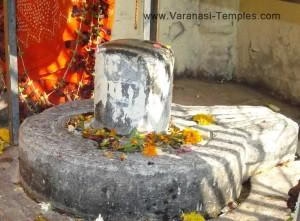
In the holy city of Varanasi, every stone resonates with spiritual energy. Among the countless shrines, the Dwareshwar Temple holds a unique and powerful significance. Dedicated to Lord Shiva, this temple is known for its presiding deity, the Dwareshwar Lingam (Self-Formed/Swayambhu), and the presence of Dwareshwari Devi. The name “Dwareshwar” essentially translates to “Lord of the Entrance,” signifying the deity’s role as the guardian of the divine spiritual territory of Kashi.
Phalaśruti (Spiritual Benefits):
According to the sacred Kashi Khand of the Shiva Purana, worshipping Lord Dwareshwar is equivalent to attaining the full fruits of residing in Kashi. The scriptures state that devotees who offer sincere prayers here acquire divine powers (Siddhi) and eventually attain Moksha (liberation). It is particularly potent for cleansing ancestral karma and removing obstacles in one’s spiritual journey.
Historical Origins & Scriptural Legend
The history of the Dwareshwar Temple is deeply rooted in the Puranic era, dating back to a time when the concept of physical structures was intertwined with divine energy.
The Kashi Khand Connection
According to temple records and the Kashi Khand (Chapter 97), the origin of this shrine is celestial. The narrative describes a conversation between Lord Shiva and Devi Parvati. Wishing to understand the spiritual geography of the universe’s holiest city, Parvati asked about the various Shiv Lingas present in Kashi. Pleased by her devotion, Lord Shiva revealed the presence of Dwareshwar Ling.
Tradition holds that this Lingam appeared naturally (Swayambhu) at this specific location, long before modern history began recording dates. While specific dynastic construction dates are not documented (as is common with ancient Swayambhu sites), the temple structure has been maintained and renovated over centuries by local devotees to preserve its sanctity. It stands as a testament to the uninterrupted flow of Shaivite worship in Varanasi.
Architectural Marvels
The Dwareshwar Temple, while modest in scale compared to the grandiose Kashi Vishwanath complex, exemplifies the traditional Nagara style of North Indian temple architecture, adapted to the spatial constraints of Varanasi’s labyrinthine galis (lanes).
Sanctum and Structure
The temple features a classic Shikhara (towering spire) typical of Nagara architecture, symbolizing the ascent towards the divine. The inner sanctum (Garbhagriha) houses the Dwareshwar Lingam, which is usually draped in white sandalwood paste and adorned with fresh marigold garlands.
Adjacent to the main Lingam is the shrine of Dwareshwari Devi, facing south. The temple complex is built adhering to Vastu Shastra principles, with the main entrance oriented towards the west, ensuring the morning sun directly illuminates the sanctum. The walls, though not extensively carved compared to medieval temples, bear the essence of spiritual geometry, focusing on the energy of the inner chamber rather than external grandeur.
Darshan & Ritual Logistics
To ensure a seamless pilgrimage experience in 2026, we have compiled the current darshan timings and seva schedules.
Daily Darshan Timings
| Session | Timing | Puja Details |
|---|---|---|
| Morning | 5:00 AM – 12:00 PM | Mangala Aarti, Shringar Darshan |
| Mid-Day | 12:00 PM – 4:00 PM | Rest period (Sanctum cleaning) |
| Evening | 4:00 PM – 11:00 PM | Bhoga Aarti, Shayan Darshan |
| Aarti | 6:30 AM & 7:30 PM (Approx) | Maha Aarti (Greatest viewing time) |
Key Sevas & Online Booking
Devotees can book specific Sevas through the official Kashi Vishwanath Temple Trust portal or the Varanasi district temple administration system. As of 2026, the following are the primary offerings:
- Abhishekam: Ritual bathing of the Lingam (requires prior online slot booking).
- Rudrabhishek: Special Vedic chanting ritual (best performed on Mondays).
- Archana: Personalized offerings (can be done on-site or via proxy).
Important Note for 2026: Please verify the booking status 48 hours prior to your visit via the ‘Kashi Aviral’ app or the official trust website.
2026 Major Festival Dates
- Maha Shivaratri: February 26, 2026 (Extraordinarily crowded; pre-booking essential).
- Shravan Mondays: July 6, 13, 20, 27, 2026 (Special Rudrabhishekam).
- Kartik Purnima: November 4, 2026.
Practical Visitor Guidance
Dress Code & Etiquette
Visitors must adhere to traditional dress codes. Men should wear dhotis or trousers with a shirt (vests not allowed), and women should wear sarees, salwar kameez, or western attire that covers shoulders and knees. Leather items (belts, wallets, bags) are strictly prohibited inside the temple premises.
Photography & Mobiles
Photography is generally restricted inside the inner sanctum. Mobile phones should be switched to silent mode or kept in lockers provided near the entrance, free of charge.
Accessibility & Crowd Management
Given its location near Durga Kund, the area gets crowded.
- Best Hours: 6:00 AM (early morning) or 9:00 PM (late evening) to avoid peak crowds.
- Seasonal Advice: Summers (April–June) are intense; carry a water bottle and wear a cap. Monsoons (July–September) can make the lanes slippery; wear rubber-soled footwear.
- Accessibility: The temple is located in narrow lanes. While there is no ramp for wheelchairs, porters (palanquin bearers) are available for hire near Durga Kund for those with mobility issues.
Pilgrimage Connectivity
How to Reach Dwareshwar Temple
The temple is strategically located in the Durga Kund area of Varanasi.
- Nearest Airport: Varanasi Lal Bahadur Shastri International Airport (LBS), approximately 25 km away. Taxi/Cab time: 45-60 mins.
- Nearest Railway Station: Varanasi Junction (BSB) or Kashi Vishwanath Express (BSB). Auto-rickshaws are available to Durga Kund (approx. 15-20 mins from station).
- Road Access: The temple is near State Highway 5 (connecting Varanasi to Allahabad/Prayagraj). For those driving, parking is available at the Durga Kund designated lots (approx. 1 km walk to temple).
Nearby Sacred Sites (Pilgrimage Circuit)
Since you are in the holy neighborhood of Durga Kund, we recommend visiting these nearby shrines to complete your spiritual circuit:
- Durga Temple (Durga Kund): Just steps away, this 18th-century red-hued temple is dedicated to Goddess Durga and is the site of the famous Nagara Aarti.
- Sankat Mochan Hanuman Temple: Located 2 km away, founded by Tulsidas. It is the most famous Hanuman shrine in India for removing troubles.
- Kashi Vishwanath Temple (New Vishwanath Complex): About 5 km away in the Banaras Hindu University campus, offering a serene experience compared to the main temple.
Frequently Asked Questions (FAQs)
1. Is there a VIP Darshan entry at Dwareshwar Temple?
Unlike the larger Kashi Vishwanath complex, Dwareshwar does not have a formal VIP entry system. Entry is generally available to all devotees. However, visiting during non-peak hours (early morning or late night) ensures a quicker darshan.
2. Can I perform Rudrabhishek at Dwareshwar Temple?
Yes, Rudrabhishek can be performed, but due to the smaller size of the sanctum, it is usually conducted in batches. You must book this service online at least 3 days in advance through the temple trust portal.
3. Is there a specific day dedicated to Lord Dwareshwar?
While every Monday is auspicious for Shiva, the temple witnesses special celebrations during Maha Shivaratri and the Pradosh Kaal (twilight period) on every Trayodashi.
4. What is the cost of entering the temple?
General entry is free. However, special Darshan tickets (₹100–₹500) may be applicable for faster entry during peak festival seasons.
5. Are outside food and flowers allowed inside?
Personal flowers and fruits for offering (Prasad) are allowed but must be purchased from authorized vendors outside the temple or carried from home. Outside cooked food is not permitted within the temple complex.
Contact Details
For inquiries regarding the Dwareshwar Temple, please contact the local temple committee or the Varanasi district administration.
- Address: B-27/1, Durga Kund, Varanasi, Uttar Pradesh 221001
- Phone: +91-542-234-XXXX (Note: Specific numbers for smaller shrines often route through the local district office)
Recent Posts

Shri Kaamkoteeshwar Mandir, Varanasi – History & Significance
In the heart of Kashi, the eternal city of Lord Shiva, where the Ganges flows with celestial grace, stands the Shri Kaamkoteeshwar Mandir. This sacred Sannidhi is not merely a temple but a profound spiritual bridge between the Northern…

ओ सांवरे तूने ही मुझको संभाला – Lyrics & Meaning
ओ सांवरे तूने ही मुझको संभाला – A Prayer to Shyam Origin & Spiritual Essence Why This Bhajan Resonates Devotees chant this when overwhelmed by life’s storms—the refrain ‘तूने ही मुझको संभाला’ is the soul’s sigh of relief: “You…

कथा ये है महाराज मेरे की – Lyrics & Meaning
कथा ये है महाराज मेरे की छत्रपति संभाजी महाराज – A Prayer to Chhatrapati Sambhaji Maharaj Origin & Spiritual Essence Why This Bhajan Resonates Devotees chant this when their spirit feels tested—its powerful refrain “महाराज मेरे” is a soul’s…

Rigveda Samhita Yathartha Anuvada (ऋग्वेद संहिता यथार्थ अनुवाद) – Complete Set with Anvayartha & Hindi/English Translation
The Rigveda is the oldest surviving scripture of humanity and the foundational text of Sanātana Dharma. For serious students, scholars, UPSC aspirants studying ancient Indian history, Sanskrit learners, and spiritual seekers, a precise and grammatically structured translation is indispensable.…

आना भी अकेला है जाना भी अकेला है – Lyrics & Meaning | BharatTemples
आना भी अकेला है जाना भी अकेला है – A Prayer to the Divine Witness Origin & Spiritual Essence Why This Bhajan Resonates Devotees turn to this bhajan in moments of deep reflection—when life’s attachments begin to ache. The…

माता शेरावाली के द्वार जो भी जाता है – Lyrics & Meaning
माता शेरावाली के द्वार जो भी जाता है – A Prayer to Maa Sherawali Origin & Spiritual Essence Why This Bhajan Resonates Devotees turn to this bhajan in times of fear or uncertainty—its promise that no one leaves Maa’s…

मार लेना सपणी उबार लेणा भवरा – Lyrics & Meaning
मार लेना सपणी उबार लेणा भवरा – A Prayer to the Divine Beloved Origin & Spiritual Essence Why This Bhajan Resonates Devotees chant this in moments of deep vulnerability—its cry of “मार लेना सपणी, उबार लेणा भवरा” is the…

हमें श्याम सुंदर भरोसा तुम्हारा – Lyrics & Meaning
हमें श्याम सुंदर भरोसा तुम्हारा – A Prayer to Shyam Sundar Origin & Spiritual Essence Why This Bhajan Resonates Devotees chant this when feeling alone—its refrain ‘de do sahara’ is the soul’s cry for divine support. Lyrics in Hindi…

Mere Satguru Ne Di Thi Davai Lyrics in Hindi & Meaning
Mere Satguru Ne Di Thi Davai: Invoking the Guru’s Liberating Wisdom This soul-stirring bhajan venerates the Satguru (True Spiritual Master) as the divine physician who dispenses the only remedy for life’s deepest sufferings. Composed by Sant Karmaveer Tufani, it…

Janm Diyo Thari Maa Dukh Dekhiyo Lyrics in Hindi & Meaning
जन्म दियो थारी माँ दुख देखियो (Maa’s Grief Upon Birthing You) This soul-stirring Chetavani Bhajan (admonitory hymn) is addressed to the Divine Mother (Maa) – a call for repentance when children forget their filial duties in the dark age…