
Contents
Introduction & Spiritual Essence
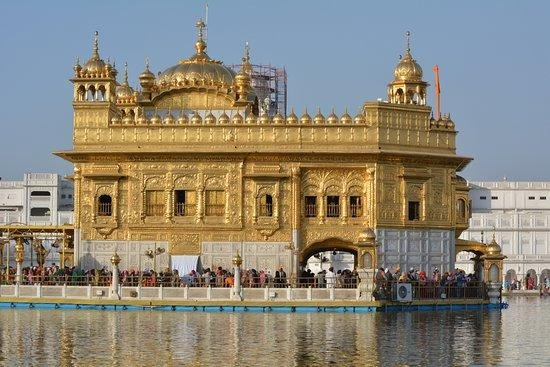
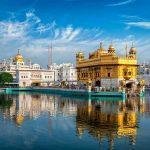
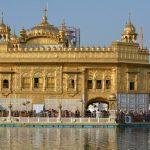
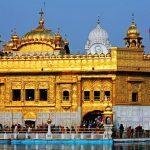
The Golden Temple, formally known as Sri Harmandir Sahib (The Abode of God) and reverently called Darbar Sahib (Court of the Lord), is the spiritual heart of the Sikh faith. Located in Amritsar, Punjab, it stands as a symbol of human brotherhood and equality. Unlike traditional temples, the Golden Temple is built on a lower level than the surrounding land, symbolizing humility. It has four entrances, welcoming devotees from all four cardinal directions and all walks of life.
Phalaśruti: Why Visit?
Devotees visit the Golden Temple to find inner peace and experience the presence of the Shabad Guru—the divine wisdom contained in the Guru Granth Sahib. The temple complex is built around the Sarovar (holy tank), whose waters are believed to possess healing properties, cleansing the soul of ego and past sins. The act of listening to the continuous recitation of Gurbani (hymns) and partaking in the Langar (community kitchen) is said to remove spiritual exhaustion and grant liberation (Mukti).
| Date built: | August 1604 |
|---|---|
| Deity: | – |
| Architectural style: | – |
| Major festivals | – |
| Locale: | – |
| District:: | Amritsar |
| Address: | Golden Temple Rd, Atta Mandi, Katra Ahluwalia, Amritsar, Punjab 143006 |
| Phone | 01832553957 |
Historical Origins & Scriptural Legend
The history of the Golden Temple is a testament to resilience and devotion. According to temple records and Sikh history, the land was originally gifted by the Mughal Emperor Akbar to Guru Amar Das, the third Guru of Sikhism. He asked his disciple, Guru Ram Das, to establish a new settlement.
The Foundation
In 1577, Guru Ram Das excavated the sarovar (holy pool), originally called Talamsar. The city was initially named Ramdaspur. In 1589, a defining moment occurred when Guru Arjan Sahib (the fifth Guru) requested the Muslim Sufi Saint, Sai Mian Mir, to lay the foundation stone of the Harmandir Sahib. This act underscored the Sikh tenets of Sarbat da Bhala (welfare for all) and interfaith harmony. The construction was completed in 1604, and Guru Arjan installed the holy scripture, the Adi Granth (later the Guru Granth Sahib), within the temple.
Persecution and Rebirth
Tradition holds that the temple has been destroyed and rebuilt multiple times due to invasions. The Afghan conqueror Ahmad Shah Abdali demolished the structure in 1757 and again in 1762, filling the Sarovar with rubble. It was restored to its glory by Maharaja Ranjit Singh in the early 19th century. He adorned the sanctum with gold leaf and marble, giving it the name “Golden Temple.” The complex also bears the scars of Operation Blue Star (1984), a military action that caused severe damage to the Akal Takht (the highest temporal seat of Sikhs). The complex was meticulously rebuilt post-1984.
Architectural Marvels
The architecture of the Golden Temple is a unique fusion of styles, primarily reflecting Indo-Saracenic influences with elements of Mughal and Rajput architecture.
Symbolic Design
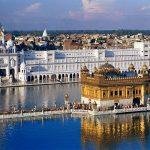
The sanctum sanctorum sits in the center of the Sarovar on a lower level, accessible by a causeway. The temple is designed with a square plan and features a Gumbaz (dome) and Chhatris (kiosks). Unlike Hindu temples where circumambulation (Pradakshina) is done around the inner sanctum, here devotees walk around the Sarovar (Parikrama). The white marble walls are inlaid with intricate pietra dura floral patterns, a style also found in the Taj Mahal.
The Akal Takht
Located opposite the Darbar Sahib, the Akal Takht (Throne of the Timeless One) was built by Guru Hargobind (1606–1644) as a seat of temporal authority. It represents the doctrine of Miri-Piri (temporal and spiritual authority).
The complex is currently pending UNESCO World Heritage status, having been added to the Tentative List.
Darshan & Ritual Logistics
The spiritual rhythm of the Golden Temple operates 24 hours a day, 365 days a year. The Guru Granth Sahib is ceremoniously carried to the Darbar Sahib in the morning and returned to the Akal Takht at night.
Daily Timings
While the doors are always open, the Palki Sahib ceremony follows a strict schedule. Below is the general timeline:
| Activity | Timing |
|---|---|
| Opening of Harmandir Sahib | 2:00 AM (All Year Round) |
| First Prakash (Morning Opening) | 3:00 AM – 6:00 AM |
| Gurbani Kirtan (Continuous) | 12:00 AM – 10:00 PM |
| Second Prakash (Evening Opening) | 6:00 PM – 10:00 PM |
| Sukhasan (Closing Ceremony) | 10:30 PM – 12:30 AM |
Key Sevas and Online Booking
To participate in rituals, devotees can book specific Sevas (services). The Shiromani Gurdwara Parbandhak Committee (SGPC) manages these bookings.
- Jaap Seva: Chanting or listening to hymns.
- Charan Seva: Cleaning the precincts.
- Sheetal Pani Seva: Serving cool water to pilgrims.
- Guru Ka Langar Seva: Serving meals in the community kitchen.
Booking can be done via the official sgpc.net website or at the information counter in Amritsar.
Festivals in 2026
Major Sikh festivals are celebrated with grandeur. The temple remains illuminated and remains open throughout the night.
- Guru Nanak Gurpurab (Birthday of Guru Nanak): November 15, 2026 (Date varies based on the Nanakshahi calendar).
- Bandi Chhor Divas (Diwali): October 21, 2026. This marks the return of Guru Hargobind from Mughal imprisonment.
- Guru Arjan Dev Ji Martyrdom Day: June 16, 2026.
- Baisakhi: April 14, 2026 (Celebrated as the Punjabi New Year).
Practical Visitor Guidance
Visiting the Golden Temple requires adherence to strict protocols to maintain the sanctity of the shrine.
Etiquette and Rules
- Head Covering: A head covering is mandatory for all visitors (men, women, and children). Scarves are available for free at the entrance.
- Footwear: Shoes must be removed at the dedicated counters (Jora Ghar) before entering the complex. Tokens are issued for retrieval.
- Dress Code: Modest clothing is required. Avoid shorts or sleeveless tops.
- No Tobacco/Alcohol: The complex is strictly smoke-free and alcohol-free.
Crowd Management
Crowd levels: Peak crowds occur on Sundays, public holidays, and the first and fifth day of any month.
Best time to visit: Visit on a weekday (Tuesday–Thursday) between 10:00 AM and 2:00 PM to avoid heavy rush. Winter months (October–March) are ideal for weather comfort.
Security: There are mandatory security checks. Bags are scanned. Do not carry large backpacks or sharp objects.
Pilgrimage Connectivity
Amritsar is well-connected by air, rail, and road. The airport is located just 13 km from the city center.
How to Reach
- By Air: Sri Guru Ram Dass Jee International Airport (ATQ) connects Amritsar to major Indian cities and international hubs like Dubai and London. From the airport, taxis and auto-rickshaws are available directly to the Golden Temple.
- By Rail: Amritsar Junction Railway Station is a major terminus. The station is approximately 2.5 km from the temple. Auto-rickshaws and electric rickshaws are readily available.
- By Road: Amritsar is connected by National Highway 44 (Grand Trunk Road). The ISBT (Inter State Bus Terminal) offers frequent buses to Delhi, Chandigarh, and Jammu.
Nearby Sacred Sites
Extend your pilgrimage to these nearby sites:
- Jallianwala Bagh: A memorial to the 1919 massacre, located just 5 minutes walking distance from the Golden Temple.
- Wagah Border: The India-Pakistan border, famous for the daily retreat ceremony (approx. 30 mins drive).
- Durgiana Temple: A Hindu temple dedicated to Goddess Durga, architecturally similar to the Golden Temple, located 1 km away.
Frequently Asked Questions (FAQ)
1. Is there a VIP Darshan entry at the Golden Temple?
No, the Golden Temple does not have a VIP Darshan system. The principle of equality is fundamental here. All devotees stand in the same queue to enter the sanctum. However, a separate queue exists for those needing assistance due to age or disability.
2. Is there an entry fee?
There is no entry fee. The Langar (community meal) is also offered free of cost to everyone.
3. Can non-Sikhs enter the sanctum sanctorum?
Yes. The Golden Temple is open to people of all faiths, castes, and creeds. All are welcome to bow their heads and offer prayers.
4. What is the significance of the Langar?
The Langar is a community kitchen that serves vegetarian meals to approximately 100,000 people daily. It represents equality, selfless service (Seva), and community bonding. It is open 24 hours a day.
5. Are photography and mobile phones allowed?
Photography is strictly prohibited inside the sanctum sanctorum and near the Sarovar. However, photography is allowed in certain areas of the Parikrama (circumambulation path). Mobile phones are permitted but must be kept on silent mode. Video recording may be restricted during certain ceremonies.
Photo Gallery
How to Reach:
Contact Details
Official Address
Recent Posts

Shri Kaamkoteeshwar Mandir, Varanasi – History & Significance
In the heart of Kashi, the eternal city of Lord Shiva, where the Ganges flows with celestial grace, stands the Shri Kaamkoteeshwar Mandir. This sacred Sannidhi is not merely a temple but a profound spiritual bridge between the Northern…

ओ सांवरे तूने ही मुझको संभाला – Lyrics & Meaning
ओ सांवरे तूने ही मुझको संभाला – A Prayer to Shyam Origin & Spiritual Essence Why This Bhajan Resonates Devotees chant this when overwhelmed by life’s storms—the refrain ‘तूने ही मुझको संभाला’ is the soul’s sigh of relief: “You…

कथा ये है महाराज मेरे की – Lyrics & Meaning
कथा ये है महाराज मेरे की छत्रपति संभाजी महाराज – A Prayer to Chhatrapati Sambhaji Maharaj Origin & Spiritual Essence Why This Bhajan Resonates Devotees chant this when their spirit feels tested—its powerful refrain “महाराज मेरे” is a soul’s…

Rigveda Samhita Yathartha Anuvada (ऋग्वेद संहिता यथार्थ अनुवाद) – Complete Set with Anvayartha & Hindi/English Translation
The Rigveda is the oldest surviving scripture of humanity and the foundational text of Sanātana Dharma. For serious students, scholars, UPSC aspirants studying ancient Indian history, Sanskrit learners, and spiritual seekers, a precise and grammatically structured translation is indispensable.…

आना भी अकेला है जाना भी अकेला है – Lyrics & Meaning | BharatTemples
आना भी अकेला है जाना भी अकेला है – A Prayer to the Divine Witness Origin & Spiritual Essence Why This Bhajan Resonates Devotees turn to this bhajan in moments of deep reflection—when life’s attachments begin to ache. The…

माता शेरावाली के द्वार जो भी जाता है – Lyrics & Meaning
माता शेरावाली के द्वार जो भी जाता है – A Prayer to Maa Sherawali Origin & Spiritual Essence Why This Bhajan Resonates Devotees turn to this bhajan in times of fear or uncertainty—its promise that no one leaves Maa’s…

मार लेना सपणी उबार लेणा भवरा – Lyrics & Meaning
मार लेना सपणी उबार लेणा भवरा – A Prayer to the Divine Beloved Origin & Spiritual Essence Why This Bhajan Resonates Devotees chant this in moments of deep vulnerability—its cry of “मार लेना सपणी, उबार लेणा भवरा” is the…

हमें श्याम सुंदर भरोसा तुम्हारा – Lyrics & Meaning
हमें श्याम सुंदर भरोसा तुम्हारा – A Prayer to Shyam Sundar Origin & Spiritual Essence Why This Bhajan Resonates Devotees chant this when feeling alone—its refrain ‘de do sahara’ is the soul’s cry for divine support. Lyrics in Hindi…

Mere Satguru Ne Di Thi Davai Lyrics in Hindi & Meaning
Mere Satguru Ne Di Thi Davai: Invoking the Guru’s Liberating Wisdom This soul-stirring bhajan venerates the Satguru (True Spiritual Master) as the divine physician who dispenses the only remedy for life’s deepest sufferings. Composed by Sant Karmaveer Tufani, it…

Janm Diyo Thari Maa Dukh Dekhiyo Lyrics in Hindi & Meaning
जन्म दियो थारी माँ दुख देखियो (Maa’s Grief Upon Birthing You) This soul-stirring Chetavani Bhajan (admonitory hymn) is addressed to the Divine Mother (Maa) – a call for repentance when children forget their filial duties in the dark age…