
Contents
- 1 Gomathi Amman Temple, Sankarankovil: The Sanctum of Sankaranarayana
Gomathi Amman Temple, Sankarankovil: The Sanctum of Sankaranarayana
As the Lead Heritage Architect and SEO Strategist for BharatTemples.com, I invite you to explore the architectural and spiritual majesty of the Gomathi Amman Temple in Sankarankovil, Tamil Nadu. This 900-year-old masterpiece stands as a testament to the architectural prowess of the Pandiya dynasty and the profound philosophical unity of Lord Shiva and Lord Vishnu.
1. Introduction & Spiritual Essence
The Gomathi Amman Temple, popularly known as Sankaranayinar Kovil or Sankarankovil, is the abode of Gomathi Amman, a manifestation of Adhi Shakthi (the Primeval Goddess). The temple is renowned for the unique Sankaranarayana idol, a rare form representing the unification of Lord Shiva and Lord Vishnu.
Phalaśruti: The Divine Benefits
Devotees flock to this temple not only for its architectural beauty but for its potent spiritual benefits. The primary deity, Gomathi Amman, is known as the “Repository of Wealth” (Gomathi literally means a reservoir of wealth).
Why do devotees visit?
- Protection from Venom: Due to the legends of the serpent kings (Sangan and Padman), the temple is revered for protection against venomous bites and fears.
- Cleansing Ancestral Karma: Rituals performed here are believed to alleviate sins and cleanse ancestral lineage issues.
- Unity & Harmony: Worshipping the Sankaranarayana form helps reconcile dualities and promotes familial harmony.
2. Historical Origins & Scriptural Legend
The Pandiya Legacy
According to historical records, the temple was constructed in the 15th century by King Ukkira Pandian of the Pandiya Dynasty. For over nine centuries, this structure has stood as a beacon of Dravidian culture and spiritual resilience.
The Legend of Sankaranarayana
Tradition holds that two serpents, Sangan (worshipping Lord Shiva) and Padman (worshipping Lord Narayana/Vishnu), engaged in a fierce quarrel regarding the supremacy of their chosen deities. They approached a Yogini (penitent devotee) performing tapas on the tip of a needle to seek a verdict.
The Yogini, through intense penance, prayed for the Almighty to reveal their true nature. Pleased, the Lord appeared before them as Sankaranarayana—a singular form with the right half representing Shiva and the left half representing Vishnu. This miraculous vision proved that both deities are equal and that the Ultimate Reality is one. The Yogini was none other than Goddess Gomathi.
The Siddha Connection: One of the 18 Siddhas, Pambatti Siddhar, worshipped Gomathi Amman here as Valai Kumari (the Serpent Power). His Samadhi is located behind the temple, making it a significant site for practitioners of Siddha medicine and yoga.
3. Architectural Marvels
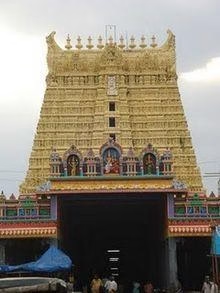
The temple showcases the grandeur of Dravidian Architecture, specifically the Pandiya style. The structure is a marvel of Vastu Shastra, designed to channel cosmic energies effectively.
Key Features
- The Gopuram: The towering Rayagopuram (tower) adorned with intricate stucco work serves as the monumental entrance.
- Sculptures: The Mandapa (hall) pillars feature detailed carvings depicting mythological narratives, celestial beings, and scenes from the legends of the serpent kings.
- The Sanctum: The inner sanctum houses the swayambhu (self-manifested) idol of Sankaranarayana, considered highly rare in temple architecture.
| Date built: | 15th Century |
|---|---|
| Deity: | Gomathi Amman (Sankaranarayana) |
| Architectural style: | Dravidian (Pandiya) |
| Major festivals | Adi Thabasu, Chithirai Festival |
| Locale: | Sankarankovil |
| District: | Tirunelveli |
| Address: | Sankarankovil, Tamil Nadu 627756 |
| Phone | Available via Official HR & CE Website |
4. Darshan & Ritual Logistics
To ensure a seamless spiritual experience, devotees are advised to check the latest timings. The following schedule is based on standard temple panchangam.
Daily Timings
| Session | Opening Time | Closing Time |
|---|---|---|
| Morning | 06:00 AM | 12:00 PM |
| Evening | 04:00 PM | 08:30 PM |
Key Sevas and Offerings
- Abhishekam: Performed daily with milk, honey, and sandalwood paste.
- Archana: Special Archana for Gomathi Amman is believed to bring wealth and prosperity.
- Vilakku Puja: The offering of lamps is a primary ritual here.
Online Seva Booking
Devotees can now book pujas online through the Tamil Nadu HR & CE department portal. Select “Sankarankovil” as the temple to view available slots for Abhishekam and Special Darshan.
2026 Festival Calendar
Plan your visit around these major events:
- Adi Thabasu (Adi 18): August 1, 2026 (Friday). This is the most significant festival here, celebrating the idol consecration.
- Chithirai Festival: April 14 – 25, 2026. The annual chariot festival (Ther).
- Aadi Perukku: July 28, 2026. Special river rituals and prayers.
5. Practical Visitor Guidance
To maintain the sanctity of the temple and ensure a comfortable visit, please adhere to the following guidelines.
Code of Conduct
- Dress Code: Traditional attire is mandatory. Men should wear dhoti or trousers with a shirt; women should wear saree, half-saree, or churidar with dupatta.
- Photography: Strictly prohibited inside the inner sanctum. Photography in the outer praharam (corridor) may require permission from the executive officer.
- Mobile Lockers: A cloakroom facility is available near the entrance for electronic devices and luggage, as mobile phones are not allowed inside.
- Accessibility: The temple is wheelchair accessible in the outer corridors, though the sanctum sanctorum has traditional steps.
Crowd Management & Seasonal Advice
- Best Hours: Visit between 6:00 AM – 8:00 AM or 4:00 PM – 6:00 PM on weekdays to avoid crowds.
- Weekends: Expect heavy crowds, especially on Saturdays.
- Seasonal Tip: During the summer months (May), carry a water bottle and an umbrella, as the temple courtyard can be hot.
6. Pilgrimage Connectivity
How to Reach
By Air: The nearest airport is Madurai International Airport (approx. 90 km).
By Rail: The nearest railway junction is Sankarankovil Railway Station (located within the town). The next major junction is Tirunelveli Junction (approx. 55 km).
By Road: Sankarankovil is located on NH 131 (Old NH 208) connecting Tirunelveli to Rajapalayam/Thenkasi. Frequent bus services are available from Tirunelveli, Madurai, and Sivakasi.
Nearby Sacred Sites (Pilgrimage Circuit)
- Kalisagar Temple: Located in the same town, dedicated to Lord Vishnu and Lord Shiva (Appu Lingam).
- Kurukkuturai Temple: A scenic temple dedicated to Lord Murugan, located about 15 km away.
- Pulappaatti: A water tank known for its legend associated with the temple chariot.
7. Frequently Asked Questions (FAQ)
1. Is there a VIP Darshan entry available?
Yes, the temple administration offers a special darshan ticket (usually Rs. 50/-) for quick access to the sanctum. This can be purchased at the counter or booked online.
2. What is the significance of the Sankaranarayana idol?
The idol represents the spiritual truth that Lord Shiva (The Destroyer) and Lord Vishnu (The Preserver) are one and the same. Worshipping this form is said to remove the duality of mind and grant Moksha.
3. Can non-Hindus visit the temple?
Entry is generally restricted to Hindus and those who respect the traditions. However, the outer areas and architecture are visible to all.
4. What are the accommodation options?
There are several private lodges and hotels in Sankarankovil. For devotees, the Tirunelveli Devasthanam guest house offers budget accommodation (booking recommended).
5. Is there a restriction on entering during menstruation?
As per traditional temple customs, women are required to abstain from entering the sanctum during their menstrual cycle. This is standard practice in this region.
Contact Details
For official inquiries and rituals:
- Executive Officer
- Arulmigu Sankarankovil Sankaranayinar Temple
- Sankarankovil – 627756, Tirunelveli District, Tamil Nadu.
- Official Website: Tamil Nadu HR & CE
Gomathi Amman Temple is not just a structure of stone; it is a living energy field where the protector and the destroyer converge to grant peace. Plan your visit to this heritage marvel with reverence and devotion.
Recent Posts

ओ सांवरे तूने ही मुझको संभाला – Lyrics & Meaning
ओ सांवरे तूने ही मुझको संभाला – A Prayer to Shyam Origin & Spiritual Essence Why This Bhajan Resonates Devotees chant this when overwhelmed by life’s storms—the refrain ‘तूने ही मुझको संभाला’ is the soul’s sigh of relief: “You…

कथा ये है महाराज मेरे की – Lyrics & Meaning
कथा ये है महाराज मेरे की छत्रपति संभाजी महाराज – A Prayer to Chhatrapati Sambhaji Maharaj Origin & Spiritual Essence Why This Bhajan Resonates Devotees chant this when their spirit feels tested—its powerful refrain “महाराज मेरे” is a soul’s…

Rigveda Samhita Yathartha Anuvada (ऋग्वेद संहिता यथार्थ अनुवाद) – Complete Set with Anvayartha & Hindi/English Translation
The Rigveda is the oldest surviving scripture of humanity and the foundational text of Sanātana Dharma. For serious students, scholars, UPSC aspirants studying ancient Indian history, Sanskrit learners, and spiritual seekers, a precise and grammatically structured translation is indispensable.…

आना भी अकेला है जाना भी अकेला है – Lyrics & Meaning | BharatTemples
आना भी अकेला है जाना भी अकेला है – A Prayer to the Divine Witness Origin & Spiritual Essence Why This Bhajan Resonates Devotees turn to this bhajan in moments of deep reflection—when life’s attachments begin to ache. The…

माता शेरावाली के द्वार जो भी जाता है – Lyrics & Meaning
माता शेरावाली के द्वार जो भी जाता है – A Prayer to Maa Sherawali Origin & Spiritual Essence Why This Bhajan Resonates Devotees turn to this bhajan in times of fear or uncertainty—its promise that no one leaves Maa’s…

मार लेना सपणी उबार लेणा भवरा – Lyrics & Meaning
मार लेना सपणी उबार लेणा भवरा – A Prayer to the Divine Beloved Origin & Spiritual Essence Why This Bhajan Resonates Devotees chant this in moments of deep vulnerability—its cry of “मार लेना सपणी, उबार लेणा भवरा” is the…

हमें श्याम सुंदर भरोसा तुम्हारा – Lyrics & Meaning
हमें श्याम सुंदर भरोसा तुम्हारा – A Prayer to Shyam Sundar Origin & Spiritual Essence Why This Bhajan Resonates Devotees chant this when feeling alone—its refrain ‘de do sahara’ is the soul’s cry for divine support. Lyrics in Hindi…

Mere Satguru Ne Di Thi Davai Lyrics in Hindi & Meaning
Mere Satguru Ne Di Thi Davai: Invoking the Guru’s Liberating Wisdom This soul-stirring bhajan venerates the Satguru (True Spiritual Master) as the divine physician who dispenses the only remedy for life’s deepest sufferings. Composed by Sant Karmaveer Tufani, it…

Janm Diyo Thari Maa Dukh Dekhiyo Lyrics in Hindi & Meaning
जन्म दियो थारी माँ दुख देखियो (Maa’s Grief Upon Birthing You) This soul-stirring Chetavani Bhajan (admonitory hymn) is addressed to the Divine Mother (Maa) – a call for repentance when children forget their filial duties in the dark age…
Bhadi Sabha Mein Thane Manaun Lyrics in Hindi & Meaning
Bhadi Sabha Mein Thane Manaun: Invoking the Spear-Wielding Mother Mata Bhawani (श्री ज्वाला भवानी), the fiery manifestation of Shakti worshipped as the Protector of Dharma in Her Dhaulagarh sanctum. Origin & Spiritual Essence Composed in Rajasthani folk tradition by…