
Contents
Introduction & Spiritual Essence
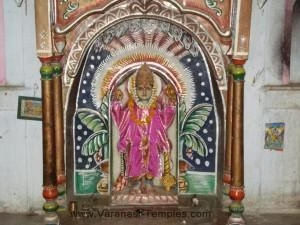
Nestled along the sacred banks of the Ganga in Varanasi (Kashi) lies the Gyan Keshav Temple, a sanctum dedicated to the fountainhead of all knowledge. This ancient shrine is not merely a structure of stone but a repository of spiritual wisdom, deeply woven into the fabric of the Kashi Khand of Skanda Purana.
The primary deity here is Gyan Keshav, a revered form of Lord Shiva, often considered a variation of the famous Kashi Vishwanath. As the name suggests, ‘Gyan’ (Knowledge) and ‘Keshav’ (a name of Vishnu, often connoting the supreme), this temple symbolizes the syncretic wisdom found in Sanatana Dharma. The idol is a swayambhu (self-manifested) murti of immense antiquity, believed to bestow clarity of intellect and spiritual insight upon the devotee.
Phalaśruti (Spiritual Benefits):
According to ancient scriptural records, a visit to Gyan Keshav yields profound spiritual merit. Devotees who offer prayers here are said to be cleansed of the agyaan (ignorance) that binds the soul to the cycle of rebirth. Specifically, ritual bathing in the nearby waters (historically the Swet Deep Teerth, now merged with the Ganges) followed by darshan of Gyan Keshav is believed to elevate consciousness and aid in academic pursuits and intellectual clarity.
Historical Origins & Scriptural Legend
Scriptural Significance:
The foundation of Gyan Keshav Temple is rooted in the Kashi Khand of the Skanda Purana. Textual references describe the existence of a Teerth (sacred pond) known as Swet Deep, located near the shrine. Tradition holds that bathing in this Teerth and worshipping Gyan Keshav was a mandatory spiritual practice for attaining Moksha. While the physical Teerth has merged into the Ganga over centuries due to the river’s changing course, the spiritual potency of the site remains undiminished.
Archaeological History & Renovations:
While specific stone inscriptions detailing the exact century of construction are partially eroded, temple records and oral traditions suggest the shrine predates the medieval period. The current structure is located at A-37/51, Adi Keshav Temple, within the precincts of the historic Rajghat Fort. The temple has undergone several renovations to preserve its sanctity, particularly after periods of historical upheaval. The site stands as a testament to the enduring resilience of Kashi’s spiritual heritage.
Architectural Marvels
The Gyan Keshav Temple represents a blend of traditional Nagara style temple architecture with specific regional adaptations of Kashi. While the exterior is modest, blending with the historic fabric of the Rajghat area, the interior sanctum exudes a magnetic spiritual aura.
- Sanctum Sanctorum (Garbhagriha): The inner chamber is designed to focus all energies on the central deity. The Gyan Keshav Murti is revered for its ancient craftsmanship, though the specific mineral composition is traditionally kept veiled from common documentation.
- Adi Keshav Complex: The temple is often associated with the larger Adi Keshav area. The architectural layout follows the Vastu Shastra principles of energy alignment, with the Garbhagriha located at the center, allowing for a circular flow of devotional movement (Pradakshina).
- Proximity to the Ganga: The temple’s placement on the riverbank allows for a unique architectural flow where the river itself serves as the outermost Mandapa. Devotees enter the temple premises after taking a dip in the Ganga, mimicking the ritual architecture of purification described in ancient texts.
Darshan & Ritual Logistics
To ensure a seamless spiritual experience, devotees should note the daily schedules and specific rituals dedicated to Lord Gyan Keshav. The current operational patterns are based on standard Kashi temple traditions.
Daily Darshan Timings
| Session | Timing | Activity |
|---|---|---|
| Morning | 05:00 AM – 12:00 PM | Mangala Darshan, Abhishekam |
| Afternoon | 12:00 PM – 04:00 PM | Temple Cleaning & Rest |
| Evening | 04:00 PM – 09:30 PM | Shringar Darshan, Aarti |
*Note: Timings may vary slightly during festivals.
Key Sevas and Online Booking
Devotees can book the following Sevas (ritual services) through the official Kashi Vishwanath Temple Trust portals or on-site counters:
- Abhishekam (Ritual Bathing): Performed in the early morning. Sankalp is required.
- Gyan Keshav Archana: A specific recitation of 108 names dedicated to the deity of knowledge.
- Rudrabhishek: Recommended for students and those seeking wisdom.
2026 Festival Calendar:
Mark your calendars for these auspicious dates:
- Maha Shivaratri: February 26, 2026 (Special night-long vigils).
- Sawan Somvar Vrat: July 14, 21, 28 & August 4, 2026 (Peak crowd; early arrival recommended).
- Kartik Purnima: November 5, 2026 (Ganga Pooja at the riverbank).
Practical Visitor Guidance
Visiting a temple in Varanasi requires preparation to maintain focus on the spiritual experience.
- Dress Code: Traditional Indian attire (Dhoti/Saree/Kurta-Pajama) is strictly recommended. Avoid shorts and sleeveless tops.
- Footwear & Electronics: Shoes must be removed outside the temple premises. Mobile lockers are available but limited; it is best to travel light.
- Photography: Photography is prohibited inside the inner sanctum (Garbhagriha). Discretion is advised in the outer complex.
- Accessibility: The temple is near the river level. While the path is paved, it can be uneven. It is accessible for senior citizens via cycle rickshaws which can drop you near the entrance.
Crowd Management & Seasonal Advice
Best Hours to Visit: For a peaceful darshan, visit between 8:00 AM and 11:00 AM on weekdays. Avoid weekends and Mondays (Somvar) during the Shravan month if you prefer shorter queues.
Seasonal Tips:
- Summer (April-June): Temperatures can exceed 40°C. Carry a reusable water bottle and cover your head.
- Monsoon (July-September): The Ganga levels rise. Check local advisories before visiting riverbank temples.
- Winter (December-February): The best time to visit. Mornings are misty and serene.
Pilgrimage Connectivity
How to Reach:
The Gyan Keshav Temple is located at A-37/51, Adi Keshav Temple, Rajghat Fort, Varanasi.
- Nearest Airport: Lal Bahadur Shastri International Airport (LBS), Varanasi (approx. 30 km / 1 hour drive).
- Nearest Railway Station: Varanasi Junction (BSB) (approx. 6 km / 20-30 mins via auto).
- Road Access: The temple is situated just off the Varanasi-Allahabad Highway (NH-19). Auto-rickshaws and cycle rickshaws are readily available from Dashashwamedh Ghat or Godaulia crossing.
Nearby Sacred Sites (Pilgrimage Circuit):
Expand your spiritual journey by visiting these nearby landmarks:
- Kashi Vishwanath Temple (New): Located approx. 3 km away.
- Adi Keshava Temple: Often confused with Gyan Keshav, this is the older counterpart located in the same Rajghat vicinity.
- Bharat Mata Mandir: 4 km away at the Mahatma Gandhi Kashi Vidyapith campus.
Frequently Asked Questions (FAQs)
1. Is there a VIP Darshan entry at Gyan Keshav Temple?
While Gyan Keshav is a shrine within the Rajghat complex, it does not have a formal VIP entry system like the main Kashi Vishwanath Corridor. However, early morning access before 6:00 AM is usually calm and allows for a quick darshan. For special privileges, it is advisable to contact the administrative office of the Kashi Vishwanath Temple Trust.
2. What is the significance of the ‘Swet Deep’ Teerth?
The Swet Deep Teerth is a legendary water body mentioned in the Kashi Khand. Historically, bathing in this pond was considered essential before worshipping Gyan Keshav. Today, the ritual has adapted; devotees take a dip in the Ganges (which flows nearby) and then proceed to the temple to fulfill the scriptural requirement.
3. Can I perform a havan or special yagna at the temple?
Individual havans inside the temple premises are generally restricted due to space constraints and safety regulations. However, the temple priests can perform a specific Shanti Yagna on your behalf by taking a Sankalp (vow). You should contact the head priest (Mukhya Pujari) a day in advance to arrange materials and timing.
4. Is there a dress code for entry?
Yes, as with most temples in Varanasi, modest and traditional clothing is required. Men should wear dhoti or long trousers, and women should wear sarees, salwar kameez, or long skirts. Western attire like jeans, shorts, or t-shirts may lead to denial of entry.
5. Is photography allowed inside the temple?
No, photography is strictly prohibited inside the sanctum sanctorum. While handheld photography might be allowed in the outer courtyard, visitors are requested to maintain the sanctity of the space and refrain from using flash or tripods without prior permission from temple authorities.
Photo Gallery
Contact Details
Kashi Vishwanath Temple Trust (Administrative Body)
Office: Lalita Ghat, Varanasi, UP 221001
Phone (General Inquiries): +91-542-222-0022
Email: info@kashivishwanath.org
Official Website: www.kashivishwanath.org (For online seva booking and donations)
Recent Posts

ओ सांवरे तूने ही मुझको संभाला – Lyrics & Meaning
ओ सांवरे तूने ही मुझको संभाला – A Prayer to Shyam Origin & Spiritual Essence Why This Bhajan Resonates Devotees chant this when overwhelmed by life’s storms—the refrain ‘तूने ही मुझको संभाला’ is the soul’s sigh of relief: “You…

कथा ये है महाराज मेरे की – Lyrics & Meaning
कथा ये है महाराज मेरे की छत्रपति संभाजी महाराज – A Prayer to Chhatrapati Sambhaji Maharaj Origin & Spiritual Essence Why This Bhajan Resonates Devotees chant this when their spirit feels tested—its powerful refrain “महाराज मेरे” is a soul’s…

Rigveda Samhita Yathartha Anuvada (ऋग्वेद संहिता यथार्थ अनुवाद) – Complete Set with Anvayartha & Hindi/English Translation
The Rigveda is the oldest surviving scripture of humanity and the foundational text of Sanātana Dharma. For serious students, scholars, UPSC aspirants studying ancient Indian history, Sanskrit learners, and spiritual seekers, a precise and grammatically structured translation is indispensable.…

आना भी अकेला है जाना भी अकेला है – Lyrics & Meaning | BharatTemples
आना भी अकेला है जाना भी अकेला है – A Prayer to the Divine Witness Origin & Spiritual Essence Why This Bhajan Resonates Devotees turn to this bhajan in moments of deep reflection—when life’s attachments begin to ache. The…

माता शेरावाली के द्वार जो भी जाता है – Lyrics & Meaning
माता शेरावाली के द्वार जो भी जाता है – A Prayer to Maa Sherawali Origin & Spiritual Essence Why This Bhajan Resonates Devotees turn to this bhajan in times of fear or uncertainty—its promise that no one leaves Maa’s…

मार लेना सपणी उबार लेणा भवरा – Lyrics & Meaning
मार लेना सपणी उबार लेणा भवरा – A Prayer to the Divine Beloved Origin & Spiritual Essence Why This Bhajan Resonates Devotees chant this in moments of deep vulnerability—its cry of “मार लेना सपणी, उबार लेणा भवरा” is the…

हमें श्याम सुंदर भरोसा तुम्हारा – Lyrics & Meaning
हमें श्याम सुंदर भरोसा तुम्हारा – A Prayer to Shyam Sundar Origin & Spiritual Essence Why This Bhajan Resonates Devotees chant this when feeling alone—its refrain ‘de do sahara’ is the soul’s cry for divine support. Lyrics in Hindi…

Mere Satguru Ne Di Thi Davai Lyrics in Hindi & Meaning
Mere Satguru Ne Di Thi Davai: Invoking the Guru’s Liberating Wisdom This soul-stirring bhajan venerates the Satguru (True Spiritual Master) as the divine physician who dispenses the only remedy for life’s deepest sufferings. Composed by Sant Karmaveer Tufani, it…

Janm Diyo Thari Maa Dukh Dekhiyo Lyrics in Hindi & Meaning
जन्म दियो थारी माँ दुख देखियो (Maa’s Grief Upon Birthing You) This soul-stirring Chetavani Bhajan (admonitory hymn) is addressed to the Divine Mother (Maa) – a call for repentance when children forget their filial duties in the dark age…
Bhadi Sabha Mein Thane Manaun Lyrics in Hindi & Meaning
Bhadi Sabha Mein Thane Manaun: Invoking the Spear-Wielding Mother Mata Bhawani (श्री ज्वाला भवानी), the fiery manifestation of Shakti worshipped as the Protector of Dharma in Her Dhaulagarh sanctum. Origin & Spiritual Essence Composed in Rajasthani folk tradition by…