
Contents
Introduction & Spiritual Essence
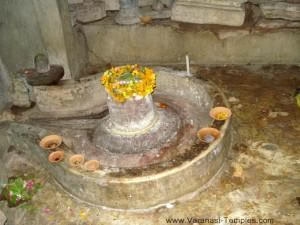
Located in the spiritual heart of the ancient city of Kashi (Varanasi), the Jarasanheshwar Temple stands as a testament to the healing power of Lord Shiva. Known locally as Jarasandheshwar or the Jwara Nashak (Fever Eradicator) Lingam, this sacred shrine is deeply embedded in the scriptural texts of the Kashi Khand. While Varanasi is famous for Vishwanath and Sankat Mochan, Jarasanheshwar offers a specific spiritual potency for devotees seeking relief from ailments and the cleansing of ancestral karma.
The primary deity here is a Swayambhu (self-manifested) Lingam of Lord Shiva. The spiritual significance of this temple is immense; according to religious beliefs, a sincere darshan and worship of this Lingam can cure illnesses that evade modern medical explanation. It is a place where the devotion meets the desperate plea for health, offering solace to thousands of pilgrims who visit annually seeking the grace of Mrityunjaya (Conqueror of Death).
Phalaśruti: The Benefit of Worship
Devotees believe that worshipping the Jarasanheshwar Lingam acts as a potent remedy for chronic fevers, seasonal illnesses, and prolonged suffering. It is traditionally believed that offering Abhishekam with holy water and milk washes away the negative karma associated with health issues, paving the way for physical recovery and mental peace.
Historical Origins & Scriptural Legend
The Kashi Khand Connection
The origins of Jarasanheshwar Temple are deeply rooted in the Kashi Khand of the Skanda Purana. Tradition holds that Lord Shiva, residing in Kashi, described the divine energy of this specific location to Goddess Parvati. He revealed that this area is one of the most powerful Teerthas (sacred sites) where the very atmosphere exudes healing vibrations.
The name “Jarasanheshwar” is derived from two Sanskrit words: Jara (old age/fever/ailment) and Sanhara (destruction). Thus, the Lord here is the Destroyer of Ailments. Legend states that in ancient times, a demon or a severe epidemic could only be cured by the divine energy radiating from this specific spot.
Archaeological & Dynastic History
While the exact date of the original construction is obscured by the antiquity of the site, the temple structure reflects the architectural patronage of the Kashmiri Kings who visited Varanasi during the medieval period. The temple has undergone several renovations to preserve its sanctity and structural integrity. Currently, under the management of local temple trusts, it maintains the traditional rituals established centuries ago.
Architectural Marvels
The Jarasanheshwar Temple, though modest in footprint compared to the colossal Kashi Vishwanath complex, is rich in Vastu Shastra alignment. The temple follows the Nagara style of North Indian architecture, characterized by a towering Shikhara (spire) that points vertically towards the heavens.
- The Sanctum (Garbhagriha): The inner sanctum houses the Swayambhu Lingam, facing east to catch the first rays of the rising sun. The Lingam is naturally formed and is adorned with a silver mask representing Lord Shiva.
- The Mandapa: A pillared hall allows devotees to gather for prayers. The pillars are carved with motifs of Dwarapalas (guardian deities) and floral patterns typical of 18th-century Kashi architecture.
- Stone Carvings: The exterior walls feature intricate carvings of various manifestations of Shiva, including Nataraja (the cosmic dancer) and Ardhanarishvara (the union of Shiva and Shakti).
Darshan & Ritual Logistics
Visiting Kashi requires planning, especially during the holy month of Shravan and Mahashivratri. The Jarasanheshwar Temple offers a more intimate darshan experience than the main corridor.
Daily Timings
| Session | Timings | Activity |
|---|---|---|
| Morning | 5:00 AM – 12:00 PM | Mangala Aarti & Abhishekam |
| Evening | 4:00 PM – 9:00 PM | Shringar Aarti & Visarjan |
*Note: Timings may vary slightly during festivals. It is advisable to confirm with the temple trust office upon arrival.
Key Sevas & Online Booking
Devotees can perform specific Sevas to enhance the spiritual efficacy of their visit:
- Jwara Nashak Abhishekam: A specialized Abhishekam performed with Panchamrit and holy Ganga water to eradicate fever and illness.
- Rudra Archana: Chanting of the Sri Rudram hymn.
To book these rituals, visit the Bharat Temples portal or the official Varanasi temple coordination website. While the Jarasanheshwar Temple has limited digital infrastructure, most Sevas in Kashi can now be booked via the unified Kashi Vishwanath Corridor Portal (if integrated) or by contacting the head priest (Archaka) directly.
2026 Festival Dates
Key dates for 2026 when crowds are expected to be highest:
- Mahashivratri: February 26, 2026
- Shravan Mondays: July 13, 20, 27 & August 3, 2026
- Kartik Purnima: November 4, 2026
Practical Visitor Guidance
Dress Code & Etiquette
Visitors should dress modestly. Traditional Indian attire (dhoti/kurta for men, saree/salwar kameez for women) is preferred. Western clothing like shorts or sleeveless tops is generally discouraged within the sanctum sanctorum.
Photography & Mobiles
Photography is strictly prohibited inside the inner sanctum. Mobile phones should be switched to silent mode. There are locker facilities available near the Mir Ghat entrance for depositing luggage and electronic devices.
Crowd Management & Accessibility
The temple is located in the narrow bylanes of Kashi, typical of the old city. It is not wheelchair accessible due to ancient stone steps and narrow passages.
Best Hours to Visit: For a peaceful darshan, visit between 9:00 AM and 11:00 AM (after morning rituals) or 2:00 PM to 4:00 PM. Avoid 6:00 PM – 8:00 PM during peak seasons.
Seasonal Advice: In May and June, temperatures in Varanasi exceed 40°C. Carry a reusable water bottle and a head cover. In winter (Dec-Jan), warm layers are essential for early morning visits.
Pilgrimage Connectivity
How to Reach
The Jarasanheshwar Temple is situated at D-3/71, Mir Ghat, near Bare Hanuman Temple, Varanasi.
- By Air: Lal Bahadur Shastri International Airport (LBS) is approximately 30 km away. Taxis and auto-rickshaws are readily available to drop you at Dashashwamedh Ghat.
- By Rail: Varanasi Junction (BSB) is the major railway station, about 6 km from the temple.
- By Road: The temple is located in the old city. Vehicles cannot enter the narrow lanes. The nearest drop-off point is Dasaswamedh Ghat. From there, it is a 10-minute walk or a short boat ride.
Nearby Sacred Sites (Pilgrimage Circuit)
Devotees are encouraged to combine their visit to Jarasanheshwar with these nearby shrines:
- Bare Hanuman Temple: Located right opposite the ghat, this temple houses a massive, standing idol of Hanuman Ji.
- Vishalakshi Gauri Temple: A short walk from the site, dedicated to the Goddess of Sight.
- Kashi Vishwanath Temple: The main Jyotirlinga is approximately 1.5 km away (boat or walk via the ghats).
Frequently Asked Questions
1. Is there a VIP darshan entry?
Unlike the Kashi Vishwanath Corridor, the Jarasanheshwar Temple does not have a formal VIP entry system. Darshan is generally accessible to all devotees. However, contacting the local priest can facilitate a smoother visit during peak hours.
2. Can I perform the Abhishekam myself?
Generally, only the authorized head priest performs the Abhishekam in the sanctum. However, devotees can offer the materials (milk, honey, curd) and the priest will perform the ritual on their behalf. Some temples allow limited participation; check with the priest upon arrival.
3. Is there any entry fee?
Entry to the temple is free for all devotees. Specific Sevas (rituals) have a prescribed donation amount which goes towards temple maintenance and offerings.
4. What is the best time to visit Varanasi for this temple?
The weather is most pleasant from October to March. Avoid the peak summer months (May-June) if you are not accustomed to extreme heat, as walking in the old city can be challenging.
5. How safe is the area near Mir Ghat?
The area is very safe and heavily patrolled by police and volunteers, especially near the ghats. However, as with any crowded tourist place, keep your belongings secure.
Recent Posts

ओ सांवरे तूने ही मुझको संभाला – Lyrics & Meaning
ओ सांवरे तूने ही मुझको संभाला – A Prayer to Shyam Origin & Spiritual Essence Why This Bhajan Resonates Devotees chant this when overwhelmed by life’s storms—the refrain ‘तूने ही मुझको संभाला’ is the soul’s sigh of relief: “You…

कथा ये है महाराज मेरे की – Lyrics & Meaning
कथा ये है महाराज मेरे की छत्रपति संभाजी महाराज – A Prayer to Chhatrapati Sambhaji Maharaj Origin & Spiritual Essence Why This Bhajan Resonates Devotees chant this when their spirit feels tested—its powerful refrain “महाराज मेरे” is a soul’s…

Rigveda Samhita Yathartha Anuvada (ऋग्वेद संहिता यथार्थ अनुवाद) – Complete Set with Anvayartha & Hindi/English Translation
The Rigveda is the oldest surviving scripture of humanity and the foundational text of Sanātana Dharma. For serious students, scholars, UPSC aspirants studying ancient Indian history, Sanskrit learners, and spiritual seekers, a precise and grammatically structured translation is indispensable.…

आना भी अकेला है जाना भी अकेला है – Lyrics & Meaning | BharatTemples
आना भी अकेला है जाना भी अकेला है – A Prayer to the Divine Witness Origin & Spiritual Essence Why This Bhajan Resonates Devotees turn to this bhajan in moments of deep reflection—when life’s attachments begin to ache. The…

माता शेरावाली के द्वार जो भी जाता है – Lyrics & Meaning
माता शेरावाली के द्वार जो भी जाता है – A Prayer to Maa Sherawali Origin & Spiritual Essence Why This Bhajan Resonates Devotees turn to this bhajan in times of fear or uncertainty—its promise that no one leaves Maa’s…

मार लेना सपणी उबार लेणा भवरा – Lyrics & Meaning
मार लेना सपणी उबार लेणा भवरा – A Prayer to the Divine Beloved Origin & Spiritual Essence Why This Bhajan Resonates Devotees chant this in moments of deep vulnerability—its cry of “मार लेना सपणी, उबार लेणा भवरा” is the…

हमें श्याम सुंदर भरोसा तुम्हारा – Lyrics & Meaning
हमें श्याम सुंदर भरोसा तुम्हारा – A Prayer to Shyam Sundar Origin & Spiritual Essence Why This Bhajan Resonates Devotees chant this when feeling alone—its refrain ‘de do sahara’ is the soul’s cry for divine support. Lyrics in Hindi…

Mere Satguru Ne Di Thi Davai Lyrics in Hindi & Meaning
Mere Satguru Ne Di Thi Davai: Invoking the Guru’s Liberating Wisdom This soul-stirring bhajan venerates the Satguru (True Spiritual Master) as the divine physician who dispenses the only remedy for life’s deepest sufferings. Composed by Sant Karmaveer Tufani, it…

Janm Diyo Thari Maa Dukh Dekhiyo Lyrics in Hindi & Meaning
जन्म दियो थारी माँ दुख देखियो (Maa’s Grief Upon Birthing You) This soul-stirring Chetavani Bhajan (admonitory hymn) is addressed to the Divine Mother (Maa) – a call for repentance when children forget their filial duties in the dark age…
Bhadi Sabha Mein Thane Manaun Lyrics in Hindi & Meaning
Bhadi Sabha Mein Thane Manaun: Invoking the Spear-Wielding Mother Mata Bhawani (श्री ज्वाला भवानी), the fiery manifestation of Shakti worshipped as the Protector of Dharma in Her Dhaulagarh sanctum. Origin & Spiritual Essence Composed in Rajasthani folk tradition by…