
Contents
- 1 Introduction & Spiritual Essence: The Abode of Kardhameshwar
- 2 Historical Origins & Scriptural Legend
- 3 Architectural Marvels
- 4 Darshan & Ritual Logistics (2026 Guide)
- 5 Practical Visitor Guidance
- 6 Pilgrimage Connectivity
- 7 Frequently Asked Questions (FAQ)
- 7.1 1. Is there a VIP Darshan entry at Kardhameshwar Temple?
- 7.2 2. Can I perform my own Abhishekam?
- 7.3 3. What is the significance of the location between Ark Vinayak and Durga Devi?
- 7.4 4. Is the temple part of the Kashi Vishwanath Corridor?
- 7.5 5. What are the 2026 festival dates to avoid or plan for?
- 8 Contact Details
Introduction & Spiritual Essence: The Abode of Kardhameshwar
Amidst the eternal spiritual vibrancy of Varanasi (Kashi), nestled near the holy waters of the Lolark Kund, stands the ancient Kardhameshwar Temple. Dedicated to Lord Shiva in his form as Kardhameshwar, this temple is a sanctuary for devotees seeking spiritual emancipation and the fulfillment of desires. Unlike the more commercialized shrines of the city, this temple retains the raw, meditative atmosphere of a bygone era.
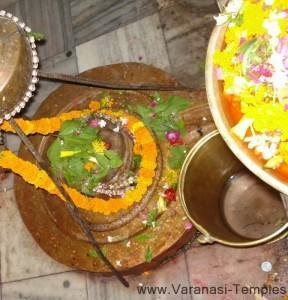
Primary Deity & Form: The temple houses a Swayambhu (self-manifested) Shiva Lingam. As per scriptural records, Lord Kardhameshwar is worshipped here as a powerful dispenser of justice and grace.
Phalaśruti: The Divine Benefits
According to the Kashi Khand (Chapter 97) of the Skanda Purana, Goddess Parvati inquired about the various Shiv Lingas in Kashi. Lord Shiva, in his narration, revealed the significance of Kardhameshwar.
- Fulfillment of Wishes: Devotees who worship Kardhameshwar with sincere devotion are blessed by Lord Shiva, ensuring that their righteous wishes are fulfilled.
- Ancestral Liberation: Performing rituals here is believed to assist in the liberation of ancestral souls trapped in the cycle of karma.
- Removal of Fear: Situated between Ark Vinayak (Lolark) and Durga Devi, the temple is a triangulation of immense spiritual energy, offering protection from fear and negative influences.
Historical Origins & Scriptural Legend
The Narrative of Kashi Khand
The spiritual history of Kardhameshwar is deeply rooted in the Kashi Khand. Tradition holds that the Lingam was established to balance the cosmic energies of Kashi. The proximity to Ark Vinayak (the Sun God-associated Ganesha) and Durga Devi creates a unique Tridevi and Trideva convergence point, allowing devotees to receive blessings from the Holy Trinity in close proximity.
Archaeological Timeline
While the divine legend is timeless, the physical structure bears witness to centuries of devotion. Historical records indicate that the temple structure dates back to the 10th Century. This makes it one of the oldest surviving Hindu temples in Varanasi from an archaeological perspective. The temple has undergone restorations over the centuries, yet it retains its original sanctity and structural integrity.
Architectural Marvels
Visitors often confuse the Kardhameshwar temple as part of the larger complex of the Mahishasurmardini (Chamunda Devi) Temple. However, Kardhameshwar has its own distinct architectural identity.
Style and Vastu
The architecture is a classic example of the Nagara style, characterized by its towering Shikhara (spire). While the exterior is modest compared to the grand palatial temples of Rajasthan, the interior follows strict Vastu Shastra principles, positioning the Garbhagriha (sanctum sanctorum) to align with the cardinal directions to maximize energy reception.
Notable Sculptures
The temple walls feature intricate carvings depicting scenes from Hindu mythology. Though weathered by the humid climate of Varanasi, the stonework showcases the fine craftsmanship of the 10th-century artisans.
Photo Gallery

Darshan & Ritual Logistics (2026 Guide)
The temple follows the traditional Vedic schedule. Darshan remains open throughout the day with a brief closure in the afternoon.
Daily Timings
| Session | Timing |
|---|---|
| Morning Darshan | 06:00 AM – 12:00 PM |
| Afternoon Break | 12:00 PM – 03:00 PM |
| Evening Darshan | 03:00 PM – 09:00 PM |
Key Sevas and Online Booking
For the convenience of devotees, various Sevas can be booked online via the Varanasi Temple Board portal.
- Rudrabhishekam: Performed every Monday. Special Abhishekam during Maha Shivaratri 2026 (February 26, 2026).
- Maha Rudra Yagna: Conducted during the month of Sravana (July-August 2026) and Kartik (October-November 2026).
- Online Seva Booking: Visit the official Varanasi Devlopment Authority website to book slots for specific dates.
Practical Visitor Guidance
Dress Code and Etiquette
As with most Shiva temples in Varanasi, a degree of modesty is appreciated, though not as strictly enforced as in South Indian temples. Traditional Indian attire (Kurta-Pajama or Dhoti for men; Saree/Salwar Kameez for women) is recommended. Western attire should be avoided to maintain the devotional sanctity of the shrine.
Photography and Mobiles
Photography is strictly prohibited inside the Garbhagriha. It is advisable to keep mobile phones on silent mode. There are mobile locker facilities available near the entrance of the main Mahishasurmardini complex where this temple is located.
Crowd Management & Accessibility
The temple is located in a dense lane near Lolark Kund.
- Best Time to Visit: Early morning (6:00 AM – 8:00 AM) or late evening (8:00 PM onwards) to avoid crowds.
- Seasonal Advice: Varanasi summers (April-June) are scorching; carry water and a head covering. Monsoons (July-Sept) bring high humidity but the temple ambiance is particularly refreshing during this time.
- Accessibility: The lanes are narrow and paved with stone. It is not wheelchair accessible due to the lack of ramps in the heritage lane structure.
Pilgrimage Connectivity
How to Reach Kardhameshwar Temple
The temple is located at No. B.2/17, within the premises of the Mahishasurmardini (Chamunda Devi) Temple.
- Nearest Landmark: Lolark Kund.
- Transport: Auto-rickshaws can take you to the Lolark road junction. From there, it is a walk of approximately 5-10 minutes through the heritage lanes.
- Road Access: The area is connected via Varanasi-Ramnagar Road and is accessible from the main ghats.
Visiting Nearby Sacred Sites
To maximize your pilgrimage, consider visiting these nearby sites which form the spiritual circuit mentioned in the Pancha Krosha Yatra:
- Lolark Kund (Ark Vinayak): Just steps away, this sun-shaped pond is one of the eight sacred ponds of Varanasi.
- Mahishasurmardini Temple: The main complex housing Kardhameshwar, dedicated to Goddess Durga in her fierce form.
- Shri Durga Temple (Durga Kund): Located roughly 2 km away, this is a major shrine dedicated to Goddess Durga, featuring vibrant red architecture.
Frequently Asked Questions (FAQ)
1. Is there a VIP Darshan entry at Kardhameshwar Temple?
Unlike the Kashi Vishwanath Temple, Kardhameshwar is a smaller heritage shrine. There is no specific VIP entry system here. Darshan is on a first-come, first-served basis, though weekdays witness fewer crowds than weekends.
2. Can I perform my own Abhishekam?
Generally, only temple priests are allowed to perform the Abhishekam inside the sanctum. However, you can offer milk, water, and bilva leaves to the priest to perform the ritual on your behalf.
3. What is the significance of the location between Ark Vinayak and Durga Devi?
As per the Kashi Khand, this specific location represents a balance between the remover of obstacles (Ganesha/Vinayak), the fierce protective energy (Durga), and the supreme consciousness (Shiva/Kardhameshwar). It is considered a highly potent spot for meditation.
4. Is the temple part of the Kashi Vishwanath Corridor?
No, Kardhameshwar Temple is located in a different lane near Lolark Kund. However, the Varanasi Development Authority maintains heritage pathways to such temples to ensure visitor safety.
5. What are the 2026 festival dates to avoid or plan for?
Expect high crowds during Maha Shivaratri (Feb 26, 2026), Mondays in Sravana (July-August), and Navratri (March & October 2026). For peaceful Darshan, visit on weekdays outside of these festival windows.
Contact Details
While direct contact details for this specific sub-shrine are not publicly listed, it is maintained under the jurisdiction of the Mahishasurmardini Temple Trust.
General Varanasi Temple Helpline: 1800-XXX-XXXX (Update as per official 2026 directory)
Address: B.2/17, Lolark Lane, Varanasi, Uttar Pradesh 221001.
Recent Posts

ओ सांवरे तूने ही मुझको संभाला – Lyrics & Meaning
ओ सांवरे तूने ही मुझको संभाला – A Prayer to Shyam Origin & Spiritual Essence Why This Bhajan Resonates Devotees chant this when overwhelmed by life’s storms—the refrain ‘तूने ही मुझको संभाला’ is the soul’s sigh of relief: “You…

कथा ये है महाराज मेरे की – Lyrics & Meaning
कथा ये है महाराज मेरे की छत्रपति संभाजी महाराज – A Prayer to Chhatrapati Sambhaji Maharaj Origin & Spiritual Essence Why This Bhajan Resonates Devotees chant this when their spirit feels tested—its powerful refrain “महाराज मेरे” is a soul’s…

Rigveda Samhita Yathartha Anuvada (ऋग्वेद संहिता यथार्थ अनुवाद) – Complete Set with Anvayartha & Hindi/English Translation
The Rigveda is the oldest surviving scripture of humanity and the foundational text of Sanātana Dharma. For serious students, scholars, UPSC aspirants studying ancient Indian history, Sanskrit learners, and spiritual seekers, a precise and grammatically structured translation is indispensable.…

आना भी अकेला है जाना भी अकेला है – Lyrics & Meaning | BharatTemples
आना भी अकेला है जाना भी अकेला है – A Prayer to the Divine Witness Origin & Spiritual Essence Why This Bhajan Resonates Devotees turn to this bhajan in moments of deep reflection—when life’s attachments begin to ache. The…

माता शेरावाली के द्वार जो भी जाता है – Lyrics & Meaning
माता शेरावाली के द्वार जो भी जाता है – A Prayer to Maa Sherawali Origin & Spiritual Essence Why This Bhajan Resonates Devotees turn to this bhajan in times of fear or uncertainty—its promise that no one leaves Maa’s…

मार लेना सपणी उबार लेणा भवरा – Lyrics & Meaning
मार लेना सपणी उबार लेणा भवरा – A Prayer to the Divine Beloved Origin & Spiritual Essence Why This Bhajan Resonates Devotees chant this in moments of deep vulnerability—its cry of “मार लेना सपणी, उबार लेणा भवरा” is the…

हमें श्याम सुंदर भरोसा तुम्हारा – Lyrics & Meaning
हमें श्याम सुंदर भरोसा तुम्हारा – A Prayer to Shyam Sundar Origin & Spiritual Essence Why This Bhajan Resonates Devotees chant this when feeling alone—its refrain ‘de do sahara’ is the soul’s cry for divine support. Lyrics in Hindi…

Mere Satguru Ne Di Thi Davai Lyrics in Hindi & Meaning
Mere Satguru Ne Di Thi Davai: Invoking the Guru’s Liberating Wisdom This soul-stirring bhajan venerates the Satguru (True Spiritual Master) as the divine physician who dispenses the only remedy for life’s deepest sufferings. Composed by Sant Karmaveer Tufani, it…

Janm Diyo Thari Maa Dukh Dekhiyo Lyrics in Hindi & Meaning
जन्म दियो थारी माँ दुख देखियो (Maa’s Grief Upon Birthing You) This soul-stirring Chetavani Bhajan (admonitory hymn) is addressed to the Divine Mother (Maa) – a call for repentance when children forget their filial duties in the dark age…
Bhadi Sabha Mein Thane Manaun Lyrics in Hindi & Meaning
Bhadi Sabha Mein Thane Manaun: Invoking the Spear-Wielding Mother Mata Bhawani (श्री ज्वाला भवानी), the fiery manifestation of Shakti worshipped as the Protector of Dharma in Her Dhaulagarh sanctum. Origin & Spiritual Essence Composed in Rajasthani folk tradition by…