
Contents
Karuneshwar Temple Varanasi: History, Darshan Timings & Complete Guide
Introduction & Spiritual Essence
The Karuneshwar Temple is a sanctuary of compassion and solace hidden within the labyrinthine bylanes of Varanasi. Dedicated to Karuneshwar (a form of Lord Shiva), this ancient shrine is steeped in the spiritual heritage of Kashi. The name itself translates to the “Lord of Compassion,” emphasizing the benevolent nature of the deity worshipped here.
Phalaśruti (Spiritual Benefits):
According to the sacred Kashi Khand of the Skanda Purana, the spiritual potency of this temple is immense. Devotees believe that worshipping the Karuneshwar Ling bestows eternal happiness and removes sorrow. The scriptures specifically state that a person who takes a holy dip in the nearby Manikarnika Ghat and then proceeds to worship Karuneshwar achieves a state of perpetual joy. Furthermore, performing Pooja on consecutive Mondays for a full year is believed to lead to the fulfillment of all sincere wishes. This ritual is considered highly effective for cleansing ancestral karma and attaining inner peace.
Historical Origins & Scriptural Legend
While the exact date of construction is lost to antiquity, the temple finds its roots in the verses of the Kashi Khand, Chapter 94. The text places the temple in the proximity of the Moksha Dwareshwar Linga.
According to local tradition and temple records, the shrine has been a site of continuous worship for centuries, preserved by the residents of the Lahouri Tola neighborhood. Unlike grand state-sponsored monuments, this temple’s survival is a testament to the resilience of community-led Bhakti (devotion). Legend holds that the Linga is self-manifested (Swayambhu), radiating the compassionate energy that gives the temple its name. The site is also intricately linked to the Phoota Ganesh shrine, forming a composite spiritual landmark in the heart of the old city.
Architectural Marvels
The Karuneshwar Temple represents the quintessential Nagara style of Hindu temple architecture, adapted to the constraints of the dense urban settlement of Varanasi.
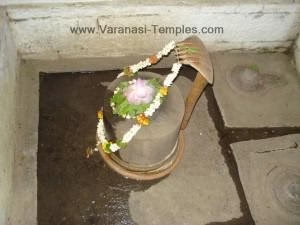
- Sanctum Sanctorum (Garbhagriha): The inner sanctum houses the ancient Shiva Linga, which is relatively small but believed to be ancient and powerful. The atmosphere inside is cool, dark, and deeply meditative.
- Shikhara (Spire): The temple features a curvilinear Shikhara typical of North Indian architecture, though it is modest in height compared to the towering spires of major shrines, necessitated by the surrounding narrow alleys (Gullis).
- Mandapa (Assembly Hall): The Mandapa features traditional stone flooring and pillars with carved motifs of deities. The architecture is designed to focus the devotee’s attention inward toward the sanctum.
Darshan & Ritual Logistics
Visiting the Karuneshwar Temple is an intimate experience. The temple follows the traditional Vedic timings common in Kashi.
Daily Darshan Timings (2026)
| Session | Timing |
|---|---|
| Morning Darshan | 05:00 AM – 12:00 PM |
| Evening Darshan | 04:00 PM – 09:00 PM |
Key Sevas and Online Booking
While the temple primarily operates on a walk-in basis, special Sevas can be arranged through trusted local priests. For 2026, many Kashi temples are integrating digital payments, but a dedicated online portal for this specific local shrine may vary. It is recommended to inquire at the temple counter upon arrival or contact local Varanasi pilgrimage guides for pre-arranged Puja services.
- Abhishekam: Performed with water, milk, and honey (usually requires prior notice).
- Archana: Recitation of names; highly recommended on Mondays.
Important Festival Dates (2026)
- Shivaratri (Maha Shivaratri): February 25, 2026. The temple remains open 24 hours; expect significant crowds.
- Monday Pooja (Somwar Vrat): Devotees flock to the temple every Monday throughout the year. July 2026 (Sawan Month) will see the highest footfall for Mondays.
Practical Visitor Guidance
Varanasi’s old city is enchanting but challenging. Here is how to prepare:
- Dress Code: Traditional attire is recommended. Men should wear Dhoti or Kurta-Pajama; women should wear Saree or Salwar Kameez. Avoid shorts and sleeveless tops.
- Photography: Strictly prohibited inside the sanctum (Garbhagriha). It is generally permissible in the Mandapa, but always seek permission from the priest.
- Mobile & Lockers: There are no official digital lockers. It is advised to carry minimal luggage and wear a secure waist pouch for essentials (phone, money).
- Accessibility: Due to the narrow gullis, the temple is not wheelchair accessible. Visitors must walk through approximately 200 meters of stone-paved alleys.
- Crowd Management: To avoid crowds, visit during early morning hours (5:00 AM – 7:00 AM). During summer (May/June), carry a water bottle and cover your head, as the alleys can reflect heat intensely.
Pilgrimage Connectivity
Karuneshwar Temple is located in the heart of Varanasi (Lahouri Tola). The narrow lanes prevent vehicular access directly to the temple entrance.
How to Reach
- By Air: Lal Bahadur Shastri International Airport (VNS) is approximately 25 km away. From there, take a taxi to Dasaswamedh Ghat.
- By Rail: Varanasi Junction (BSB) is the nearest major railway station (approx. 5 km).
- Local Route: From Shri Kashi Vishwanath Temple, head toward Saraswati Phatak. Proceed straight for 200 meters towards Phoota Ganesh. The Karuneshwar Temple is situated in Lahouri Tola. Access is best via e-rickshaw to the edge of the lane, followed by a walk.
Nearby Sacred Sites (Pilgrimage Circuit)
- Phoota Ganesh: Located just steps away, this is a unique Ganesha idol with a split trunk (representing wisdom and energy).
- Manikarnika Ghat: A 5-minute walk. Taking a dip here before visiting Karuneshwar is scripturally advised.
- Moksha Dwareshwar: The nearby Linga mentioned in Kashi Khand, essential for completing the spiritual circuit of Moksha (liberation).
Frequently Asked Questions (FAQ)
1. What is the exact address of Karuneshwar Temple?
The temple is located at Ck.34/10, Lahouri Tola, near Phoota Ganesh, Varanasi, Uttar Pradesh. It is situated in the old city, close to the banks of the Ganges.
2. Is there a VIP Darshan entry available?
No. Being a smaller, heritage shrine in the old city, it does not have a formal VIP entry system. Darshan is general and open to all. However, visiting early morning (before 6:30 AM) ensures a private and peaceful experience.
3. Can I book an online Seva for Karuneshwar Temple?
Currently, most rituals at this temple are conducted physically through on-site priests. For 2026, specific online booking may not be available for this individual shrine, but services can be booked via the broader Kashi Vishwanath temple administration portals or local priestly families.
4. Why is it called “Karuneshwar”?
Karuneshwar is a Sanskrit compound: Karuna (Compassion) + Ishwar (God). It translates to the “God of Compassion.” Worshipping this form of Shiva is believed to remove suffering and grant happiness.
5. What is the best time to visit?
The best months are October to March (winter) for pleasant weather. For a specific day, the best time is early morning between 5:00 AM and 7:00 AM to avoid the heavy crowds of the Old City.
Recent Posts

ओ सांवरे तूने ही मुझको संभाला – Lyrics & Meaning
ओ सांवरे तूने ही मुझको संभाला – A Prayer to Shyam Origin & Spiritual Essence Why This Bhajan Resonates Devotees chant this when overwhelmed by life’s storms—the refrain ‘तूने ही मुझको संभाला’ is the soul’s sigh of relief: “You…

कथा ये है महाराज मेरे की – Lyrics & Meaning
कथा ये है महाराज मेरे की छत्रपति संभाजी महाराज – A Prayer to Chhatrapati Sambhaji Maharaj Origin & Spiritual Essence Why This Bhajan Resonates Devotees chant this when their spirit feels tested—its powerful refrain “महाराज मेरे” is a soul’s…

Rigveda Samhita Yathartha Anuvada (ऋग्वेद संहिता यथार्थ अनुवाद) – Complete Set with Anvayartha & Hindi/English Translation
The Rigveda is the oldest surviving scripture of humanity and the foundational text of Sanātana Dharma. For serious students, scholars, UPSC aspirants studying ancient Indian history, Sanskrit learners, and spiritual seekers, a precise and grammatically structured translation is indispensable.…

आना भी अकेला है जाना भी अकेला है – Lyrics & Meaning | BharatTemples
आना भी अकेला है जाना भी अकेला है – A Prayer to the Divine Witness Origin & Spiritual Essence Why This Bhajan Resonates Devotees turn to this bhajan in moments of deep reflection—when life’s attachments begin to ache. The…

माता शेरावाली के द्वार जो भी जाता है – Lyrics & Meaning
माता शेरावाली के द्वार जो भी जाता है – A Prayer to Maa Sherawali Origin & Spiritual Essence Why This Bhajan Resonates Devotees turn to this bhajan in times of fear or uncertainty—its promise that no one leaves Maa’s…

मार लेना सपणी उबार लेणा भवरा – Lyrics & Meaning
मार लेना सपणी उबार लेणा भवरा – A Prayer to the Divine Beloved Origin & Spiritual Essence Why This Bhajan Resonates Devotees chant this in moments of deep vulnerability—its cry of “मार लेना सपणी, उबार लेणा भवरा” is the…

हमें श्याम सुंदर भरोसा तुम्हारा – Lyrics & Meaning
हमें श्याम सुंदर भरोसा तुम्हारा – A Prayer to Shyam Sundar Origin & Spiritual Essence Why This Bhajan Resonates Devotees chant this when feeling alone—its refrain ‘de do sahara’ is the soul’s cry for divine support. Lyrics in Hindi…

Mere Satguru Ne Di Thi Davai Lyrics in Hindi & Meaning
Mere Satguru Ne Di Thi Davai: Invoking the Guru’s Liberating Wisdom This soul-stirring bhajan venerates the Satguru (True Spiritual Master) as the divine physician who dispenses the only remedy for life’s deepest sufferings. Composed by Sant Karmaveer Tufani, it…

Janm Diyo Thari Maa Dukh Dekhiyo Lyrics in Hindi & Meaning
जन्म दियो थारी माँ दुख देखियो (Maa’s Grief Upon Birthing You) This soul-stirring Chetavani Bhajan (admonitory hymn) is addressed to the Divine Mother (Maa) – a call for repentance when children forget their filial duties in the dark age…
Bhadi Sabha Mein Thane Manaun Lyrics in Hindi & Meaning
Bhadi Sabha Mein Thane Manaun: Invoking the Spear-Wielding Mother Mata Bhawani (श्री ज्वाला भवानी), the fiery manifestation of Shakti worshipped as the Protector of Dharma in Her Dhaulagarh sanctum. Origin & Spiritual Essence Composed in Rajasthani folk tradition by…