
Contents
- 1 Koteeshwor (Kotiling) Temple Varanasi: A Complete Pilgrimage Guide
Koteeshwor (Kotiling) Temple Varanasi: A Complete Pilgrimage Guide
1. Introduction & Spiritual Essence
Nestled in the sacred lanes of Kashi (Varanasi), the Koteeshwar Temple, often revered locally as the Kotiling Temple, stands as a testament to the immense spiritual energies described in the ancient texts. Unlike the grand structural marvels, this shrine offers an intimate connection with the divine through the sanctity of the Koti Ling.
Primary Deity and Form
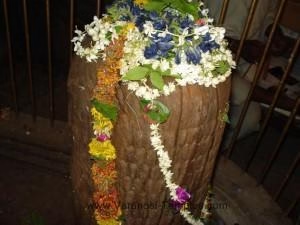
The temple houses a Swayambhu (self-manifested) Shiva Linga known as Koteeshwar or Kotiling. According to local tradition, this Linga is not merely a stone but a convergence point of divine energy where the benediction of one crore (ten million) Lings is believed to reside.
Phalaśruti: Why Visit?
The spiritual benefits, or Phalaśruti, of visiting Koteeshwar are profound. As referenced in the Kashi Khand of the Skanda Purana, worshipping this Ling is equivalent to the merit earned from donating one crore cows (Godaan). Devotees believe that a single darshan here cleanses ancestral karma and liberates the soul from the cycle of rebirth, specifically bestowing the blessings of Dharmic prosperity and spiritual liberation (Moksha) akin to visiting millions of Shiva shrines across the universe.
2. Historical Origins & Scriptural Legend
Scriptural Foundations
The existence and sanctity of the Kotiling are deeply rooted in Vedic literature. The temple derives its authority from:
- Kashi Khand, Chapter 69: It describes the place where Lord Shiva wore the skin of the demon Gajasur, renaming the spot Rudra Vasam (Reference: Krithi Vaseshwar).
- Ling Puraan: Cited in Chapter 3 and verses 148–157 of Chapter 92, explicitly mentioning the divine energy of the Kotiling.
Oral Tradition (Sthala Purana)
Tradition holds that Lord Shiva, residing here as Krithi Vaseshwar alongside Goddess Uma, listened to his vehicle, Nandi, express a wish. Nandi stated that Kashi contains 68 holy sites, yet he desired a place where the cumulative power of all Shiva shrines could be concentrated. In response, idols and sacred Lings from various cosmic regions were brought to Kashi by divine intervention. The Kotiling represents the focal point where the merit of worshipping 1 crore distinct Lings is concentrated in a single form.
3. Architectural Marvels
The architecture of Koteeshwar Temple reflects the ancient heritage of the Kashi region. While specific dynasty construction dates are not explicitly recorded in modern archives, the structural elements align with traditional North Indian (Nagara) Hindu Temple architecture.
Vastu and Design
The temple is situated in the densely populated Dasaswamedh area, adhering to Vastu Shastra principles where the main deity faces the east. The sanctum sanctorum (Garbhagriha) is designed to be compact yet powerful, focusing the devotee’s attention solely on the Linga. The walls may feature carvings typical of Varanasi stone masonry, depicting scenes from the Shiva Purana, though the primary focus remains the central deity. The temple does not currently hold a specific ASI or UNESCO status, but it is protected and maintained as a vital heritage site of Varanasi.
4. Darshan & Ritual Logistics
Visiting Koteeshwar is best combined with the darshan of the nearby Kashi Vishwanath Temple and Sakshi Vinayak. The temple follows the standard Varanasi timings, which can vary slightly during festivals.
Daily Timings
| Session | Timings |
|---|---|
| Morning Darshan | 5:00 AM – 12:00 PM |
| Evening Darshan | 4:00 PM – 10:00 PM |
| Aarti (Sandhya) | Approx 7:00 PM (Varies by season) |
Key Sevas and Online Booking
Although a smaller shrine, the rituals are potent. Devotees can perform specific Sevas:
- Rudrabhishekam: Performed for removing obstacles.
- Maha Pooja: Dedicated to Kotiling for ancestral peace.
- Online Booking: For major rituals in Varanasi, including coordination for Kashi Vishwanath complex rituals, devotees can utilize the official Kashi Vishwanath Temple (KVT) app or website. While direct booking for Kotiling may not be available online due to its scale, the main rituals often allow for combined bookings through the Kashi Vishwanath administrative office.
2026 Festival Dates (Varanasi Calendar)
Plan your visit around these auspicious dates for maximum spiritual benefit:
- Maha Shivaratri: February 26, 2026
- Kartik Purnima: November 5, 2026
- Sawan Somvar (Mondays of July/August): Peak seasons for Shiva devotees.
- Pradosh Vrat: Occurring twice monthly (Trayodashi).
5. Practical Visitor Guidance
Dress Code & Etiquette
Visitors are expected to dress modestly. Traditional Indian attire (Dhoti/Kurta for men, Saree/Salwar Kameez for women) is recommended. Western attire should cover shoulders and knees. Footwear must be removed outside the temple premises.
Photography & Mobiles
Photography inside the sanctum sanctorum is strictly prohibited. It is advisable to use mobile lockers available near the Kashi Vishwanath corridor before entering the narrow lanes of Dasaswamedh.
Crowd Management & Accessibility
The temple is located in a narrow gully (lane) near Giridhar Stores and Babaji Shop. Accessibility is limited for wheelchairs due to the ancient, narrow layout of the lanes.
Pro Tip: The best time for a peaceful darshan is early morning between 5:00 AM and 8:00 AM. During May and June (summer), the stone floors can be hot; carry a light cloth for walking and plenty of water, as the lanes are crowded and enclosed.
6. Pilgrimage Connectivity
How to Reach Koteeshwar Temple
The temple is located in the heart of Varanasi, making it accessible via the main transportation hubs.
- Nearest Airport: Lal Bahadur Shastri International Airport (LBS) (Approx. 30 km).
- Nearest Railway Station: Varanasi Junction (BSB) (Approx. 7 km).
- By Road: Accessible via NH-19 and the Varanasi-Agra Ring Road. Auto-rickshaws can drop you at Dashashwamedh Ghat. From there, it is a 5-minute walk.
Location Context
Address: Dasaswamedh Vishwanath Gully, near Sakshi Vinayak Temple, Varanasi, Uttar Pradesh 221001.
Nearby Sacred Sites (Pilgrimage Circuit)
To maximize your spiritual journey in Kashi, combine your visit with:
- Kashi Vishwanath Temple (Jyotirlinga): Located just a few minutes’ walk away.
- Sakshi Vinayak Temple: Dedicated to Lord Ganesha; located in the same lane, essential to visit before other shrines.
- Dashashwamedh Ghat: The site of the grand Ganga Aarti, a short walk away.
7. Frequently Asked Questions (FAQ)
What is the significance of the name “Kotiling”?
The term “Kotiling” translates to “One Crore Lings.” It signifies that the merit gained by worshipping this single Ling is equal to worshipping one crore (ten million) different Shiva Lingas.
Is there a VIP darshan entry available?
Due to the compact size of the Koteeshwar Temple and its location in a narrow lane, there are no separate VIP entry gates. All devotees stand in a common queue. However, early morning hours offer the least crowd.
What is the best route to combine Koteeshwar with Kashi Vishwanath?
The recommended sequence is: Start at Dashashwamedh Ghat, walk towards Sakshi Vinayak for blessings, then proceed to Koteeshwar (Kotiling). Afterward, walk to the main Kashi Vishwanath Temple (Southern entrance) to complete the circuit.
Are there accommodation options nearby?
While hotels are restricted near the temple due to the heritage zone, numerous Dharamshalas and budget hotels are available 1-2 km away on Godaulia and Assi Ghat roads.
Can I perform a Shradh ceremony here?
Yes, the energy of this Linga is highly beneficial for ancestral rites. However, for elaborate Shradh rituals, it is advised to book through the Kashi Vishwanath administration or local priests who specialize in Kashi rituals.
Recent Posts

ओ सांवरे तूने ही मुझको संभाला – Lyrics & Meaning
ओ सांवरे तूने ही मुझको संभाला – A Prayer to Shyam Origin & Spiritual Essence Why This Bhajan Resonates Devotees chant this when overwhelmed by life’s storms—the refrain ‘तूने ही मुझको संभाला’ is the soul’s sigh of relief: “You…

कथा ये है महाराज मेरे की – Lyrics & Meaning
कथा ये है महाराज मेरे की छत्रपति संभाजी महाराज – A Prayer to Chhatrapati Sambhaji Maharaj Origin & Spiritual Essence Why This Bhajan Resonates Devotees chant this when their spirit feels tested—its powerful refrain “महाराज मेरे” is a soul’s…

Rigveda Samhita Yathartha Anuvada (ऋग्वेद संहिता यथार्थ अनुवाद) – Complete Set with Anvayartha & Hindi/English Translation
The Rigveda is the oldest surviving scripture of humanity and the foundational text of Sanātana Dharma. For serious students, scholars, UPSC aspirants studying ancient Indian history, Sanskrit learners, and spiritual seekers, a precise and grammatically structured translation is indispensable.…

आना भी अकेला है जाना भी अकेला है – Lyrics & Meaning | BharatTemples
आना भी अकेला है जाना भी अकेला है – A Prayer to the Divine Witness Origin & Spiritual Essence Why This Bhajan Resonates Devotees turn to this bhajan in moments of deep reflection—when life’s attachments begin to ache. The…

माता शेरावाली के द्वार जो भी जाता है – Lyrics & Meaning
माता शेरावाली के द्वार जो भी जाता है – A Prayer to Maa Sherawali Origin & Spiritual Essence Why This Bhajan Resonates Devotees turn to this bhajan in times of fear or uncertainty—its promise that no one leaves Maa’s…

मार लेना सपणी उबार लेणा भवरा – Lyrics & Meaning
मार लेना सपणी उबार लेणा भवरा – A Prayer to the Divine Beloved Origin & Spiritual Essence Why This Bhajan Resonates Devotees chant this in moments of deep vulnerability—its cry of “मार लेना सपणी, उबार लेणा भवरा” is the…

हमें श्याम सुंदर भरोसा तुम्हारा – Lyrics & Meaning
हमें श्याम सुंदर भरोसा तुम्हारा – A Prayer to Shyam Sundar Origin & Spiritual Essence Why This Bhajan Resonates Devotees chant this when feeling alone—its refrain ‘de do sahara’ is the soul’s cry for divine support. Lyrics in Hindi…

Mere Satguru Ne Di Thi Davai Lyrics in Hindi & Meaning
Mere Satguru Ne Di Thi Davai: Invoking the Guru’s Liberating Wisdom This soul-stirring bhajan venerates the Satguru (True Spiritual Master) as the divine physician who dispenses the only remedy for life’s deepest sufferings. Composed by Sant Karmaveer Tufani, it…

Janm Diyo Thari Maa Dukh Dekhiyo Lyrics in Hindi & Meaning
जन्म दियो थारी माँ दुख देखियो (Maa’s Grief Upon Birthing You) This soul-stirring Chetavani Bhajan (admonitory hymn) is addressed to the Divine Mother (Maa) – a call for repentance when children forget their filial duties in the dark age…
Bhadi Sabha Mein Thane Manaun Lyrics in Hindi & Meaning
Bhadi Sabha Mein Thane Manaun: Invoking the Spear-Wielding Mother Mata Bhawani (श्री ज्वाला भवानी), the fiery manifestation of Shakti worshipped as the Protector of Dharma in Her Dhaulagarh sanctum. Origin & Spiritual Essence Composed in Rajasthani folk tradition by…