
Contents
- 1 Kshemeshwar Temple Varanasi: The Abode of Serenity and Prosperity
- 1.1 Introduction & Spiritual Essence
- 1.2 Historical Origins & Scriptural Legend
- 1.3 Architectural Marvels
- 1.4 Photo Gallery
- 1.5 Darshan & Ritual Logistics (2026 Season)
- 1.6 Practical Visitor Guidance
- 1.7 Pilgrimage Connectivity
- 1.8 Frequently Asked Questions (FAQ)
- 1.9 Contact Details & Official Address
- 1.10 How to Reach:
Kshemeshwar Temple Varanasi: The Abode of Serenity and Prosperity
Welcome to the definitive Kshemeshwar Temple Varanasi guide. As we navigate the spiritual landscape of Kashi in 2026, this ancient shrine remains a beacon for devotees seeking shanti (peace) and kalyan (prosperity). Located on the banks of the Ganga at Kshemeshwar Ghat, this temple is not merely a structure but a living testament to the legends preserved in the Kashi Khand of the Skanda Purana.
Introduction & Spiritual Essence
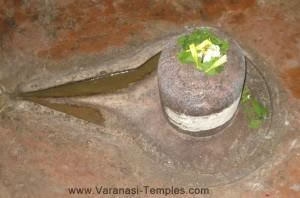
The Kshemeshwar Temple is dedicated to Lord Shiva in the form of a Swayambhu (self-manifested) Lingam. The presiding deity, Lord Kshemeshwar, represents the aspect of Shiva that bestows safety, health, and prosperity upon his devotees. In Sanskrit, Kshema means well-being or welfare, and Ishwar means the Supreme Lord. Thus, worshipping here is believed to alleviate anxieties and secure a stable future.
Phalaśruti: The Spiritual Benefits
According to the sacred Kashi Khand, Chapter 55, the spiritual potency of this shrine is immense. The texts declare that a devotee who performs rituals at the Kshemeshwar Ling is cleansed of all sins (Paap). It is believed that worship here grants:
- Internal Peace: Removal of mental turmoil and anxiety.
- Ancestral Liberation: Performing rituals here aids in the Moksha (liberation) of ancestors.
- Material Stability: Blessings for a harmonious family life and economic stability.
Historical Origins & Scriptural Legend
While the exact construction date is not stamped in modern records, the temple’s history is deeply rooted in the Puranic era of Kashi.
The Legend of Kshemak Gan
According to tradition, Lord Shiva initially sent batches of his Ganas (attendants) to Kashi to establish dominion. After the first few batches failed to return, Lord Shiva dispatched a new group from the celestial Mandarachal region. These divine beings fell in love with the spiritual energy of Kashi and decided to settle there permanently.
One such Gan was named Kshemak. Upon his arrival, he installed a Shiva Lingam and dedicated himself to severe penance and worship. The Lingam became known as Kshemeshwar, the Lord worshipped by Kshemak. This lineage connects the temple directly to the divine administration of Lord Shiva, making it a site of immense spiritual gravity.
Architectural Marvels
Though compact in scale, the Kshemeshwar Temple exemplifies the resilience of traditional Hindu Temple Architecture. Situated at Kshemeshwar Ghat (House No. B-14/14, Manasarovar Ghat), the architecture blends elements of the Nagara style with the vernacular aesthetics of the Kashi region.
Vastu Shastra & The Sacred Spire
The temple follows the principles of Vastu Shastra, oriented to capture the energies of the rising sun over the Ganga. The Shikhara (spire) above the sanctum is proportionate, designed to channel cosmic energy toward the Garbhagriha (inner sanctum). The sanctum houses the Swayambhu Lingam, which is naturally formed and worshipped in its raw, organic form.
Photo Gallery
Darshan & Ritual Logistics (2026 Season)
The temple maintains a traditional schedule, opening early for Mangala Darshan (auspicious viewing). While official online systems for this specific historic shrine may vary via the Kashi Vishwanath Corridor portal, the following schedule represents the standard 2026 timings.
Daily Timings
| Session | Timing | Activity |
|---|---|---|
| Morning | 05:00 AM – 12:00 PM | Mangala Darshan & Abhishekam |
| Afternoon | 12:00 PM – 04:00 PM | Sanctum Cleaning / Break |
| Evening | 04:00 PM – 09:00 PM | Aarti & Shayan Darshan |
Key Sevas & Online Booking
To perform specific rituals, devotees can opt for the following Sevas:
- Abhishekam: Ritual bathing of the Lingam with water, milk, and honey. Timing: 6:00 AM – 8:00 AM.
- Archana: Recitation of names. Available throughout the day.
- Rudrabhishek: A powerful Vedic ritual for healing and prosperity.
Booking Process: While Kshemeshwar is a smaller shrine, it is often managed by the local Panchayati Mahasabha or is accessible via the general Varanasi temple networks. For major festivals, devotees are advised to book through the Kashi Vishwanath official app or the UP Tourism portal. On-site arrangements are also available through the temple caretaker.
2026 Festival Calendar
- Shivratri: February 26, 2026 (Maha Shivratri). Special night-long Darshan and Bhajans.
- Sawan Somwar: July 14, 21, 28, 2026 (Monsoon Mondays). Early morning queues expected.
- Mahashivratri (Vaishakh): May 2026 (Specific date TBA based on Tithi).
Practical Visitor Guidance
Visiting Kshemeshwar Temple requires preparation, as it is located in the narrow, bustling lanes near the Ghat.
Rules & Etiquette
- Dress Code: Traditional attire is recommended. Men should wear dhoti/kurta, and women sarees/salwar kameez. Avoid shorts or sleeveless tops.
- Photography: Strictly prohibited inside the sanctum sanctorum. Photography in the outer courtyard is usually permitted, but seek permission from the priest.
- Mobile & Electronics: Lockers are limited. It is best to carry minimal electronics. Silence your phone to maintain the spiritual atmosphere.
- Accessibility: The temple is accessible by foot via steep stairs from the ghat. It is not wheelchair accessible due to the heritage structure constraints.
Crowd Management
- Best Hours: Weekday mornings (6 AM – 8 AM) offer the most serene Darshan.
- Seasonal Advice: During the summer months (April-June), the heat can be intense. Carry water and a head covering. In the monsoon (July-September), be cautious of slippery steps on the ghat.
Pilgrimage Connectivity
How to Reach
Kshemeshwar Temple is located at Kshemeshwar Ghat, adjacent to Manasarovar Ghat and near Kedarghat.
- By Air: Lal Bahadur Shastri International Airport (VNS) is approximately 30-40 minutes by taxi.
- By Rail: Varanasi Junction (BSB) is the nearest major railway station (5 km).
- By Road: Located near the Kedarghat intersection. The nearest motorable point is Dashashwamedh Ghat or Lalita Ghat. From there, a 10-15 minute walk through heritage lanes is required. Note: The temple is not accessible by private vehicles directly.
Nearby Sacred Sites (Pilgrimage Circuit)
- Kedarnath Temple (Kedarghat): Located very close to Kshemeshwar. A powerful Jyotirlinga installation.
- Kukkuteshwar Ling: Associated with the legend of the Shiv Gans mentioned in the history section.
- Manasarovar Ghat: A serene spot for bathing in the Ganga, believed to be created by Lord Vishnu.
Frequently Asked Questions (FAQ)
Is there a VIP Darshan entry at Kshemeshwar Temple?
As a heritage site managed by local traditions rather than a large commercial board, VIP entry is not typically defined. However, early morning entry (Mangala Darshan) is the most exclusive time. Donations to the temple trust can facilitate priority access during peak hours.
What is the best time to visit Varanasi for Darshan?
The ideal time to visit Varanasi and Kshemeshwar Temple is between October and March. The weather is cool and pleasant, making the walking tours of the Ghats comfortable.
Are there accommodation options near the temple?
Yes. The Kedar Ghat area offers several heritage guest houses and hotels. For a premium stay, hotels near Dashashwamedh Ghat are a 15-minute walk away. Budget travelers can opt for Dharamshalas near Kedarghat.
What rituals are performed for ancestors?
Devotees often perform Pinda Daan or specific Shraddha rituals near the Ganga, followed by prayers to Lord Kshemeshwar to ensure the soul’s peaceful journey. Priests at the temple can assist with these rituals.
Is the temple open during Solar Eclipse?
Generally, temples in Varanasi follow specific guidelines during eclipses. Kshemeshwar Temple typically remains closed during the eclipse period and reopens after purification rituals. Check local advisories for 2026 dates.
Contact Details & Official Address
Since direct contact details for smaller heritage shrines are often limited to the managing priest, the standard address is provided below.
| Date built: | Unknown (Puranic Era) |
|---|---|
| Deity: | Kshemeshwar (Lord Shiva) |
| Architectural style: | Hindu Temple architecture (Nagara influence) |
| Major festivals: | Mahashivratri, Sawan Somwar |
| Locale: | Varanasi |
| District: | Varanasi |
| Address: | Kshemeshwar Ghat, House No. B-14/14, Manasarovar Ghat, Varanasi, Uttar Pradesh 221001 |
| Phone | Available upon request at Kedarghat Post Office |
How to Reach:
Kshemeshwar is located at Kshemeshwar Ghat at House No. B-14/14, Manasarovar Ghat. People can travel upto Kedarghat by rickshaw and walk on foot upto Kedarghat Post Office and take a right turn towards Kshemeshwar Ghat. The Ling is located in a house belonging to Kumaraswamy Mutt of Kedar Ghat.
Recent Posts

ओ सांवरे तूने ही मुझको संभाला – Lyrics & Meaning
ओ सांवरे तूने ही मुझको संभाला – A Prayer to Shyam Origin & Spiritual Essence Why This Bhajan Resonates Devotees chant this when overwhelmed by life’s storms—the refrain ‘तूने ही मुझको संभाला’ is the soul’s sigh of relief: “You…

कथा ये है महाराज मेरे की – Lyrics & Meaning
कथा ये है महाराज मेरे की छत्रपति संभाजी महाराज – A Prayer to Chhatrapati Sambhaji Maharaj Origin & Spiritual Essence Why This Bhajan Resonates Devotees chant this when their spirit feels tested—its powerful refrain “महाराज मेरे” is a soul’s…

Rigveda Samhita Yathartha Anuvada (ऋग्वेद संहिता यथार्थ अनुवाद) – Complete Set with Anvayartha & Hindi/English Translation
The Rigveda is the oldest surviving scripture of humanity and the foundational text of Sanātana Dharma. For serious students, scholars, UPSC aspirants studying ancient Indian history, Sanskrit learners, and spiritual seekers, a precise and grammatically structured translation is indispensable.…

आना भी अकेला है जाना भी अकेला है – Lyrics & Meaning | BharatTemples
आना भी अकेला है जाना भी अकेला है – A Prayer to the Divine Witness Origin & Spiritual Essence Why This Bhajan Resonates Devotees turn to this bhajan in moments of deep reflection—when life’s attachments begin to ache. The…

माता शेरावाली के द्वार जो भी जाता है – Lyrics & Meaning
माता शेरावाली के द्वार जो भी जाता है – A Prayer to Maa Sherawali Origin & Spiritual Essence Why This Bhajan Resonates Devotees turn to this bhajan in times of fear or uncertainty—its promise that no one leaves Maa’s…

मार लेना सपणी उबार लेणा भवरा – Lyrics & Meaning
मार लेना सपणी उबार लेणा भवरा – A Prayer to the Divine Beloved Origin & Spiritual Essence Why This Bhajan Resonates Devotees chant this in moments of deep vulnerability—its cry of “मार लेना सपणी, उबार लेणा भवरा” is the…

हमें श्याम सुंदर भरोसा तुम्हारा – Lyrics & Meaning
हमें श्याम सुंदर भरोसा तुम्हारा – A Prayer to Shyam Sundar Origin & Spiritual Essence Why This Bhajan Resonates Devotees chant this when feeling alone—its refrain ‘de do sahara’ is the soul’s cry for divine support. Lyrics in Hindi…

Mere Satguru Ne Di Thi Davai Lyrics in Hindi & Meaning
Mere Satguru Ne Di Thi Davai: Invoking the Guru’s Liberating Wisdom This soul-stirring bhajan venerates the Satguru (True Spiritual Master) as the divine physician who dispenses the only remedy for life’s deepest sufferings. Composed by Sant Karmaveer Tufani, it…

Janm Diyo Thari Maa Dukh Dekhiyo Lyrics in Hindi & Meaning
जन्म दियो थारी माँ दुख देखियो (Maa’s Grief Upon Birthing You) This soul-stirring Chetavani Bhajan (admonitory hymn) is addressed to the Divine Mother (Maa) – a call for repentance when children forget their filial duties in the dark age…
Bhadi Sabha Mein Thane Manaun Lyrics in Hindi & Meaning
Bhadi Sabha Mein Thane Manaun: Invoking the Spear-Wielding Mother Mata Bhawani (श्री ज्वाला भवानी), the fiery manifestation of Shakti worshipped as the Protector of Dharma in Her Dhaulagarh sanctum. Origin & Spiritual Essence Composed in Rajasthani folk tradition by…