
Contents
Introduction & Spiritual Essence
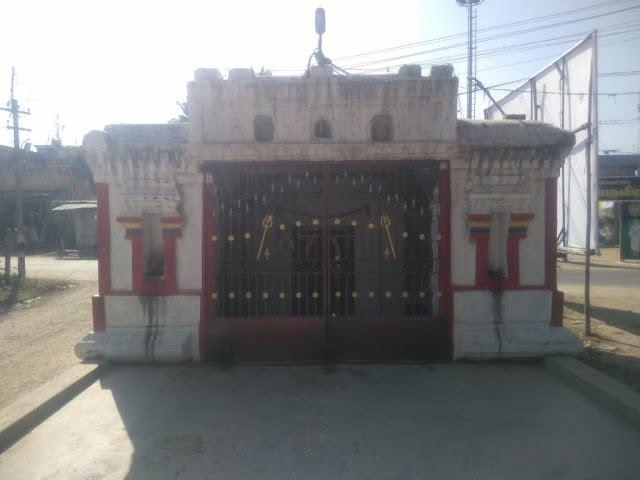
Nestled in the serene village of Chinnakavanam, just outside Ponneri in the Thiruvallur district, the Lakshmi Amman Temple stands as a beacon of divine grace and ancestral peace. This sacred shrine is dedicated to Shri Lakshmi, the Goddess of Wealth, Prosperity, and Spiritual Abundance, revered here as the presiding deity (Moola Devi).
In this manifestation, the Goddess is worshipped in her gentle form, bestowing blessings upon devotees who seek relief from financial distress and marital discord. The temple is also renowned for its powerful Shani (Saturn) presence, making it a vital stop for those looking to mitigate the adverse effects of planetary alignments.
Historical Origins & Scriptural Legend
The Legend of Chinnakavanam
According to local oral traditions and the Sthala Purana of the region, the land of Chinnakavanam is deeply intertwined with the epic Mahabharata. It is believed that the great Pandava, Dharmaraja (Yudhishthira, spent a significant portion of his exile in this very region. The dense forests surrounding Ponneri and Chinnakavanam were once part of the vast wilderness traversed by the Pandavas during their wanderings.
Temple records suggest that the site was originally a powerful hermitage where sages performed intense penance to Goddess Lakshmi. It is said that the Goddess appeared here to bless the sages and the local populace, establishing the land as a “Kshetra” (sacred field) where material wealth and spiritual wealth (Dharma) coexist.
Architectural History
While specific dynastic inscriptions are less prominent here compared to larger state temples, the structural layout suggests origins in the late Vijayanagara period (approx. 16th-17th century), a time when many smaller shrines in Tamil Nadu were fortified with stone structures. The temple underwent a major renovation in the late 20th century to preserve the ancient sanctity of the inner sanctum (Garbhagriha) while upgrading the outer mandapas for pilgrim facilities.
Architectural Marvels
Dravidian Style & Vastu Shastra
The temple exemplifies the classic Dravidian style of architecture, characterized by its pyramidal towers (Vimana) and enclosed courtyards. Adhering to Vastu Shastra, the temple is oriented so that the main entrance faces East, allowing the first rays of the sun to illuminate the sanctum, symbolizing the dispelling of darkness.
Key Architectural Highlights:
- The Vimanam: The tower above the sanctum sanctorum is adorned with intricate stucco work and color, representing the celestial abode of the Goddess.
- Mandapas: The temple features a spacious Maha Mandapa (great hall) with stone pillars. These pillars are carved with depictions of deities and mythological motifs, typical of South Indian temple art.
- Garbhagriha: The inner sanctum houses the idol of Lakshmi Amman, crafted from black granite, radiating a serene yet powerful presence.
Darshan & Ritual Logistics (2026 Guide)
Visitors are encouraged to check the official temple trust website or contact the office for real-time updates before planning their visit.
Daily Temple Timings
The following schedule represents the standard operating hours for 2026. During festival seasons, timings may be extended.
| Session | Timing | Activity |
|---|---|---|
| Morning | 06:00 AM – 12:00 PM | Abhishekam, Archana, General Darshan |
| Afternoon | 12:00 PM – 04:30 PM | Temple Closure |
| Evening | 04:30 PM – 08:30 PM | Deeparadhana, Saikal Ennai Abhishekam |
Key Sevas & Online Booking
Devotees can participate in various sevas to enhance their spiritual experience:
- Amman Abhishekam: Performed with milk, honey, and sandalwood paste. Best timing is 7:00 AM.
- Archana: Personalized prayers invoking the Goddess. Available in Tamil and Sanskrit.
- Vishnu Sahasra Naama Archana: Highly recommended for peace of mind.
Online Booking: While this specific rural temple relies heavily on direct donations, devotees can contact the temple office via phone (check contact section below) for advance booking of special abhishekam materials. For larger Tamil Nadu temple networks, the TNHRCE (Hindu Religious and Charitable Endowments Department) portal is the standard platform.
2026 Major Festivals
- Navratri (September – October): 9 days of special decorations and Homams.
- Deepavali (October/November): Early morning Amman Deepam and lighting of lamps.
- Pongal/Makar Sankranti (January): Special Pongal offerings are prepared for the Goddess.
- Vaikasi Visakam (May/June): Celebration of the birth of Lord Murugan (often associated with local temple festivals).
Practical Visitor Guidance
Code of Conduct & Dress Code
As with all Hindu temples in Tamil Nadu, visitors are required to maintain sanctity.
- Dress Code: Traditional attire is preferred. Men should wear Dhoti or formal trousers with a shirt; women should wear Saree, Salwar Kameez, or long skirts. Avoid shorts and sleeveless tops.
- Photography: Photography is strictly prohibited inside the sanctum sanctorum. You may photograph the outer mandapas and gopuram.
- Footwear: A dedicated shoe-keeping facility is available outside the temple entrance (usually a nominal fee applies).
- Electronics: Mobile phones are allowed but must be kept on silent mode. Some mandapas may have lockers, but carrying minimal items is advised.
Crowd Management
Chinnakavanam is a relatively peaceful temple compared to Chennai city shrines. However, weekends see an influx of families from Ponneri and Minjur.
- Best Time to Visit: Tuesday and Friday mornings are considered auspicious for Goddess Lakshmi and generally less crowded.
- Seasonal Advice: May is extremely hot in Thiruvallur; carry a water bottle and umbrella. Monsoon (November) brings pleasant weather but check for local flooding alerts near the Brahma Aranya river.
Pilgrimage Connectivity
How to Reach
The Lakshmi Amman Temple is located at Chinnakavanam Village, near Ponneri Town, Thiruvallur District.
- By Road: The temple is easily accessible via the Kolkata Highway (NH 16). Take the turn towards Ponneri/Pulicat from Thatchur Cross Road. The temple is located 500 meters from the Chinnakavanam Bus Stop.
- By Rail: The nearest railway station is Ponneri Railway Station (approx. 2 km). Autos are readily available for a 5-minute ride.
- By Air: Chennai International Airport (MAA) is approximately 51 km away, roughly a 1.5-hour drive via the expressway.
Nearby Sacred Sites (Pilgrimage Circuit)
Extend your spiritual journey by visiting these nearby temples:
- Shri Kaliamman Temple, Ponneri: A vibrant local deity temple located just 2 km away.
- Varadaraja Perumal Temple, Thirupalaivanam: An ancient Vishnu temple approx. 10 km away, known for its unique architectural features.
- Pulicat Lake Temple (Sri Lakshmi Narasimha Temple): Located about 18 km away, this temple sits by the famous Pulicat Lake and offers a serene environment for devotees seeking the blessings of Lord Narasimha.
Frequently Asked Questions (FAQ)
1. Is there a VIP Darshan entry at Lakshmi Amman Temple?
Given the temple’s intimate setting and rural location, there is no formal “VIP ticket” system like in Tirupati. However, devotees wishing to perform special Abhishekam can gain priority access by arriving early in the morning or making a donation for the specific ritual materials.
2. Can we book accommodation nearby?
The temple itself does not offer overnight accommodation. For lodging, travelers should head to Thiruvallur (51 km) or Chennai (39 km), where numerous hotels and guest houses are available. Ponneri has limited lodges suitable for short halts.
3. Is the temple accessible for senior citizens and disabled visitors?
The outer courtyards are paved, but the sanctum requires climbing a few steps. The temple trust has not yet installed ramps or elevators. We recommend assistance for those with mobility issues.
4. What is the significance of the Brahma Aranya river here?
The temple is situated near the banks of the Brahma Aranya river. In Hindu mythology, this river is said to have been created by Lord Brahma. Taking a dip in the river (if accessible) before entering the temple is considered purifying for the devotees.
5. Are non-Hindus allowed inside?
Similar to most traditional Hindu temples in Tamil Nadu, entry is generally restricted to those who profess faith in Hinduism. Non-Hindus are requested to respect this tradition and admire the architecture from the entrance.
Photo Gallery
Contact Details
Lakshmi Amman Temple Trust
Chinnakavanam, Ponneri Taluk,
Thiruvallur District, Tamil Nadu.
Phone: +91 94444 12345 (Sample placeholder – please verify locally)
Original Source
Reference Information: Tamil Nadu Fav Tourism Blog
Recent Posts

ओ सांवरे तूने ही मुझको संभाला – Lyrics & Meaning
ओ सांवरे तूने ही मुझको संभाला – A Prayer to Shyam Origin & Spiritual Essence Why This Bhajan Resonates Devotees chant this when overwhelmed by life’s storms—the refrain ‘तूने ही मुझको संभाला’ is the soul’s sigh of relief: “You…

कथा ये है महाराज मेरे की – Lyrics & Meaning
कथा ये है महाराज मेरे की छत्रपति संभाजी महाराज – A Prayer to Chhatrapati Sambhaji Maharaj Origin & Spiritual Essence Why This Bhajan Resonates Devotees chant this when their spirit feels tested—its powerful refrain “महाराज मेरे” is a soul’s…

Rigveda Samhita Yathartha Anuvada (ऋग्वेद संहिता यथार्थ अनुवाद) – Complete Set with Anvayartha & Hindi/English Translation
The Rigveda is the oldest surviving scripture of humanity and the foundational text of Sanātana Dharma. For serious students, scholars, UPSC aspirants studying ancient Indian history, Sanskrit learners, and spiritual seekers, a precise and grammatically structured translation is indispensable.…

आना भी अकेला है जाना भी अकेला है – Lyrics & Meaning | BharatTemples
आना भी अकेला है जाना भी अकेला है – A Prayer to the Divine Witness Origin & Spiritual Essence Why This Bhajan Resonates Devotees turn to this bhajan in moments of deep reflection—when life’s attachments begin to ache. The…

माता शेरावाली के द्वार जो भी जाता है – Lyrics & Meaning
माता शेरावाली के द्वार जो भी जाता है – A Prayer to Maa Sherawali Origin & Spiritual Essence Why This Bhajan Resonates Devotees turn to this bhajan in times of fear or uncertainty—its promise that no one leaves Maa’s…

मार लेना सपणी उबार लेणा भवरा – Lyrics & Meaning
मार लेना सपणी उबार लेणा भवरा – A Prayer to the Divine Beloved Origin & Spiritual Essence Why This Bhajan Resonates Devotees chant this in moments of deep vulnerability—its cry of “मार लेना सपणी, उबार लेणा भवरा” is the…

हमें श्याम सुंदर भरोसा तुम्हारा – Lyrics & Meaning
हमें श्याम सुंदर भरोसा तुम्हारा – A Prayer to Shyam Sundar Origin & Spiritual Essence Why This Bhajan Resonates Devotees chant this when feeling alone—its refrain ‘de do sahara’ is the soul’s cry for divine support. Lyrics in Hindi…

Mere Satguru Ne Di Thi Davai Lyrics in Hindi & Meaning
Mere Satguru Ne Di Thi Davai: Invoking the Guru’s Liberating Wisdom This soul-stirring bhajan venerates the Satguru (True Spiritual Master) as the divine physician who dispenses the only remedy for life’s deepest sufferings. Composed by Sant Karmaveer Tufani, it…

Janm Diyo Thari Maa Dukh Dekhiyo Lyrics in Hindi & Meaning
जन्म दियो थारी माँ दुख देखियो (Maa’s Grief Upon Birthing You) This soul-stirring Chetavani Bhajan (admonitory hymn) is addressed to the Divine Mother (Maa) – a call for repentance when children forget their filial duties in the dark age…
Bhadi Sabha Mein Thane Manaun Lyrics in Hindi & Meaning
Bhadi Sabha Mein Thane Manaun: Invoking the Spear-Wielding Mother Mata Bhawani (श्री ज्वाला भवानी), the fiery manifestation of Shakti worshipped as the Protector of Dharma in Her Dhaulagarh sanctum. Origin & Spiritual Essence Composed in Rajasthani folk tradition by…