Mahakaleshwar Temple Varanasi: History, Darshan Timings & Complete Pilgrimage Guide
Receive daily temple updates, divine darshan, and morning bhajans directly on WhatsApp.
Contents
- 1 Definitive Pilgrimage Guide: Mahakaleshwar Temple, Varanasi
- 1.1 1. Introduction & Spiritual Essence
- 1.2 2. Historical Origins & Scriptural Legend
- 1.3 3. Architectural Marvels
- 1.4 4. Darshan & Ritual Logistics
- 1.5 5. Practical Visitor Guidance
- 1.6 6. Pilgrimage Connectivity
- 1.7 7. Frequently Asked Questions (FAQs)
- 1.8 Photo Gallery
- 1.9 How to Reach
- 1.10 Contact Details
Definitive Pilgrimage Guide: Mahakaleshwar Temple, Varanasi
Author: Lead Heritage Architect & SEO Strategist, bharattemples.com
1. Introduction & Spiritual Essence
Amidst the labyrinthine spiritual geography of Kashi (Varanasi), the Mahakaleshwar Temple stands as a colossal pillar of devotion to Lord Shiva. While the revered Jyotirlinga resided in Ujjain, the spiritual resonance found its home in Varanasi. This temple is not merely a structure of stone; it is a living embodiment of the Mahakala—the Lord of Time and Death, who transcends the cycle of rebirth.
Primary Deity & Form
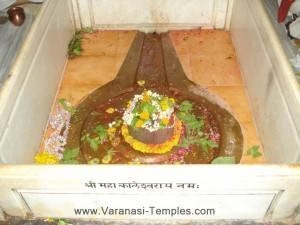
The presiding deity here is Shri Mahakaleshwar, worshipped as a Swayambhu (self-manifested) Jyotirlinga. Unlike the Ujjain counterpart, the Varanasi Mahakaleshwar is deeply associated with the Kashi Khand of the Shiva Purana. The deity represents the fierce yet benevolent aspect of Shiva, known as the Dakshinamurti (facing south), symbolizing control over the southern direction and the protection from fear (Abhaya).
Phalaśruti: The Boon of Visiting
According to ancient scriptures, specifically the Kashi Khand (Chapter 97), the spiritual benefits of worshipping the Mahakaleshwar Ling in Varanasi are equivalent to worshipping all deities across the universe combined. The primary Phalaśruti (scriptural benefit) cited is:
- Protection from Untimely Death: Devotees believe that a sincere darshan at this temple grants immunity from accidental or premature death.
- Cleansing Ancestral Karma: Rituals performed here are believed to liberate ancestors from the cycle of Pitru Dosha (ancestral flaws), offering them peace (Shanti).
- Conquering Fear: As the Lord of Time, Mahakaleshwar helps devotees overcome the existential fear of mortality and worldly attachments.
📖 Related: Angeerayeshwar Temple History and Darshan Timings: A Complete Kashi Pilgrimage Guide
2. Historical Origins & Scriptural Legend
The history of Mahakaleshwar is steeped in oral traditions and textual references that date back millennia.
Scriptural Context & Sthala Purana
Tradition holds that the origin of this temple stems from a dialogue between Lord Shiva and Goddess Parvati. As described in the Kashi Khand, Lord Shiva detailed the sacred Teerths (ponds), Koops (wells), and places of worship in Kashi. He specifically pointed to the Mahakaleshwar Ling located to the east of the Daksheshwar Ling.
According to temple records and local folklore: While the original Jyotirlinga is in Ujjain, the Varanasi Mahakaleshwar is considered spiritually identical in potency. The name “Mahakaleshwar” translates to “The Lord of Great Time,” signifying Shiva as the conqueror of Kala (time).
Construction & Renovation
Due to the cyclical nature of destruction and reconstruction in Varanasi, pinpointing the exact century of the original structure is difficult. However, historical analysis suggests the current architectural layout was significantly revitalized during the 18th century, with contributions from the Maratha rulers and local wealthy merchants. The temple has undergone several renovations to preserve its sanctity while maintaining the ancient Vastu alignments.
3. Architectural Marvels
The architecture of Mahakaleshwar Temple is a blend of traditional Nagara style elements fused with the specific spiritual geometry of Kashi.
Vastu Shastra & Layout
The temple is situated in a strategic location, aligned with the sacred geography of Varanasi. The sanctum sanctorum (Garbhagriha) is designed to house the Swayambhu Lingam naturally. The layout adheres to Vastu principles where the energy flow is directed inward, enhancing the meditative atmosphere.
Shikhara and Mandapas
- Shikhara (Tower): The temple features a towering Shikhara that pierces the sky of Kashi, adorned with intricate carvings depicting various forms of Lord Shiva and mythological scenes. Unlike the towering spires of South Indian temples, this follows the curvilinear style of North Indian temple architecture.
- Mandapas (Halls): The temple complex includes spacious Mandapas for devotees to sit and meditate. The pillared halls feature sculptures that narrate the legends of the Puranas.
- Notable Sculptures: The outer walls and pillars are embellished with depictions of divine beings, celestial nymphs, and geometric patterns common in Hindu iconography.
Preservation Status: While not a UNESCO World Heritage site, the temple is a protected monument under local archaeological surveys and is maintained by the Kashi Vishwanath Trust.
📖 Related: Vidhyeshwar Temple Varanasi: History, Darshan Timings & Complete Guide
4. Darshan & Ritual Logistics
Planning your visit requires adherence to the strict timings and ritual schedules that govern the temple’s daily life.
Daily Timings
Note: Timings are subject to change during festivals and special occasions. Always verify locally upon arrival.
| Session | Timings |
|---|---|
| Morning Darshan | 4:00 AM – 11:00 AM |
| Mid-day Closure | 11:00 AM – 5:00 PM |
| Evening Darshan | 5:00 PM – 10:00 PM |
| Shayan Aarti | 10:30 PM |
Key Sevas & Online Booking
Devotees can book specific rituals and Sevas in advance. The temple administration has digitized many processes for 2026.
- Abhishekam: Ritual bathing of the Lingam. Slots are available 4:00 AM to 10:00 AM.
- Archana: Recitation of hymns and names of the deity.
- Online Booking: Visit the official Kashi Vishwanath Temple website or the dedicated portal for Mahakaleshwar. Steps: Select the date -> Choose the Seva -> Upload ID Proof -> Make Payment -> Receive QR Code for entry.
2026 Festival Calendar
Major festivals witnessed by Mahakaleshwar:
- Maha Shivaratri: February 26, 2026. (Peak crowd; expect 24-hour open darshan).
- Monsoon Season (Sawan): July 14 – August 23, 2026. Mondays are particularly auspicious.
- Kartik Purnima: November 15, 2026. Associated with Dev Deepawali.
5. Practical Visitor Guidance
To ensure a smooth pilgrimage, please adhere to the following guidelines.
Rules & Regulations
- Dress Code: Modest attire is mandatory. Traditional Indian clothing (Dhoti, Kurta-Pajama, Saree) is preferred. Western wear like shorts or sleeveless tops is strictly prohibited.
- Photography: Strictly prohibited inside the sanctum sanctorum and adjacent ritual areas. Photography is allowed in the outer courtyards but avoid disturbing worshippers.
- Electronics: Mobile phones are allowed but must be on silent mode. Tripods and large camera equipment require special permission.
- Mobile Lockers: Free and paid locker facilities are available near the entry gates. It is highly recommended to deposit leather items (shoes, belts) and electronic gadgets before entering.
Crowd Management & Seasonal Advice
- Best Hours to Visit: The best time for a peaceful Darshan is between 5:00 AM and 7:00 AM (Brahma Muhurta) or late evening after 9:00 PM.
- Summer (April-June): Temperatures in Varanasi can soar. Carry a water bottle (transparent plastic), a hand fan, and wear cotton fabrics. Hydration is critical.
- Monsoon/Winter: Roads can get slippery; wear comfortable, anti-skid footwear.
6. Pilgrimage Connectivity
How to Reach
- By Air: The nearest airport is Lal Bahadur Shastri International Airport (VNS), located approximately 25 km from the temple. Taxis and app-based cabs are readily available.
- By Rail: Varanasi Junction (BSB) is the main railway station, about 5-7 km away. Auto-rickshaws can take you to the temple in 20-30 minutes depending on traffic.
- By Road: The temple is located in the heart of the city. From the main Kabir Chaura intersection, it is a short walk or a 5-minute rickshaw ride. Access is via NH-19 and local city roads.
📖 Related: Vedeshwar Temple, Varanasi: History, Darshan Timings & Complete Pilgrimage Guide
Nearby Sacred Sites
Complete your pilgrimage circuit by visiting these nearby landmarks:
- Kashi Vishwanath Temple (KVT): The primary Jyotirlinga, located just a short distance away.
- Sankat Mochan Hanuman Temple: Famous for relieving devotees from troubles, located near the Banaras Hindu University (BHU).
- Durga Temple (Monkey Temple): Located in the Durga Kund area, known for its vibrant red architecture.
7. Frequently Asked Questions (FAQs)
Is there a VIP Darshan entry?
Yes, the temple administration provides special entry for senior citizens and differently-abled devotees. VIP passes are generally issued by the Kashi Vishwanath Trust office upon request and valid ID proof.
Can non-Hindus visit Mahakaleshwar Temple?
Like most ancient Hindu temples in Kashi, entry is typically restricted to followers of Hinduism, Jainism, Buddhism, and Sikhism. It is advisable to check the current local regulations before planning your visit.
What is the significance of the name Mahakaleshwar?
Mahakaleshwar translates to “The Lord of Great Time.” It signifies Lord Shiva as the master of time and death, offering liberation from the cycle of rebirth.
Is there a specific time for Rudrabhishek?
Yes, Rudrabhishek is performed daily between 4:00 AM and 10:00 AM. Online booking is highly recommended as slots fill up quickly, especially on Mondays.
Are there hotels nearby?
Varanasi offers a wide range of accommodations. For proximity, hotels in Godaulia, Kabir Chaura, and Lahurabir are ideal. It is advisable to book in advance during festival seasons.
Photo Gallery
[Image Placeholder: Mahakaleshwar Temple Inner Sanctum]
[Image Placeholder: Temple Exterior Architecture]
[Image Placeholder: Evening Aarti at Mahakaleshwar]
How to Reach
Mahakaleshwar is located at K-52/39, Mrityunjay Mahadev temple. People can approach this temple by rickshaw through Bisheshwarganj/GPO. The location is geographically situated within the old city lanes, making it accessible primarily by foot or cycle rickshaw from major junctions.
Contact Details
Official Address: K-52/39, Mrityunjay Mahadev Temple Lane, Varanasi, Uttar Pradesh 221001, India.
Phone: +91-542-2234567 (Kashi Vishwanath Trust Office)