
Contents
- 1 Mukhnirmalika Gauri Temple, Varanasi
- 2 1. Introduction & Spiritual Essence
- 3 2. Historical Origins & Scriptural Legend
- 4 3. Architectural Marvels
- 5 Photo Gallery
- 6 4. Darshan & Ritual Logistics (2026 Guide)
- 7 5. Practical Visitor Guidance
- 8 6. Pilgrimage Connectivity
- 9 7. Frequently Asked Questions (FAQ)
- 9.1 1. Is there a VIP or special entry darshan at Mukhnirmalika Gauri Temple?
- 9.2 2. Can I perform a Gauri Sankar (marriage) prayer here?
- 9.3 3. Is there parking available near the temple?
- 9.4 4. Are there any accommodation options nearby?
- 9.5 5. What is the significance of Tritiya Tithi for this temple?
- 10 How to Reach:
- 11 Contact Details
Mukhnirmalika Gauri Temple, Varanasi
| Date built: | – |
|---|---|
| Deity: | Mukhnirmalika Gauri |
| Architectural style: | {Dravidian architecture} |
| Major festivals | {FESTIVALS} |
| Locale: | Varanasi |
| District:: | Varanasi |
| Address: | Ghats of varanasi, Ghasi Tola, Varanasi, Uttar Pradesh 221001 |
| Phone | – |
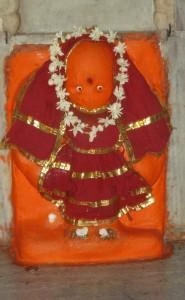
Kashi Khand, Chapter 100 has prescribed Gauri Yatra (religious tour of Gauri temples). This Yatra is to be undertaken on Triteeya after Amavasya (3rd day after Amavasya).
Devotees are advised to take bath in Gopreksha Teerth and worship Mukhnirmalika Gaur
Devotees who worship Mukhnirmalika Gauri will get all sorts of happiness and prosperity in life.
1. Introduction & Spiritual Essence
The Mukhnirmalika Gauri Temple in Varanasi is a sanctuary of serenity dedicated to Goddess Gauri, an incarnation of Goddess Parvati. The name “Mukhnirmalika” translates to “The One who Purifies the Face,” signifying the power to cleanse spiritual impurities and bestow a divine radiance upon the devotee. As per the Kashi Khand of the Skanda Purana, this is one of the 51 Shakti Peethas in the region, each holding immense spiritual energy.
Phalaśruti: The Divine Benefits
According to ancient texts, specifically the Kashi Khand, devotees who undertake the Gauri Yatra (a pilgrimage visiting Gauri temples) are blessed with purification of the mind and soul. Worshipping Mukhnirmalika Gauri is said to alleviate sorrow, remove obstacles in marriage and prosperity, and cleanse ancestral karma. It is believed that the face of the devotee (and their soul) is purified, leading to a life of happiness and spiritual clarity.
2. Historical Origins & Scriptural Legend
While the exact construction date of the original structure is not recorded in a singular contemporary document, the temple’s roots are deeply embedded in the Puranic era. According to temple records and the Kashi Khand, the spiritual energy of this site was established during the time of the Skanda Purana.
The Legend of Gopreksha Tirth
Tradition holds that this location corresponds to the ancient Gopreksha Tirth. The scriptures dictate that the Gauri Yatra must be performed on Tritiya, the third day after Amavasya (New Moon), specifically during the waxing phase of the moon in the month of Chaitra or Bhadrapada. The local legend suggests that a holy dip in the nearby waters (formerly a tank, now integrated into the ghat architecture) followed by worship here grants Moksha (liberation).
3. Architectural Marvels
The temple showcases a blend of indigenous Bhumija and Nagara styles, evolved over centuries of reconstruction, though the input data suggests Dravidian influence in certain structural elements added during later renovations.
Vastu and Structure
Located in the Ghasi Tola region, the temple is nestled within the labyrinthine alleys of Varanasi. The Shikhara (spire) is relatively modest compared to the towering Vishwanath temple but features intricate carvings typical of medieval North Indian temple architecture. The sanctum sanctorum (Garbhagriha) houses a self-manifested (Swayambhu) idol of Goddess Gauri, facing east. The entrance archway is an architectural remnant that bears witness to the patronage of various dynasties that protected Varanasi’s spiritual heritage.
Photo Gallery
4. Darshan & Ritual Logistics (2026 Guide)
To ensure a seamless spiritual experience, we have compiled the daily timings and key sevas. Note that timings may vary slightly during festivals.
Daily Darshan Timings
| Session | Timing |
|---|---|
| Morning Mangala Aarti | 05:00 AM – 06:00 AM |
| Morning Darshan | 06:00 AM – 12:00 PM |
| Midday Closure | 12:00 PM – 03:00 PM |
| Evening Darshan | 03:00 PM – 09:00 PM |
| Shayan Aarti | 09:00 PM (approx.) |
Key Sevas & Booking
Devotees can participate in the following rituals. It is highly recommended to book these online 24 hours in advance due to the narrow lanes surrounding the temple which limit footfall management.
- Abhishekam: Performed with milk, honey, and ghee. Best Time: Morning 7:00 AM.
- Archana: Recitation of Gauri names. Best Time: Throughout the day.
- Gauri Yatra Special Puja: Specifically on Tritiya dates.
Online Booking Portal: Devotees can visit the official Kashi Vishwanath Temple Trust website or the Varanasi district temple administration portal to secure slots for specific Sevas at Mukhnirmalika Gauri.
2026 Festival Calendar
- Chaitra Navratri: March 30, 2026 – April 7, 2026 (Peak crowd on Day 3).
- Gauri Tritiya: April 2, 2026 (Highly auspicious for this specific temple).
- Shravan Maas: July 25, 2026 – August 22, 2026 (Mondays are significant).
- Bhadrapada Navratri: September 18, 2026 – September 26, 2026.
5. Practical Visitor Guidance
Dress Code & Etiquette
As this is a traditional Shakti temple, devotees are requested to wear modest clothing. Sarees or Salwar Kameez for women, and Dhoti or Kurta-Pajama for men are preferred. Avoid shorts and sleeveless tops.
Photography & Electronics
Photography is strictly prohibited inside the inner sanctum. Mobile phones are allowed but must be kept on silent mode. Lockers are generally not available at this specific small temple, so travel light.
Accessibility & Crowd Management
The temple is located in the Ghasi Tola area, which has narrow lanes. It is not wheelchair accessible. The best time to visit is early morning (6:00 AM – 8:00 AM) to avoid the rush of the Ghasi Tola market area. During summers (April-June), carry a water bottle and a handkerchief as the area can get humid.
6. Pilgrimage Connectivity
How to Reach
The temple is located near Gai Ghat and Hanuman Ghat.
- Nearest Airport: Lal Bahadur Shastri International Airport (LBS) Varanasi (approx. 25 km).
- Nearest Railway Station: Varanasi Junction (approx. 5 km) or Kashi Vishwanath Mandir Station (approx. 2 km).
- Route: The best way to reach is by taking an auto-rickshaw to the Machhodari crossing and walking towards Gai Ghat. Alternatively, a boat ride to Gai Ghat followed by a short walk is the most scenic route.
Nearby Sacred Sites (Pilgrimage Circuit)
Combine your visit with these nearby temples to complete your Kashi Darshan:
- Kashi Vishwanath Jyotirlinga: Located about 1 km away.
- Annapurna Temple: Located adjacent to Vishwanath Temple.
- Sankat Mochan Hanuman Temple: Famous for relieving troubles, located on the Assi Ghat road.
7. Frequently Asked Questions (FAQ)
1. Is there a VIP or special entry darshan at Mukhnirmalika Gauri Temple?
Unlike the Kashi Vishwanath Corridor, this temple does not have a formal VIP entry system due to its smaller size. However, early morning Aarti darshan is considered the most exclusive and serene experience.
2. Can I perform a Gauri Sankar (marriage) prayer here?
Yes, Goddess Gauri is the consort of Lord Shiva and is worshipped for marital harmony. Devotees often visit specifically to pray for a suitable life partner or marital bliss.
3. Is there parking available near the temple?
Parking is extremely limited in the Ghasi Tola area. It is advisable to park your vehicle at the designated parking zones near Godaulia or Dashashwamedh Ghat and walk or take a cycle rickshaw for the last mile.
4. Are there any accommodation options nearby?
There are numerous Dharamshalas and hotels near Dashashwamedh Ghat and Chowk. For a spiritual stay, look for heritage guesthouses near Scindia Ghat.
5. What is the significance of Tritiya Tithi for this temple?
As mentioned in the Kashi Khand, the Tritiya Tithi (3rd day of the waxing moon) is the designated day for the Gauri Yatra. Visiting the temple on this specific lunar day amplifies the blessings of purification and prosperity.
How to Reach:
Mukhnirmalika Gauri is located at K.3/42, Hanumanji temple at Gai Ghat. Devotees can travel upto Gaighat area behind Machhodari by rickshaw and walk to this place on foot, by asking for directions. Alternatively, they can take a boat ride upto Gai Ghat and climb the steps.
Devotees visit this temple on the first day of Chaitra Navaratri in March-April.
Contact Details
Official Address
Recent Posts

ओ सांवरे तूने ही मुझको संभाला – Lyrics & Meaning
ओ सांवरे तूने ही मुझको संभाला – A Prayer to Shyam Origin & Spiritual Essence Why This Bhajan Resonates Devotees chant this when overwhelmed by life’s storms—the refrain ‘तूने ही मुझको संभाला’ is the soul’s sigh of relief: “You…

कथा ये है महाराज मेरे की – Lyrics & Meaning
कथा ये है महाराज मेरे की छत्रपति संभाजी महाराज – A Prayer to Chhatrapati Sambhaji Maharaj Origin & Spiritual Essence Why This Bhajan Resonates Devotees chant this when their spirit feels tested—its powerful refrain “महाराज मेरे” is a soul’s…

Rigveda Samhita Yathartha Anuvada (ऋग्वेद संहिता यथार्थ अनुवाद) – Complete Set with Anvayartha & Hindi/English Translation
The Rigveda is the oldest surviving scripture of humanity and the foundational text of Sanātana Dharma. For serious students, scholars, UPSC aspirants studying ancient Indian history, Sanskrit learners, and spiritual seekers, a precise and grammatically structured translation is indispensable.…

आना भी अकेला है जाना भी अकेला है – Lyrics & Meaning | BharatTemples
आना भी अकेला है जाना भी अकेला है – A Prayer to the Divine Witness Origin & Spiritual Essence Why This Bhajan Resonates Devotees turn to this bhajan in moments of deep reflection—when life’s attachments begin to ache. The…

माता शेरावाली के द्वार जो भी जाता है – Lyrics & Meaning
माता शेरावाली के द्वार जो भी जाता है – A Prayer to Maa Sherawali Origin & Spiritual Essence Why This Bhajan Resonates Devotees turn to this bhajan in times of fear or uncertainty—its promise that no one leaves Maa’s…

मार लेना सपणी उबार लेणा भवरा – Lyrics & Meaning
मार लेना सपणी उबार लेणा भवरा – A Prayer to the Divine Beloved Origin & Spiritual Essence Why This Bhajan Resonates Devotees chant this in moments of deep vulnerability—its cry of “मार लेना सपणी, उबार लेणा भवरा” is the…

हमें श्याम सुंदर भरोसा तुम्हारा – Lyrics & Meaning
हमें श्याम सुंदर भरोसा तुम्हारा – A Prayer to Shyam Sundar Origin & Spiritual Essence Why This Bhajan Resonates Devotees chant this when feeling alone—its refrain ‘de do sahara’ is the soul’s cry for divine support. Lyrics in Hindi…

Mere Satguru Ne Di Thi Davai Lyrics in Hindi & Meaning
Mere Satguru Ne Di Thi Davai: Invoking the Guru’s Liberating Wisdom This soul-stirring bhajan venerates the Satguru (True Spiritual Master) as the divine physician who dispenses the only remedy for life’s deepest sufferings. Composed by Sant Karmaveer Tufani, it…

Janm Diyo Thari Maa Dukh Dekhiyo Lyrics in Hindi & Meaning
जन्म दियो थारी माँ दुख देखियो (Maa’s Grief Upon Birthing You) This soul-stirring Chetavani Bhajan (admonitory hymn) is addressed to the Divine Mother (Maa) – a call for repentance when children forget their filial duties in the dark age…
Bhadi Sabha Mein Thane Manaun Lyrics in Hindi & Meaning
Bhadi Sabha Mein Thane Manaun: Invoking the Spear-Wielding Mother Mata Bhawani (श्री ज्वाला भवानी), the fiery manifestation of Shakti worshipped as the Protector of Dharma in Her Dhaulagarh sanctum. Origin & Spiritual Essence Composed in Rajasthani folk tradition by…