Pindara Temple, Jind, Haryana

Pindara Temple: A Definitive Pilgrimage Guide to Haryana’s Ancient Shiva Shrine

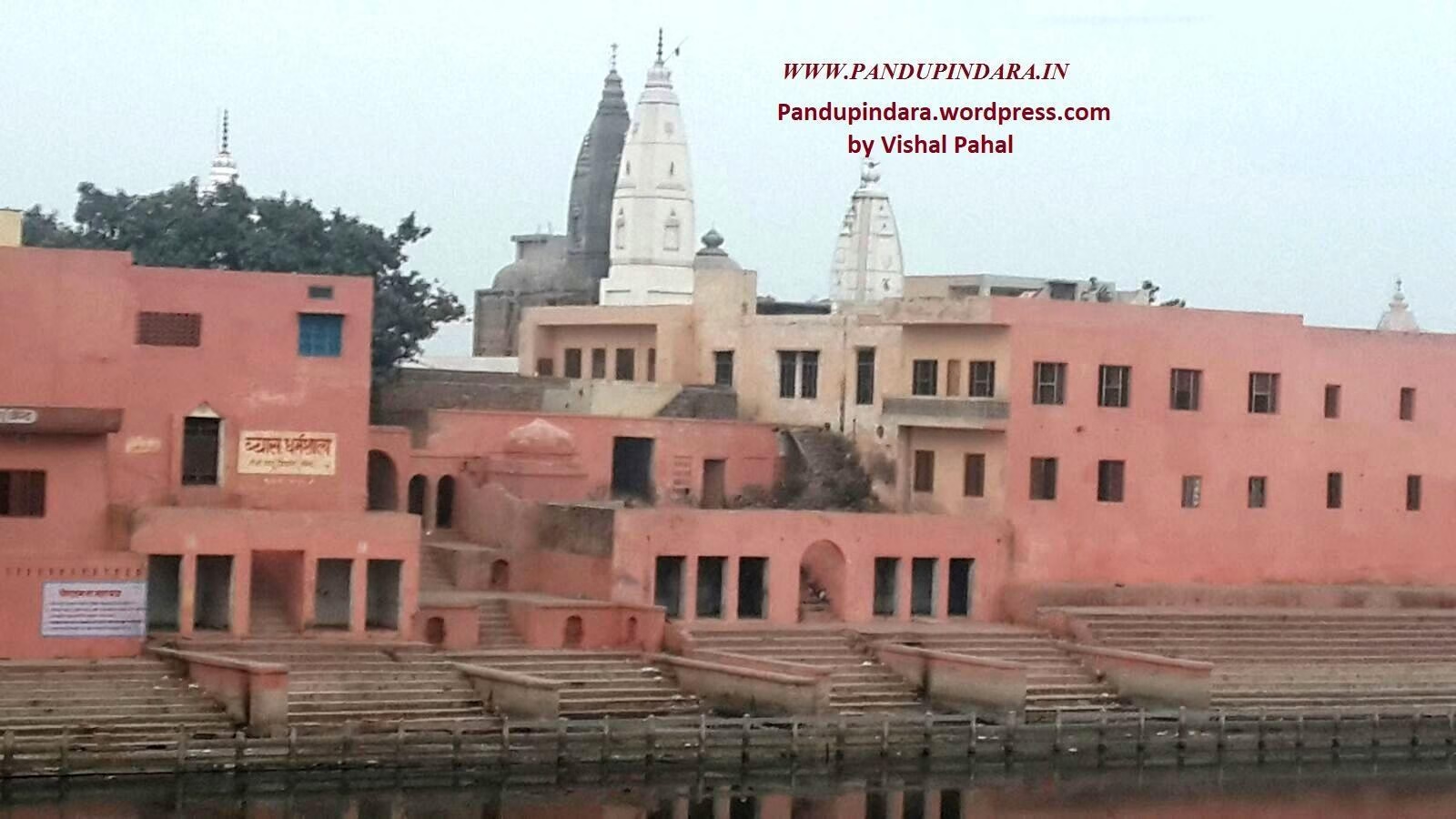
Featured: The sanctum of Pindara Temple in Jind, preserving the legacy of the Pandavas.

Introduction & Spiritual Essence

Nestled in the heart of Haryana, just 7 kilometers from the district center of Jind, lies the ancient Pindara Temple. Dedicated to Lord Shiva, this shrine is not merely a place of worship but a spiritual testament to the epic Mahabharata. Locally known as Pandu Pindara, the temple carries the weight of a celestial history where the Pandava brothers performed sacred rites for their ancestors.

Phalaśruti: Why Devotees Visit

According to local tradition and the Sthala Purana, the primary spiritual benefit of visiting Pindara Temple is the cleansing of ancestral karma. It is considered one of the 67 sacred Tirths (pilgrimage sites) within the Kurukshetra Bhumi.

Devotees flock here specifically to perform Shraddha and offer Pinds (rice balls) to their forefathers. It is believed that offering Pinds at this very site, where the Pandavas performed the same rites for their slain relatives, liberates the souls of ancestors from the cycle of rebirth and brings peace to the family lineage.

Historical Origins & Scriptural Legend

The Mahabharata Connection

The history of Pindara Temple is deeply intertwined with the Dwapara Yuga. Tradition holds that during their exile, or perhaps after the great war of Kurukshetra, the five Pandava brothers visited this spot.

“According to the legends, the Pandavas offered here pinds to their forefathers and hence the village got the name Pandu Pindara.”

Scriptural References

While specific architectural inscriptions are sparse due to the temple’s ancient roots, the site is referenced in regional folklore as a significant resting point in the Kurukshetra region. The temple stands as a symbol of Pitr-Rina (debt to ancestors), a core concept in Vedic culture. Over centuries, the site has undergone renovations to preserve the sanctity of the shrine while maintaining its rustic, ancient charm typical of rural Haryana temples.

See also  Sannihit Sarovar, Kurukshetra: History, Darshan Timings & Complete Guide

Architectural Marvels

The architecture of Pindara Temple reflects the Nagara style of temple construction, adapted to the regional aesthetics of Haryana. While it may not possess the towering spires of South Indian temples, it features the quintessential elements of North Indian Hindu architecture.

Key Structural Elements

  • Garbhagriha (Sanctum Sanctorum): The innermost shrine houses the Shiva Lingam. It is traditionally believed to be a Swayambhu (self-manifested) idol, adding to its spiritual potency.
  • Shikhara (Spire): The temple features a modest yet distinct spire that crowns the sanctum, symbolizing the cosmic mountain Meru.
  • Assembly Hall (Mandapa): A spacious open-air mandapa allows devotees to gather during the Abhishekam and Aarti ceremonies.

The surroundings are marked by the Som Tirth, a holy water body (stepwell or pond) where pilgrims take ritual dips before offering prayers. The complex is designed to facilitate the large influx of devotees during the annual fair.

Darshan & Ritual Logistics

To ensure a smooth spiritual experience, devotees should plan their visit according to the temple’s schedule. While the temple is accessible throughout the day, specific rituals offer a deeper connection to the divine.

Daily Timings

SessionTiming
Morning Darshan6:00 AM – 12:00 PM
Mid-day Closure12:00 PM – 4:00 PM
Evening Darshan4:00 PM – 8:00 PM
Aarti (Sandhya)7:00 PM (Daily)

Key Sevas & Online Booking

The temple administration facilitates standard rituals. While traditional in-person offerings are the norm, online seva booking for specific rituals is increasingly common in Haryana’s religious sites.

  • Abhishekam: Ritual bathing of the Shiva Lingam with milk, honey, and water.
  • Archana: Recitation of names and hymns.
  • Pind Daan: The most significant ritual here, performed for ancestors.
See also  Jyotisar Temple, Kurukshetra: History, Timings & Complete Guide

2026 Festival Dates: The temple is most vibrant during Somavati Amavas. In 2026, the significant dates for this fair are:

  • January 27, 2026 (Paush Amavas)
  • February 26, 2026 (Magha Amavas)
  • March 27, 2026 (Chaitra Amavas)

Photo Gallery

Practical Visitor Guidance

Code of Conduct & Essentials

  • Dress Code: Traditional attire is recommended. Men should wear dhotis or trousers with shirts; women should wear sarees or salwar kameez. Modesty is paramount.
  • Photography: Photography is strictly prohibited inside the Garbhagriha. Permitted in the outer courtyard with respect.
  • Mobile Lockers: Due to the high spiritual sensitivity of the site, visitors are advised to deposit electronic devices and leather items in the free lockers available at the entrance.
  • Accessibility: The temple complex is on a single level and is accessible for wheelchairs, though the historic stone flooring requires assistance.

Crowd Management & Best Times to Visit

During the annual Somavati Amavas fair, footfall exceeds 50,000 devotees. For a peaceful darshan:

  • Best Hours: Weekdays between 7:00 AM and 10:00 AM.
  • Seasonal Advice: Summers in Haryana (May-June) are harsh; carry sufficient water and a head covering. Winters (December-January) offer the most pleasant weather for travel.

Pilgrimage Connectivity

How to Reach

Pindara Temple is conveniently located near Jind, a major railway junction in Haryana.

  • By Air: The nearest airport is Chandigarh International Airport (approx. 130 km). Alternatively, Indira Gandhi International Airport, Delhi is approximately 140 km away.
  • By Rail: Jind Junction is the nearest major railway station, well-connected to Delhi and other North Indian cities. From the station, taxis and auto-rickshaws are readily available to reach the temple (approx. 15-20 mins).
  • By Road: The temple is located on the Jind-Gohana Road. It is accessible via NH-352 (Ambala-Narnaul highway). Regular bus services operate from Jind bus stand to Pindara village.

Nearby Sacred Sites

To extend your pilgrimage, consider visiting these nearby locations in the Jind district:

  1. Suraj Kund Mandir (Jind): A historic pond and temple complex dedicated to the Sun God, located within the city of Jind.
  2. Ashta Vinayaka Temple (Jind): A modern temple dedicated to Lord Ganesha, showcasing intricate architecture.
  3. Kurukshetra (approx. 90 km): The land of the Mahabharata war, featuring the Brahma Sarovar and Jyotisar.
See also  Agroha Dham Temple History, Timings & Complete Pilgrimage Guide

Frequently Asked Questions (FAQ)

1. Is there a VIP darshan entry at Pindara Temple?

Pindara Temple is a community-focused shrine. While there is no formal VIP ticket system like larger corporate temples, devotees performing Pind Daan are usually given priority access to the sanctum by the temple priests. It is advisable to contact the temple administration ahead of the annual fair for group access.

2. What is the significance of the Som Tirth water body?

The water body adjacent to the temple is known as Som Tirth. It is considered highly purifying. Devotees believe that bathing in the Som Tirth before offering Pinds washes away sins and purifies the mind and body, making the subsequent prayers more effective.

3. Can we perform Pind Daan for ancestors at any time?

Yes, Pind Daan can be performed on any day. However, the most potent time is during Somavati Amavas (No Moon day falling on a Monday). Other auspicious days include Mahalaya and the 15-day Shradh period in September-October.

4. Is accommodation available near the temple?

Basic guest houses and dharamshalas are available in Jind city. For better amenities, hotels and lodges are available in Jind (7 km) and Hisar (approx. 45 km). During the fair, temporary camps are often set up by local committees.

5. What is the entry fee for the temple?

There is no entry fee for general darshan. However, offerings like flowers, milk, and specific Seva bookings (like Abhishekam) have nominal charges that contribute to the temple’s maintenance.

Contact Details

Official Address: Pindara Village, Jind District, Haryana, India

Phone: Information not available in public records. Please contact the District Collector’s Office, Jind for temple committee details.

Recent Posts

कथा ये है महाराज मेरे की – Lyrics & Meaning

कथा ये है महाराज मेरे की छत्रपति संभाजी महाराज – A Prayer to Chhatrapati Sambhaji Maharaj Origin & Spiritual Essence Why This Bhajan Resonates Devotees chant this when their spirit feels tested—its powerful refrain “महाराज मेरे” is a soul’s…

Mere Satguru Ne Di Thi Davai Lyrics in Hindi & Meaning

Mere Satguru Ne Di Thi Davai: Invoking the Guru’s Liberating Wisdom This soul-stirring bhajan venerates the Satguru (True Spiritual Master) as the divine physician who dispenses the only remedy for life’s deepest sufferings. Composed by Sant Karmaveer Tufani, it…

Janm Diyo Thari Maa Dukh Dekhiyo Lyrics in Hindi & Meaning

जन्म दियो थारी माँ दुख देखियो (Maa’s Grief Upon Birthing You) This soul-stirring Chetavani Bhajan (admonitory hymn) is addressed to the Divine Mother (Maa) – a call for repentance when children forget their filial duties in the dark age…