
Contents
| Date built: | – |
|---|---|
| Deity: | Sammakka-Saralamma |
| Architectural style: | – |
| Major festivals | – |
| Locale: | – |
| District:: | Jayashankar Bhupalpally |
| Address: | – |
| Phone | – |
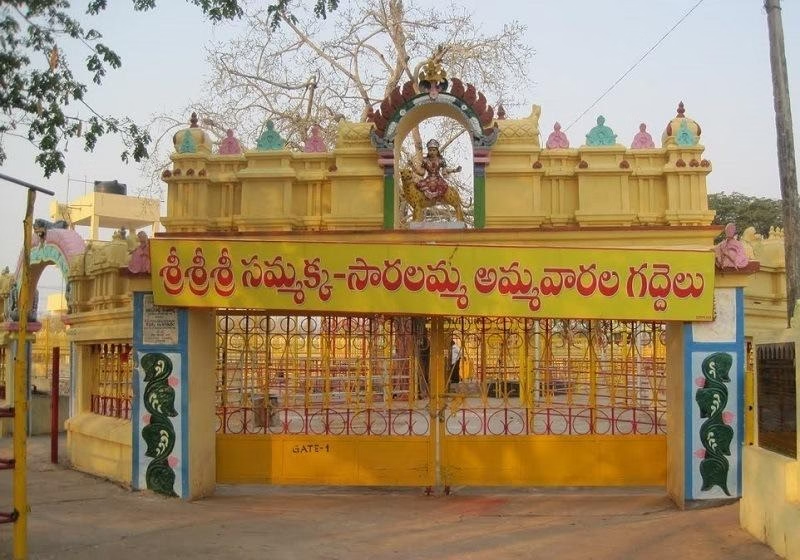
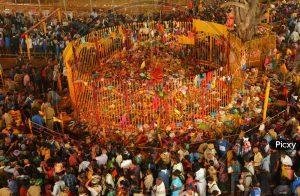
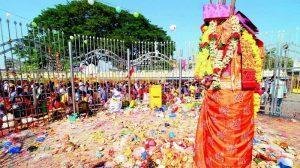
Sammakka Saralamma Jatara or Medaram Jatara is a festival of honouring the goddesses celebrated in the state of Telangana, India. This Jatara is known for witnessing one of the largest people gatherings in the world. People offer Bangarm (jaggery) :The Jatara begins at Medaram in Tadvai mandal in Jayashankar Bhupalpally district. The rituals related to the Goddesses are entirely conducted by Koya tribe priests, in accordance with Koya customs and traditions.
Medaram is a remote place in the Eturnagaram Wildlife Sanctuary, a part of Dandakaranya, the largest surviving forest belt in the Deccan.
Jatara is celebrated during the time the goddesses of the tribals are believed to visit them. It is believed that after Kumbha Mela, the Medaram jatara attracts the largest number of devotees in the country.it is very Asia’s largest tribal festival which is celebrated in telangana
Architecture
Unlike classical Hindu temples which follow the Vastu Shastra and Agama scriptures with permanent stone structures, the Sammakka Saralamma Jatara takes place in the open air amidst the dense forests of the Eturnagaram Wildlife Sanctuary. The architecture of this sacred site is defined by the landscape itself—a natural mandala where the hills and streams form the sanctum.
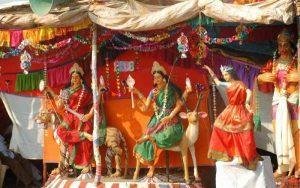
The site of Medaram features a temporary but highly organized layout that has been utilized for centuries. The central shrine area is where the idols (Saralamma and Sammakka) are placed. The structure is ephemeral, often constructed with local materials by the Koya tribe, adhering to their distinct tribal aesthetics rather than Nagara or Dravida styles. The “temple” is a representation of the tribal resistance and unity, characterized by open-air platforms and pavilions that allow for the massive congregation of devotees, prioritizing accessibility over classical stone architecture.
Legend / Local stories
The Sammakka-Saralamma jatara, a biennial tribal festival, marks the sacrifice by Sammakka and Saralamma — a mother-daughter duo – against the powerful Kakatiya rulers’ unjust tax law. The four-day tribal festival begins at Medaram in Jayashankar Bhupalpalli district and attracts millions of people.
According to a tribal legend, about seven centuries ago, the Koya tribals found a little girl playing with tigers while passing through the Dandakaranya forest. The tribal chief adopted her and named her Sammakka.
She married Pagididda Raju, headman of a neighbouring village, and begot three children –Jampanna, Nagulamma and Saaralamma. The Koyas were under the tutelage of the Kakatiyas, who ruled Central India from Warangal City between 1000 AD and 1380 AD.
During a severe drought that lasted years, the mighty Godavari dried up and the Koyas fell on hard times. Though the Kakatiya rulers’ insisted on them paying the tax, it was beyond the means of the Koyas. Kakatiya Emperor Pratapa Rudra sent forces to teach the Koyas a lesson. This was resisted by the Koyas. In the bitter war, most of the Koya chieftains lost.
Samakka resolved to continue the fight to avenge the dead and was wounded. Samakka told her people that as long as they remembered her, she would protect them. Then, she cursed the Kakatiya dynasty and disappeared into the forest.
Legends say that the tribals searched for their queen and found a red ochre box, containing her bangles, and the pug-mark of a tigress. Since then, the Koyas, Waddaras and other tribes and non-tribals have been holding feasts in memory of Sammakka and Saralamma.
Sammakka-Saralamma jatara is held in over 100 tribal locations in Chhattisgarh, Maharashtra and Andhra Pradesh.
There are many legends about the miraculous powers of Sammakka. According to a tribal story, about 6-7 centuries ago, that is in the 13th century, some tribal leaders who went for a hunting found a new born girl (Sammakka) emitting enormous light playing amidst tigers. She was taken to their habitation, and the head of the tribe adopted her and brought up as a chief. She later became the saviour of the tribals of the region. She was married to Pagididda Raju, a feudatory tribal chief of Kakatiyas (who ruled the country of Telugus from Warangal City between 1000 AD and 1380 AD). She was blessed with 2 daughters and one son namely Sarakka, Nagulamma and Jampanna respectively. Jampanna died in this attack and fell bleeding into a vaagu (stream) and later the whole sampangi vaagu has turned red due to which it was later on called JAMPANNA VAAGU near the place where the present mela is taking place.
Introduction & Spiritual Essence
The Sammakka Saralamma Jatara is not merely a gathering; it is a living testament to the valor of the Koya tribe and the divine feminine energy. The primary deity is Sammakka, the mother goddess, and her daughter Saralamma (also known as Sarakka). These deities are revered as Swayambhu (self-manifested) figures, emerging from the forest without human carving.
Phalaśruti: The Benefits of Pilgrimage
Devotees believe that visiting the Jatara brings profound spiritual benefits. The Phalaśruti (scriptural promise of merit) associated with this site is deeply tied to the welfare of the tribe and the removal of suffering.
- Removal of Curses: The goddess is believed to absolve devotees of ancestral curses and bad karma.
- Health & Prosperity: Offering Bangaram (jaggery) is a specific ritual to cleanse the body of ailments and invite sweetness into life.
- Tribal Unity: Partaking in the Jatara is believed to integrate the devotee into the protective fold of the Dandakaranya forest spirits.
Architectural Marvels
While the site does not possess the stone-carved gopurams of classical South Indian temples, it showcases a unique Tribal Aesthetic aligned with nature. The layout of the Jatara follows the path of the forest stream, representing a natural Vastu alignment where the water body (Vaagu) serves as a spiritual cleanser.
The sanctum sanctorum is a temporary structure where the idols of Sammakka and Saralamma are placed. The surrounding area is organized to facilitate millions of pilgrims, utilizing the natural topography of the Eturnagaram Wildlife Sanctuary. The absence of rigid architectural boundaries emphasizes the open, inclusive nature of the worship, where the forest itself is the temple.
Darshan & Ritual Logistics
The Jatara is conducted biennially. While the main event occurs over four specific days, the shrine remains active during the intervening years, though with reduced crowds. The rituals are exclusively performed by the Koya tribal priests, adhering strictly to ancient customs.
Daily Timings (During Jatara Season)
The shrine is accessible 24 hours during the main festival days. Below are the standard timings for the annual ritual days:
| Session | Timing | Activity |
|---|---|---|
| Morning Darshan | 06:00 AM – 12:00 PM | Morning Pooja, Prasadam distribution |
| Afternoon Rituals | 12:00 PM – 04:00 PM | Special Abhishekam (Oil/Flower) |
| Evening Darshan | 04:00 PM – 08:00 PM | Evening Aarti, Naivedyam |
| Night | 08:00 PM – 06:00 AM | Continuous Darshan |
Key Sevas and Booking
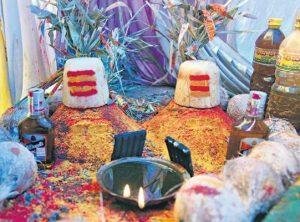
Unlike modern commercial temples, Sevas here are traditional offerings. The most significant offering is Bangaram (Jaggery). Devotees carry jaggery in cloth bags and offer it to the goddess.
- Bangaram Offering: Available on-site. No prior booking required.
- Special Pooja: Conducted by tribal priests on request.
- Online Booking: For the main biennial Jatara, the Telangana Tourism Development Corporation (TSTDC) manages crowd control and basic accommodation. However, traditional Sevas are performed on-site directly.
2026 Festival Schedule
Note: The main Jatara is biennial. The next grand Jatara is expected in 2026 (Tentative dates).
- Maha Sammelanam Start: February 3, 2026 (Magha Purnima)
- Key Dates: February 3 – February 6, 2026
- Bathala Amavasya: The most auspicious day (Expected Feb 5, 2026).
Practical Visitor Guidance
Rules & Etiquette
- Dress Code: Traditional attire is recommended. Men should wear Dhoti or Pants with a shirt; Women should wear Saree or Salwar Kameez. Avoid western attire to respect the tribal sanctity.
- Photography: Allowed in general areas, but restricted near the inner sanctum. Drone usage is strictly prohibited due to the forest sanctuary status.
- Mobile Lockers: Due to the massive crowds, electronic items are discouraged. Government-run cloakrooms are available but can be crowded.
- Accessibility: The terrain is uneven and forest-based. The path involves walking on muddy/soil tracks. It is challenging for those with mobility issues.
Crowd Management & Seasonal Advice
- Best Hours: If visiting during the Jatara, the least crowded times are early morning (4 AM – 6 AM) or late night (after 10 PM). Avoid afternoons.
- Seasonal Tip: The festival occurs in early February. Days can be warm, and nights cool. Carry a light sweater for evenings and a hat for afternoons.
- Hydration: Carry water bottles. While stalls are available, the heat and crowds can cause dehydration.
Photo Gallery
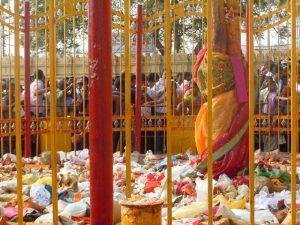
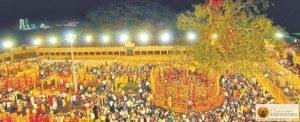
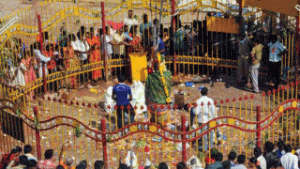
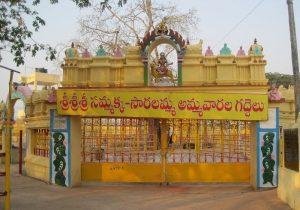
Pilgrimage Connectivity
Medaram is located in the deep forest region of Jayashankar Bhupalpally district. It is well-connected by road during the festival via special bus services.
How to Reach
- By Road: From Hyderabad, the distance is approximately 200 km via NH163 (Hyderabad-Warangal Highway). From Warangal, it is roughly 85 km.
- By Rail: The nearest major railway station is Warangal Railway Station (approx. 90 km). From there, frequent buses are available to Medaram.
- By Air: The nearest airport is Rajiv Gandhi International Airport, Hyderabad (approx. 210 km).
Nearby Sacred Sites
Extend your pilgrimage circuit with these nearby locations:
- Eturnagaram Wildlife Sanctuary: Located just before Medaram, this ancient forest offers serene natural beauty and a temple dedicated to the God of Wind.
- Laknavaram Lake: A picturesque man-made lake surrounded by hillocks, located about 40 km from Medaram. It features a hanging bridge and islands.
- Warangal Fort: A historical fort built by the Kakatiya dynasty (the very rulers mentioned in the Jatara legend), located roughly 90 km away.
FAQs
1. Is there a VIP darshan entry available?
No. Sammakka Saralamma Jatara is known for its egalitarian nature. There is no VIP entry or special queue based on status. Everyone stands in the same line, reflecting the tribal ethos of equality.
2. What is the significance of offering Bangaram (Jaggery)?
Jaggery symbolizes sweetness and purity. In local belief, offering jaggery pleases the goddess and results in the removal of toxins (both physical and spiritual) from the devotee’s life.
3. Are there accommodation facilities at Medaram?
During the Jatara, the government sets up temporary tents and sheds. However, amenities are basic. It is advisable to book hotels in Warangal or Jayashankar Bhupalpally in advance.
4. Is the temple open year-round?
Yes, the shrine is open year-round, but the energy and crowd peak during the biennial festival. Small rituals are performed on full moon days.
5. Is alcohol or meat consumed at the festival?
While some tribal festivals involve these, the Sammakka Saralamma Jatara is strictly a vegetarian and teetotaler event. The consumption of alcohol and non-vegetarian food is strictly prohibited within the temple premises and the forest area.
Contact Details
Official Address:
Sammakka Saralamma Temple,
Medaram, Tadvai Mandal,
Jayashankar Bhupalpally District,
Telangana – 506101.
Tourism Enquiry:
Telangana Tourism Development Corporation (TSTDC) – Warangal Office.
Recent Posts

ओ सांवरे तूने ही मुझको संभाला – Lyrics & Meaning
ओ सांवरे तूने ही मुझको संभाला – A Prayer to Shyam Origin & Spiritual Essence Why This Bhajan Resonates Devotees chant this when overwhelmed by life’s storms—the refrain ‘तूने ही मुझको संभाला’ is the soul’s sigh of relief: “You…

कथा ये है महाराज मेरे की – Lyrics & Meaning
कथा ये है महाराज मेरे की छत्रपति संभाजी महाराज – A Prayer to Chhatrapati Sambhaji Maharaj Origin & Spiritual Essence Why This Bhajan Resonates Devotees chant this when their spirit feels tested—its powerful refrain “महाराज मेरे” is a soul’s…

Rigveda Samhita Yathartha Anuvada (ऋग्वेद संहिता यथार्थ अनुवाद) – Complete Set with Anvayartha & Hindi/English Translation
The Rigveda is the oldest surviving scripture of humanity and the foundational text of Sanātana Dharma. For serious students, scholars, UPSC aspirants studying ancient Indian history, Sanskrit learners, and spiritual seekers, a precise and grammatically structured translation is indispensable.…

आना भी अकेला है जाना भी अकेला है – Lyrics & Meaning | BharatTemples
आना भी अकेला है जाना भी अकेला है – A Prayer to the Divine Witness Origin & Spiritual Essence Why This Bhajan Resonates Devotees turn to this bhajan in moments of deep reflection—when life’s attachments begin to ache. The…

माता शेरावाली के द्वार जो भी जाता है – Lyrics & Meaning
माता शेरावाली के द्वार जो भी जाता है – A Prayer to Maa Sherawali Origin & Spiritual Essence Why This Bhajan Resonates Devotees turn to this bhajan in times of fear or uncertainty—its promise that no one leaves Maa’s…

मार लेना सपणी उबार लेणा भवरा – Lyrics & Meaning
मार लेना सपणी उबार लेणा भवरा – A Prayer to the Divine Beloved Origin & Spiritual Essence Why This Bhajan Resonates Devotees chant this in moments of deep vulnerability—its cry of “मार लेना सपणी, उबार लेणा भवरा” is the…

हमें श्याम सुंदर भरोसा तुम्हारा – Lyrics & Meaning
हमें श्याम सुंदर भरोसा तुम्हारा – A Prayer to Shyam Sundar Origin & Spiritual Essence Why This Bhajan Resonates Devotees chant this when feeling alone—its refrain ‘de do sahara’ is the soul’s cry for divine support. Lyrics in Hindi…

Mere Satguru Ne Di Thi Davai Lyrics in Hindi & Meaning
Mere Satguru Ne Di Thi Davai: Invoking the Guru’s Liberating Wisdom This soul-stirring bhajan venerates the Satguru (True Spiritual Master) as the divine physician who dispenses the only remedy for life’s deepest sufferings. Composed by Sant Karmaveer Tufani, it…

Janm Diyo Thari Maa Dukh Dekhiyo Lyrics in Hindi & Meaning
जन्म दियो थारी माँ दुख देखियो (Maa’s Grief Upon Birthing You) This soul-stirring Chetavani Bhajan (admonitory hymn) is addressed to the Divine Mother (Maa) – a call for repentance when children forget their filial duties in the dark age…
Bhadi Sabha Mein Thane Manaun Lyrics in Hindi & Meaning
Bhadi Sabha Mein Thane Manaun: Invoking the Spear-Wielding Mother Mata Bhawani (श्री ज्वाला भवानी), the fiery manifestation of Shakti worshipped as the Protector of Dharma in Her Dhaulagarh sanctum. Origin & Spiritual Essence Composed in Rajasthani folk tradition by…