
Contents
The Definitive Pilgrimage Guide to Sanisvara Siva Temple, Bhubaneswar
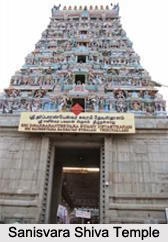
Sanisvara Siva Temple is a serene yet historically profound Mandir situated in the Gosagaresvara Precinct, just south of Paradaresvara Siva Temple in Bhubaneswar, Odisha. Nestled in the ancient capital of the Kalinga empire, this temple offers a unique glimpse into the 14th-15th century A.D. architectural heritage and the enduring devotion to Lord Siva.
Introduction & Spiritual Essence
The primary deity of the Sanisvara Siva Temple is a circular Yoni Pitha (the aniconic symbol of the Goddess Shakti) located at the center of the sanctum. While the Swayambhu (self-manifested) Linga is the focal point, the temple is deeply woven into the spiritual fabric of Bhubaneswar.
Phalaśruti (Spiritual Benefits):
Devotees visit this shrine primarily to seek forgiveness for sins and to cleanse negative karma. According to local tradition, worshiping here is believed to alleviate the effects of Pitru Dosha (ancestral afflictions) and grant peace to departed souls. The temple’s association with the nearby Gosagaresvara tank enhances its reputation as a powerful site for ritual purification.
Historical Origins & Scriptural Legend
Archaeological Context:
Based on inscriptions and architectural style, the temple dates back to the 14th-15th Century A.D., likely constructed during the later Ganga dynasty or the subsequent Gajapati rule. It stands as a testament to the evolution of Odishan temple architecture.
The Legend of the Golden Calf:
According to local folklore, during the Ganga rule, Lord Siva (in his disguise as a mendicant) accidentally killed a calf. Overcome with the sin of Gohatya (killing a cow), Lord Siva sought redemption. Tradition holds that he performed a penance at this very spot, taking a ritual bath in the Gosagaresvara tank and worshiping the Linga to cleanse his sins.
Consequently, the practice of taking a holy dip in the tank and offering prayers continues to this day. The temple is classified under the Pidha Deul typology, characterized by a pyramidal roof over the sanctum, distinct from the towering spires of earlier Kalinga temples.
Architectural Marvels
The Sanisvara Siva Temple is an exquisite example of the Kalingan Style of architecture, prevalent in Odisha.
- Sanctum (Garbhagriha): The sanctum is relatively modest (approx. 1.00 square meter), focusing the devotee’s attention on the circular Yoni Pitha.
- Mukhasala (Assembly Hall): The temple features a jagati (platform) and a pillared assembly hall that allows for circumambulation (Pradakshina).
- Pidha Deul: Unlike the towering curved spires (Rekha Deul) of earlier temples, this shrine features a horizontal stepped pyramid (Pidha Deul) over the sanctum, a hallmark of post-13th century Odishan architecture.
- Sculptural Details: Though smaller in scale, the retaining walls and pillars exhibit intricate carvings typical of the medieval period, depicting floral motifs and divine figures.
Darshan & Ritual Logistics
The temple is maintained as a living shrine, blending daily rituals with historical preservation.
Daily Timings
Timings are based on standard Bhubaneswar temple schedules. Please verify locally for seasonal adjustments.
| Session | Timing | Details |
|---|---|---|
| Morning Darshan | 6:00 AM – 12:00 PM | Best time for Abhishekam and peaceful prayers. |
| Afternoon Break | 12:00 PM – 3:00 PM | Sanctum remains closed for Deity rest. |
| Evening Darshan | 3:00 PM – 9:00 PM | Evening Aarti and general darshan. |
| Sandhya Aarti | 6:30 PM – 7:00 PM | Highly recommended for a devotional experience. |
Key Sevas (Services)
While the temple is smaller than the Lingaraja, key rituals are performed:
- Abhishekam: Ritual bathing of the Yoni Pitha (usually performed with water, milk, and honey).
- Archana: Recitation of names accompanied by flower offerings.
- Maha Deepa: Lighting of the eternal lamp.
Online Booking & Festivals
Note: For specific online bookings, devotees often utilize the broader Odisha Temple Management portal or visit the local temple office.
2026 Festival Dates:
- Maha Shivaratri: February 26, 2026 (Major celebration).
- Nabanna: January 15, 2026 (Harvest festival).
- Shivratri Month (Jyeshtha): May 2026 (Weekly Mondays).
Practical Visitor Guidance
To ensure a smooth pilgrimage, please adhere to the following guidelines:
- Dress Code: Traditional Indian attire is preferred (Dhoti/Kurta for men; Saree/Salwar Kameez for women). Avoid shorts and sleeveless tops.
- Photography: Photography inside the sanctum is strictly prohibited. Outside, it is generally allowed but respectful of worshippers.
- Footwear: Shoes must be removed at the designated stands outside the temple complex.
- Crowd Management:
- Best Hours: Weekday mornings (7:00 AM – 9:00 AM) are least crowded.
- Seasonal Advice: Bhubaneswar summers (May-June) are humid. Carry a water bottle and an umbrella. Monsoons (July-Sept) bring heavy rains; carry a raincoat.
- Mobile Lockers: While the temple may not have extensive locker facilities, it is advisable to carry minimal valuables.
Pilgrimage Connectivity
The temple is located in the heart of Bhubaneswar, making it easily accessible.
How to Reach
- Nearest Airport: Biju Patnaik International Airport (BBI) is approximately 5-6 km away (15-20 mins by taxi).
- Nearest Railway Station: Bhubaneswar Railway Station (BBS) is about 3 km from the temple precinct.
- Road Access: The temple is located near Kapilaprasad. It connects to the main city roads leading to National Highway 16 (NH16).
Nearby Sacred Sites
Extend your spiritual journey by visiting these nearby landmarks:
- Paradaresvara Siva Temple: Located just north of Sanisvara, sharing the same precinct.
- Gosagaresvara Tank: The holy water body associated with the temple’s legend.
- Lingaraja Temple: The grandeur of Bhubaneswar’s most famous temple is a short drive away.
- Mukteswar Temple: An architectural gem of the 10th century, located nearby.
Frequently Asked Questions (FAQ)
1. Is there a VIP darshan entry at Sanisvara Siva Temple?
Being a smaller, local heritage temple, there is no formal VIP darshan system like in major shrines. Darshan is generally open to all devotees with minimal waiting time.
2. What is the exact address of the temple?
The temple is located in the Gosagaresvara Precinct, Kapilaprasad, Bhubaneswar, Odisha. It is situated immediately south of the Paradaresvara Siva Temple.
3. Are there accommodation facilities nearby?
While the temple complex itself does not have guest houses, Bhubaneswar offers a wide range of hotels and government lodges (OTDC properties) ranging from budget to luxury.
4. What is the significance of the Yoni Pitha here?
The circular Yoni Pitha represents the feminine creative energy (Shakti). In Sanisvara Temple, the absence of a towering Linga focuses the worship on the base upon which Lingas are placed, symbolizing the foundation of creation.
5. Is the temple accessible for senior citizens?
Yes, the temple has a jagati (platform) which is approachable via steps. However, the inner sanctum is compact. Wheelchair access might be limited to the outer halls depending on the current infrastructure maintenance.
Recent Posts

माता शेरावाली के द्वार जो भी जाता है – Lyrics & Meaning
माता शेरावाली के द्वार जो भी जाता है – A Prayer to Maa Sherawali Origin & Spiritual Essence Why This Bhajan Resonates Devotees turn to this bhajan in times of fear or uncertainty—its promise that no one leaves Maa’s…

मार लेना सपणी उबार लेणा भवरा – Lyrics & Meaning
मार लेना सपणी उबार लेणा भवरा – A Prayer to the Divine Beloved Origin & Spiritual Essence Why This Bhajan Resonates Devotees chant this in moments of deep vulnerability—its cry of “मार लेना सपणी, उबार लेणा भवरा” is the…

हमें श्याम सुंदर भरोसा तुम्हारा – Lyrics & Meaning
हमें श्याम सुंदर भरोसा तुम्हारा – A Prayer to Shyam Sundar Origin & Spiritual Essence Why This Bhajan Resonates Devotees chant this when feeling alone—its refrain ‘de do sahara’ is the soul’s cry for divine support. Lyrics in Hindi…

Mere Satguru Ne Di Thi Davai Lyrics in Hindi & Meaning
Mere Satguru Ne Di Thi Davai: Invoking the Guru’s Liberating Wisdom This soul-stirring bhajan venerates the Satguru (True Spiritual Master) as the divine physician who dispenses the only remedy for life’s deepest sufferings. Composed by Sant Karmaveer Tufani, it…

Janm Diyo Thari Maa Dukh Dekhiyo Lyrics in Hindi & Meaning
जन्म दियो थारी माँ दुख देखियो (Maa’s Grief Upon Birthing You) This soul-stirring Chetavani Bhajan (admonitory hymn) is addressed to the Divine Mother (Maa) – a call for repentance when children forget their filial duties in the dark age…
Bhadi Sabha Mein Thane Manaun Lyrics in Hindi & Meaning
Bhadi Sabha Mein Thane Manaun: Invoking the Spear-Wielding Mother Mata Bhawani (श्री ज्वाला भवानी), the fiery manifestation of Shakti worshipped as the Protector of Dharma in Her Dhaulagarh sanctum. Origin & Spiritual Essence Composed in Rajasthani folk tradition by…
श्याम सुन्दरवा छोटे छोटे कनुवा Lyrics & Meaning
श्याम सुन्दरवा छोटे छोटे कनुवा (Shyam Sundarva Chhote Chhote Kanuva) is a heartfelt invocation to Lord Krishna in his most enchanting form—Shyam Sundar (the dark, beautiful one). This bhajan is a plea for the divine child Kanha to grace…
Maat Meri Chintapurni Lyrics in Hindi & Meaning
Maat Meri Chintapurni is a heartfelt devotional prayer dedicated to Maa Chintapurni, a form of the Divine Mother. She is revered as the remover of worries and the granter of wishes, especially venerated in the Himalayan region of Himachal…
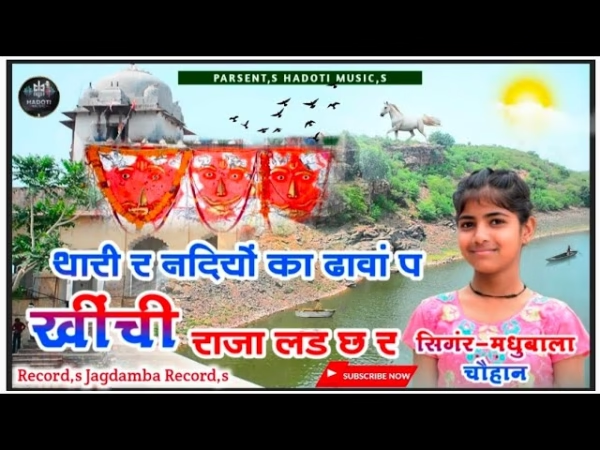
थारी रे नदियां का ढावा पे खीची राजा Lyrics & Meaning
खीची राजा का अद्भुत युद्ध: एक शौर्य गाथा यह भजन एक पौराणिक या ऐतिहासिक शूरवीर राजा की वीरता का वर्णन करता है, जो प्रायः गुजराती लोक संस्कृति में लोककथाओं का हिस्सा है। इसकी रचना दुर्गेश कटारा ने की है…
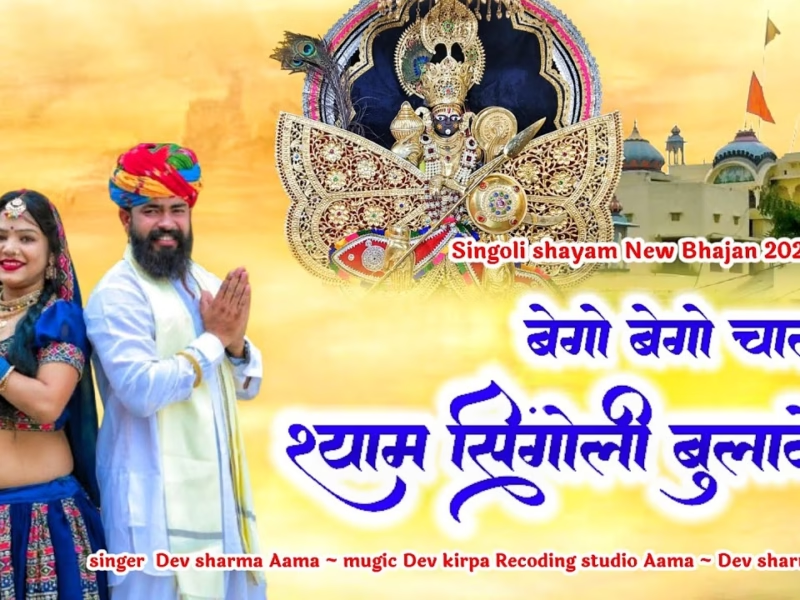
बेगो बेगो चाल श्याम सिंगोली बुलावे रे Lyrics in Hindi & Meaning
Bhajan Title & Deity This bhajan, बेगो बेगो चाल श्याम सिंगोली बुलावे रे, is dedicated to Lord Shyam, a revered form of Lord Krishna. Origin & Spiritual Essence The composer of this bhajan is not specified, but it is…