
Contents
Siddha Lakshmi Devi Temple: The Abode of Siddhis in Kashi
Introduction & Spiritual Essence
Deep within the sacred lanes of Varanasi (Kashi), away from the bustling ghats, lies the Siddha Lakshmi Devi Temple. This is not merely a shrine of worship but a spiritual powerhouse where devotees seek the fulfillment of their deepest desires. The temple is dedicated to Goddess Siddha Lakshmi, a manifestation of the Divine Mother who grants Siddhi—divine powers and the success of one’s spiritual and material endeavors.
Phalaśruti: The Fruits of Devotion
According to ancient spiritual traditions, the grace of Siddha Lakshmi Devi is unparalleled. It is believed that worshipping her:
- Fulfills Wishes: Devotees believe that sincere prayers here remove obstacles and grant blessings for specific life goals.
- Cleanses Ancestral Karma: It is a potent site for Pinda Daan, helping to liberate ancestors from the cycle of birth and death.
- Brings Prosperity: As a form of Lakshmi, she ensures financial stability and abundance in the household.
Historical Origins & Scriptural Legend
The Kashi Khand Connection
While the physical structure of the temple showcases Dravidian architectural influences (often associated with later periods), its spiritual lineage is traced back to the Kashi Khand of the Skanda Purana, one of the most authoritative texts on the geography and holiness of Kashi.
According to temple records and the Kashi Khand, Chapter 70, various deities reside in Kashi to protect devotees. In the vicinity of Pita Maheshwar, the divine mother manifests as Siddha Lakshmi Devi. Tradition holds that this location is a site of Swayambhu (self-manifested) energy, where the power of the Devi has been accessible to seekers for centuries.
Architectural Marvels
The Siddha Lakshmi Devi Temple is a striking example of Dravidian architecture situated in the North Indian city of Varanasi. This unique blend creates a visual contrast with the typical North Indian Nagara style temples in the region.
- Vimana and Shikhara: The temple features a pyramid-like Vimana (tower) typical of Dravidian style, rising gracefully above the narrow bylanes.
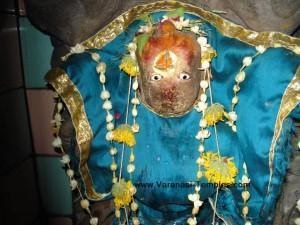
- Garbhagriha (Sanctum): The inner sanctum houses the idol of Siddha Lakshmi Devi, adorned with traditional silks and jewelry. The atmosphere inside is thick with the scent of incense and camphor.
- Mandapa: The pillared hall allows devotees to sit for meditation and witness the daily rituals (Aarti) clearly.

Visual Note: The temple features ornate carvings and a vibrant exterior typical of South Indian temple styles.
Darshan & Ritual Logistics
For the year 2026, the temple follows a standard Varanasi temple schedule, with extended hours during festivals. Note that while the temple is ancient, specific timings may vary during special religious observances.
Daily Timings (Tentative)
| Session | Timings |
|---|---|
| Morning Darshan | 05:00 AM – 12:00 PM |
| Mid-Day Break | 12:00 PM – 3:00 PM |
| Evening Darshan | 3:00 PM – 10:00 PM |
| Aarti Times | Morning (06:00 AM), Evening (07:30 PM) |
Key Sevas & Online Booking
Devotees can perform various Sevas to seek the blessings of the Goddess. For convenience, most bookings in Varanasi are now managed via the Varanasi Nikay app or local temple counters.
- Abhishekam (Ritual Bath): Performed with milk, honey, and ghee. Timing: 6:00 AM.
- Archana (Recitation of Names): A 15-minute ritual involving the chanting of Lakshmi’s 108 names.
- Vishesh Puja: Conducted during Navratri for special blessings.
How to Book Online: Visit the official Varanasi district temple portal or the Kashi Vishwanath Corridor management application. Select “Siddha Lakshmi Devi Temple” from the list of authorized shrines.
2026 Major Festivals
- Chaitra Navratri: April 6 – April 14, 2026
- Sharad Navratri: September 22 – October 1, 2026
- Diwali: October 18, 2026 (Deepavali Lakshmi Puja)
Note: Crowds are significantly higher during Navratri. It is advisable to book accommodation and darshan slots in advance.
Practical Visitor Guidance
Code of Conduct & Essentials
The temple is a place of high spiritual vibration. Adherence to protocols ensures a smooth experience for all pilgrims.
- Dress Code: Traditional attire is preferred. Men should wear Dhoti/Kurta, and women Saree/Salwar Kameez. Avoid shorts and sleeveless tops.
- Photography: Strictly prohibited inside the Garbhagriha (sanctum sanctorum). Photography may be allowed in the courtyard, but seek permission from the trust.
- Mobile Lockers: There are no official lockers at the entrance due to the shrine’s compact size in the bylanes. It is advised to travel light.
- Accessibility: The temple is located in the old city. The approach is via narrow, uneven stone steps. It is not wheelchair accessible.
Crowd Management Strategy
- Best Hours to Visit: Early morning (5:30 AM – 7:00 AM) for a peaceful Darshan.
- Seasonal Advice: Varanasi summers (May–June) are scorching; carry a water bottle. Winters (Dec–Jan) are foggy and pleasant.
- Footwear: Leave shoes at the designated paid shoe-keeping counter outside the temple lane (small fee applies).
Pilgrimage Connectivity
How to Reach
The Siddha Lakshmi Devi Temple is located in the Chowk area, near Manikarnika Ghat.
- By Air: Lal Bahadur Shastri International Airport (LBS) is approximately 25 km away. Taxis are available to Chowk.
- By Rail: Varanasi Junction (BSB) is the main railway station, roughly 5-6 km from Chowk.
- By Road: From Varanasi Junction, take a taxi/auto to Godaulia or Chowk. Private vehicles cannot enter the narrow lanes of the old city. From Chowk, the temple is a 5-10 minute walk.
- By Boat: As mentioned in the original records, devotees can take a boat to Manikarnika Ghat. From the ghat, climb the steps and walk towards the Siddhi Vinayak intersection.
Nearby Sacred Sites
Expand your pilgrimage circuit with these nearby holy spots:
- Siddhi Vinayak Temple: Located just opposite the temple, dedicated to Lord Ganesha.
- Pita Maheshwar: Mentioned in the Kashi Khand as the specific location where Siddha Lakshmi resides.
- Manikarnika Ghat: The primary cremation ghat of Kashi, symbolizing the gateway to liberation (Moksha).
Frequently Asked Questions (FAQs)
1. Is there a VIP darshan entry at Siddha Lakshmi Devi Temple?
No, due to the temple’s location in the narrow bylanes and its ancient structure, there is no dedicated VIP entry gate. Darshan is based on a first-come, first-served basis. However, during Navratri, special passes are sometimes issued by the Varanasi Nikay for priority access.
2. Can I carry my own Prasad (offerings)?
Yes, you can carry dry fruits, sweets, and flowers. However, avoid carrying liquid Prasad (like milk or clarified butter) in open containers as the lanes are crowded.
3. What is the significance of the “Siddha” name?
“Siddha” implies accomplished or perfected. Worshiping Siddha Lakshmi Devi is believed to grant Siddhis—supernatural powers or the successful completion of spiritual endeavors.
4. Are there hotels nearby for accommodation?
Yes, the Chowk and Dashashwamedh areas offer numerous guest houses (Dharamshalas) and hotels. For better amenities, staying near Godaulia or Assi Ghat is recommended, with easy access to the old city via auto-rickshaw.
5. Is the temple open year-round?
Yes, the temple is open every day. It closes briefly during the afternoon for cleaning and priest rest.
Contact Details
For inquiries, pilgrims should contact the office of the Varanasi Nikay (Municipal Corporation) or the local temple trust board, as specific contact numbers for smaller shrines in the old city are often updated on local listings.
Recent Posts

Shri Kaamkoteeshwar Mandir, Varanasi – History & Significance
In the heart of Kashi, the eternal city of Lord Shiva, where the Ganges flows with celestial grace, stands the Shri Kaamkoteeshwar Mandir. This sacred Sannidhi is not merely a temple but a profound spiritual bridge between the Northern…

ओ सांवरे तूने ही मुझको संभाला – Lyrics & Meaning
ओ सांवरे तूने ही मुझको संभाला – A Prayer to Shyam Origin & Spiritual Essence Why This Bhajan Resonates Devotees chant this when overwhelmed by life’s storms—the refrain ‘तूने ही मुझको संभाला’ is the soul’s sigh of relief: “You…

कथा ये है महाराज मेरे की – Lyrics & Meaning
कथा ये है महाराज मेरे की छत्रपति संभाजी महाराज – A Prayer to Chhatrapati Sambhaji Maharaj Origin & Spiritual Essence Why This Bhajan Resonates Devotees chant this when their spirit feels tested—its powerful refrain “महाराज मेरे” is a soul’s…

Rigveda Samhita Yathartha Anuvada (ऋग्वेद संहिता यथार्थ अनुवाद) – Complete Set with Anvayartha & Hindi/English Translation
The Rigveda is the oldest surviving scripture of humanity and the foundational text of Sanātana Dharma. For serious students, scholars, UPSC aspirants studying ancient Indian history, Sanskrit learners, and spiritual seekers, a precise and grammatically structured translation is indispensable.…

आना भी अकेला है जाना भी अकेला है – Lyrics & Meaning | BharatTemples
आना भी अकेला है जाना भी अकेला है – A Prayer to the Divine Witness Origin & Spiritual Essence Why This Bhajan Resonates Devotees turn to this bhajan in moments of deep reflection—when life’s attachments begin to ache. The…

माता शेरावाली के द्वार जो भी जाता है – Lyrics & Meaning
माता शेरावाली के द्वार जो भी जाता है – A Prayer to Maa Sherawali Origin & Spiritual Essence Why This Bhajan Resonates Devotees turn to this bhajan in times of fear or uncertainty—its promise that no one leaves Maa’s…

मार लेना सपणी उबार लेणा भवरा – Lyrics & Meaning
मार लेना सपणी उबार लेणा भवरा – A Prayer to the Divine Beloved Origin & Spiritual Essence Why This Bhajan Resonates Devotees chant this in moments of deep vulnerability—its cry of “मार लेना सपणी, उबार लेणा भवरा” is the…

हमें श्याम सुंदर भरोसा तुम्हारा – Lyrics & Meaning
हमें श्याम सुंदर भरोसा तुम्हारा – A Prayer to Shyam Sundar Origin & Spiritual Essence Why This Bhajan Resonates Devotees chant this when feeling alone—its refrain ‘de do sahara’ is the soul’s cry for divine support. Lyrics in Hindi…

Mere Satguru Ne Di Thi Davai Lyrics in Hindi & Meaning
Mere Satguru Ne Di Thi Davai: Invoking the Guru’s Liberating Wisdom This soul-stirring bhajan venerates the Satguru (True Spiritual Master) as the divine physician who dispenses the only remedy for life’s deepest sufferings. Composed by Sant Karmaveer Tufani, it…

Janm Diyo Thari Maa Dukh Dekhiyo Lyrics in Hindi & Meaning
जन्म दियो थारी माँ दुख देखियो (Maa’s Grief Upon Birthing You) This soul-stirring Chetavani Bhajan (admonitory hymn) is addressed to the Divine Mother (Maa) – a call for repentance when children forget their filial duties in the dark age…