
Contents
- 1 1. Introduction & Spiritual Essence: The Bestower of Siddhis
- 2 2. Historical Origins & Scriptural Legend
- 3 3. Architectural Marvels
- 4 4. Darshan & Ritual Logistics (2026 Schedule)
- 5 5. Practical Visitor Guidance
- 6 6. Pilgrimage Connectivity
- 7 7. Frequently Asked Questions (FAQ)
- 8 Photo Gallery
- 9 Contact Details
1. Introduction & Spiritual Essence: The Bestower of Siddhis
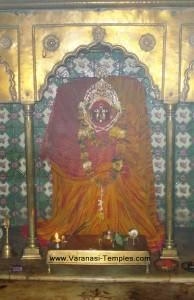
Located in the heart of the ancient city, the Siddheshwari Temple Varanasi stands as a profound spiritual beacon for devotees seeking the blessings of Siddhidatri, the ninth form of Goddess Durga. While Varanasi (Kashi) is predominantly known as the abode of Lord Shiva, this temple beautifully exemplifies the Ardhanarishvara form, where Shiva and Shakti are one.
The presiding deity, Siddheshwari Devi (also revered as Siddhidatri), is the granter of all Siddhis (supernatural powers or spiritual accomplishments). According to the Devi Purana, Lord Shiva himself attained these Siddhis only through her grace. She is depicted with four hands holding a Chakra (discus), Gada (mace), Shankha (conch), and Padma (lotus), seated upon a blooming lotus and riding a lion.
Phalaśruti: Why Devotees Visit
Devotees flock to this Siddh Peeth to seek liberation (Moksha) and the removal of obstacles in their path to spiritual and worldly success. The temple is particularly significant for those seeking:
- Removal of Sorrow: Maa Siddhidatri relieves her devotees from grief and suffering.
- Completion of Tasks: Worshipping here ensures the successful completion of difficult endeavors.
- Cleansing Ancestral Karma: Rituals performed here are believed to pacify ancestors and remove generational doshas.
2. Historical Origins & Scriptural Legend
Unlike many temples in Varanasi that trace their origins to the Gupta or medieval periods, the exact construction date of the Siddheshwari Temple is not definitively recorded in early copper plates. However, tradition holds that the temple has existed for several centuries, deeply embedded in the local Siddheshwar Mohalla.
The Sthala Purana
The Kashi Khand of the Skanda Purana prescribes the Durga Devi Yatra during Navratri. A specific local legend associated with this site describes it as a place where the energy of the Siddhi Dhatri (the bestower of accomplishments) manifested naturally. It is widely believed that this temple houses a Swayambhu (self-manifested) or highly ancient idol, infused with intense spiritual energy.
Historically, the temple structure has been renovated by devout kings and wealthy patrons over the ages, maintaining the sanctity of the sanctum while upgrading the exterior facilities. The temple is often referred to as the abode of Ardhanarishvara, symbolizing the union of Shiva (Siddheshwar) and Shakti (Siddheshwari).
3. Architectural Marvels
Dravidian Influence in Kashi
While Nagara style dominates Northern India, the Siddheshwari Temple exhibits distinct elements of Dravidian architecture. This is a rare and fascinating feature in Varanasi. The temple features a stepped pyramidal tower (Vimana) rather than the curvilinear shikhara typical of North Indian temples.
Sanctum and Mandapas
The inner sanctum (Garbhagriha) is relatively intimate, designed to focus the devotee’s attention on the imposing idol of Maa Siddhidatri. The outer Mandapa (hall) allows for ritual circumambulation (Parikrama). The walls are adorned with intricate carvings depicting scenes from the Puranas and the various forms of the Goddess.
The temple complex also houses the Chandra Koop (Moon Well) and an ancient shrine for Chandreshwar (a form of Shiva associated with the moon), further enhancing its status as a powerful Peeth (seat of power).
4. Darshan & Ritual Logistics (2026 Schedule)
Timings may vary slightly during festivals. We recommend checking the official temple notice board or the contact details before planning a visit.
| Session | Timing | Activity |
|---|---|---|
| Morning | 06:00 AM – 12:00 PM | Mangala Aarti, Abhishekam, General Darshan |
| Afternoon | 12:00 PM – 04:00 PM | Temple Closed / Raj Bhog |
| Evening | 04:00 PM – 09:00 PM | Shayan Aarti, General Darshan |
Key Sevas & Online Booking
Devotees can perform specific Sevas to invoke the blessings of Siddhidatri. While specific online portals for this historic temple may vary, many services are coordinated through local priests or the Varanasi temple trusts.
- Abhishekam: Ritual bathing of the deity with milk, honey, and water (Best time: Morning).
- Archana: Recitation of the Goddess’s 108 names.
- Havan: Fire ritual performed for Siddhi (accomplishment).
Note on Online Seva: While the temple is historic, digital booking is managed by trusts. Visit the official Varanasi district temple trust portal or inquire at the temple office upon arrival for the most secure booking process.
Festival Dates 2026
The temple is most vibrant during Navratri.
- Chaitra Navratri: March 30 – April 7, 2026 (Maha Navami on April 6).
- Sharad Navratri: September 18 – September 26, 2026 (Maha Navami on September 25).
- Special Note: On the 9th day (Maha Navami) of Navratri, the temple witnesses a massive influx of devotees seeking the final blessings of Maa Siddhidatri.
5. Practical Visitor Guidance
Dress Code & Etiquette
As with all Hindu temples in Varanasi, modest clothing is mandatory. Traditional Indian attire (Saree, Kurta-Pajama, Dhoti) is preferred. Avoid shorts, sleeveless tops, or tight-fitting garments. Shoes must be removed at the designated shoe-keeping counter (nominal fee applies).
Photography & Electronics
Photography inside the Garbhagriha is strictly prohibited. Mobile phones should be kept on silent mode. It is advisable to use the mobile lockers available at the entrance to store valuables and electronic devices, ensuring a distraction-free darshan.
Accessibility
The temple is located in the dense lanes of Varanasi. While the sanctum is on the ground floor, the approach roads are narrow and best navigated on foot from the main Chowk intersection. For elderly devotees, rickshaws can go up to the temple gate, but due to narrow lanes, a short walk (approx. 5-10 minutes) is required.
Crowd Management
Best Hours to Visit: To avoid the morning rush, plan your visit between 10:00 AM and 11:00 AM, or in the early evening (5:00 PM).
Seasonal Advice: Varanasi summers (May-June) are extremely hot. Carry a water bottle and a handkerchief. The monsoon (July-August) brings high humidity; light cotton clothing is recommended.
6. Pilgrimage Connectivity
How to Reach
- Nearest Airport: Lal Bahadur Shastri International Airport (VNS) is approximately 25 km away. A taxi or cab takes about 45-60 minutes to reach Chowk.
- Nearest Railway Station: Varanasi Junction (BSB) is 5 km away. Auto-rickshaws are readily available.
- By Road: Varanasi is well connected via NH 19 and NH 35. Once inside the city, navigate to Chowk, from where the temple is accessible by foot or cycle rickshaw through the heritage lanes.
Nearby Sacred Sites (The Kashi Pilgrimage Circuit)
When visiting Siddheshwari Temple, consider adding these nearby shrines to your itinerary:
- Kal Bhairav Temple: Located 1 km from the temple. Lord Kal Bhairav is the Kotwal (Guardian) of Kashi. No pilgrimage is complete without his darshan.
- Kashi Vishwanath Temple: Approximately 2.5 km away. The primary Jyotirlinga of Lord Shiva.
- Annapurna Mata Temple: Located near Vishwanath Temple, dedicated to the Goddess of Food.
7. Frequently Asked Questions (FAQ)
Is there a VIP darshan entry?
The Siddheshwari Temple generally does not have a formal VIP entry system like large state-run temples. However, during peak Navratri crowds, the temple priests manage queue flow. It is best to arrive early morning to avoid long lines.
Can I perform a Rudrabhishekam at this temple?
Yes, as the temple is dedicated to Siddheshwari (a form of Shakti) and houses a Shiva shrine (Siddheshwar), Rudrabhishekam and other Vedic rituals can be performed. You must coordinate with the temple priests at least one day in advance.
What is the significance of the name Siddheshwari?
The name combines “Siddhi” (spiritual accomplishment or success) and “Ishwari” (Goddess). It denotes the supreme power that grants success and liberation to her devotees.
Are there accommodation facilities nearby?
There are no guest houses directly attached to the temple. However, the area around Chowk and Dashashwamedh offers numerous Dharamshalas and budget hotels. It is advisable to book in advance during festival seasons.
Photo Gallery
Contact Details
Address: Siddheshwari Ck.7/124, Siddheshwari Mohalla, Varanasi, Uttar Pradesh 221001
Phone: Available at the temple office (Contact local administration for specific numbers).
Location Map: The temple is situated near the main Chowk market area.
Recent Posts

ओ सांवरे तूने ही मुझको संभाला – Lyrics & Meaning
ओ सांवरे तूने ही मुझको संभाला – A Prayer to Shyam Origin & Spiritual Essence Why This Bhajan Resonates Devotees chant this when overwhelmed by life’s storms—the refrain ‘तूने ही मुझको संभाला’ is the soul’s sigh of relief: “You…

कथा ये है महाराज मेरे की – Lyrics & Meaning
कथा ये है महाराज मेरे की छत्रपति संभाजी महाराज – A Prayer to Chhatrapati Sambhaji Maharaj Origin & Spiritual Essence Why This Bhajan Resonates Devotees chant this when their spirit feels tested—its powerful refrain “महाराज मेरे” is a soul’s…

Rigveda Samhita Yathartha Anuvada (ऋग्वेद संहिता यथार्थ अनुवाद) – Complete Set with Anvayartha & Hindi/English Translation
The Rigveda is the oldest surviving scripture of humanity and the foundational text of Sanātana Dharma. For serious students, scholars, UPSC aspirants studying ancient Indian history, Sanskrit learners, and spiritual seekers, a precise and grammatically structured translation is indispensable.…

आना भी अकेला है जाना भी अकेला है – Lyrics & Meaning | BharatTemples
आना भी अकेला है जाना भी अकेला है – A Prayer to the Divine Witness Origin & Spiritual Essence Why This Bhajan Resonates Devotees turn to this bhajan in moments of deep reflection—when life’s attachments begin to ache. The…

माता शेरावाली के द्वार जो भी जाता है – Lyrics & Meaning
माता शेरावाली के द्वार जो भी जाता है – A Prayer to Maa Sherawali Origin & Spiritual Essence Why This Bhajan Resonates Devotees turn to this bhajan in times of fear or uncertainty—its promise that no one leaves Maa’s…

मार लेना सपणी उबार लेणा भवरा – Lyrics & Meaning
मार लेना सपणी उबार लेणा भवरा – A Prayer to the Divine Beloved Origin & Spiritual Essence Why This Bhajan Resonates Devotees chant this in moments of deep vulnerability—its cry of “मार लेना सपणी, उबार लेणा भवरा” is the…

हमें श्याम सुंदर भरोसा तुम्हारा – Lyrics & Meaning
हमें श्याम सुंदर भरोसा तुम्हारा – A Prayer to Shyam Sundar Origin & Spiritual Essence Why This Bhajan Resonates Devotees chant this when feeling alone—its refrain ‘de do sahara’ is the soul’s cry for divine support. Lyrics in Hindi…

Mere Satguru Ne Di Thi Davai Lyrics in Hindi & Meaning
Mere Satguru Ne Di Thi Davai: Invoking the Guru’s Liberating Wisdom This soul-stirring bhajan venerates the Satguru (True Spiritual Master) as the divine physician who dispenses the only remedy for life’s deepest sufferings. Composed by Sant Karmaveer Tufani, it…

Janm Diyo Thari Maa Dukh Dekhiyo Lyrics in Hindi & Meaning
जन्म दियो थारी माँ दुख देखियो (Maa’s Grief Upon Birthing You) This soul-stirring Chetavani Bhajan (admonitory hymn) is addressed to the Divine Mother (Maa) – a call for repentance when children forget their filial duties in the dark age…
Bhadi Sabha Mein Thane Manaun Lyrics in Hindi & Meaning
Bhadi Sabha Mein Thane Manaun: Invoking the Spear-Wielding Mother Mata Bhawani (श्री ज्वाला भवानी), the fiery manifestation of Shakti worshipped as the Protector of Dharma in Her Dhaulagarh sanctum. Origin & Spiritual Essence Composed in Rajasthani folk tradition by…