
Contents
Sooriyeswarar Temple, Kanchipuram
| Date built: | – |
|---|---|
| Deity: | Sooriyeswarar |
| Architectural style: | Dravidian architecture |
| Major festivals | – |
| Locale: | Kanchipuram |
| District:: | Kanchipuram |
| Address: | – |
| Phone | – |
1. Introduction & Spiritual Essence
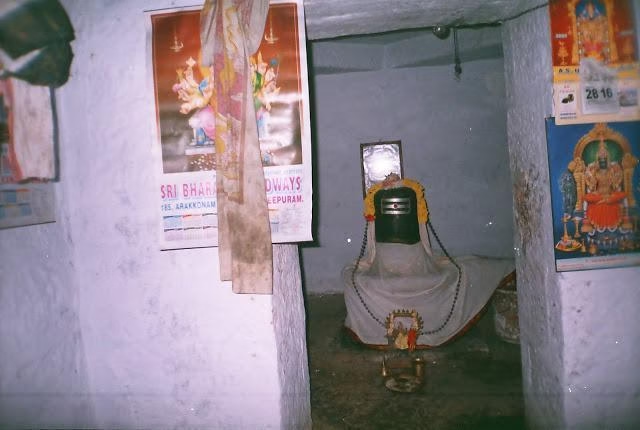
Sooriyeswarar Temple, located in the heart of Kanchipuram (Tamil Nadu), stands as a unique architectural marvel and a significant Navagraha Parihara Sthalam. Unlike many standalone temples, this shrine embodies a distinct spiritual geometry where Lord Shiva, in his form as Sooriyeswarar (The Lord illuminated by the Sun), serves as the healing deity for the solar deity (Surya).
Phalaśruti (Spiritual Benefits): Devotees flock to this temple seeking relief from Graha Dosham (planetary afflictions), particularly those caused by an adverse Sun (Surya) placement in their astrological charts. It is believed that worshipping here cleanses ancestral karma and restores vitality, leadership qualities, and health to the devotee.
2. Historical Origins & Scriptural Legend
According to temple records and local lore, the Sooriyeswarar Temple dates back to the Pallava dynasty (circa 7th–9th century CE), with subsequent renovations during the Chola and Vijayanagara periods. The temple is inextricably linked to the epic Ramayana.
The Legend: Tradition holds that Lord Rama, during his quest to rescue Sita, faced great adversity due to the malefic influence of the Sun God. To pacify the celestial body, Rama established a Shiva Lingam here and performed rigorous penance. The Shiva Lingam emerged from the earth (Swayambhu) and was radiated by the Sun’s rays, hence the name Sooriyeswarar (Shiva who received the Surya Jothi).
Another local legend suggests that Sage Kalika and the Sun God himself worshipped the presiding deity here to attain spiritual liberation.
3. Architectural Marvels
The temple showcases the grandeur of Dravidian architecture, featuring intricate carvings and towering gateways. Key architectural elements include:
- The Sanctum (Garbhagriha): The main shrine houses the Sooriyeswarar Lingam, facing east to catch the first rays of the sun.
- Mandapas: The temple boasts a series of pillared halls featuring sculptures depicting scenes from Hindu mythology. The pillars are carved with miniature representations of deities and mythological figures.
- Navagraha Shrine: A dedicated enclosure for the nine planets, with Surya (Sun) positioned prominently and worshipped with specific rituals.
4. Darshan & Ritual Logistics
Devotees can participate in daily rituals and special Sevas. Below are the typical timings for 2026. (Note: It is advisable to contact the temple administration for any last-minute changes during festival seasons).
Daily Darshan Timings
| Session | Timings | Activity |
|---|---|---|
| Morning | 6:00 AM – 12:00 PM | General Darshan, Abhishekam |
| Afternoon Break | 12:00 PM – 4:00 PM | Temple remains closed |
| Evening | 4:00 PM – 8:00 PM | Darshan, Deeparadhana |
Key Sevas & Online Booking
Sooriya Abhishekam: The most auspicious ritual performed on Sundays.
Archana: Can be performed daily. To book online, devotees can visit the official Tamil Nadu Temple Administration portal (HR&CE) or specific Navagraha booking platforms launching in 2026.
2026 Festival Calendar
- Adi Amavasya: July 23, 2026 (Special Pooja for Ancestors)
- Rathasapthami: February 4, 2026 (Major festival for Surya)
- Sivarathri: February 26, 2026 (Night-long vigil)
5. Practical Visitor Guidance
To ensure a serene spiritual experience:
- Dress Code: Traditional attire is mandatory. Men should wear Dhoti or Pants with a shirt; Women should wear Saree, Salwar Kameez, or Half-Saree.
- Photography: Strictly prohibited inside the inner sanctum.
- Accessibility: The temple complex has uneven steps; elderly visitors are advised to use the side rails. Mobile lockers are available near the entrance for keeping bags and electronics.
Crowd Management Tips
Best Hours: Weekday mornings between 7:00 AM and 8:30 AM offer the least crowd.
Seasonal Advice: Kanchipuram gets hot in May and June. Carry a water bottle and wear light cotton clothes. Monsoons (October–December) bring cool breezes but occasional rain; an umbrella is recommended.
6. Pilgrimage Connectivity
How to Reach
- By Air: The nearest airport is Chennai International Airport (KMA), located approximately 70 km away.
- By Train: Kanchipuram Railway Station is the nearest railhead, well-connected to Chennai and Chengalpattu. The temple is a short auto-rickshaw ride from the station.
- By Road: Kanchipuram lies on NH 48 (Chennai-Bangalore Highway). Buses frequently ply from Chennai and Vellore.
Nearby Sacred Sites
Encourage a pilgrimage circuit by visiting these nearby temples:
- Ekambareswarar Temple: Dedicated to Lord Shiva as the Lord of Earth (Prithvi Lingam).
- Kailasanathar Temple: The oldest structural temple in Kanchipuram, built by the Pallavas.
- Varadharaja Perumal Temple: A Vishnu temple showcasing architectural brilliance similar to this shrine.
7. Frequently Asked Questions (FAQ)
What is the significance of the Sooriyeswarar Temple?
The temple is a Navagraha Parihara Sthalam specifically dedicated to mitigating the ill effects of the Sun (Surya) in one’s horoscope. It is unique because the Shiva Lingam here is believed to have been worshipped by the Sun God himself.
Is there a VIP darshan entry available?
Yes, the temple administration provides a special entry darshan for elderly citizens and differently-abled visitors. VIP tickets can often be booked through the Tamil Nadu Tourism Department app.
What are the parking facilities like?
Limited parking is available near the temple entrance on Damal War Street. During festivals, parking is available at the Kanchipuram Bus Stand complex (1 km away).
Can I perform Rudra Abhishekam for Surya Dosha?
Absolutely. Rudra Abhishekam performed on Sundays or during Rathasapthami is considered highly potent for Surya Dosha remedy. Booking in advance is required.
Is the temple open throughout the year?
Yes, the temple remains open year-round. However, timings may vary slightly during major Tamil festivals like Diwali and Pongal.

How to Reach
Contact Details
Official Address: Damal War Street, Kanchipuram, Tamil Nadu 600001.
Recent Posts

Shri Kaamkoteeshwar Mandir, Varanasi – History & Significance
In the heart of Kashi, the eternal city of Lord Shiva, where the Ganges flows with celestial grace, stands the Shri Kaamkoteeshwar Mandir. This sacred Sannidhi is not merely a temple but a profound spiritual bridge between the Northern…

ओ सांवरे तूने ही मुझको संभाला – Lyrics & Meaning
ओ सांवरे तूने ही मुझको संभाला – A Prayer to Shyam Origin & Spiritual Essence Why This Bhajan Resonates Devotees chant this when overwhelmed by life’s storms—the refrain ‘तूने ही मुझको संभाला’ is the soul’s sigh of relief: “You…

कथा ये है महाराज मेरे की – Lyrics & Meaning
कथा ये है महाराज मेरे की छत्रपति संभाजी महाराज – A Prayer to Chhatrapati Sambhaji Maharaj Origin & Spiritual Essence Why This Bhajan Resonates Devotees chant this when their spirit feels tested—its powerful refrain “महाराज मेरे” is a soul’s…

Rigveda Samhita Yathartha Anuvada (ऋग्वेद संहिता यथार्थ अनुवाद) – Complete Set with Anvayartha & Hindi/English Translation
The Rigveda is the oldest surviving scripture of humanity and the foundational text of Sanātana Dharma. For serious students, scholars, UPSC aspirants studying ancient Indian history, Sanskrit learners, and spiritual seekers, a precise and grammatically structured translation is indispensable.…

आना भी अकेला है जाना भी अकेला है – Lyrics & Meaning | BharatTemples
आना भी अकेला है जाना भी अकेला है – A Prayer to the Divine Witness Origin & Spiritual Essence Why This Bhajan Resonates Devotees turn to this bhajan in moments of deep reflection—when life’s attachments begin to ache. The…

माता शेरावाली के द्वार जो भी जाता है – Lyrics & Meaning
माता शेरावाली के द्वार जो भी जाता है – A Prayer to Maa Sherawali Origin & Spiritual Essence Why This Bhajan Resonates Devotees turn to this bhajan in times of fear or uncertainty—its promise that no one leaves Maa’s…

मार लेना सपणी उबार लेणा भवरा – Lyrics & Meaning
मार लेना सपणी उबार लेणा भवरा – A Prayer to the Divine Beloved Origin & Spiritual Essence Why This Bhajan Resonates Devotees chant this in moments of deep vulnerability—its cry of “मार लेना सपणी, उबार लेणा भवरा” is the…

हमें श्याम सुंदर भरोसा तुम्हारा – Lyrics & Meaning
हमें श्याम सुंदर भरोसा तुम्हारा – A Prayer to Shyam Sundar Origin & Spiritual Essence Why This Bhajan Resonates Devotees chant this when feeling alone—its refrain ‘de do sahara’ is the soul’s cry for divine support. Lyrics in Hindi…

Mere Satguru Ne Di Thi Davai Lyrics in Hindi & Meaning
Mere Satguru Ne Di Thi Davai: Invoking the Guru’s Liberating Wisdom This soul-stirring bhajan venerates the Satguru (True Spiritual Master) as the divine physician who dispenses the only remedy for life’s deepest sufferings. Composed by Sant Karmaveer Tufani, it…

Janm Diyo Thari Maa Dukh Dekhiyo Lyrics in Hindi & Meaning
जन्म दियो थारी माँ दुख देखियो (Maa’s Grief Upon Birthing You) This soul-stirring Chetavani Bhajan (admonitory hymn) is addressed to the Divine Mother (Maa) – a call for repentance when children forget their filial duties in the dark age…