
Contents
- 1 Introduction & Spiritual Essence: The Serenity of Arasaleeswarar
- 2 Historical Origins & Scriptural Legend: The Curse of Sage Vamadeva
- 3 Architectural Marvels: Chalukyan Grandeur in Tamil Nadu
- 4 Photo Gallery
- 5 Darshan & Ritual Logistics
- 6 Practical Visitor Guidance
- 7 Pilgrimage Connectivity: How to Reach
- 8 Address
Introduction & Spiritual Essence: The Serenity of Arasaleeswarar
Nestled in the quiet village of Ozhindiyapattu, roughly 15 kilometers from the coastal town of Puducherry, stands the Sri Arasaleeswarar Temple. Dedicated to Lord Shiva, this ancient shrine offers a profound spiritual retreat for devotees seeking solace from the chaos of modern life. The primary deity, Arasaleeswarar (a form of Lord Shiva), is revered as the Ishwar (Supreme Ruler) who resides beneath the sacred Arasu (Peepal) tree.
For the devoted pilgrim, this temple is not merely a stone structure but a powerful center for cleansing ancestral karma and liberating the soul from the cycle of rebirth. According to Phalaśruti (scriptural promises of merit), worshipping the Swayambhu (self-manifested) Lingam here is believed to bestow mental clarity, healing from ailments, and the ultimate grace of Moksha. The serene atmosphere of the Arasu grove surrounding the temple enhances the meditative qualities of the space, making it a potent spot for Dhyana (meditation).
Historical Origins & Scriptural Legend: The Curse of Sage Vamadeva
The history of the Sri Arasaleeswarar Temple is a blend of dynastic patronage and divine intervention. According to temple records, the structure was initially erected by the Chalukya dynasty. The Chalukyas, primarily known for their influence in Deccan India, left architectural imprints in the Tamil region through their alliances and trade routes. While the primary construction dates back centuries, the temple has undergone necessary renovations to preserve its sanctity while retaining its ancient soul.
The Sthala Purana: Vamadeva’s Sanctuary
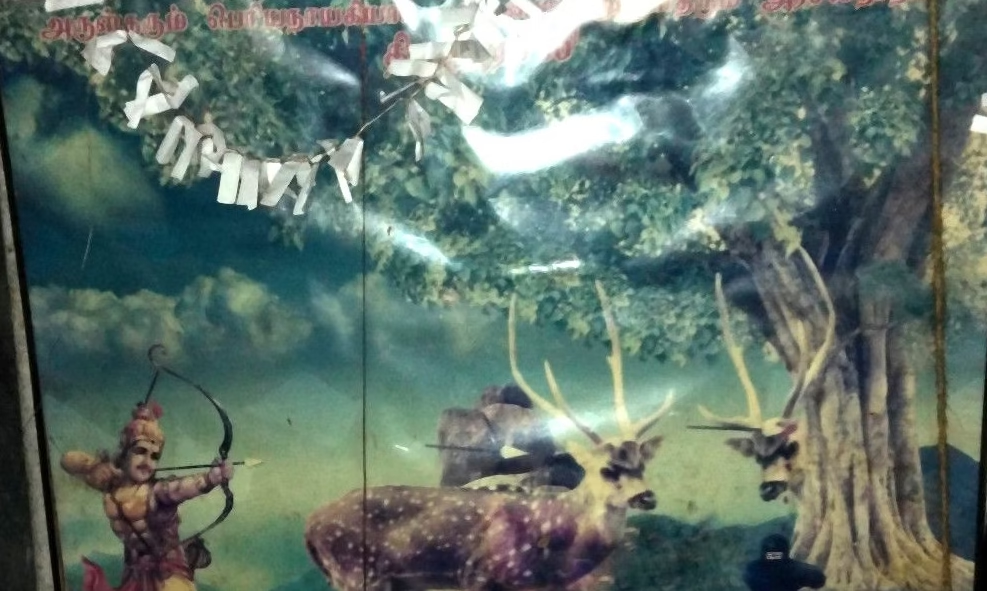
Tradition holds that the great Sage Vamadeva, one of the seers who compiled the Rigveda, was suffering from a dire curse. Seeking relief, he traveled across Bharat, visiting numerous Shiva Sthalams. When he arrived at this specific location, he paused to rest beneath a magnificent Arasu (Peepal) tree. Mesmerized by the divine aura and the serene atmosphere of the grove, the sage felt an overwhelming desire to have a temple for Lord Shiva established at that very spot.
It is believed that the Lingam worshipped by Sage Vamadeva is the same Swayambhu Lingam present today. The temple thus stands as a testament to the power of devotion over worldly curses, offering a sanctuary where the divine energy of the sage and the Lord merge.
Architectural Marvels: Chalukyan Grandeur in Tamil Nadu
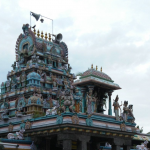
The Sri Arasaleeswarar Temple is a distinctive example of how North Indian Nagara style influences (brought by the Chalukyas) blend with the traditional Dravida styles of Tamil Nadu. While the temple features a modest footprint, its architectural elements are precise and spiritually aligned.
Structure and Vastu
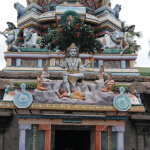
The temple is East-facing, a vital Vastu Shastra principle that allows the first rays of the sun to illuminate the inner sanctum, infusing the deity with solar energy. The Rajagopuram (main tower) is compact yet elegant, designed to draw the eye inward toward the sanctum. Unlike massive temple complexes, Arasaleeswarar is defined by a single corridor (Prakaram) that circles the main shrine, maintaining an intimate connection between the devotee and the divine.
Sculpture and Sanctity
Within the Mandapa (hall), the pillars showcase intricate carvings that reflect the mastery of the artisans of the era. The sanctum houses the Swayambhu Lingam, facing east. To the left of the main shrine is the shrine for Goddess Periyanayagi (Parvati), who faces south. The presence of the ancient Peepal tree within the temple complex adds a living, organic dimension to the stone architecture, symbolizing the connection between the terrestrial and the celestial.
Photo Gallery
Darshan & Ritual Logistics
Visiting Sri Arasaleeswarar Temple requires adherence to specific timings to align with the daily liturgical cycles. Below are the standard daily darshan timings. Note: Timings may vary slightly on festival days.
Daily Timings
| Period | Timing |
|---|---|
| Morning Darshan | 6:00 AM – 11:00 AM |
| Midday Closure | 11:00 AM – 4:30 PM |
| Evening Darshan | 4:30 PM – 8:00 PM |
| Pooja / Rituals | Morning & Evening |
Key Sevas and Online Booking
Devotees can participate in various Sevas (offerings) to deepen their spiritual experience:
- Abhishekam: Ritual bathing of the deity with water, milk, honey, and sandalwood paste. Performed on Mondays and during festival days.
- Archana: Personalized chanting of names and attributes of the Lord. Available daily during darshan hours.
- Rudra Abhishekam: A powerful Vedic ritual performed for overall well-being.
While physical booking is available at the temple counter, the Tamil Nadu Hindu Religious and Charitable Endowments (HR&CE) Board often facilitates online booking for major rituals. Pilgrims are advised to check the official HR&CE portal for online seva booking availability.
2026 Major Festivals
- Pradosham: Bi-monthly rituals (13th and 28th of every month).
Specific dates in 2026: Jan 11, Jan 26, Feb 9, Feb 25, etc. - Mahashivratri: March 17, 2026 (Grand celebration with night-long vigils).
- Arudra Darshan: January 10, 2026 (Celebrating the cosmic dance of Shiva).
- Navaratri: September 22 – October 1, 2026 (Special decorations for Goddess Periyanayagi).
Practical Visitor Guidance
To ensure a smooth and respectful pilgrimage, please observe the following guidelines:
Etiquette and Rules
- Dress Code: Traditional attire is mandatory. Men should wear Dhoti or trousers with a shirt; women should wear saree, salwar kameez, or long skirts. Avoid shorts and sleeveless tops.
- Photography: Photography is generally restricted inside the inner sanctum (Garbhagriha). Flash photography is prohibited during rituals.
- Mobiles & Lockers: Use of mobile phones inside the sanctum is strictly banned. While there are no high-tech lockers, it is advisable to carry minimal belongings.
- Accessibility: The temple has a single corridor. While generally flat, there are no specialized ramps for wheelchairs; assistance may be required for those with mobility issues.
Crowd Management and Seasonal Advice
- Best Hours: The ideal time for a peaceful Darshan is early morning (6:00 AM – 7:30 AM) or right upon reopening in the evening.
- Seasonal Tips: Puducherry experiences humid weather. In summer (May), carry a water bottle and a head covering. During the monsoon (October–November), carry an umbrella as the courtyard is open to the elements.
- Local Transport: Auto-rickshaws are the most common mode from Morattandi to the temple. Private cars can be parked on the road near the temple entrance.
Pilgrimage Connectivity: How to Reach
The temple is located in Ozhindiyapattu village in Vanur Taluk.
Travel Routes
- From Puducherry: Take the Puducherry to Tindivanam route (NH-332). Travel approximately 15 kms. After crossing Morattandi, take the small right turn leading to Ozhindiyapattu village. Proceed 1.5 kms down this road to reach the temple.
- Nearest Airport: Puducherry Airport (PNY) is roughly 20 km away. Alternatively, Chennai International Airport (MAA) is about 150 km away.
- Nearest Railway Station: Puducherry Railway Station (17 km) or Mailam Railway Station (closer but limited connectivity).
Nearby Sacred Sites (Pilgrimage Circuit)
When visiting the region, devotees are encouraged to visit the nearby Paadal Petra Sthalams (temples revered in the Tevaram hymns):
- Kiliyanur Temple: Located nearby, dedicated to Shiva as Gnanapureeswarar.
- Irumbai Maakaalam Temple: A significant Shiva temple also in the vicinity.
- Morattandi: Home to the famous Moolanathar Temple (Venugopala Swamy Temple), known for its unique architectural blend.
Frequently Asked Questions (FAQ)
1. Is there a VIP Darshan entry available?
As a smaller village temple, Sri Arasaleeswarar Temple does not have a formal VIP queue system like major mega-temple complexes. However, special entry can be arranged for large groups or those performing specific Archana by coordinating with the temple caretaker in advance.
2. Are there accommodation facilities near the temple?
There are no hotels within Ozhindiyapattu village. For comfortable stay options, pilgrims should book accommodation in Puducherry (15 km away) or in Vanur (closer).
3. What is the significance of the Peepal tree in this temple?
The temple is named Arasaleeswarar because the Lord is believed to reside under the Arasu (Peepal) tree. In Vedic tradition, the Peepal tree houses the Trinity—Brahma (roots), Vishnu (trunk), and Shiva (leaves). Worshipping here acknowledges this unified cosmic presence.
4. Is non-vegetarian food allowed near the temple?
Strictly no. Being a Hindu temple complex, the premises are vegetarian. Alcohol and smoking are prohibited within the temple vicinity.
5. How can I contact the temple administration?
For inquiries regarding rituals or timings, you may contact the temple landline:
Address
Ozhindiapattu, Vanur Taluk
Villupuram District
Tamil Nadu – 605 109.
Recent Posts

ओ सांवरे तूने ही मुझको संभाला – Lyrics & Meaning
ओ सांवरे तूने ही मुझको संभाला – A Prayer to Shyam Origin & Spiritual Essence Why This Bhajan Resonates Devotees chant this when overwhelmed by life’s storms—the refrain ‘तूने ही मुझको संभाला’ is the soul’s sigh of relief: “You…

कथा ये है महाराज मेरे की – Lyrics & Meaning
कथा ये है महाराज मेरे की छत्रपति संभाजी महाराज – A Prayer to Chhatrapati Sambhaji Maharaj Origin & Spiritual Essence Why This Bhajan Resonates Devotees chant this when their spirit feels tested—its powerful refrain “महाराज मेरे” is a soul’s…

Rigveda Samhita Yathartha Anuvada (ऋग्वेद संहिता यथार्थ अनुवाद) – Complete Set with Anvayartha & Hindi/English Translation
The Rigveda is the oldest surviving scripture of humanity and the foundational text of Sanātana Dharma. For serious students, scholars, UPSC aspirants studying ancient Indian history, Sanskrit learners, and spiritual seekers, a precise and grammatically structured translation is indispensable.…

आना भी अकेला है जाना भी अकेला है – Lyrics & Meaning | BharatTemples
आना भी अकेला है जाना भी अकेला है – A Prayer to the Divine Witness Origin & Spiritual Essence Why This Bhajan Resonates Devotees turn to this bhajan in moments of deep reflection—when life’s attachments begin to ache. The…

माता शेरावाली के द्वार जो भी जाता है – Lyrics & Meaning
माता शेरावाली के द्वार जो भी जाता है – A Prayer to Maa Sherawali Origin & Spiritual Essence Why This Bhajan Resonates Devotees turn to this bhajan in times of fear or uncertainty—its promise that no one leaves Maa’s…

मार लेना सपणी उबार लेणा भवरा – Lyrics & Meaning
मार लेना सपणी उबार लेणा भवरा – A Prayer to the Divine Beloved Origin & Spiritual Essence Why This Bhajan Resonates Devotees chant this in moments of deep vulnerability—its cry of “मार लेना सपणी, उबार लेणा भवरा” is the…

हमें श्याम सुंदर भरोसा तुम्हारा – Lyrics & Meaning
हमें श्याम सुंदर भरोसा तुम्हारा – A Prayer to Shyam Sundar Origin & Spiritual Essence Why This Bhajan Resonates Devotees chant this when feeling alone—its refrain ‘de do sahara’ is the soul’s cry for divine support. Lyrics in Hindi…

Mere Satguru Ne Di Thi Davai Lyrics in Hindi & Meaning
Mere Satguru Ne Di Thi Davai: Invoking the Guru’s Liberating Wisdom This soul-stirring bhajan venerates the Satguru (True Spiritual Master) as the divine physician who dispenses the only remedy for life’s deepest sufferings. Composed by Sant Karmaveer Tufani, it…

Janm Diyo Thari Maa Dukh Dekhiyo Lyrics in Hindi & Meaning
जन्म दियो थारी माँ दुख देखियो (Maa’s Grief Upon Birthing You) This soul-stirring Chetavani Bhajan (admonitory hymn) is addressed to the Divine Mother (Maa) – a call for repentance when children forget their filial duties in the dark age…

Bhadi Sabha Mein Thane Manaun Lyrics in Hindi & Meaning
Bhadi Sabha Mein Thane Manaun: Invoking the Spear-Wielding Mother Mata Bhawani (श्री ज्वाला भवानी), the fiery manifestation of Shakti worshipped as the Protector of Dharma in Her Dhaulagarh sanctum. Origin & Spiritual Essence Composed in Rajasthani folk tradition by…