
Contents
- 1 Introduction & Spiritual Essence
- 2 Historical Origins & Scriptural Legend
- 3 Architectural Marvels
- 4 Darshan & Ritual Logistics (2026 Schedule)
- 5 Practical Visitor Guidance
- 6 Pilgrimage Connectivity
- 7 Frequently Asked Questions (FAQ)
- 7.1 1. Is there a VIP darshan entry available?
- 7.2 2. Are there accommodation facilities near the temple?
- 7.3 3. What is the significance of the Subramanya Swamy with a single peacock?
- 7.4 4. Is the temple accessible for senior citizens and differently-abled visitors?
- 7.5 5. Can non-Hindus visit the temple?
Introduction & Spiritual Essence
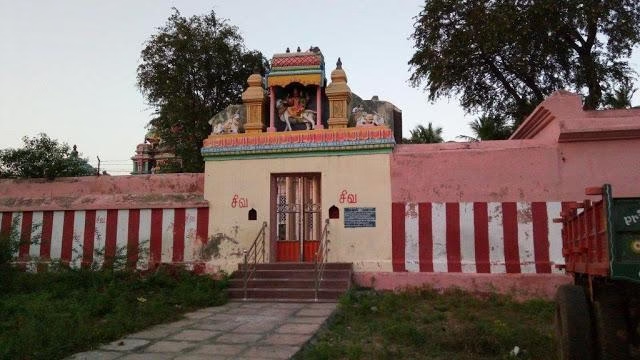
The Sundareswarar Temple, located in the serene village of Thinniyam in the Trichy district, is a sacred haven dedicated to Lord Shiva. Known locally as the Thinniyam Sundareswarar Temple, this east-facing shrine stands as a testament to unwavering faith and architectural simplicity. The primary deity, Sundareswarar (a form of Shiva representing divine beauty), is enshrined in the sanctum sanctorum, facing east. The presiding Goddess, Meenakshi Amman (also revered as Periya Nayagi), faces south.
What makes this temple unique is the presence of Subramanya Swamy (Murugan) accompanied by Valli and Deivayanai, mounted on a single peacock. This specific iconographic representation is rare and highly revered. According to local belief, the temple possesses potent spiritual energy capable of fulfilling the sincere wishes of devotees. It is particularly known for blessing devotees with relief from prolonged ailments and obstacles in life.
Phalaśruti: Why Visit Sundareswarar Temple?
- Fulfillment of Vows: Tradition holds that devotees who perform specific rituals here with a pure heart see their desires manifested.
- Ancestral Karma Cleansing: The temple is believed to hold energies that help in pacifying ancestral issues, particularly through rituals performed for ancestors.
- Planetary Relief: The presence of Dhakshinamoorthy and the specific alignment of the temple are believed to mitigate the ill effects of planetary alignments (Graha Dosha).
Historical Origins & Scriptural Legend
While the exact date of construction is not explicitly recorded in granite inscriptions, the Sundareswarar Temple, Thinniyam reflects the architectural sensibilities prevalent during the Chola dynasty era, possibly renovated during the Nayak period. The layout and style suggest deep historical roots, possibly dating back over a millennium.
The Legend of Thinniyam
According to local oral tradition (Sthala Purana), the village of Thinniyam is considered a “Prana Kshetram“—a power center vital for the life force of the region. Legend says that Lord Shiva appeared as Sundareswarar to bless sages meditating in this secluded grove. The name “Sundareswarar” translates to “The Lord of Beauty,” signifying the aesthetic and spiritual grace of the form.
Temple records indicate that the temple has undergone several phases of renovation to preserve its structural integrity, ensuring that the ancient Vastu principles remain undisturbed. It is a living heritage site where rituals have been performed without a single day of lapse.
Architectural Marvels
The temple exemplifies the Dravidian style of architecture. It is a compact, east-facing structure enclosed within a modest prakaram (corridor).
Key Architectural Features
- Garbhagriha (Sanctum): The presiding deity, Sundareswarar, is a Swayambhu (self-manifested) Lingam.
- Ardha Mandapa: The pillared hall preceding the sanctum features intricate carvings typical of Dravidian art.
- Niche Sculptures: The outer walls of the sanctum house beautiful niches (Koshtas) depicting various forms of Shiva and Vishnu.
- Subsidiary Shrines: Separate shrines for Vinayaka (Ganesha) and Dhakshinamoorthy (the teacher form of Shiva) are situated within the complex, facing their respective directions.
Unlike massive temple complexes, the Thinniyam temple is designed for intimate darshan, allowing devotees to feel a direct connection with the deities without physical barriers.
Darshan & Ritual Logistics (2026 Schedule)
For a seamless spiritual experience, we recommend planning your visit during the early morning hours. Below are the standard daily timings. Please note that timings may vary slightly on festival days.
Daily Timings
| Session | Timing | Activity |
|---|---|---|
| Morning | 06:00 AM – 12:00 PM | Opening Rituals, Abhishekam, General Darshan |
| Afternoon | 12:00 PM – 04:30 PM | Closed for Rest |
| Evening | 04:30 PM – 08:00 PM | Deeparadhana, Temple Closes |
Key Sevas & Online Booking
Devotees can perform various Sevas (ritual offerings) to the deity. While on-the-spot booking is available, we suggest booking in advance for major festivals.
- Abhishekam: Ritual bathing of the deity with milk, honey, sandalwood paste, and sacred ash. Best performed in the morning.
- Archana: Recitation of the names of the Lord with specific offerings (flowers, vilva leaves).
- Deepa Aradhana: Offering of camphor and ghee lamps.
Note: As of 2026, the temple administration facilitates online bookings for Sevas via the official Tamil Nadu HR&CE portal.
Major Festivals in 2026
- Maha Shivaratri: February 26, 2026. This is the grandest celebration here, featuring all-night chanting and special Abhishekams.
- Arudra Darshanam: January 4, 2026 (Tamil Month Margazhi). Celebrates the cosmic dance of Shiva.
- Navaratri: September 22 – October 1, 2026. The Goddess Meenakshi is adorned with special alankarams.
- Skanda Shashti: October 28, 2026. Dedicated to Lord Subramanya.
Practical Visitor Guidance
To ensure a respectful and hassle-free visit, please adhere to the following guidelines:
Code of Conduct
- Dress Code: Traditional attire is mandatory. Men should wear dhotis or pants with shirts; women should wear sarees, salwar kameez, or long skirts. Avoid shorts and sleeveless tops.
- Photography: Photography is generally prohibited inside the inner sanctum (Garbhagriha). You may take photos of the outer mandapas and architectural details.
- Mobile Phones: Please switch your phone to silent mode. Some temples offer locker facilities, but it is best to travel light.
- Footwear: Remove footwear before entering the temple premises. Designated areas are provided for shoe storage.
Crowd Management & Seasonal Advice
- Best Time to Visit: Early mornings (6:00 AM – 8:00 AM) offer the most peaceful darshan.
- Summer (April – June): Thinniyam can get quite hot. Carry a water bottle, an umbrella, and wear light cotton clothes.
- Monsoon (October – December): Carry a raincoat or umbrella. The village roads can be slippery; wear sturdy footwear.
Pilgrimage Connectivity
The Sundareswarar Temple is well-connected by road, making it an accessible stop on a Trichy district pilgrimage circuit.
How to Reach
- By Road: Thinniyam is located just 350 meters from the main bus stop. It is 11 km from Lalgudi and 26 km from Srirangam. The nearest major highway is the NH 81 (connecting Trichy to Ariyalur).
- Nearest Railway Station: Kattur Railway Station (approx. 7 km) is the closest. Trichy Junction (approx. 33 km) is the major hub for travelers from other cities.
- Nearest Airport: Trichy International Airport (TRZ) is located approximately 38 km away.
Nearby Sacred Sites (Pilgrimage Circuit)
- Thirukkattupalli (12 km): Home to the famous Abiramieswarar Temple and the Jambukeswarar Temple (associated with the element of water).
- Srirangam (26 km): The island temple of Ranganathaswamy, one of the largest functioning temple complexes in the world.
- Anbil (4 km): A historic village known for the Sundareswarar Temple (different from Thinniyam) and Vedic schools.
Frequently Asked Questions (FAQ)
1. Is there a VIP darshan entry available?
Currently, the temple does not have a specific VIP entry gate. However, devotees wishing to perform special Sevas (like Abhishekam) can bypass the general queue during the designated ritual time by purchasing a Seva ticket.
2. Are there accommodation facilities near the temple?
Thinniyam is a small village with limited lodging options. We recommend staying in Trichy or Lalgudi, where numerous hotels and guest houses are available. For pilgrims, the Temple Choultries (Rest Houses) managed by the HR&CE department in Srirangam or Trichy are excellent options.
3. What is the significance of the Subramanya Swamy with a single peacock?
The iconography of Lord Murugan seated on a single peacock with Valli and Deivayanai is a rare feature specific to this region. In many temples, the peacock is shown standing beside the deity or waiting. Here, the deity is mounted on the bird, symbolizing the control over the ego (represented by the peacock) and the union of spiritual and material consorts.
4. Is the temple accessible for senior citizens and differently-abled visitors?
The temple complex is compact and generally level. However, due to its age, there are a few steps leading to the main mandapa. Wheelchair access is possible but may require assistance from family members.
5. Can non-Hindus visit the temple?
While the temple is primarily for Hindu devotees, the management usually allows visitors of all backgrounds to view the exterior architecture and gardens. Entry into the sanctum sanctorum for darshan is restricted to those who practice the Hindu faith.
Recent Posts

Shri Kaamkoteeshwar Mandir, Varanasi – History & Significance
In the heart of Kashi, the eternal city of Lord Shiva, where the Ganges flows with celestial grace, stands the Shri Kaamkoteeshwar Mandir. This sacred Sannidhi is not merely a temple but a profound spiritual bridge between the Northern…

ओ सांवरे तूने ही मुझको संभाला – Lyrics & Meaning
ओ सांवरे तूने ही मुझको संभाला – A Prayer to Shyam Origin & Spiritual Essence Why This Bhajan Resonates Devotees chant this when overwhelmed by life’s storms—the refrain ‘तूने ही मुझको संभाला’ is the soul’s sigh of relief: “You…

कथा ये है महाराज मेरे की – Lyrics & Meaning
कथा ये है महाराज मेरे की छत्रपति संभाजी महाराज – A Prayer to Chhatrapati Sambhaji Maharaj Origin & Spiritual Essence Why This Bhajan Resonates Devotees chant this when their spirit feels tested—its powerful refrain “महाराज मेरे” is a soul’s…

Rigveda Samhita Yathartha Anuvada (ऋग्वेद संहिता यथार्थ अनुवाद) – Complete Set with Anvayartha & Hindi/English Translation
The Rigveda is the oldest surviving scripture of humanity and the foundational text of Sanātana Dharma. For serious students, scholars, UPSC aspirants studying ancient Indian history, Sanskrit learners, and spiritual seekers, a precise and grammatically structured translation is indispensable.…

आना भी अकेला है जाना भी अकेला है – Lyrics & Meaning | BharatTemples
आना भी अकेला है जाना भी अकेला है – A Prayer to the Divine Witness Origin & Spiritual Essence Why This Bhajan Resonates Devotees turn to this bhajan in moments of deep reflection—when life’s attachments begin to ache. The…

माता शेरावाली के द्वार जो भी जाता है – Lyrics & Meaning
माता शेरावाली के द्वार जो भी जाता है – A Prayer to Maa Sherawali Origin & Spiritual Essence Why This Bhajan Resonates Devotees turn to this bhajan in times of fear or uncertainty—its promise that no one leaves Maa’s…

मार लेना सपणी उबार लेणा भवरा – Lyrics & Meaning
मार लेना सपणी उबार लेणा भवरा – A Prayer to the Divine Beloved Origin & Spiritual Essence Why This Bhajan Resonates Devotees chant this in moments of deep vulnerability—its cry of “मार लेना सपणी, उबार लेणा भवरा” is the…

हमें श्याम सुंदर भरोसा तुम्हारा – Lyrics & Meaning
हमें श्याम सुंदर भरोसा तुम्हारा – A Prayer to Shyam Sundar Origin & Spiritual Essence Why This Bhajan Resonates Devotees chant this when feeling alone—its refrain ‘de do sahara’ is the soul’s cry for divine support. Lyrics in Hindi…

Mere Satguru Ne Di Thi Davai Lyrics in Hindi & Meaning
Mere Satguru Ne Di Thi Davai: Invoking the Guru’s Liberating Wisdom This soul-stirring bhajan venerates the Satguru (True Spiritual Master) as the divine physician who dispenses the only remedy for life’s deepest sufferings. Composed by Sant Karmaveer Tufani, it…

Janm Diyo Thari Maa Dukh Dekhiyo Lyrics in Hindi & Meaning
जन्म दियो थारी माँ दुख देखियो (Maa’s Grief Upon Birthing You) This soul-stirring Chetavani Bhajan (admonitory hymn) is addressed to the Divine Mother (Maa) – a call for repentance when children forget their filial duties in the dark age…