
Contents
- 1 Introduction & Spiritual Essence: The Eternal Abode of Shiva
- 2 Historical Origins & Scriptural Legend
- 3 Architectural Marvels: Kerala Style & Vastu
- 4 Darshan & Ritual Logistics (2026 Updates)
- 5 Practical Visitor Guidance
- 6 Pilgrimage Connectivity
- 7 Frequently Asked Questions (FAQ)
- 8 Photo Gallery
- 9 Contact Details
Introduction & Spiritual Essence: The Eternal Abode of Shiva
Nestled in the ancient port city of Kodungallur, Thrissur, the Thiruvanchikulam Mahadeva Temple stands as a timeless witness to Kerala’s spiritual history. Known locally as Thiruvanchaikkalam Temple, this shrine is dedicated to Lord Shiva, worshipped here as Mahadeva, and his consort Parvathi as Umadevi. Unlike many temples, the sanctum houses a Swayambhu (self-manifested) lingam, adding to its mystical aura.
Phalaśruti (Spiritual Benefits): Why do devotees flock here? The temple is revered as the Paadal Petra Sthalam of Kerala, mentioned in the 7th-century Tamil Saiva canon, the Tevaram. Devotees believe that a darshan here cleanses ancestral karma and blesses couples with a harmonious married life. It is the only temple in Kerala listed in the 276 revered Shiva shrines of the Nayanmars, making it a spiritual bridge between the Dravidian North and South.
Historical Origins & Scriptural Legend
Chera Dynasty Roots: According to temple records, the structure was originally built during the Chera period in the 8th century (9th-century construction). It stands on the grounds of the ancient Chera capital, Mahodayapuram, which was fortified around the temple. The temple is maintained by the Thiruvanchikulam Devaswom under the Cochin Devaswom Board.
The Legend of Sundara Murthi Nayanar: Tradition holds that this is the celestial departure point of Sundara Murthi Nayanar, one of the four great Saiva Acharyas. On the day of Adi Swathi (July/August), he is said to have ascended to Kailash sitting on a white elephant sent by Shiva. The temple is intrinsically linked to the Cochin Royal Family (Perumpadapu Swaroopam), who considered Shiva their family deity after the decline of the Cheras.
Conflict and Resilience: The temple faced destruction during Tipu Sultan’s invasion in the 18th century, where the copper roofing and treasures were looted. It was subsequently rebuilt by the Paliath Achan of Kochi, preserving its sanctity for future generations.
Architectural Marvels: Kerala Style & Vastu
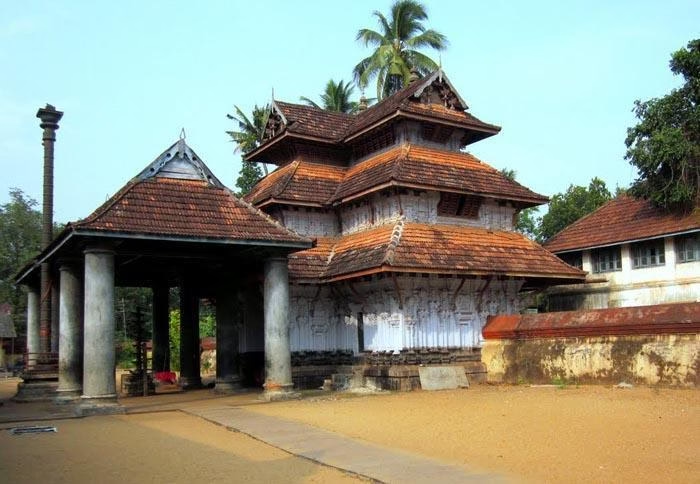
Constructed in the distinct Kerala Style of Architecture, the temple is a marvel of Vastu Shastra. The sanctum (Sreekovil) occupies the fortified center, approached through an axial flagstaff and entrance tower.
- The Namaskara Mandapam: A major highlight is the pavilion in front of the sanctum, featuring 16 pillars. This intricate wooden structure is typical of Kerala temple art.
- Sculptures & Murals: The Vimana (tower over the sanctum) features a carving of Lord Narasimha. The temple houses exceptional mural paintings, earning it protected monument status by the Archaeological Survey of India (ASI).
- Temple Tanks: Two sacred tanks (Kulams) are located in the second precinct, essential for ritual purification before darshan.
Darshan & Ritual Logistics (2026 Updates)
The temple follows a strict ritual schedule. Four daily rituals and three annual festivals are conducted. Note that the temple remains open full-day during festival dates.
Daily Timings
| Session | Timing | Status |
|---|---|---|
| Morning Darshan | 4:00 AM – 12:00 PM | Open |
| Afternoon Break | 12:00 PM – 4:00 PM | Closed |
| Evening Darshan | 4:00 PM – 8:30 PM | Open |
| Festival Days | Full Day (4:00 AM – 9:00 PM) | Varies |
Key Sevas & Online Booking
Devotees can perform various sevas to seek blessings. While online seva booking is managed via the Cochin Devaswom Board portal, tickets are also available at the counter.
- Abhishekam: Ritual bathing of the Shiva Lingam (Highly recommended on Mondays).
- Archana: Chanting of hymns specific to the deity.
- Palliyara Pujas: Held just before temple closure in the evening, specifically on full moon nights (Pournami). Devotees pray for marital bliss and progeny.
- Deeparadhana: The offering of lamps.
2026 Major Festival Dates
- Vaikasi Brahmotsavam (10-Day Festival): May 13 – May 22, 2026. This is the most prominent festival, celebrating the deity with grandeur.
- Adi Swathi (Sundara Murthi Nayanar Samadhi): July 23 – July 24, 2026. The day of the white elephant procession.
- Maha Shivaratri: February 26, 2026. Celebrated with special Palliyara Pujas and night-long vigils.
Practical Visitor Guidance
To ensure a smooth and respectful darshan experience:
- Dress Code: Traditional attire is mandatory. Men should wear Mundu or dhoti (no shirts inside the sanctum). Women should wear sarees or full-length skirts.
- Photography & Mobiles: Photography is strictly prohibited inside the sanctum and inner corridors. Use the mobile lockers provided near the entry for electronic devices.
- Crowd Management: The best time to visit is between 9:00 AM and 11:00 AM on weekdays to avoid crowds. During summer (May), carry water and an umbrella as the queue can be exposed to sunlight.
- Accessibility: The temple complex has stone steps. Wheelchair access is available for the ground level, but the inner sanctum may be challenging for those with mobility issues.
Pilgrimage Connectivity
The temple is strategically located on the Kodungallur-Ernakulam Highway (SH-62), making it highly accessible.
How to Reach
- Nearest Airport: Cochin International Airport (COK) is approximately 40 km away. Taxis and app-based cabs are readily available.
- Nearest Railway Station: Kodungallur Railway Station (approx. 2 km). Alternatively, Ernakulam South is 20 km away.
- By Road: The temple is located just 6 km from the center of Kodungallur. Buses run frequently from Thrissur and Ernakulam to Kottappuram.
Nearby Sacred Sites (Pilgrimage Circuit)
- Kottiyoor Temple: Located roughly 60 km north, famous for the annual Vavu Bali ritual.
- Kodungallur Bhagavathy Temple: Just 4 km away, this fierce Goddess temple is linked by mythology to the Shiva temple.
- Vadakkunnathan Temple (Thrissur): The UNESCO World Heritage site is 35 km away, completing a rich heritage trail.
Frequently Asked Questions (FAQ)
Is there a VIP darshan entry at Thiruvanchikulam Temple?
Yes, the temple offers a ‘Quick Darshan’ ticket option for a nominal fee during peak hours and festivals. However, during regular days, the queue moves relatively quickly, making a special ticket unnecessary for most visitors.
Why is this temple unique in Kerala?
It is the only temple in Kerala mentioned in the Tevaram, the 7th-century Tamil devotional canon by the Nayanmars. This gives it the status of a Paadal Petra Sthalam, placing it on the same spiritual map as famous Tamil Nadu temples like Chidambaram.
What is the significance of the 16-pillar Mandapam?
The Namaskara Mandapam with 16 pillars is architecturally significant as it reflects the zenith of Kerala woodwork. Each pillar is carved with intricate designs and is used for ritual offerings and processions. It stands immediately in front of the Sreekovil.
Can we visit Kodungallur Bhagavathy Temple on the same day?
Absolutely. The Kodungallur Bhagavathy Temple is only 4 km (15 minutes) from Thiruvanchikulam. It is recommended to visit in the morning and travel to Thiruvanchikulam for the evening darshan.
Is the temple open for all religions?
Like most ancient Hindu temples in Kerala, entry is generally restricted to Hindus. Non-Hindus may visit the outer precincts and the temple tank, but entry into the main sanctum is permitted only for those following Hinduism.
Photo Gallery
Contact Details
Office Address:
Thiruvanchikulam Devaswom,
Kodungallur – Ernakulam Highway,
Kottappuram, Kodungallur,
Thrissur, Kerala 680664.
Phone: 04802812061
Recent Posts

Shri Kaamkoteeshwar Mandir, Varanasi – History & Significance
In the heart of Kashi, the eternal city of Lord Shiva, where the Ganges flows with celestial grace, stands the Shri Kaamkoteeshwar Mandir. This sacred Sannidhi is not merely a temple but a profound spiritual bridge between the Northern…

ओ सांवरे तूने ही मुझको संभाला – Lyrics & Meaning
ओ सांवरे तूने ही मुझको संभाला – A Prayer to Shyam Origin & Spiritual Essence Why This Bhajan Resonates Devotees chant this when overwhelmed by life’s storms—the refrain ‘तूने ही मुझको संभाला’ is the soul’s sigh of relief: “You…

कथा ये है महाराज मेरे की – Lyrics & Meaning
कथा ये है महाराज मेरे की छत्रपति संभाजी महाराज – A Prayer to Chhatrapati Sambhaji Maharaj Origin & Spiritual Essence Why This Bhajan Resonates Devotees chant this when their spirit feels tested—its powerful refrain “महाराज मेरे” is a soul’s…

Rigveda Samhita Yathartha Anuvada (ऋग्वेद संहिता यथार्थ अनुवाद) – Complete Set with Anvayartha & Hindi/English Translation
The Rigveda is the oldest surviving scripture of humanity and the foundational text of Sanātana Dharma. For serious students, scholars, UPSC aspirants studying ancient Indian history, Sanskrit learners, and spiritual seekers, a precise and grammatically structured translation is indispensable.…

आना भी अकेला है जाना भी अकेला है – Lyrics & Meaning | BharatTemples
आना भी अकेला है जाना भी अकेला है – A Prayer to the Divine Witness Origin & Spiritual Essence Why This Bhajan Resonates Devotees turn to this bhajan in moments of deep reflection—when life’s attachments begin to ache. The…

माता शेरावाली के द्वार जो भी जाता है – Lyrics & Meaning
माता शेरावाली के द्वार जो भी जाता है – A Prayer to Maa Sherawali Origin & Spiritual Essence Why This Bhajan Resonates Devotees turn to this bhajan in times of fear or uncertainty—its promise that no one leaves Maa’s…

मार लेना सपणी उबार लेणा भवरा – Lyrics & Meaning
मार लेना सपणी उबार लेणा भवरा – A Prayer to the Divine Beloved Origin & Spiritual Essence Why This Bhajan Resonates Devotees chant this in moments of deep vulnerability—its cry of “मार लेना सपणी, उबार लेणा भवरा” is the…

हमें श्याम सुंदर भरोसा तुम्हारा – Lyrics & Meaning
हमें श्याम सुंदर भरोसा तुम्हारा – A Prayer to Shyam Sundar Origin & Spiritual Essence Why This Bhajan Resonates Devotees chant this when feeling alone—its refrain ‘de do sahara’ is the soul’s cry for divine support. Lyrics in Hindi…

Mere Satguru Ne Di Thi Davai Lyrics in Hindi & Meaning
Mere Satguru Ne Di Thi Davai: Invoking the Guru’s Liberating Wisdom This soul-stirring bhajan venerates the Satguru (True Spiritual Master) as the divine physician who dispenses the only remedy for life’s deepest sufferings. Composed by Sant Karmaveer Tufani, it…

Janm Diyo Thari Maa Dukh Dekhiyo Lyrics in Hindi & Meaning
जन्म दियो थारी माँ दुख देखियो (Maa’s Grief Upon Birthing You) This soul-stirring Chetavani Bhajan (admonitory hymn) is addressed to the Divine Mother (Maa) – a call for repentance when children forget their filial duties in the dark age…