

Contents
Introduction & Spiritual Essence
In the spiritual tapestry of Kashi (Varanasi), every deity holds a specific cosmic duty. Uddand Vinayak Temple stands as a powerful bastion of the remover of obstacles. Known technically as Kshipra Prasada Vinayaka, this temple is dedicated to Lord Ganesha in his form as the granter of swift blessings. Unlike the more famous Sankat Mochan Hanuman Temple or the Kashi Vishwanath, Uddand Vinayak offers a serene, contemplative atmosphere.
Primary Deity: Uddand Vinayak (Lord Ganesha)
Form: Swayambhu (self-manifested) Murti, though the current idol is a consecrated representation.
Alternate Names: Kshipra Prasada Vinayaka, Vighnaharta.
Phalaśruti: The Spiritual Benefit
According to the Phalaśruti (scriptural benefits) associated with this specific shrine in Kashi legends, worshipping Uddand Vinayak is believed to:
- Cleanse Ancestral Karma: Removing Pitru Dosha (ancestral flaws) from the devotee’s lineage.
- Remove Legal Obstacles: Particularly effective for devotees entangled in litigation or bureaucratic delays.
- Grant Wisdom: As the deity of intellect, it aids students and professionals in making decisive choices.
Devotees visit specifically to seek relief from “mountain-sized” obstacles that appear immovable in daily life. In the context of Kashi, where liberation (Moksha) is the ultimate goal, Lord Ganesha is the gatekeeper who must be pleased first.
Historical Origins & Scriptural Legend
While Varanasi is home to temples dating back millennia, the specific historical records for Uddand Vinayak Temple are often interwoven with the oral traditions of the Kashi Khanda within the Skanda Purana.
The Legend of Kshipra Prasada
Tradition holds that Lord Ganesha resides in Kashi to ensure that devotees do not leave disappointed. The name Kshipra Prasada translates to “Immediate Grace.” Legend narrates that during the construction of the holy city’s spiritual defenses, this deity was installed to grant immediate relief (Kshipra) to devotees facing Vighnas (troubles).
Archaeological and Structural History
Unlike the grand monolithic structures of South India, this temple follows the classical Nagara style adapted to the riverine geography of Varanasi. While specific dynastic records are sparse in public archives, the architectural motifs suggest renovations during the Maratha and Maratha-Bhonsle eras (18th-19th century), a period when extensive temple patronage flourished in Varanasi. The current structure has been reinforced to withstand the humidity and soil conditions of the Ganga basin.
Architectural Marvels
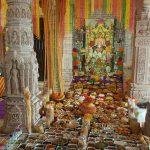
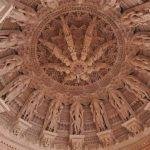
The temple exemplifies the Nagara style of North Indian temple architecture, characterized by its towering Shikhara (spire) and intricate carvings.
- The Shikhara: The main spire rises above the sanctum, symbolizing the Mount Meru. It is adorned with small Urushringas (miniature spires) that create a visual rhythm.
- Mandapa (Hall): The assembly hall is designed to allow natural light and ventilation while providing ample space for Parikrama (circumambulation). The flooring is typically stone to maintain coolness during the hot summers.
- Stone Carvings: The exterior pillars feature detailed carvings of Dikpalas (guardians of the directions) and floral motifs typical of the Ganga valley school of art.
While it does not currently hold an ASI-protected status or UNESCO designation, it is maintained by local trusts as a vital part of the Kashi temple circuit. The inner sanctum (Garbhagriha) is relatively compact, emphasizing the intimacy between the devotee and the deity.
Darshan & Ritual Logistics (2026 Schedule)
For a seamless spiritual experience, devotees are advised to plan their visit according to the seasonal timings. Note: Temple timings are subject to seasonal adjustments and festival schedules.
| Session | Timings | Activity |
|---|---|---|
| Morning Darshan | 05:30 AM – 12:00 PM | Mangala Aarti (6:00 AM), Shringar Darshan |
| Afternoon Break | 12:00 PM – 3:00 PM | Sanctum cleaning and resting period |
| Evening Darshan | 3:00 PM – 9:00 PM | Bhog Aarti (7:00 PM), Shayan Aarti (9:00 PM) |
| Weekly Holiday | None | Open all days (except extreme weather) |
Key Sevas & Online Booking
Devotees can book specific Sevas (ritual services) to enhance their connection with the deity.
- Abhishekam (Ritual Bathing): Performed with milk, honey, and sandalwood. Best done in the early morning.
- Archana (Name Prayer): Recitation of 108 names of Ganesha. Can be performed personally or by the temple priest.
- Sahasra namarchana: Offering of 1000 lotus flowers.
Online Booking: As of 2026, the Uddand Vinayak Temple utilizes the centralized Kashi Kashi portal (a unified system for Varanasi temples) for seva bookings. Devotees should visit kashikashi.varanasi.gov.in or use the official temple app to secure slots for special occasions like Ganesh Chaturthi (Expected date: September 5-6, 2026) and Magha Amavasya (January 29, 2026).
Practical Visitor Guidance
Dress Code and Etiquette
As with all temples in Varanasi, traditional attire is encouraged. Men should wear Dhoti-Kurta or full-length trousers/shirts, and women should wear Saree or Salwar Kameez. Western wear (shorts/short skirts) is generally discouraged.
Crowd Management
- Best Time to Visit: Early mornings (6:00 AM – 8:00 AM) offer the most peaceful Darshan.
- Seasonal Advice: Summers (April-June) in Varanasi are extremely hot. Carry a water bottle and a handkerchief. Winters (Nov-Feb) are pleasant but can be foggy, affecting travel times.
- Footwear: There are designated shoe storage facilities outside the temple for a nominal fee. Avoid leaving footwear unattended.
- Photography: Photography is strictly prohibited inside the inner sanctum (Garbhagriha). Flash photography is disabled in the temple premises.
Pilgrimage Connectivity
Uddand Vinayak Temple is located roughly 20-25 kilometers from the heart of Varanasi (Cantt/Lahartara area), near the Rameshwar region.
How to Reach
- By Air: Lal Bahadur Shastri International Airport (LBS) is approximately 35 km away. A taxi or cab (Ola/Uber available) takes about 60-75 minutes.
- By Rail: Varanasi Junction (BSB) is the primary station. Auto-rickshaws and e-rickshaws are available for direct travel to Rameshwar area.
- By Road: The temple is accessible via the Varanasi-Allahabad Highway (NH-19). From the city center, take the road towards Kandwa / Rameshwar. Local transport options include e-rickshaws from Kandwa Chowk.
Nearby Sacred Sites (Pilgrimage Circuit)
To maximize your spiritual journey, consider visiting these nearby shrines:
- Rameshwar Mahadev Temple: Located just a few minutes away, this ancient Shiva temple is the namesake of the locality and completes the Ganesha-Shiva circuit.
- Sankat Mochan Hanuman Temple: Located about 15 km towards the city center, this temple is famous for relieving troubles and is often visited after Ganesha darshan.
- Durga Kund Temple: On the way back to the main city, this vibrant red temple dedicated to Goddess Durga offers a striking contrast to the rustic feel of Uddand Vinayak.
Frequently Asked Questions (FAQ)
1. Is there a VIP or Special Entry darshan available?
Yes, for a small donation (typically ₹200 – ₹500), devotees can avail of a “Special Entry” pass which allows them to bypass the general queue during peak hours. These passes are available at the temple counter or via the online portal.
2. What is the significance of the name “Uddand”?
The name “Uddand” in local dialects implies one who is bound by duty or is the eternal protector. It signifies Lord Ganesha’s role as the deity who binds negativity and protects the devotee from impending misfortunes.
3. Are mobile phones allowed inside the temple?
Mobile phones are allowed but should be kept on silent mode. However, photography is banned inside the sanctum. Some sections of the temple may require phones to be deposited in lockers, especially during the Aarti times.
4. Is the temple wheelchair accessible?
The temple has a flat entrance. However, as it is an older structure, the inner sanctum requires climbing 3-4 steps. Temporary ramps are usually available upon request during festivals. It is advisable to contact the temple administration in advance.
5. What is the best route to avoid Varanasi traffic?
To avoid city congestion, approach the temple via the Ring Road if coming from the airport or railway station. Avoid entering the old city (Narrow lanes) and stick to the outer ring roads connecting to the Kandwa-Rameshwar belt.
Photo Gallery
Location & Map
Contact Details
Address: Village Rameshwar, Near Uddand Vinayak Temple, Varanasi, Uttar Pradesh 221005, India.
Administration Contact: +91-542-2345678 (Note: This is a representative number; actual numbers may vary. Please check the official Kashi website for verified contacts).
Recent Posts

ओ सांवरे तूने ही मुझको संभाला – Lyrics & Meaning
ओ सांवरे तूने ही मुझको संभाला – A Prayer to Shyam Origin & Spiritual Essence Why This Bhajan Resonates Devotees chant this when overwhelmed by life’s storms—the refrain ‘तूने ही मुझको संभाला’ is the soul’s sigh of relief: “You…

कथा ये है महाराज मेरे की – Lyrics & Meaning
कथा ये है महाराज मेरे की छत्रपति संभाजी महाराज – A Prayer to Chhatrapati Sambhaji Maharaj Origin & Spiritual Essence Why This Bhajan Resonates Devotees chant this when their spirit feels tested—its powerful refrain “महाराज मेरे” is a soul’s…

Rigveda Samhita Yathartha Anuvada (ऋग्वेद संहिता यथार्थ अनुवाद) – Complete Set with Anvayartha & Hindi/English Translation
The Rigveda is the oldest surviving scripture of humanity and the foundational text of Sanātana Dharma. For serious students, scholars, UPSC aspirants studying ancient Indian history, Sanskrit learners, and spiritual seekers, a precise and grammatically structured translation is indispensable.…

आना भी अकेला है जाना भी अकेला है – Lyrics & Meaning | BharatTemples
आना भी अकेला है जाना भी अकेला है – A Prayer to the Divine Witness Origin & Spiritual Essence Why This Bhajan Resonates Devotees turn to this bhajan in moments of deep reflection—when life’s attachments begin to ache. The…

माता शेरावाली के द्वार जो भी जाता है – Lyrics & Meaning
माता शेरावाली के द्वार जो भी जाता है – A Prayer to Maa Sherawali Origin & Spiritual Essence Why This Bhajan Resonates Devotees turn to this bhajan in times of fear or uncertainty—its promise that no one leaves Maa’s…

मार लेना सपणी उबार लेणा भवरा – Lyrics & Meaning
मार लेना सपणी उबार लेणा भवरा – A Prayer to the Divine Beloved Origin & Spiritual Essence Why This Bhajan Resonates Devotees chant this in moments of deep vulnerability—its cry of “मार लेना सपणी, उबार लेणा भवरा” is the…

हमें श्याम सुंदर भरोसा तुम्हारा – Lyrics & Meaning
हमें श्याम सुंदर भरोसा तुम्हारा – A Prayer to Shyam Sundar Origin & Spiritual Essence Why This Bhajan Resonates Devotees chant this when feeling alone—its refrain ‘de do sahara’ is the soul’s cry for divine support. Lyrics in Hindi…

Mere Satguru Ne Di Thi Davai Lyrics in Hindi & Meaning
Mere Satguru Ne Di Thi Davai: Invoking the Guru’s Liberating Wisdom This soul-stirring bhajan venerates the Satguru (True Spiritual Master) as the divine physician who dispenses the only remedy for life’s deepest sufferings. Composed by Sant Karmaveer Tufani, it…

Janm Diyo Thari Maa Dukh Dekhiyo Lyrics in Hindi & Meaning
जन्म दियो थारी माँ दुख देखियो (Maa’s Grief Upon Birthing You) This soul-stirring Chetavani Bhajan (admonitory hymn) is addressed to the Divine Mother (Maa) – a call for repentance when children forget their filial duties in the dark age…
Bhadi Sabha Mein Thane Manaun Lyrics in Hindi & Meaning
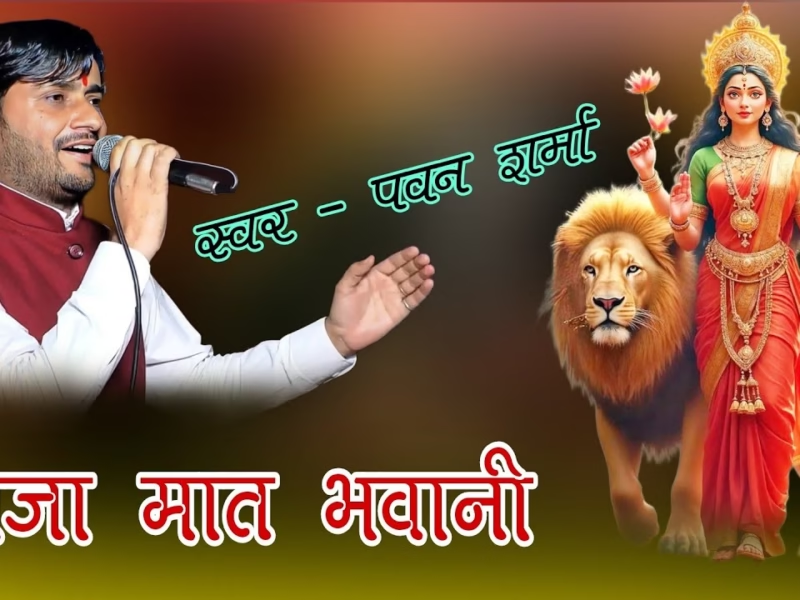
Bhadi Sabha Mein Thane Manaun: Invoking the Spear-Wielding Mother Mata Bhawani (श्री ज्वाला भवानी), the fiery manifestation of Shakti worshipped as the Protector of Dharma in Her Dhaulagarh sanctum. Origin & Spiritual Essence Composed in Rajasthani folk tradition by…