
Contents
Introduction & Spiritual Essence
Nestled in the sacred soil of Kushinagar, Uttar Pradesh—the land where Lord Buddha attained Mahaparinirvana—stands the serene Ved Mata Gayatri Mandir. Dedicated to Maa Gayatri, the Mother of the Vedas, this temple serves as a beacon of Vedic wisdom, spiritual purity, and divine feminine energy (Shakti). Unlike ancient shrines carved millennia ago, this temple represents a modern revival of ancient Vedic traditions, serving as a vibrant cultural hub for devotees seeking knowledge and inner peace.
The Divine Form: The presiding deity is worshipped as Maa Gayatri, often depicted with five faces (representing the five elements) and ten hands holding the symbols of the Vedas. She is the consort of Lord Brahma and the embodiment of the sacred Gayatri Mantra.
Phalaśruti (Benefits of Visiting):
According to temple traditions and Vedic scriptures, worshipping Maa Gayatri bestows specific spiritual and material blessings:
- Removal of Obstacles: Devotees believe that sincere prayer here washes away past Karmas and clears hurdles in one’s path to success.
- Intellectual Clarity: As the Vani (Goddess of Speech), she grants wisdom, eloquence, and academic success.
- Inner Purification: The temple is renowned for the spiritual vibrations generated during the chanting of the 24-syllable Gayatri Mantra, cleansing the soul of negative energies.
Historical Origins & Scriptural Legend
Modern Foundation: While the worship of Gayatri Devi is eternal, the Ved Mata Gayatri Mandir in Kushinagar was formally established on December 8, 2013. The temple was founded by Mr. Rampravesh Kushwaha, with a vision to create a sanctuary dedicated solely to the Vedic mother goddess in this historic region of eastern Uttar Pradesh.
Scriptural Significance:
Tradition holds that the temple embodies the essence of the Gayatri Purana and the Yajur Veda. In the ancient scriptures, Maa Gayatri is not merely a deity but the “Mother of the Vedas”—the energy that sustains the universe. According to Vedic lore, the Gayatri Mantra is believed to have been revealed to the sage Vishwamitra, carrying the power to grant liberation (Moksha).
While Kushinagar is primarily a Buddhist pilgrimage site due to Lord Buddha’s Nirvana, this temple adds a distinct Hindu spiritual layer to the region, symbolizing the interconnectedness of Vedic and Buddhist philosophies regarding mindfulness and consciousness.
Architectural Marvels
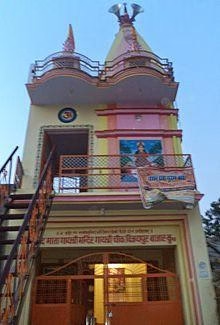
The Ved Mata Gayatri Mandir showcases a blend of Modern North Indian (Nagara) Architectural Style with Vastu Shastra compliance. Unlike the rustic ruins of nearby historical sites, this temple is designed with pristine marble and white structural elements, symbolizing purity.
Key Features:
- The Shikhara (Spire): The temple features a soaring Shikhara rising above the sanctum sanctorum, designed to draw the eye upward toward the heavens, symbolizing the ascent of the soul.
- Vastu Shastra: The layout is strictly aligned with cardinal directions to ensure the flow of positive energy, with the main entrance facing East.
- Sanctum Sanctorum: The inner sanctum houses the exquisite black stone idol of Maa Gayatri, adorned with gold ornaments and fresh flowers. The atmosphere is dimly lit with diyas (oil lamps), creating a meditative ambiance.
- Community Hall: The complex includes a large hall used for cultural activities, religious discourses, and the annual mass wedding ceremonies.
Photo Gallery
[Gallery Shortcode – Placeholder for images of Maa Gayatri idol, temple exterior, and cultural events at Ved Mata Gayatri Mandir, Kushinagar]
Visual Reference: The temple is noted for its white facade and intricate carvings.
Darshan & Ritual Logistics (2026 Guide)
The temple administration maintains a strict schedule to facilitate both regular devotees and those performing special rituals. Below is the general timetable. Please note that timings may extend during festivals.
Daily Darshan Timings
| Session | Timings | Activity |
|---|---|---|
| Morning | 06:00 AM – 12:00 PM | Mangala Aarti, Abhishekam, Darshan |
| Afternoon | 12:00 PM – 02:00 PM | Midday Puja (Temple may close for rest) |
| Evening | 04:00 PM – 09:00 PM | Sandhya Aarti, Bhog, Shayan Darshan |
*Timings are subject to change during major festivals.
Key Sevas & Booking
Devotees can participate in various services (Sevas) to deepen their spiritual experience:
- Abhishekam: Ritual bathing of the deity with milk, honey, and flowers. Performed during morning hours.
- Archana: Personalized chanting of hymns and mantras for specific intentions (health, wealth, education).
- Naivedyam: Offering food to the deity.
- Samuhik Vivah (Mass Wedding): A unique social service performed annually (typically around Navratri), where the temple facilitates mass marriages for the underprivileged.
Online Seva Booking: While physical booking is available at the temple counter, devotees are advised to check the official website or contact the administration for online booking options for the 2026 season.
Major Festivals 2026
The temple comes alive during these specific dates:
- Gayatri Jayanti: Celebrated on Jyeshtha Purnima (approx. May 21, 2026). The most significant day here, marked by a grand Yagya (Fire Ritual).
- Navratri: Celebrated twice a year (March-April & September-October). The temple performs special Homams and hosts the Samohik Vivah during the Chaitra Navratri.
- Vijayadashami (Dussehra): October 1, 2026. Marks the victory of good over evil.
- Krishna Janmashtami: August 14, 2026. Celebrated with night-long vigils (Jagran).
Practical Visitor Guidance
Code of Conduct & Essentials
- Dress Code: Modest clothing is required. Traditional Indian attire (Saree, Kurta-Pajama) is recommended. Avoid shorts, sleeveless tops, or tight-fitting garments.
- Photography: Photography is generally restricted inside the inner sanctum (Garbhagriha). You may take photos of the exterior architecture and courtyard, but please respect the privacy of other devotees.
- Mobile Lockers: The temple provides a cloakroom facility for mobile phones and footwear. It is mandatory to deposit electronic devices before entering the main prayer hall to maintain sanctity.
- Accessibility: The temple premises are wheelchair accessible with ramps leading to the main courtyard. However, the inner sanctum has a few steps.
Crowd Management
- Best Hours: For a peaceful Darshan, visit between 9:00 AM and 11:00 AM on weekdays. Avoid weekends and holidays if possible.
- Seasonal Advice:
- Summer (April-June): Temperatures in Kushinagar can exceed 40°C. Carry a water bottle (non-plastic), a hat, and sunglasses. The temple often distributes free water and juice during this season.
- Monsoon (July-September): Carry an umbrella. The surrounding area in Kushinagar can get muddy, so wear comfortable, slip-resistant footwear.
Location Map
[Embed Map Location – Ved Mata Gayatri Mandir, Kushinagar, Uttar Pradesh]
Pilgrimage Connectivity
How to Reach
By Air: The nearest airport is Gorakhpur Airport (GOP), located approximately 45 km from Kushinagar. From the airport, taxis and buses are readily available to reach the temple (approx. 1.5 hours).
By Rail: The closest major railway junction is Gorakhpur Junction. For those specifically visiting the Buddha circuit, Kushinagar Railway Station is also accessible via direct trains from major cities like Lucknow and Varanasi.
By Road: Kushinagar is well-connected via National Highway (NH) and State Highways. The temple is located within the main town, easily accessible by auto-rickshaw or cycle-rickshaw from the bus stand.
Nearby Sacred Sites
Enhance your pilgrimage by visiting these nearby spiritual destinations:
- Mahabodhi Temple (Bodh Gaya): A significant Buddhist site (approx. 60 km from Kushinagar) where Lord Buddha attained enlightenment.
- Parinirvana Stupa: Located just a few kilometers from the Gayatri Mandir, this is the site where Lord Buddha attained Mahaparinirvana.
- Kushinagar Temple (Chinese Temple): A beautiful temple complex reflecting international Buddhist architecture, located nearby.
Frequently Asked Questions (FAQ)
Is there a VIP Darshan entry at Ved Mata Gayatri Mandir?
The temple administration treats all devotees equally. However, special arrangements can be made for elderly visitors or those with medical conditions. Please contact the temple office 24 hours in advance.
What are the accommodation options near the temple?
Kushinagar offers a range of accommodations from budget lodges to mid-range hotels. Since the temple is in the town center, many hotels are within walking distance. It is advisable to book in advance during festival seasons.
Can non-Hindus visit the temple?
While the temple is a center of Vedic Hinduism, visitors of all backgrounds are welcome to appreciate the architecture and spiritual atmosphere. However, non-Hindus may be restricted from entering the inner sanctum depending on specific religious norms observed on that day.
Is there a donation system for the Mass Wedding ceremony?
Yes, the temple operates on community donations. You can contribute to the Samohik Vivah fund to support the marriage of underprivileged girls. Donations are eligible for tax exemption (ask for the official receipt).
What is the best time to visit Kushinagar for a pilgrimage?
The ideal time is between October and March when the weather is pleasant and cool, making it comfortable for walking around the temple complex and nearby historical sites.
Contact Details
Address: Ved Mata Gayatri Mandir, Kushinagar, Uttar Pradesh
Phone: Please contact the local temple administration office for the current landline/mobile numbers.
Official Email/Website: Check local directories for the latest updates.
Recent Posts

Shri Kaamkoteeshwar Mandir, Varanasi – History & Significance
In the heart of Kashi, the eternal city of Lord Shiva, where the Ganges flows with celestial grace, stands the Shri Kaamkoteeshwar Mandir. This sacred Sannidhi is not merely a temple but a profound spiritual bridge between the Northern…

ओ सांवरे तूने ही मुझको संभाला – Lyrics & Meaning
ओ सांवरे तूने ही मुझको संभाला – A Prayer to Shyam Origin & Spiritual Essence Why This Bhajan Resonates Devotees chant this when overwhelmed by life’s storms—the refrain ‘तूने ही मुझको संभाला’ is the soul’s sigh of relief: “You…

कथा ये है महाराज मेरे की – Lyrics & Meaning
कथा ये है महाराज मेरे की छत्रपति संभाजी महाराज – A Prayer to Chhatrapati Sambhaji Maharaj Origin & Spiritual Essence Why This Bhajan Resonates Devotees chant this when their spirit feels tested—its powerful refrain “महाराज मेरे” is a soul’s…

Rigveda Samhita Yathartha Anuvada (ऋग्वेद संहिता यथार्थ अनुवाद) – Complete Set with Anvayartha & Hindi/English Translation
The Rigveda is the oldest surviving scripture of humanity and the foundational text of Sanātana Dharma. For serious students, scholars, UPSC aspirants studying ancient Indian history, Sanskrit learners, and spiritual seekers, a precise and grammatically structured translation is indispensable.…

आना भी अकेला है जाना भी अकेला है – Lyrics & Meaning | BharatTemples
आना भी अकेला है जाना भी अकेला है – A Prayer to the Divine Witness Origin & Spiritual Essence Why This Bhajan Resonates Devotees turn to this bhajan in moments of deep reflection—when life’s attachments begin to ache. The…

माता शेरावाली के द्वार जो भी जाता है – Lyrics & Meaning
माता शेरावाली के द्वार जो भी जाता है – A Prayer to Maa Sherawali Origin & Spiritual Essence Why This Bhajan Resonates Devotees turn to this bhajan in times of fear or uncertainty—its promise that no one leaves Maa’s…

मार लेना सपणी उबार लेणा भवरा – Lyrics & Meaning
मार लेना सपणी उबार लेणा भवरा – A Prayer to the Divine Beloved Origin & Spiritual Essence Why This Bhajan Resonates Devotees chant this in moments of deep vulnerability—its cry of “मार लेना सपणी, उबार लेणा भवरा” is the…

हमें श्याम सुंदर भरोसा तुम्हारा – Lyrics & Meaning
हमें श्याम सुंदर भरोसा तुम्हारा – A Prayer to Shyam Sundar Origin & Spiritual Essence Why This Bhajan Resonates Devotees chant this when feeling alone—its refrain ‘de do sahara’ is the soul’s cry for divine support. Lyrics in Hindi…

Mere Satguru Ne Di Thi Davai Lyrics in Hindi & Meaning
Mere Satguru Ne Di Thi Davai: Invoking the Guru’s Liberating Wisdom This soul-stirring bhajan venerates the Satguru (True Spiritual Master) as the divine physician who dispenses the only remedy for life’s deepest sufferings. Composed by Sant Karmaveer Tufani, it…

Janm Diyo Thari Maa Dukh Dekhiyo Lyrics in Hindi & Meaning
जन्म दियो थारी माँ दुख देखियो (Maa’s Grief Upon Birthing You) This soul-stirring Chetavani Bhajan (admonitory hymn) is addressed to the Divine Mother (Maa) – a call for repentance when children forget their filial duties in the dark age…