
Contents
Introduction & Spiritual Essence: The Sun God of Kashi
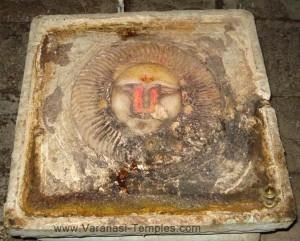
Located in the ancient spiritual capital of Varanasi, the Vimal Aditya Temple stands as a beacon of healing and purification. Dedicated to Lord Surya (the Sun God), this shrine is unique in its theological significance and the powerful narrative attached to its origin. In Vedic astrology and Hindu mythology, Surya is the primary source of light, life, and health. Here, he is worshipped as Vimal Aditya—the one who removes impurities and grants clarity.
Phalaśruti: The Benefits of Devotion
Why do devotees flock to this specific shrine in Varanasi? The spiritual potency of Vimal Aditya is deeply rooted in the concept of karmic cleansing. According to the Kashi Khand (a section of the Skanda Purana), a mere darshan (sacred viewing) of the Vimal Aditya idol is capable of curing chronic diseases, particularly those considered karmic retribution, such as leprosy in ancient texts. It is believed that worshipping here helps in:
- Cleansing Ancestral Karma: alleviating negative planetary influences.
- Physical Healing: Invoking Surya’s radiant energy to cure ailments.
- Mental Clarity: Removing “vimal” (impurities) from the mind and soul.
Historical Origins & Scriptural Legend
While specific architectural inscriptions regarding the construction date are sparse, the temple’s history is preserved through oral tradition and sacred texts.
The Legend of Vimal
According to local tradition, the temple derives its name from a devout sage named Vimal. Long ago, Vimal was a resident of a hilly region who suffered from leprosy due to sins committed in a past life. Embracing renunciation, he abandoned his worldly possessions and traveled to Kashi.
In Kashi, Vimal established a routine of intense worship directed at Lord Surya. He performed complex Poojas and Pushp Archana (offerings of flowers) with unwavering fervor. His devotion was so potent that it pleased the Sun God. Lord Surya appeared before Vimal, curing his leprosy instantly with divine grace. He then offered Vimal a boon.
Vimal requested that Lord Surya remain in that very spot to bless devotees and ensure they never suffered from such ailments again. Lord Surya granted this wish, stating that he would eternally reside in the idol known as Vimal Aditya.
Architectural Marvels
The Vimal Aditya Temple is a testament to traditional temple design, blending spiritual symbolism with structural harmony.
Style and Vastu Shastra
Based on the temple data and the architectural lineage of Varanasi, the shrine follows the Dravidian architectural style. This is characteristic of the South Indian influence found in many temples around the sacred ghats of Varanasi. The layout adheres to Vastu Shastra, ensuring that the energy flow (Vastu Purusha Mandala) is aligned with cosmic principles.
Notable Features
- The Sanctum (Garbhagriha): The inner sanctum houses the idol of Vimal Aditya, facing east to catch the first rays of the rising sun.
- Sculptures: The exterior walls and pillars often feature carvings depicting various forms of Surya and geometric patterns representing solar energy.
- Prakara: The circumambulatory path around the shrine allows devotees to perform Pradakshina, absorbing the vibrational energy of the space.
Darshan & Ritual Logistics
To ensure a smooth spiritual experience, it is essential to check the daily schedules and ritual offerings.
Daily Timings
Temple timings are generally aligned with solar cycles. Below is the standard schedule:
| Session | Timings |
|---|---|
| Morning Darshan | 06:00 AM – 12:00 PM |
| Afternoon Closure | 12:00 PM – 4:00 PM |
| Evening Darshan | 4:00 PM – 9:00 PM |
| Morning Aarti | 06:30 AM (approx.) |
| Evening Aarti | 07:00 PM (approx.) |
Key Sevas & Online Booking
Devotees can participate in several rituals to enhance their connection with the deity.
- Abhishekam: Ritual bathing of the idol with holy water, milk, and honey. Best performed during morning hours.
- Archana: Personalized chanting of Surya mantras (e.g., Aditya Hridayam).
- Surya Namaskar: Group yoga and prayer sessions often held in the temple courtyard.
Note: While physical booking is available at the temple counter, many Varanasi temples are adopting digital systems. Check the official temple trust website or the Varanasi Municipal Corporation portal for “Online Seva Booking” closer to your 2026 travel date.
2026 Festival Calendar
Major festivals celebrated with great pomp include:
- Makar Sankranti (January 14, 2026): The Sun’s transit into Capricorn; special Vedic rituals performed.
- Ratha Saptami (February 4, 2026): Dedicated to Lord Surya driving his chariot; a key festival for Vimal Aditya.
- Chhath Puja (October 24–27, 2026): Though celebrated widely across the ghats, the temple sees heightened footfall from devotees offering Arghya to the setting sun.
Practical Visitor Guidance
Visiting Varanasi requires preparation to ensure a respectful and comfortable journey.
Etiquette and Rules
- Dress Code: Modest attire is mandatory. Men should wear dhotis or trousers (no shorts); women should opt for sarees or full-length dresses.
- Photography: Strictly prohibited inside the inner sanctum. Photography in the outer courtyard may be allowed with permission, but flash is discouraged.
- Mobile Lockers: Due to the narrow lanes (galis) surrounding the temple, large bags are not allowed. Small temples usually offer basic storage, but it is advisable to carry minimal items.
- Accessibility: The temple is located in the old city (Jangambari area). The lanes are narrow and paved with stone; they are not wheelchair accessible. Comfortable footwear is recommended as you may need to walk from Godowlia.
Crowd Management
- Best Hours: The best time for a peaceful darshan is early morning (6:00 AM – 8:00 AM) or late evening after 8:00 PM.
- Seasonal Advice: Varanasi summers (April–June) are extremely hot. Carry a water bottle, an umbrella, and electrolytes. Winters (November–February) are pleasant but foggy.
Pilgrimage Connectivity
How to Reach Vimal Aditya Temple
The temple is situated in the heart of Varanasi, specifically at D-35/273, Gully behind Khari Kuan, Jangambari, near Godowlia.
- Nearest Airport: Lal Bahadur Shastri International Airport (LBS), Varanasi (approx. 30 mins by taxi).
- Nearest Railway Station: Varanasi Junction (BSB) (approx. 20 mins by auto/taxi to Godowlia).
- By Road: Varanasi is connected via NH-19 (formerly NH-2). From the highway, take the ring road towards Godowlia.
- Local Transport: Auto-rickshaws can take you to Godowlia. From Godowlia, the temple is accessible by foot through the bustling market lanes (approx. 5-10 minute walk). Cycle rickshaws are available for the last mile but may not fit through the narrowest galis.
Nearby Sacred Sites
Extend your pilgrimage by visiting these nearby spiritual landmarks:
- Kashi Vishwanath Temple (approx. 1 km): The main Jyotirlinga of Lord Shiva. A must-visit for any pilgrim in Varanasi.
- Sankat Mochan Hanuman Temple (approx. 3 km): Famous for the relief from planetary afflictions and the belief that Lord Hanuman protects devotees here.
- Durga Temple (approx. 2.5 km): Known as the Monkey Temple, it showcases Nagara style architecture and is dedicated to Goddess Durga.
Photo Gallery

Frequently Asked Questions (FAQ)
1. Is there a VIP or special entry darshan available?
Given the temple’s location in the narrow lanes of the old city, VIP entry systems are generally not as formalized as at large shrines like Kashi Vishwanath. However, during special aartis, priority is given to those participating in the rituals. It is best to consult the temple priest or trust office upon arrival.
2. What is the significance of “Vimal” in the context of the temple?
“Vimal” translates to “pure” or “clean” in Sanskrit. The name signifies the temple’s power to cleanse devotees of their sins and physical impurities through the grace of Lord Surya.
3. Are cameras allowed inside the temple?
Cameras are strictly prohibited inside the sanctum sanctorum. For mobile phones, photography inside the inner shrine is banned, but you may take photos of the exterior architecture. Please respect the sanctity of the space.
4. Is the temple open year-round?
Yes, the temple remains open throughout the year. However, visiting hours may vary slightly during extreme weather conditions or specific local festivals. It is advisable to check locally for any temporary closures.
5. How far is the temple from the main Ghats?
The temple is located in the Jangambari area, which is relatively close to the Dashashwamedh Ghat area (walking distance of about 15-20 minutes through the market), making it easily accessible if you are staying near the ghats.
Recent Posts

Shri Kaamkoteeshwar Mandir, Varanasi – History & Significance
In the heart of Kashi, the eternal city of Lord Shiva, where the Ganges flows with celestial grace, stands the Shri Kaamkoteeshwar Mandir. This sacred Sannidhi is not merely a temple but a profound spiritual bridge between the Northern…

ओ सांवरे तूने ही मुझको संभाला – Lyrics & Meaning
ओ सांवरे तूने ही मुझको संभाला – A Prayer to Shyam Origin & Spiritual Essence Why This Bhajan Resonates Devotees chant this when overwhelmed by life’s storms—the refrain ‘तूने ही मुझको संभाला’ is the soul’s sigh of relief: “You…

कथा ये है महाराज मेरे की – Lyrics & Meaning
कथा ये है महाराज मेरे की छत्रपति संभाजी महाराज – A Prayer to Chhatrapati Sambhaji Maharaj Origin & Spiritual Essence Why This Bhajan Resonates Devotees chant this when their spirit feels tested—its powerful refrain “महाराज मेरे” is a soul’s…

Rigveda Samhita Yathartha Anuvada (ऋग्वेद संहिता यथार्थ अनुवाद) – Complete Set with Anvayartha & Hindi/English Translation
The Rigveda is the oldest surviving scripture of humanity and the foundational text of Sanātana Dharma. For serious students, scholars, UPSC aspirants studying ancient Indian history, Sanskrit learners, and spiritual seekers, a precise and grammatically structured translation is indispensable.…

आना भी अकेला है जाना भी अकेला है – Lyrics & Meaning | BharatTemples
आना भी अकेला है जाना भी अकेला है – A Prayer to the Divine Witness Origin & Spiritual Essence Why This Bhajan Resonates Devotees turn to this bhajan in moments of deep reflection—when life’s attachments begin to ache. The…

माता शेरावाली के द्वार जो भी जाता है – Lyrics & Meaning
माता शेरावाली के द्वार जो भी जाता है – A Prayer to Maa Sherawali Origin & Spiritual Essence Why This Bhajan Resonates Devotees turn to this bhajan in times of fear or uncertainty—its promise that no one leaves Maa’s…

मार लेना सपणी उबार लेणा भवरा – Lyrics & Meaning
मार लेना सपणी उबार लेणा भवरा – A Prayer to the Divine Beloved Origin & Spiritual Essence Why This Bhajan Resonates Devotees chant this in moments of deep vulnerability—its cry of “मार लेना सपणी, उबार लेणा भवरा” is the…

हमें श्याम सुंदर भरोसा तुम्हारा – Lyrics & Meaning
हमें श्याम सुंदर भरोसा तुम्हारा – A Prayer to Shyam Sundar Origin & Spiritual Essence Why This Bhajan Resonates Devotees chant this when feeling alone—its refrain ‘de do sahara’ is the soul’s cry for divine support. Lyrics in Hindi…

Mere Satguru Ne Di Thi Davai Lyrics in Hindi & Meaning
Mere Satguru Ne Di Thi Davai: Invoking the Guru’s Liberating Wisdom This soul-stirring bhajan venerates the Satguru (True Spiritual Master) as the divine physician who dispenses the only remedy for life’s deepest sufferings. Composed by Sant Karmaveer Tufani, it…

Janm Diyo Thari Maa Dukh Dekhiyo Lyrics in Hindi & Meaning
जन्म दियो थारी माँ दुख देखियो (Maa’s Grief Upon Birthing You) This soul-stirring Chetavani Bhajan (admonitory hymn) is addressed to the Divine Mother (Maa) – a call for repentance when children forget their filial duties in the dark age…