Vishwa Bhuja Gauri Temple, Varanasi: History, Darshan Timings & Guide
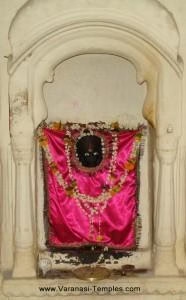
Receive daily temple updates, divine darshan, and morning bhajans directly on WhatsApp.
Contents
- 1 Introduction & Spiritual Essence
- 2 Historical Origins & Scriptural Legend
- 3 Architectural Marvels
- 4 Darshan & Ritual Logistics (2026 Guide)
- 5 Practical Visitor Guidance
- 6 Pilgrimage Connectivity
- 7 Frequently Asked Questions (FAQ)
- 8 Photo Gallery
- 9 Contact Details
Introduction & Spiritual Essence
In the heart of Kashi, the eternal city of spiritual liberation, stands the ancient Vishwa Bhuja Gauri Temple. While the world-famous Vishalakshi (Goddess of Sight) temple draws millions, the Vishwa Bhuja Gauri (The Goddess worshipped by the entire world) holds a distinct, foundational place in the mystical geography of Varanasi.
She is the Pratyakh (protector of land) and the embodiment of Gauri—the fair-complexioned consort of Shiva. Unlike the fierce aspects of the Goddess, Vishwa Bhuja Gauri represents nourishment and the removal of obstacles. According to Kashi Khand (Chapter 70), these are the Ashta Matrikas (eight mother goddesses) worshipped by Lord Brahma himself to create the world.
Phalaśruti: The Benefits of Darshan
Devotees visit this sanctum not just for the darshan of the deity, but to wash away the heavier karmic debts accumulated in Kashi.
- Cleansing Ancestral Karma: Offering prayers here is believed to pacify Pitru Dosha (ancestral afflictions).
- Removal of Obstacles: The Goddess removes the Shatru Bhaya (fear of enemies) and obstacles in professional paths.
- Navratri Fulfills Desires: The text from Kashi Khand explicitly states that worshipping this Gauri on all days during Navratri leads to the fulfillment of all wishes (Kamna Siddhi).
Historical Origins & Scriptural Legend
The history of Vishwa Bhuja Gauri is not recorded merely in stone but in the sacred verses of the Skanda Purana, specifically the Kashi Khand section.
Scriptural Legend: The Birth of the World
Tradition holds that after the catastrophic dissolution of the universe (Pralaya), Lord Vishnu slept on the cosmic waters on the serpent Shesha. Lord Brahma, born from a lotus stem originating from Vishnu’s navel, sought to create the world but required divine power.
📖 Related: Raj Putra Vinayak Temple, Varanasi: History, Darshan Timings & Guide
According to Kashi Khand, Chapter 70, Lord Brahma performed austerities here in Kashi to please the Goddess. Appearing as Vishwa Bhuja Gauri, she commanded him to perform the creation. Thus, this temple marks the genesis point of creative energy in the universe.
Renovation and Architecture
While the original foundations are shrouded in antiquity, the current structure exhibits typical North Indian temple architecture. Over centuries, the temple has undergone several renovations funded by royal patrons of the Kashi Naresh dynasty and devout merchants. The sanctum houses a Shaila Murti (stone sculpture) representing the deity, believed to be ancient and deeply imbued with spiritual potency.
Architectural Marvels
Temples in Varanasi generally follow a syncretic style, blending elements of Nagara (North Indian) architecture with unique local aesthetics influenced by the Bengal school due to geographic proximity.
Vastu and Sacred Geometry
The temple is located in the Virat Kshetra of Kashi, specifically near the Dharam Koop. The layout aligns with Vastu Shastra principles, focusing on the energy center of the earth.
- The Shikhara (Tower): A modest yet elegant tower rises above the sanctum, topped by a Amalaka (ringed disk) and Kalasha (pot finial).
- The Mandapa: A pillared hall allows devotees to gather for prayers. The stone carvings often depict floral motifs (Kalasha) and depictions of the Goddess.
- The Sanctum (Garbhagriha): The inner sanctum is usually compact, requiring devotees to move clockwise. The idol is typically a Murti (sculpted form), unlike the Swayambhu (self-manifested) lingams found elsewhere in Kashi.
Note: Unlike major heritage sites, this temple falls under the jurisdiction of the Kashi Vishwanath Temple Trust, ensuring the preservation of its heritage status.
Darshan & Ritual Logistics (2026 Guide)
Based on the seasonal timings of Varanasi temples, here are the projected darshan and ritual schedules for 2026. Please note that timings may vary slightly during extreme weather or festivals.
Daily Timings
| Session | Timing | Activity |
|---|---|---|
| Morning | 05:00 AM – 12:00 PM | Mangala Aarti, Abhishekam, Darshan |
| Mid-Day | 12:00 PM – 03:00 PM | Sanctum Rest (Deep Cleaning) |
| Evening | 03:00 PM – 11:00 PM | Darshan, Sandhya Aarti |
Key Sevas & 2026 Festivals
- Abhishekam: Ritual bathing of the deity. Best performed in the morning.
- Archana: Offering of flowers and akshata (rice grains) with specific mantras.
- Sahasranama Archana: Recitation of 1000 names of the Goddess.
📖 Related: Kaholeshwar Temple Varanasi: History, Darshan Timings & Complete Guide
Important 2026 Dates:
- Navratri (Shardiya): September 22 – October 1, 2026. This is the most auspicious time to visit Vishwa Bhuja Gauri. The temple remains open late, and special Yagna is performed.
- Diwali: October 18, 2026. The temple is decorated with thousands of earthen lamps.
- Maha Shivratri: February 26, 2026. While focused on Shiva, the consort temples see massive footfall.
Online Seva Booking
Most local temples in Varanasi rely on direct offerings. However, for major events and general donations, you can visit the Kashi Vishwanath Temple Trust portal or inquire directly at the temple office.
Practical Visitor Guidance
Varanasi is a living heritage city. Navigating its narrow alleys requires preparation.
Code of Conduct & Dress Code
- Attire: Traditional clothing is preferred. Men should wear dhoti/kurta or trousers; women should wear sarees or salwar kameez. Avoid shorts and sleeveless tops.
- Photography: Photography is generally restricted inside the inner sanctum (Garbhagriha). You may photograph the exterior architecture and courtyard, but respect the privacy of worshippers.
- Footwear: Shoes must be removed at designated stands. Use the paid lockers (Rs. 10-20) available at the entrance of the lane to avoid carrying them.
Crowd Management & Accessibility
- Best Time to Visit: 5:00 AM – 7:00 AM (peaceful, cool) or 3:00 PM – 5:00 PM.
- Seasonal Advice:
- May/June (Summer): Temperatures exceed 40°C. Carry water, wear sunglasses, and use a hat. The stone floors become hot.
- July-Sept (Monsoon): Varanasi can flood. Wear waterproof footwear.
- Accessibility: The lane leading to the temple is narrow and uneven. It is difficult for wheelchair access. However, the temple is located near Dharam Koop, which is accessible by rickshaw up to a certain point.
Pilgrimage Connectivity
How to Reach Vishwa Bhuja Gauri Temple
The temple is situated at D.2/15, near Dharam Koop (Dharmeshwar), which is very close to the Vishalakshi Devi Temple.
- Nearest Airport: Lal Bahadur Shastri International Airport (VNS) is roughly 25 km away. A taxi costs approximately ₹500-700 to Dasaswamedh Ghat.
- Nearest Railway Station: Varanasi Junction (BSB) is about 5 km away. Autos and e-rickshaws are readily available.
- Route via NH: From the airport, take the NH-19 (formerly NH-2) towards Varanasi City. Once at Godaulia intersection, proceed towards Dashashwamedh Ghat.
- Walking Route: Auto-rickshaws can drop you at Dasaswamedh Vishwanath Gulli or Bansphatak Vishwanath Gulli. From there, it is a 5-minute walk through the historic alleys.
📖 Related: Bharabhooteshwar Temple, Varanasi: History, Darshan Timings & Legends
Nearby Sacred Sites (Pilgrimage Circuit)
Devotees should combine the visit to this temple with other major shrines in the vicinity to complete the spiritual circuit:
- Vishalakshi Temple: Located just adjacent. Vishwa Bhuja Gauri is the protector of this power center.
- Kashi Vishwanath Temple (Jyotirlinga): About 10 minutes walk from here. The primary deity of Kashi.
- Annapurna Temple: Located near the ghats. Devotees often visit to seek blessings for food and nourishment after offering prayers to Gauri.
Frequently Asked Questions (FAQ)
1. What is the difference between Vishalakshi and Vishwa Bhuja Gauri?
Vishalakshi represents the “All-Seeing” Mother (eyes as the source of cosmic vision), while Vishwa Bhuja Gauri represents the “Bhartri” (nourisher) who is worshipped by the entire world. They are considered aspects of the same divine energy but are enshrined in separate sanctums according to Kashi Khand.
2. Is there a VIP Darshan entry available?
Given the size of the temple and the narrow alleyway access, there are no official VIP entry gates like those at the main Kashi Vishwanath Corridor. Darshan is typically first-come, first-served, though priests can facilitate faster access for specific rituals (Abhishekam) if requested in advance.
3. Can I perform Tarpan (offering to ancestors) here?
Yes. While the temple itself is not a ghat for water offerings, the proximity to the Ganges and the specific energy of Vishwa Bhuja Gauri makes it ideal for performing mental or small ritual offerings to ancestors to clear Karmic debts.
4. Is the temple open during lockdowns or eclipses?
Temples in Kashi generally remain open unless specific government orders or astronomical rules (Sutak) apply during solar/lunar eclipses. It is advised to check local announcements before visiting during festivals.
5. Are non-Hindus allowed inside?
Traditionally, the temples within the old city of Varanasi (including this one) are restricted to followers of the Hindu faith (Sanatana Dharma) for inner sanctum darshan, though courtyard access may vary depending on the specific priest’s discretion. Please respect local customs.
Photo Gallery
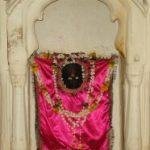
Vishwa-Bhuja-Gauri2-186×300, Vishwa Bhuja Gauri Temple, Varanasi
Contact Details
Address: D.2/15, near Dharam Koop, Varanasi, Uttar Pradesh 221001
Managed by: Kashi Vishwanath Temple Trust