
Contents
- 1 Introduction & Spiritual Essence: The Abode of Eight Siddhis
- 2 Historical Origins & Scriptural Legend
- 3 Architectural Marvels
- 4 Photo Gallery
- 5 Darshan & Ritual Logistics
- 6 Practical Visitor Guidance
- 7 Pilgrimage Connectivity
- 8 Frequently Asked Questions (FAQ)
- 8.1 1. Is there a VIP Darshan entry at Siddhi Ashtakeshwar Temple?
- 8.2 2. Is there a Siddhi Ashtak Kund present today?
- 8.3 3. Can I perform Shraddha (Ancestral Rites) here?
- 8.4 4. Is photography allowed inside the sanctum?
- 8.5 5. What is the best way to reach the temple with luggage?
- 8.6 6. Are there food options nearby?
Introduction & Spiritual Essence: The Abode of Eight Siddhis
Hidden within the labyrinthine spiritual geography of Kashi (Varanasi), the Siddhi Ashtakeshwar Temple stands as a testament to the profound Tantric and Puranic traditions of the city. Dedicated to Lord Shiva in his form as Siddhi Ashtakeshwar—the Lord who grants eight types of supernatural attainments—this temple is a sanctuary for devotees seeking mastery over their destiny and spiritual evolution.
Unlike the grand, towering temple complexes often seen in major pilgrimage circuits, Siddhi Ashtakeshwar embodies the intimate, neighborhood spirituality that characterizes the Galipuras (street temples) of Varanasi. The deity is housed within the premises of the renowned Bara Ganeshji Temple, creating a unique sacred confluence of Shiva and Ganesha energies.
Phalaśruti: Why Devotees Visit
According to the Kashi Khand of the Skanda Purana, specific locations in Varanasi are charged with energies that grant distinct blessings. The significance of worshipping Siddhi Ashtakeshwar is outlined in Kashi Khand, Chapter 67, which details the benefits of devotion here:
- Eight Types of Siddhi: Devotees who worship here are blessed with Ashta Siddhi—eight divine attainments including Anima (becoming atomic), Mahima (becoming infinitely large), Laghima (becoming weightless), and Prapti (obtaining anything).
- Ancestral Liberation: The temple houses the Siddhi Ashtak Kund. Bathing in this sacred tank (or performing rituals nearby) is believed to cleanse ancestral karma and bring peace to departed souls.
- Prosperity & Success: Tradition holds that regular worship here eliminates obstacles in professional and personal life, ensuring “all-round prosperity.”
Historical Origins & Scriptural Legend
The precise date of construction is not recorded in modern surveys, as is common with many ancient neighborhood shrines in Kashi. However, the temple’s spiritual antiquity is undisputed, stemming directly from the Puranic era.
Scriptural Basis
The primary scriptural reference is the Kashi Khand of the Skanda Purana. Specifically, Chapter 67 maps the spiritual geography of Varanasi, noting that “towards the north of Mandakini Teerth, devotees can find Siddhi Ashtakeshwar.” This textual evidence dates the worship of this specific form of Shiva to at least the period of the Puranas, approximately 1,500–2,000 years ago in tradition.
Local Oral History
Tradition holds that the current location, integrated with the Bara Ganeshji complex, serves a strategic spiritual purpose. In Hindu iconography, Lord Ganesha is the Vighnaharta (remover of obstacles), while Lord Shiva is the Adiyogi (the first Yogi). The co-location ensures that a devotee first seeks the removal of obstacles (via Ganesha) before attempting to attain the higher Siddhis (via Shiva). The architecture and the marble enclosure around the Shiva Lingam reflect Maratha and Marwari patronage influences, which heavily contributed to Varanasi’s temple infrastructure during the 18th and 19th centuries.
Architectural Marvels
The Siddhi Ashtakeshwar Temple follows the traditional Nagara style of architecture, adapted to the urban constraints of Varanasi. While compact, it adheres to the essential Vastu Shastra principles of sacred geometry.
Shikhara and Sanctum
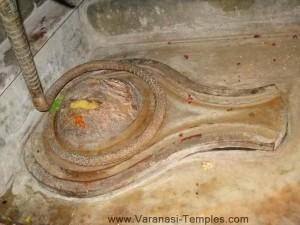
The Shikhara (tower) above the sanctum sanctorum is modest but ornate, featuring Amalaka (disk-like stones) characteristic of North Indian temple architecture. The sanctum houses the Shiva Lingam, which is a Swayambhu (self-manifested) form, encased in a modern marble enclosure for preservation.
The Marble Inscription
A distinct feature noted in the original temple records is the inscription on the marble front. This inscription serves as a historical marker, likely documenting a renovation or consecration (Prana Pratishtha) ceremony undertaken by devotees or patrons, preserving the lineage of worship.
Vastu Placement
The temple is strategically situated. As per the local guide text: “When devotees face Bara Ganesh, the Shiv Ling will be to the right of the devotees and to the left of Ganeshji.” This placement aligns with the Pradakshina (circumambulation) path, allowing a seamless flow of energy from the remover of obstacles to the granter of boons.
Photo Gallery

Darshan & Ritual Logistics
The temple follows the standard Varanasi ritual timings, opening in the early morning for Brahma Muhurta and closing late at night. Given its location within a busy neighborhood (Lohatia), it offers a serene atmosphere outside peak hours.
Daily Timings
| Session | Timings | Rituals |
|---|---|---|
| Morning | 5:00 AM – 12:00 PM | Mangala Aarti, Shringar, Abhishekam |
| Afternoon | 12:00 PM – 4:00 PM | Midday Rest (Temple may remain closed) |
| Evening | 4:00 PM – 9:30 PM | Sandhya Aarti, Shayan Aarti |
Key Sevas & Online Booking
While smaller than major shrines, the temple facilitates traditional rituals. For complex ceremonies, it is advisable to contact the priest directly or visit the administrative office of the Bara Ganeshji Trust.
- Abhishekam: Ritual bathing of the Shiva Lingam with milk, honey, and water. (Timing: 6:00 AM – 7:00 AM).
- Archana: Recitation of 108 names of Lord Shiva. (Timing: Throughout open hours).
- Rudra Abhishek: Special Vedic ritual performed on Mondays and Pradosh Kalam.
Note on Online Seva: Currently, the Siddhi Ashtakeshwar specific online portal is not separate from the Varanasi Temple Board. However, general Kashi Vishwanath Seva portals often cover adjacent shrines.
2026 Festival Schedule Highlights
Plan your visit around these specific dates for maximum spiritual merit:
- Monday, January 26, 2026: Som Pradosh Vrat (Ideal for Shiva worship).
- Sunday, February 15, 2026: Maha Shivaratri (Peak crowd; special night long vigil).
- Saturday, July 18, 2026: Sawan Somwar (Start of the Holy Month of Shravan).
- Tuesday, August 25, 2026: Nag Panchami (Celebrated in the complex with offerings to Nag Devatas).
Practical Visitor Guidance
Visiting Varanasi requires preparation. The Siddhi Ashtakeshwar Temple is located in a dense residential area, requiring a short walk.
Code of Conduct & Essentials
- Dress Code: Traditional attire is preferred. Men should wear dhoti/kurta or long trousers; women should wear saree/salwar kameez. Avoid shorts and sleeveless tops.
- Photography: Strictly prohibited inside the sanctum sanctorum. Photography of the exterior architecture may be permitted with discretion, but it is respectful to ask the priest or caretaker first.
- Mobile & Lockers: Mobile phones are permitted but must be switched to silent mode. There are no specific locker facilities at this small shrine, so travel light. Use the lockers available at the main Kashi Vishwanath Temple security checkpoint if carrying large bags.
- Accessibility: The approach lanes (Lohatia) are narrow and may be uneven. It is not fully wheelchair accessible. Seniors should use cycle rickshaws to get as close as possible.
Crowd Management & Seasonal Advice
- Best Hours: 6:00 AM – 8:00 AM (Morning) or 7:00 PM – 9:00 PM (Evening) for a peaceful Darshan.
- Monsoon (July-Sept): Carry an umbrella and waterproof footwear; the lanes flood easily.
- Summer (May-June): Temperatures exceed 40°C. Carry water; public fountains are scarce in the narrow lanes.
- Winter (Dec-Jan): Mornings are foggy. Evenings are crisp; a light jacket is sufficient.
Pilgrimage Connectivity
How to Reach
The temple is located at K-58/101, Lohatia, near Bara Ganeshji Temple, Varanasi, Uttar Pradesh 221001.
- Nearest Railway Station: Varanasi Junction (BSB) is approximately 4 km away. An auto-rickshaw ride takes about 15–20 minutes depending on traffic.
- Nearest Airport: Lal Bahadur Shastri International Airport (LBS) is roughly 25 km away (35–45 minutes by cab).
- NH Connectivity: The temple is accessible via NH-19 (formerly NH-2), connecting Varanasi to Delhi and Kolkata.
- Local Transport: Hire an auto-rickshaw or cycle rickshaw to reach the Lohatia intersection. From there, the temple is a 2-minute walk through the market.
Nearby Sacred Sites (The Pilgrimage Circuit)
To maximize the spiritual benefit of your visit, consider this 1-day itinerary:
- Bara Ganeshji Temple: Located literally right next door. Worshipping the massive Ganesh idol is considered essential before visiting Siddhi Ashtakeshwar.
- Sankat Mochan Hanuman Temple: Located about 2.5 km away (approx. 15 min drive). Famous for the “Sankat Mochan” (Reliever of Troubles) Hanuman.
- Tridev Mandir (Narayan): Located roughly 1.5 km away, housing idols of Brahma, Vishnu, and Mahesh together—a rare combination.
Frequently Asked Questions (FAQ)
1. Is there a VIP Darshan entry at Siddhi Ashtakeshwar Temple?
As this is a neighborhood temple rather than a massive complex like Kashi Vishwanath, there is no formal VIP entry system. However, the crowd is significantly lower than the main Kashi corridor, allowing for a swift and personal darshan for all visitors.
2. Is there a Siddhi Ashtak Kund present today?
According to the Kashi Khand scriptures, a Kund (water tank) existed. In modern urbanized Varanasi, open water bodies are rare. The “Kund” is often interpreted spiritually or as a small step-well structure within the premises, though currently, the focus is on the Shiva Lingam worship. Visitors can perform symbolic bathing rituals (Abhishek) at the temple.
3. Can I perform Shraddha (Ancestral Rites) here?
Yes. The Kashi Khand specifically mentions that bathing in the Siddhi Ashtak Kund and performing rituals for forefathers brings blessings. Even if the physical water body is not accessible, priests at the temple perform Shraddha and Pinda Daan rituals for ancestors.
4. Is photography allowed inside the sanctum?
No. Out of respect for the sanctity of the Shiva Lingam, photography is strictly prohibited inside the inner sanctum. You may photograph the exterior marble enclosure and the Bara Ganesh complex.
5. What is the best way to reach the temple with luggage?
It is recommended to drop luggage at your hotel or at the luggage counters near Kashi Vishwanath Temple or Varanasi Junction. The lanes of Lohatia are narrow and crowded, making it difficult to navigate with large suitcases.
6. Are there food options nearby?
Yes, the temple is near the bustling Lohatia and Dashashwamedh Ghat areas. You will find street food vendors and small restaurants. For Prasad, you can purchase sweets (like Modak or Laddu) from shops near Bara Ganesh and offer them at the temple.
Disclaimer: Timings and rituals are subject to change during festivals or specific religious observances. It is advisable to verify locally before planning a visit.
Recent Posts

Shri Kaamkoteeshwar Mandir, Varanasi – History & Significance
In the heart of Kashi, the eternal city of Lord Shiva, where the Ganges flows with celestial grace, stands the Shri Kaamkoteeshwar Mandir. This sacred Sannidhi is not merely a temple but a profound spiritual bridge between the Northern…

ओ सांवरे तूने ही मुझको संभाला – Lyrics & Meaning
ओ सांवरे तूने ही मुझको संभाला – A Prayer to Shyam Origin & Spiritual Essence Why This Bhajan Resonates Devotees chant this when overwhelmed by life’s storms—the refrain ‘तूने ही मुझको संभाला’ is the soul’s sigh of relief: “You…

कथा ये है महाराज मेरे की – Lyrics & Meaning
कथा ये है महाराज मेरे की छत्रपति संभाजी महाराज – A Prayer to Chhatrapati Sambhaji Maharaj Origin & Spiritual Essence Why This Bhajan Resonates Devotees chant this when their spirit feels tested—its powerful refrain “महाराज मेरे” is a soul’s…

Rigveda Samhita Yathartha Anuvada (ऋग्वेद संहिता यथार्थ अनुवाद) – Complete Set with Anvayartha & Hindi/English Translation
The Rigveda is the oldest surviving scripture of humanity and the foundational text of Sanātana Dharma. For serious students, scholars, UPSC aspirants studying ancient Indian history, Sanskrit learners, and spiritual seekers, a precise and grammatically structured translation is indispensable.…

आना भी अकेला है जाना भी अकेला है – Lyrics & Meaning | BharatTemples
आना भी अकेला है जाना भी अकेला है – A Prayer to the Divine Witness Origin & Spiritual Essence Why This Bhajan Resonates Devotees turn to this bhajan in moments of deep reflection—when life’s attachments begin to ache. The…

माता शेरावाली के द्वार जो भी जाता है – Lyrics & Meaning
माता शेरावाली के द्वार जो भी जाता है – A Prayer to Maa Sherawali Origin & Spiritual Essence Why This Bhajan Resonates Devotees turn to this bhajan in times of fear or uncertainty—its promise that no one leaves Maa’s…

मार लेना सपणी उबार लेणा भवरा – Lyrics & Meaning
मार लेना सपणी उबार लेणा भवरा – A Prayer to the Divine Beloved Origin & Spiritual Essence Why This Bhajan Resonates Devotees chant this in moments of deep vulnerability—its cry of “मार लेना सपणी, उबार लेणा भवरा” is the…

हमें श्याम सुंदर भरोसा तुम्हारा – Lyrics & Meaning
हमें श्याम सुंदर भरोसा तुम्हारा – A Prayer to Shyam Sundar Origin & Spiritual Essence Why This Bhajan Resonates Devotees chant this when feeling alone—its refrain ‘de do sahara’ is the soul’s cry for divine support. Lyrics in Hindi…

Mere Satguru Ne Di Thi Davai Lyrics in Hindi & Meaning
Mere Satguru Ne Di Thi Davai: Invoking the Guru’s Liberating Wisdom This soul-stirring bhajan venerates the Satguru (True Spiritual Master) as the divine physician who dispenses the only remedy for life’s deepest sufferings. Composed by Sant Karmaveer Tufani, it…

Janm Diyo Thari Maa Dukh Dekhiyo Lyrics in Hindi & Meaning
जन्म दियो थारी माँ दुख देखियो (Maa’s Grief Upon Birthing You) This soul-stirring Chetavani Bhajan (admonitory hymn) is addressed to the Divine Mother (Maa) – a call for repentance when children forget their filial duties in the dark age…