
Contents
- 1 Introduction & Spiritual Essence
- 2 Historical Origins & Scriptural Legend
- 3 Architectural Marvels
- 4 Darshan & Ritual Logistics
- 5 Practical Visitor Guidance
- 6 Pilgrimage Connectivity
- 7 Frequently Asked Questions (FAQs)
- 7.1 1. Is there a VIP Darshan entry at Asha Vinayak Temple?
- 7.2 2. What is the significance of offering Modak to Asha Vinayak?
- 7.3 3. How far is the temple from Dasaswamedh Ghat?
- 7.4 4. Is mobile network connectivity available inside the temple?
- 7.5 5. Can non-Hindus visit the temple?
- 7.6 6. Is there a facility for Prasad (offering) materials?
Introduction & Spiritual Essence
Ancient stones echo with prayers, and the air in Varanasi vibrates with the sound of devotion. Among the myriad shrines of Kashi, the Asha Vinayak Temple stands as a beacon for devotees seeking fulfillment of hope and desire. The very name “Asha” translates to “Hope,” and this temple is deeply associated with Lord Ganesha, the remover of obstacles.
Primary Deity and Form
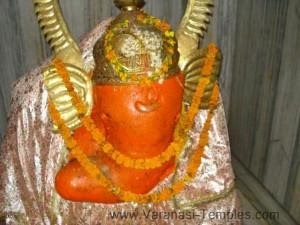
The presiding deity here is Asha Vinayak, a manifestation of Lord Ganesha. In the context of Varanasi’s sacred geography, Ganesha is often worshipped as the one who grants success (Vighnaharta). While specific historical records on the murti’s antiquity are sparse, the temple houses a swayambhu (self-manifested) or consecrated stone idol that has been worshipped for centuries. The form is typically a standard Ganesha iconography, carved in black stone, radiating serenity.
Phalaśruti: The Spiritual Benefit
Why do devotees flock to this specific shrine in the labyrinthine alleys near Mir Ghat? The Phalaśruti (scriptural promise of merit) associated with Asha Vinayak is profound:
- Fulfillment of Desires: It is believed that sincere prayers here dissolve the “bandha” (knots) of unresolved wishes.
- Cleansing Ancestral Karma: Offering prayers to Lord Ganesha in Kashi is said to liberate ancestors from the cycle of Preta (ghosts/tethered spirits), ensuring their journey to Pitru Loka proceeds smoothly.
- Removal of Obstacles: Before embarking on new ventures or journeys, a visit to Asha Vinayak removes unseen hurdles.
Historical Origins & Scriptural Legend
While the exact century of construction is difficult to pinpoint without modern carbon dating, the architecture and oral traditions suggest a legacy spanning several hundred years.
Builders and Renovations
The temple is located in the Varanasi City district (specifically D-3/71, Mir Ghat). The structure has likely evolved through centuries of patronage by local kings and wealthy merchants of the Banaras State. Unlike massive state-sponsored monuments, the Asha Vinayak temple appears to be a community-centric shrine, built and renovated over time by devotees preserving the local heritage.
Scriptural and Local Legends
Sthala Purana (Local Legend): Tradition holds that this location is part of the Manikarnika Ghat spiritual circuit. Legend says that Lord Ganesha guards the southern entrance (Dakshin Dwar) of Kashi. This specific shrine is often linked to the myth of Lord Shiva granting Ganesha the status of the first deity to be worshipped. Local lore suggests that the name “Asha” stems from the wish-fulfilling nature of this specific Ganesha, who, listening to the cries of devotees ascending the steep steps of the ghat, alleviates their suffering.
Architectural Marvels
The Asha Vinayak Temple is a classic example of the Nagara style of temple architecture, adapted to the spatial constraints of the ancient Varanasi city layout.
Structure and Vastu
While the temple is compact, it adheres to the principles of Vastu Shastra. The inner sanctum (Garbhagriha) is typically square, oriented to the cardinal directions, ensuring that the idol faces East/North, allowing morning sunlight to illuminate the deity. The Shikhara (tower) above the sanctum is a curvilinear structure, characteristic of North Indian temples, though often simpler in older local shrines compared to grand temple complexes.
Sculptural Details
The exterior walls may feature intricate carvings of:
- Dvarapalas: Guardian deities flanking the entrance.
- Mithuna Figures: Sculptural couples often found in medieval Indian architecture, symbolizing fertility and prosperity.
- Navagraha Representations: Since Ganesha is the overlord of the Navagrahas (nine planets), representations of planetary deities are common.
Note: As part of the living heritage of Varanasi, the temple structure is maintained by local trusts and likely falls under the conservation awareness of the Varanasi Municipal Corporation, though it may not be a specific ASI (Archaeological Survey of India) listed monument.
Darshan & Ritual Logistics
To ensure a seamless spiritual journey, devotees should plan their visit according to the temple’s opening hours and seasonal festivals.
Daily Timings
The temple follows the standard Panchakoshi Yatra timings prevalent in Varanasi, opening early morning and remaining open until late evening.
| Session | Timings | Activity |
|---|---|---|
| Morning | 07:00 AM – 1:00 PM | Shringar Darshan, Mangala Aarti |
| Afternoon | 1:00 PM – 4:00 PM | Temple Closed (Cleaning/Rest) |
| Evening | 4:00 PM – 9:00 PM | Shayan Darshan, Sandhya Aarti |
Key Sevas and Booking
While many small shrines in Varanasi operate on direct offerings, specific services include:
- Abhishekam: Ritual bathing of the idol with water, milk, and honey (typically performed by the head priest).
- Archana: Recitation of 108 names of Ganesha.
- Modak Offering: Distribution of sweet dumplings (Modak) as Prasadam.
Online Booking: For larger festivals or complex rituals, many temples in Varanasi now utilize the Kashi Vishwanath Corridor app or authorized local portals. However, for daily darshan at Asha Vinayak, direct visitation is standard. For specialized Sevas, it is recommended to contact the local priest upon arrival.
2026 Festival Calendar (Major Dates)
Plan your visit around these auspicious dates for special Mangala Aarti and Dravyas (offerings).
- Angarki Chaturthi: January 13, 2026 (Highly auspicious for Ganesha worship).
- Ganesh Chaturthi: August 27, 2026 (Birthday of Lord Ganesha).
- Magha Chaturthi: February 12, 2026.
- Sankashti Chaturthi: September 24, 2026.
Practical Visitor Guidance
Visiting a heritage site in Varanasi requires preparation. The lanes are narrow, and the spiritual energy is intense.
Dress Code and Etiquette
- Attire: Traditional Indian clothing (Kurta-Pajama for men, Saree/Salwar Kameez for women) is preferred. Western clothing should be modest (covered shoulders and knees).
- Footwear: Remove shoes outside the temple premises. Utilize the paid shoe keeping facilities available near Mir Ghat.
- Photography: Restriction applies inside the inner sanctum. Photography in the outer mandapa may be permitted, but always seek permission from the priest.
- Mobile Lockers: Due to security protocols near the Kashi Vishwanath Corridor, large bags and mobile phones are often restricted. Use official cloakrooms or lockers near Dasaswamedh Ghat before entering the labyrinthine lanes.
Crowd Management & Seasonal Advice
- Best Time to Visit: Early morning (7:00 AM – 9:00 AM) or late evening (after 7:30 PM) when the Aarti is performed.
- Seasonal Tip: In summer (April–June), Varanasi can be very hot. Carry water and stay hydrated. In winter (December–January), mornings are foggy; afternoon visits are more pleasant.
- Accessibility: The temple is located near Mir Ghat. Reaching it requires walking through narrow market lanes. It is not wheelchair accessible due to uneven stone steps and tight spaces.
Pilgrimage Connectivity
How to Reach
The temple is situated in the heart of Old Varanasi.
- Nearest Airport: Lal Bahadur Shastri International Airport (LBS) (approx. 30 km).
- Nearest Railway Station: Varanasi Junction (approx. 6 km) or Kashi Vishwanath Temple (KVT) Station (approx. 3 km).
- Road Access: You can reach Dasaswamedh Ghat via Varanasi-Lahartara Road or MLG Road. From Dasaswamedh Ghat, take a rickshaw or walk toward Vishalakshi Gauri Temple.
- By Boat: Take a boat to Mir Ghat. From the ghat, climb the steps; the temple is nearby.
Nearby Sacred Sites (The Kashi Pilgrimage Circuit)
A visit to Asha Vinayak is best combined with these nearby shrines to complete the spiritual circuit:
- Vishalakshi Devi Temple: Located very close to Mir Ghat. It is one of the 52 Shakti Peethas, where the eyes of Goddess Sati are believed to have fallen.
- Kashi Vishwanath Temple: After visiting Asha Vinayak (the remover of obstacles), proceed to the main Jyotirlinga (approx. 15-minute walk or short boat ride).
- Annapurna Temple: Located near Vishwanath Gali, dedicated to the Goddess of food and nourishment.
Frequently Asked Questions (FAQs)
1. Is there a VIP Darshan entry at Asha Vinayak Temple?
Unlike the main Kashi Vishwanath Corridor, Asha Vinayak is a smaller shrine. VIP entry protocols are generally not applicable here. However, during peak festivals, priority may be given to those performing specific Sevas (rituals).
2. What is the significance of offering Modak to Asha Vinayak?
Modak is considered Lord Ganesha’s favorite sweet. Offering 21 modaks is believed to please the deity immensely and remove all obstacles from the devotee’s life.
3. How far is the temple from Dasaswamedh Ghat?
It is approximately 5-10 minutes of walking distance from Dasaswamedh Ghat. However, the lanes are narrow and crowded. Hiring a local guide is recommended for first-time visitors.
4. Is mobile network connectivity available inside the temple?
Due to the thick stone walls and narrow lanes of Varanasi, mobile network signals may be weak inside the inner sanctum. It is advisable to carry cash and map offline.
5. Can non-Hindus visit the temple?
Asha Vinayak is a traditional Hindu shrine. While Varanasi is generally open to all, entry inside the sanctum sanctorum for non-Hindus varies based on the temple trust’s specific rules. It is best to ask the temple priest at the entrance.
6. Is there a facility for Prasad (offering) materials?
Yes, small shops around the temple sell flowers, coconuts, and sweets. You can also carry your own offerings. Ensure you use the dustbins provided outside the temple premises to dispose of waste.
Recent Posts

Shri Kaamkoteeshwar Mandir, Varanasi – History & Significance
In the heart of Kashi, the eternal city of Lord Shiva, where the Ganges flows with celestial grace, stands the Shri Kaamkoteeshwar Mandir. This sacred Sannidhi is not merely a temple but a profound spiritual bridge between the Northern…

ओ सांवरे तूने ही मुझको संभाला – Lyrics & Meaning
ओ सांवरे तूने ही मुझको संभाला – A Prayer to Shyam Origin & Spiritual Essence Why This Bhajan Resonates Devotees chant this when overwhelmed by life’s storms—the refrain ‘तूने ही मुझको संभाला’ is the soul’s sigh of relief: “You…

कथा ये है महाराज मेरे की – Lyrics & Meaning
कथा ये है महाराज मेरे की छत्रपति संभाजी महाराज – A Prayer to Chhatrapati Sambhaji Maharaj Origin & Spiritual Essence Why This Bhajan Resonates Devotees chant this when their spirit feels tested—its powerful refrain “महाराज मेरे” is a soul’s…

Rigveda Samhita Yathartha Anuvada (ऋग्वेद संहिता यथार्थ अनुवाद) – Complete Set with Anvayartha & Hindi/English Translation
The Rigveda is the oldest surviving scripture of humanity and the foundational text of Sanātana Dharma. For serious students, scholars, UPSC aspirants studying ancient Indian history, Sanskrit learners, and spiritual seekers, a precise and grammatically structured translation is indispensable.…

आना भी अकेला है जाना भी अकेला है – Lyrics & Meaning | BharatTemples
आना भी अकेला है जाना भी अकेला है – A Prayer to the Divine Witness Origin & Spiritual Essence Why This Bhajan Resonates Devotees turn to this bhajan in moments of deep reflection—when life’s attachments begin to ache. The…

माता शेरावाली के द्वार जो भी जाता है – Lyrics & Meaning
माता शेरावाली के द्वार जो भी जाता है – A Prayer to Maa Sherawali Origin & Spiritual Essence Why This Bhajan Resonates Devotees turn to this bhajan in times of fear or uncertainty—its promise that no one leaves Maa’s…

मार लेना सपणी उबार लेणा भवरा – Lyrics & Meaning
मार लेना सपणी उबार लेणा भवरा – A Prayer to the Divine Beloved Origin & Spiritual Essence Why This Bhajan Resonates Devotees chant this in moments of deep vulnerability—its cry of “मार लेना सपणी, उबार लेणा भवरा” is the…

हमें श्याम सुंदर भरोसा तुम्हारा – Lyrics & Meaning
हमें श्याम सुंदर भरोसा तुम्हारा – A Prayer to Shyam Sundar Origin & Spiritual Essence Why This Bhajan Resonates Devotees chant this when feeling alone—its refrain ‘de do sahara’ is the soul’s cry for divine support. Lyrics in Hindi…

Mere Satguru Ne Di Thi Davai Lyrics in Hindi & Meaning
Mere Satguru Ne Di Thi Davai: Invoking the Guru’s Liberating Wisdom This soul-stirring bhajan venerates the Satguru (True Spiritual Master) as the divine physician who dispenses the only remedy for life’s deepest sufferings. Composed by Sant Karmaveer Tufani, it…

Janm Diyo Thari Maa Dukh Dekhiyo Lyrics in Hindi & Meaning
जन्म दियो थारी माँ दुख देखियो (Maa’s Grief Upon Birthing You) This soul-stirring Chetavani Bhajan (admonitory hymn) is addressed to the Divine Mother (Maa) – a call for repentance when children forget their filial duties in the dark age…