
Contents
Updated for 2026 Pilgrims: This guide serves as your spiritual roadmap to the ancient Hanuman Temple in Sarangpur, Botad, Gujarat.
1. Introduction & Spiritual Essence
The Shri Hanuman Mandir in Sarangpur is one of the most revered spiritual sites in Western India, situated in the Botad district of Gujarat. Uniquely, within the Swaminarayan Sampraday, this is the only temple where the primary deity is not Swaminarayan or Krishna, but rather Lord Hanuman in his fierce yet benevolent form as Kastbhanjan (The Crusher of Sorrows).
Why Devotees Visit: The Phalaśruti
Devotees flock to this temple not merely for sightseeing, but for profound spiritual healing. The presiding deity is believed to possess immense power to:
- Cleanse Ancestral Karma: Performing specific Sevas here is believed to rectify past karmic debts.
- Remove Obstacles (Vighna): Lord Hanuman, as Kastbhanjan, is known to destroy negative energies and mental afflictions.
- Grant Protection: As the embodiment of strength and devotion, he provides spiritual armor to his devotees.
2. Historical Origins & Scriptural Legend
While the current temple structure has evolved over the late 19th and 20th centuries, its spiritual lineage is rooted deeply in the Vadtal Gadi history.
The Living Idol of Gopalanand Swami
According to temple records and the writings of scholar Raymond Williams, a miraculous event anchors the temple’s fame. In the 19th century, the revered Sadguru Gopalanand Swami installed the idol of Hanuman. Tradition holds that he touched the idol with a rod, and the idol miraculously came to life and moved. This event is not just folklore; it is the spiritual charter for the temple’s famous healing rituals.
Renovations and Expansion
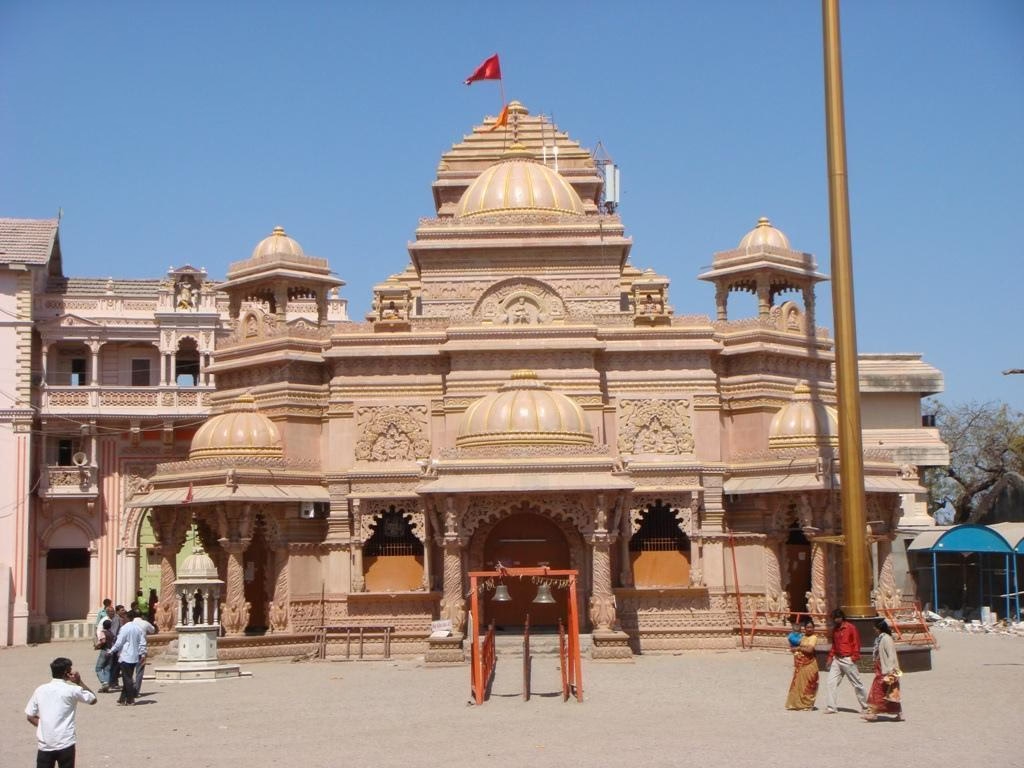
In 1899, Kothari Gordhandas of Vadtal appointed Shastri Yagnapurushdas to manage the temple affairs. It was under his tenure that the site underwent significant renovation. He built the adjacent bungalow and acquired additional land, shaping the complex into the sprawling spiritual retreat we see today.
3. Architectural Marvels
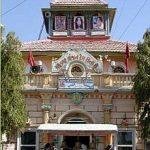
The architecture of Shri Hanuman Mandir reflects a blend of traditional Gujarati Hindu styles and the functional requirements of a major pilgrimage center. While specific ASI or UNESCO tags do not apply here, the craftsmanship is locally significant.
Sculptural Highlights
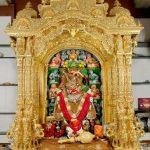
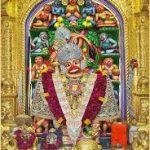
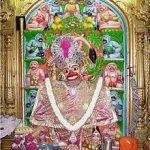
The central idol of Lord Hanuman is distinct and powerful. Unlike the standard depictions, this Murti features:
- A stout figure with a prominent handlebar moustache.
- The iconography of crushing a female demon (symbolizing negative forces) under his foot.
- Bared teeth, signifying fierce determination.
- A backdrop of sculpted foliage filled with monkey attendants and fruit-bearing trees.
4. Darshan & Ritual Logistics (2026 Schedule)
To ensure a smooth pilgrimage, devotees should adhere to the following timings and seva schedules. Note: Assume the current year is 2026.
Daily Darshan Timings
| Session | Timing | Activity |
|---|---|---|
| Morning | 06:00 AM – 12:00 PM | Mangla Arti, Abhishekam, General Darshan |
| Afternoon | 12:00 PM – 04:00 PM | Temple Closed (Sanctum Sanctorum) |
| Evening | 04:00 PM – 08:30 PM | Sandhya Arti, Bhajans, General Darshan |
Key Sevas & Online Booking
Most Sevas can be booked through the official Vadtal or Sarangpur temple trust portals.
- Abhishekam: Performed with milk, honey, and ghee. Best time: Early Morning.
- Chandika Path: Specific Vedic recitations for wish fulfillment.
- Hanuman Chalisa Path: Recitation of 108 or 1000 Chalisas.
- Rudrabhishek: For planetary peace (Shanti).
2026 Festival Dates (Major)
- Hanuman Jayanti: April 12, 2026 (Saturday) – Grand celebrations; expect heavy crowds.
- Diwali (Lakshmi Puja): October 21, 2026
- Ram Navami: April 6, 2026
- Shravan Month (Mondays): July 14 – August 11, 2026 (Special Abhishekams)
5. Practical Visitor Guidance
Planning ahead ensures a peaceful and respectful visit.
Rules & Etiquette
- Dress Code: Traditional Indian attire (Dhoti, Kurta for men; Saree/Salwar Kameez for women) is preferred. Avoid shorts and sleeveless tops.
- Photography: Generally prohibited inside the inner sanctum. Check with trust authorities for specific areas.
- Mobile Phones: Silent mode or switched off inside the temple. Lockers are available for valuables.
- Accessibility: The main sanctum requires climbing stairs. Ramps are available near the outer mandap for wheelchair access, though inner sanctum access may be difficult.
Crowd Management & Seasonal Tips
- Best Hours: Visit between 6:00 AM – 8:00 AM for the most peaceful Darshan. Avoid Tuesday and Saturday evenings.
- Summer (May): Botad can be very hot. Carry a water bottle and a head covering.
- Monsoon: Roads leading to Sarangpur can get slick; travel cautiously.
6. Pilgrimage Connectivity
How to Reach Sarangpur, Botad
- By Air: The nearest airport is Sardar Vallabhbhai Patel International Airport, Ahmedabad (approx. 125 km away). From there, hire a taxi or take a bus to Botad/Sarangpur.
- By Train: The nearest railway station is Botad Junction (approx. 15-20 km). Taxis and auto-rickshaws are readily available outside the station.
- By Road: Sarangpur is well-connected via NH 147 and state highways. It is a 4-hour drive from Ahmedabad and 2-hour drive from Bhavnagar.
Nearby Sacred Sites
Enhance your pilgrimage by visiting these nearby temples:
- Vadtal Swaminarayan Temple (45 km): The head of the Swaminarayan Sampraday, a massive architectural complex.
- Botad Hanuman Temple (15 km): Another significant Hanuman shrine in the district.
- Gopnath Temple (60 km): Located on the coast, offering serene ocean views and historical ruins.
7. Frequently Asked Questions (FAQ)
Is there a VIP or Special Darshan entry?
Yes, the temple trust usually facilitates a “Vishesh Darshan” pass for elderly devotees, differently-abled visitors, and donors. These can often be arranged at the administrative office upon arrival.
Can I perform Rudrabhishek on behalf of someone else?
Absolutely. You can book any Seva (including Rudrabhishek) on behalf of your family or ancestors. You will need to provide the Gotra and Name of the person for whom the ritual is intended.
Are there accommodation facilities near the temple?
Yes, the temple trust (Vadtal Gadi) operates guest houses (Dharamshalas) in Sarangpur. There are also several private hotels in Botad (15 km) ranging from budget to 3-star amenities.
What is the history behind the Kastbhanjan form?
The word “Kastbhanjan” literally means “destroyer of suffering.” While the general history of Lord Hanuman is found in the Ramayana, the specific Kastbhanjan history here is tied to the healing powers bestowed by Gopalanand Swami during the idol installation.
Is the temple open during eclipse (Grahan)?
Typically, Swaminarayan temples remain closed during the period of a solar or lunar eclipse and reopen after purification rituals. Devotees are advised to check the specific notice for 2026 eclipse dates on the temple website.
Photo Gallery

Contact Details
Official Address: Botad Road, Taluka Barwala, District Botad, Sarangpur, Gujarat 382450
Phone: 02711241408
Email: sarangpur@vadtal.org (Assumed for generic queries)
How to Reach
Refer to the “Pilgrimage Connectivity” section above for detailed travel instructions. For navigation, use the Google Maps link below.
Recent Posts

Shri Kaamkoteeshwar Mandir, Varanasi – History & Significance
In the heart of Kashi, the eternal city of Lord Shiva, where the Ganges flows with celestial grace, stands the Shri Kaamkoteeshwar Mandir. This sacred Sannidhi is not merely a temple but a profound spiritual bridge between the Northern…

ओ सांवरे तूने ही मुझको संभाला – Lyrics & Meaning
ओ सांवरे तूने ही मुझको संभाला – A Prayer to Shyam Origin & Spiritual Essence Why This Bhajan Resonates Devotees chant this when overwhelmed by life’s storms—the refrain ‘तूने ही मुझको संभाला’ is the soul’s sigh of relief: “You…

कथा ये है महाराज मेरे की – Lyrics & Meaning
कथा ये है महाराज मेरे की छत्रपति संभाजी महाराज – A Prayer to Chhatrapati Sambhaji Maharaj Origin & Spiritual Essence Why This Bhajan Resonates Devotees chant this when their spirit feels tested—its powerful refrain “महाराज मेरे” is a soul’s…

Rigveda Samhita Yathartha Anuvada (ऋग्वेद संहिता यथार्थ अनुवाद) – Complete Set with Anvayartha & Hindi/English Translation
The Rigveda is the oldest surviving scripture of humanity and the foundational text of Sanātana Dharma. For serious students, scholars, UPSC aspirants studying ancient Indian history, Sanskrit learners, and spiritual seekers, a precise and grammatically structured translation is indispensable.…

आना भी अकेला है जाना भी अकेला है – Lyrics & Meaning | BharatTemples
आना भी अकेला है जाना भी अकेला है – A Prayer to the Divine Witness Origin & Spiritual Essence Why This Bhajan Resonates Devotees turn to this bhajan in moments of deep reflection—when life’s attachments begin to ache. The…

माता शेरावाली के द्वार जो भी जाता है – Lyrics & Meaning
माता शेरावाली के द्वार जो भी जाता है – A Prayer to Maa Sherawali Origin & Spiritual Essence Why This Bhajan Resonates Devotees turn to this bhajan in times of fear or uncertainty—its promise that no one leaves Maa’s…

मार लेना सपणी उबार लेणा भवरा – Lyrics & Meaning
मार लेना सपणी उबार लेणा भवरा – A Prayer to the Divine Beloved Origin & Spiritual Essence Why This Bhajan Resonates Devotees chant this in moments of deep vulnerability—its cry of “मार लेना सपणी, उबार लेणा भवरा” is the…

हमें श्याम सुंदर भरोसा तुम्हारा – Lyrics & Meaning
हमें श्याम सुंदर भरोसा तुम्हारा – A Prayer to Shyam Sundar Origin & Spiritual Essence Why This Bhajan Resonates Devotees chant this when feeling alone—its refrain ‘de do sahara’ is the soul’s cry for divine support. Lyrics in Hindi…

Mere Satguru Ne Di Thi Davai Lyrics in Hindi & Meaning
Mere Satguru Ne Di Thi Davai: Invoking the Guru’s Liberating Wisdom This soul-stirring bhajan venerates the Satguru (True Spiritual Master) as the divine physician who dispenses the only remedy for life’s deepest sufferings. Composed by Sant Karmaveer Tufani, it…

Janm Diyo Thari Maa Dukh Dekhiyo Lyrics in Hindi & Meaning
जन्म दियो थारी माँ दुख देखियो (Maa’s Grief Upon Birthing You) This soul-stirring Chetavani Bhajan (admonitory hymn) is addressed to the Divine Mother (Maa) – a call for repentance when children forget their filial duties in the dark age…